Brief Farewells Upon Exiting
وداع موجز عند الخروج
As one or both individuals exit the elevator, they exchange quick, polite farewells like 'Have a good one!' or 'See you around!'
عند خروج أحد الشخصين أو كليهما من المصعد، يتبادلان عبارات وداع سريعة ومهذبة مثل 'Have a good one!' أو 'See you around!'.
حوار5
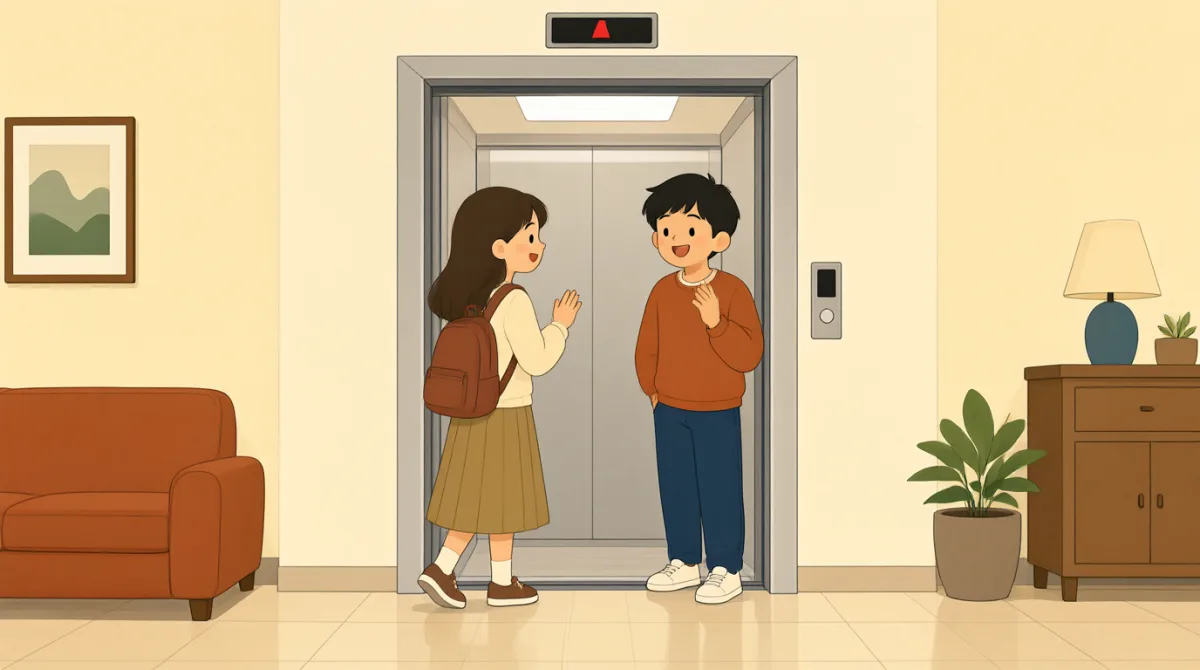

Going down, right?
إلى الأسفل، صحيح؟

Yes, please. Thanks!
نعم، من فضلك. شكرًا!
No problem.
لا مشكلة.
Oh, this is my floor. Have a good one!
أوه، هذا طابقي. أتمنى لك يومًا سعيدًا!
You too! See you around!
ولك بالمثل! أراك لاحقًا!
المفردات7
- downإلى الأسفل
In this context, 'down' means going to a lower floor in a building, like in an elevator. It's a common direction word used in everyday situations.
في هذا السياق، تعني 'down' التوجّه إلى طابق أدنى في مبنى، كما في المصعد. وهي كلمة شائعة للتعبير عن الاتجاه في المواقف اليومية.
- right?أليس كذلك؟
This is a tag question added to the end of a sentence to check if something is correct. It makes the speaker sound polite and seeking confirmation, like '对吧?' in Chinese.
تأتي هذه العبارة في نهاية الجملة للتأكد من صحة شيء ما. وتجعل المتحدث يبدو مهذبًا وكأنه يطلب التأكيد، مثل «أليس كذلك؟».
- pleaseمن فضلك
Used to make a request more polite. For example, 'Yes, please' means agreeing to something kindly. It's a basic politeness word in English conversations.
تُستخدم لجعل الطلب أكثر تهذيبًا. فعلى سبيل المثال، تعني 'Yes, please' الموافقة على شيء بأدب. وهي من الكلمات الأساسية للتهذيب في المحادثات الإنجليزية.
- no problemلا مشكلة
A casual way to say 'you're welcome' or 'it's okay' after someone thanks you. It's very common in informal English to respond to thanks.
طريقة غير رسمية لقول «العفو» أو «لا بأس» بعد أن يشكرك أحدهم. وهي شائعة جدًا في المحادثات الإنجليزية غير الرسمية ردًا على الشكر.
- floorطابق
Refers to a level in a building, like the first floor or fifth floor. In elevators, people say 'my floor' to mean the level they need to get off at.
تشير إلى مستوى في مبنى، مثل الطابق الأول أو الخامس. وفي المصعد، يقول الناس 'my floor' للإشارة إلى الطابق الذي يريدون النزول فيه.
- have a good oneأتمنى لك يومًا سعيدًا
A friendly, informal farewell meaning 'have a good day' or 'enjoy the rest of your time.' It's short and used in quick goodbyes with strangers.
عبارة وداع ودودة وغير رسمية، تعني «أتمنى لك يومًا سعيدًا» أو «استمتع ببقية وقتك». وهي قصيرة وتُستخدم في الوداع السريع مع أشخاص لا تعرفهم.
- see you aroundأراك لاحقًا
An casual way to say goodbye, implying you might meet again by chance. It's common in informal settings like with neighbors, not for close friends.
طريقة غير رسمية لقول وداعًا، توحي باحتمال أن تلتقيا مجددًا بالصدفة. وهي شائعة في المواقف غير الرسمية، مثل الحديث مع الجيران، وليست مقتصرة على الأصدقاء المقربين.
الجمل الأساسية5
- 1
Going down, right?
إلى الأسفل، صحيح؟
This is a polite question to confirm direction in an elevator. It uses a statement plus 'right?' as a tag question for confirmation. Useful for starting small talk with strangers in shared spaces.
هذا سؤال مهذب للتأكد من الاتجاه في المصعد. تتبعه كلمة 'right?' في نهاية الجملة لطلب التأكيد. ويمكن استخدامه لبدء حديث قصير مع أشخاص لا تعرفهم في الأماكن المشتركة.
- 2
Yes, please. Thanks!
نعم، من فضلك. شكرًا!
A simple, polite response to a question or offer. 'Please' adds courtesy, and 'Thanks!' shows gratitude. It's a common pattern for agreeing and thanking quickly in daily interactions.
رد بسيط ومهذب على سؤال أو عرض. تضيف كلمة 'please' لمسة من التهذيب، ويعبّر 'Thanks!' عن الامتنان. وهذا نمط شائع للموافقة والشكر بسرعة في التعاملات اليومية.
- 3
No problem.
لا مشكلة.
This is a casual reply to 'thank you,' meaning it's not a bother. It's very useful in informal English to acknowledge thanks without formality. No complex grammar, just idiomatic usage.
رد غير رسمي على 'thank you'، ومعناه أن الأمر لم يسبب إزعاجًا. وهو مفيد جدًا في الإنجليزية غير الرسمية للرد على الشكر من دون تكلف. لا توجد فيه قواعد معقدة؛ إنها عبارة اصطلاحية.
- 4
Oh, this is my floor. Have a good one!
أوه، هذا طابقي. أتمنى لك يومًا سعيدًا!
Announces arriving at your stop and says goodbye. 'Oh' shows mild surprise, and 'Have a good one' is a friendly idiom for 'have a nice day.' Perfect for brief farewells when leaving a conversation.
تُخبر هذه العبارة بأنك وصلت إلى طابقك، ثم تودّع الشخص الآخر. تعبّر 'Oh' عن مفاجأة بسيطة، أما 'Have a good one' فهي عبارة ودودة تعني «أتمنى لك يومًا سعيدًا». وهي مناسبة للوداع السريع عند إنهاء الحديث والمغادرة.
- 5
You too! See you around!
ولك بالمثل! أراك لاحقًا!
Returns a wish like 'have a good one' with 'You too!' and adds a casual goodbye. It's reciprocal and informal, ideal for ending short talks with acquaintances. Shows how to mirror politeness.
تردّ بهذه العبارة على أمنية مثل 'have a good one' بقولك 'You too!'، ثم تضيف وداعًا غير رسمي. إنها تبادل ودي للأمنيات، ومناسبة لإنهاء حديث قصير مع المعارف. كما تُظهر كيف تردّ بالمثل بتهذيب.