Handling a Child Conflict
รับมือเมื่อเด็กทะเลาะกัน
When children get into a minor disagreement or conflict, parents intervene respectfully to help resolve the situation and teach lessons in sharing or turn-taking.
เมื่อเด็ก ๆ มีความเห็นไม่ตรงกันหรือทะเลาะกันเล็กน้อย พ่อแม่จะเข้าไปช่วยแก้ปัญหาอย่างสุภาพ พร้อมสอนเรื่องการแบ่งปันและการผลัดกันเล่น
บทสนทนา8
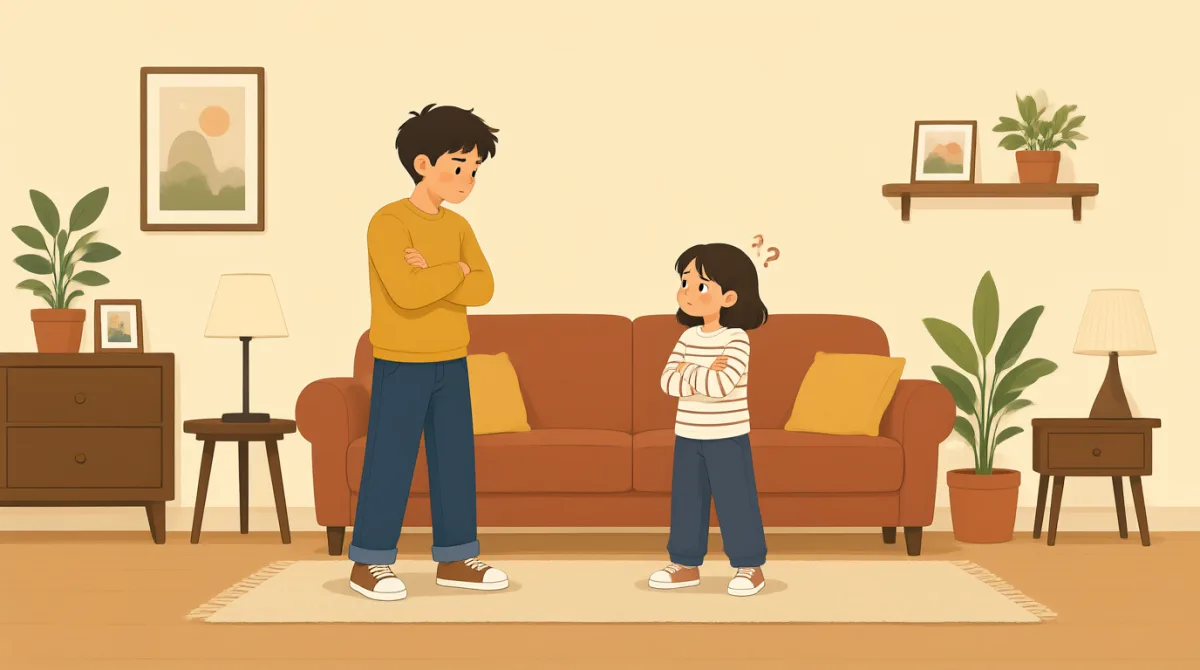

Oh dear, it looks like Liam and Maya are having a little disagreement over the red truck.
แหม ดูเหมือนเลียมกับมายากำลังแย่งรถบรรทุกสีแดงกันอยู่นะ

Yeah, Leo usually shares well, but that red one is his favorite. Let's go see what's up.
ใช่ ลีโอมักแบ่งของเล่นให้คนอื่นดีนะ แต่คันสีแดงคันนั้นเป็นคันโปรดของเขา ไปดูกันเถอะว่าเกิดอะไรขึ้น
Hey kids, what's going on here? Maya, were you playing with the truck first?
เด็ก ๆ จ๊ะ เกิดอะไรขึ้นเหรอ มายา หนูเล่นรถคันนี้ก่อนหรือเปล่า
Leo, it's important to share our toys, especially when someone else is using them. Maybe you could ask Maya if you can have a turn next?
ลีโอ การแบ่งของเล่นกันเป็นเรื่องสำคัญนะ โดยเฉพาะเวลาที่มีคนอื่นกำลังเล่นอยู่ ลองถามมายาสิว่าหนูขอเล่นต่อจากเขาได้ไหม
That's a good idea, David. Maya, would you be willing to share the red truck after a few more minutes? We can set a timer.
เป็นความคิดที่ดีนะ เดวิด มายา หนูจะแบ่งรถบรรทุกสีแดงให้ลีโอเล่นหลังจากเล่นต่ออีกสักสองสามนาทีได้ไหม เราตั้งเวลาไว้ได้นะ
Or even better, Leo, why don't you offer Maya a different toy to play with right now, and then you can play with the red truck when she's done?
หรือดีกว่านั้น ลีโอ ลองเอาของเล่นชิ้นอื่นให้มายาเล่นตอนนี้สิ แล้วพอมายาเล่นเสร็จ หนูก็ค่อยเล่นรถบรรทุกสีแดงนะ
See, Maya? Leo is trying to be a good friend. How about we practice taking turns?
เห็นไหม มายา ลีโอกำลังพยายามเป็นเพื่อนที่ดีอยู่ เรามาฝึกผลัดกันเล่นดีไหม
Exactly. Sharing means everyone gets a chance. Thanks for being understanding, kids.
ใช่เลย การแบ่งปันหมายถึงทุกคนได้มีโอกาส ขอบใจนะเด็ก ๆ ที่เข้าใจกัน
คำศัพท์8
- disagreementความเห็นไม่ตรงกัน
A small argument or difference of opinion between people, often about something they want. Use it when kids argue over toys.
การโต้เถียงเล็ก ๆ หรือมีความเห็นต่างกันระหว่างคน มักเกิดจากการอยากได้สิ่งเดียวกัน ใช้คำนี้ได้เมื่อเด็ก ๆ แย่งของเล่นกัน
- sharesแบ่งปัน
The third person form of 'share,' meaning to let others use or have part of something. Common in parenting to teach kids generosity.
รูปกริยาของ 'share' ที่ใช้กับประธานเอกพจน์บุรุษที่สาม หมายถึงยอมให้คนอื่นใช้หรือแบ่งบางส่วนของสิ่งหนึ่งให้ คำนี้มักใช้เวลาพ่อแม่สอนให้เด็กมีน้ำใจ
- favoriteของโปรด
The one you like most among several options. Kids often fight over their favorites, so parents use this word to explain preferences.
สิ่งที่ชอบที่สุดเมื่อเทียบกับตัวเลือกหลายอย่าง เด็ก ๆ มักทะเลาะกันเพราะอยากได้ของโปรด พ่อแม่จึงใช้คำนี้พูดถึงสิ่งที่แต่ละคนชอบ
- shareแบ่งปัน
To divide something so others can use it too. It's a key word in teaching children about fairness and kindness.
แบ่งบางสิ่งให้คนอื่นได้ใช้ด้วย คำนี้สำคัญเวลาสอนเด็กเรื่องความยุติธรรมและความมีน้ำใจ
- turnรอบ
A short period when you get to do something before someone else. Useful for managing playtime and teaching patience.
ช่วงเวลาสั้น ๆ ที่เราได้ทำบางอย่างก่อนถึงคิวของคนอื่น มีประโยชน์เมื่อต้องจัดเวลาเล่นและสอนให้เด็กรู้จักอดทน
- timerเครื่องจับเวลา
A tool or app that counts down time to help with turn-taking. Parents use it to make sharing fair and less argumentative.
อุปกรณ์หรือแอปที่นับถอยหลังเพื่อช่วยให้ผลัดกันเล่นได้ พ่อแม่ใช้เพื่อให้การแบ่งปันเป็นธรรมและลดการโต้เถียง
- offerเสนอให้
To suggest or give something to someone willingly. In conflicts, offering alternatives helps resolve issues peacefully.
แนะนำหรือยื่นบางสิ่งให้ใครด้วยความเต็มใจ เมื่อเกิดความขัดแย้ง การเสนอทางเลือกอื่นช่วยแก้ปัญหาอย่างสงบได้
- understandingเข้าใจและเห็นใจ
Being patient and willing to accept a situation. Praise kids for being understanding to encourage good behavior.
การอดทนและยอมรับสถานการณ์ ชมเด็ก ๆ เมื่อพวกเขาเข้าใจและเห็นใจ เพื่อส่งเสริมพฤติกรรมที่ดี
ประโยคสำคัญ8
- 1
Oh dear, it looks like Liam and Maya are having a little disagreement over the red truck.
แหม ดูเหมือนเลียมกับมายากำลังแย่งรถบรรทุกสีแดงกันอยู่นะ
This sentence expresses mild concern about a problem. 'Oh dear' is an interjection for surprise or worry; 'it looks like' means 'it seems.' Useful for starting a conversation when noticing a small issue among kids.
ประโยคนี้แสดงความกังวลเล็กน้อยต่อปัญหาที่เกิดขึ้น 'Oh dear' ใช้แสดงความตกใจหรือเป็นห่วง ส่วน 'it looks like' หมายถึง 'ดูเหมือนว่า' ใช้เริ่มบทสนทนาเมื่อเห็นเด็ก ๆ มีปัญหาเล็กน้อยได้
- 2
Yeah, Leo usually shares well, but that red one is his favorite.
ใช่ ลีโอมักแบ่งของเล่นให้คนอื่นดีนะ แต่คันสีแดงคันนั้นเป็นคันโปรดของเขา
This agrees and explains a situation. 'Usually' shows typical behavior; 'but' contrasts it. Great for parenting talks to acknowledge a child's normal habits while noting exceptions.
ประโยคนี้แสดงความเห็นด้วยพร้อมอธิบายสถานการณ์ 'Usually' บอกถึงพฤติกรรมที่ทำเป็นประจำ ส่วน 'but' ใช้แสดงความขัดแย้ง เหมาะกับการพูดถึงนิสัยปกติของลูกพร้อมกับข้อยกเว้น
- 3
Hey kids, what's going on here?
เด็ก ๆ จ๊ะ เกิดอะไรขึ้นเหรอ
A casual way to ask about a situation. 'Hey' is informal for attention; 'what's going on' means 'what is happening.' Use it to intervene gently in children's conflicts without scolding.
เป็นวิธีถามถึงสถานการณ์แบบเป็นกันเอง 'Hey' ใช้เรียกความสนใจแบบไม่เป็นทางการ ส่วน 'what's going on' หมายถึง 'เกิดอะไรขึ้น' ใช้เข้าไปช่วยไกล่เกลี่ยตอนเด็ก ๆ ทะเลาะกันอย่างนุ่มนวลโดยไม่ดุได้
- 4
Leo, it's important to share our toys, especially when someone else is using them.
ลีโอ การแบ่งของเล่นกันเป็นเรื่องสำคัญนะ โดยเฉพาะเวลาที่มีคนอื่นกำลังเล่นอยู่
This teaches a lesson politely. 'It's important to' states a rule; 'especially' adds emphasis. Ideal for explaining sharing rules to children during playtime disputes.
ประโยคนี้สอนสิ่งที่ควรทำอย่างสุภาพ 'It's important to' ใช้บอกกฎหรือสิ่งสำคัญ ส่วน 'especially' ใช้เน้นเป็นพิเศษ เหมาะกับการอธิบายกติกาเรื่องการแบ่งปันให้เด็ก ๆ ระหว่างเล่น
- 5
Maybe you could ask Maya if you can have a turn next?
ลองถามมายาสิว่าหนูขอเล่นต่อจากเขาได้ไหม
A suggestion using 'maybe' for politeness and 'could' for possibility. 'Have a turn' means taking your chance. Useful for encouraging kids to communicate instead of grabbing.
เป็นการเสนอแนะโดยใช้ 'maybe' เพื่อให้ฟังสุภาพ และใช้ 'could' เพื่อพูดถึงความเป็นไปได้ 'Have a turn' หมายถึงได้เล่นหรือทำสิ่งนั้นตามคิว ใช้กระตุ้นให้เด็ก ๆ พูดคุยกันแทนการแย่งของได้
- 6
Maya, would you be willing to share the red truck after a few more minutes? We can set a timer.
มายา หนูจะแบ่งรถบรรทุกสีแดงให้ลีโอเล่นหลังจากเล่นต่ออีกสักสองสามนาทีได้ไหม เราตั้งเวลาไว้ได้นะ
This asks for agreement politely with 'would you be willing to' and offers a solution. 'Set a timer' suggests using time to make turns fair. Perfect for resolving toy conflicts by planning ahead.
ประโยคนี้ขอความร่วมมืออย่างสุภาพด้วย 'would you be willing to' และเสนอวิธีแก้ปัญหา 'Set a timer' คือการตั้งเวลาเพื่อให้แต่ละคนได้เล่นอย่างเป็นธรรม เหมาะสำหรับวางแผนล่วงหน้าเพื่อคลี่คลายปัญหาเรื่องของเล่น
- 7
Why don't you offer Maya a different toy to play with right now, and then you can play with the red truck when she's done?
ทำไมหนูไม่เอาของเล่นชิ้นอื่นให้มายาเล่นตอนนี้ล่ะ แล้วพอมายาเล่นเสร็จ หนูก็ค่อยเล่นรถบรรทุกสีแดง
A suggestion phrased as a question with 'why don't you' for gentle advice. It proposes an alternative and sequence with 'and then.' Helpful for teaching compromise in parent-child interactions.
เป็นการเสนอแนะในรูปคำถาม โดยใช้ 'why don't you' เพื่อให้คำแนะนำอย่างนุ่มนวล ประโยคนี้เสนอทางเลือกและลำดับเหตุการณ์ด้วย 'and then' มีประโยชน์ในการสอนให้พ่อแม่กับลูกหาทางประนีประนอมกัน
- 8
Sharing means everyone gets a chance.
การแบ่งปันหมายถึงทุกคนได้มีโอกาส
This defines a concept simply. 'Means' explains what something is; 'gets a chance' means has an opportunity. Use it to summarize the value of sharing after resolving a conflict.
ประโยคนี้อธิบายแนวคิดหนึ่งอย่างง่าย ๆ 'Means' ใช้อธิบายความหมายของสิ่งหนึ่ง ส่วน 'gets a chance' หมายถึงได้มีโอกาส ใช้สรุปข้อดีของการแบ่งปันหลังจากช่วยเด็ก ๆ แก้ปัญหากันได้