Handling a Child Conflict
बच्चों के झगड़े को सुलझाना
When children get into a minor disagreement or conflict, parents intervene respectfully to help resolve the situation and teach lessons in sharing or turn-taking.
जब बच्चों में किसी छोटी-सी बात पर असहमति या झगड़ा हो जाए, तो माता-पिता सम्मानपूर्वक बीच में आकर समस्या सुलझाने में मदद करते हैं और उन्हें चीज़ें बाँटना या बारी-बारी से खेलना सिखाते हैं।
संवाद8
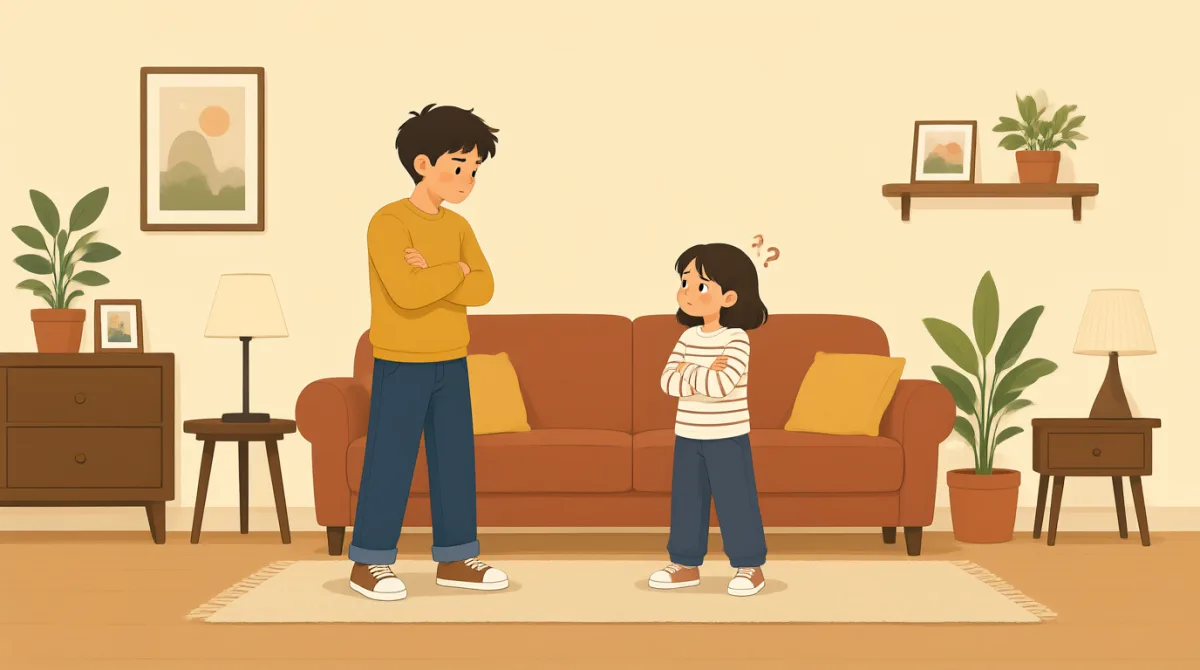

Oh dear, it looks like Liam and Maya are having a little disagreement over the red truck.
अरे, लगता है लियाम और माया लाल ट्रक को लेकर थोड़ा झगड़ रहे हैं।

Yeah, Leo usually shares well, but that red one is his favorite. Let's go see what's up.
हाँ, लियो आम तौर पर अपनी चीज़ें अच्छी तरह बाँटता है, लेकिन वह लाल ट्रक उसका सबसे पसंदीदा है। चलो, देखते हैं क्या हुआ।
Hey kids, what's going on here? Maya, were you playing with the truck first?
अरे बच्चों, यहाँ क्या हो रहा है? माया, क्या तुम पहले ट्रक से खेल रही थी?
Leo, it's important to share our toys, especially when someone else is using them. Maybe you could ask Maya if you can have a turn next?
लियो, अपने खिलौने बाँटना ज़रूरी है, खासकर तब जब कोई और उनसे खेल रहा हो। क्यों न तुम माया से पूछो कि क्या उसके बाद तुम्हारी बारी हो सकती है?
That's a good idea, David. Maya, would you be willing to share the red truck after a few more minutes? We can set a timer.
अच्छा सुझाव है, डेविड। माया, क्या तुम कुछ मिनट और खेलने के बाद लाल ट्रक बाँटने को तैयार होगी? हम टाइमर लगा सकते हैं।
Or even better, Leo, why don't you offer Maya a different toy to play with right now, and then you can play with the red truck when she's done?
या इससे भी अच्छा, लियो, तुम अभी माया को खेलने के लिए कोई दूसरा खिलौना क्यों नहीं देते? फिर जब वह खेल लेगी, तो तुम लाल ट्रक से खेल सकते हो।
See, Maya? Leo is trying to be a good friend. How about we practice taking turns?
देखा, माया? लियो अच्छा दोस्त बनने की कोशिश कर रहा है। क्यों न हम बारी-बारी से खेलना सीखें?
Exactly. Sharing means everyone gets a chance. Thanks for being understanding, kids.
बिल्कुल। बाँटने का मतलब है कि सबको मौका मिले। समझदारी दिखाने के लिए शुक्रिया, बच्चों।
शब्दावली8
- disagreementअसहमति
A small argument or difference of opinion between people, often about something they want. Use it when kids argue over toys.
लोगों के बीच किसी बात को लेकर छोटा-सा झगड़ा या राय का अंतर। इसका इस्तेमाल तब करें जब बच्चे खिलौनों को लेकर झगड़ें।
- sharesबाँटता है
The third person form of 'share,' meaning to let others use or have part of something. Common in parenting to teach kids generosity.
'Share' का तीसरे व्यक्ति का रूप, जिसका मतलब है दूसरों को किसी चीज़ का इस्तेमाल करने देना या उसमें से कुछ देना। बच्चों को उदारता सिखाने के लिए माता-पिता अक्सर इसका इस्तेमाल करते हैं।
- favoriteसबसे पसंदीदा
The one you like most among several options. Kids often fight over their favorites, so parents use this word to explain preferences.
कई विकल्पों में से वह चीज़ जो आपको सबसे ज़्यादा पसंद हो। बच्चे अक्सर अपनी पसंदीदा चीज़ों को लेकर झगड़ते हैं, इसलिए माता-पिता पसंद बताने के लिए यह शब्द इस्तेमाल करते हैं।
- shareबाँटना
To divide something so others can use it too. It's a key word in teaching children about fairness and kindness.
किसी चीज़ को इस तरह साझा करना कि दूसरे भी उसका इस्तेमाल कर सकें। बच्चों को निष्पक्षता और दयालुता सिखाने के लिए यह एक अहम शब्द है।
- turnबारी
A short period when you get to do something before someone else. Useful for managing playtime and teaching patience.
वह छोटा-सा समय जब किसी दूसरे से पहले आपको कुछ करने का मौका मिलता है। खेल के समय को सँभालने और बच्चों को धैर्य सिखाने में यह शब्द काम आता है।
- timerटाइमर
A tool or app that counts down time to help with turn-taking. Parents use it to make sharing fair and less argumentative.
समय गिनने वाला उपकरण या ऐप, जो बारी-बारी से खेलने में मदद करता है। माता-पिता इसका इस्तेमाल बाँटने को निष्पक्ष बनाने और झगड़ा कम करने के लिए करते हैं।
- offerदेना
To suggest or give something to someone willingly. In conflicts, offering alternatives helps resolve issues peacefully.
किसी को अपनी इच्छा से कोई चीज़ देने या उसका सुझाव रखने का मतलब। झगड़े के समय कोई दूसरा विकल्प देना समस्या को शांति से सुलझाने में मदद करता है।
- understandingसमझदारी
Being patient and willing to accept a situation. Praise kids for being understanding to encourage good behavior.
धैर्य रखना और परिस्थिति को स्वीकार करने के लिए तैयार होना। बच्चों के अच्छे व्यवहार को बढ़ावा देने के लिए उनकी समझदारी की तारीफ़ करें।
मुख्य वाक्य8
- 1
Oh dear, it looks like Liam and Maya are having a little disagreement over the red truck.
अरे, लगता है लियाम और माया लाल ट्रक को लेकर थोड़ा झगड़ रहे हैं।
This sentence expresses mild concern about a problem. 'Oh dear' is an interjection for surprise or worry; 'it looks like' means 'it seems.' Useful for starting a conversation when noticing a small issue among kids.
यह वाक्य किसी समस्या को देखकर हल्की चिंता जताता है। 'Oh dear' आश्चर्य या चिंता जताने के लिए कहा जाता है; 'it looks like' का मतलब है 'ऐसा लगता है'। बच्चों के बीच कोई छोटी समस्या देखकर बातचीत शुरू करने के लिए यह उपयोगी है।
- 2
Yeah, Leo usually shares well, but that red one is his favorite.
हाँ, लियो आम तौर पर अपनी चीज़ें अच्छी तरह बाँटता है, लेकिन वह लाल ट्रक उसका सबसे पसंदीदा है।
This agrees and explains a situation. 'Usually' shows typical behavior; 'but' contrasts it. Great for parenting talks to acknowledge a child's normal habits while noting exceptions.
इस वाक्य में सहमति जताते हुए परिस्थिति समझाई गई है। 'Usually' सामान्य आदत बताता है, जबकि 'but' उससे अलग बात जोड़ता है। बच्चे की आम आदत का ज़िक्र करते हुए किसी अपवाद की ओर ध्यान दिलाने के लिए यह वाक्य माता-पिता की बातचीत में काम आता है।
- 3
Hey kids, what's going on here?
अरे बच्चों, यहाँ क्या हो रहा है?
A casual way to ask about a situation. 'Hey' is informal for attention; 'what's going on' means 'what is happening.' Use it to intervene gently in children's conflicts without scolding.
किसी परिस्थिति के बारे में पूछने का यह अनौपचारिक तरीका है। 'Hey' ध्यान खींचने का अनौपचारिक शब्द है; 'what's going on' का मतलब है 'क्या हो रहा है'। बच्चों को डाँटे बिना उनके झगड़े में प्यार से बीच-बचाव करने के लिए इसका इस्तेमाल करें।
- 4
Leo, it's important to share our toys, especially when someone else is using them.
लियो, अपने खिलौने बाँटना ज़रूरी है, खासकर तब जब कोई और उनसे खेल रहा हो।
This teaches a lesson politely. 'It's important to' states a rule; 'especially' adds emphasis. Ideal for explaining sharing rules to children during playtime disputes.
इस वाक्य में विनम्रता से एक सीख दी जाती है। 'It's important to' किसी नियम या ज़रूरी बात को बताता है; 'especially' उस बात पर ज़ोर देता है। खेलते समय हुए झगड़ों में बच्चों को चीज़ें बाँटने का नियम समझाने के लिए यह अच्छा वाक्य है।
- 5
Maybe you could ask Maya if you can have a turn next?
क्यों न तुम माया से पूछो कि क्या उसके बाद तुम्हारी बारी हो सकती है?
A suggestion using 'maybe' for politeness and 'could' for possibility. 'Have a turn' means taking your chance. Useful for encouraging kids to communicate instead of grabbing.
यहाँ 'maybe' से सुझाव को नरम बनाया गया है और 'could' संभावना जताता है। 'Have a turn' का मतलब है अपनी बारी पाना। चीज़ छीनने के बजाय बच्चों को आपस में बात करने के लिए प्रोत्साहित करने में यह वाक्य उपयोगी है।
- 6
Maya, would you be willing to share the red truck after a few more minutes? We can set a timer.
माया, क्या तुम कुछ मिनट और खेलने के बाद लाल ट्रक बाँटने को तैयार होगी? हम टाइमर लगा सकते हैं।
This asks for agreement politely with 'would you be willing to' and offers a solution. 'Set a timer' suggests using time to make turns fair. Perfect for resolving toy conflicts by planning ahead.
'Would you be willing to' के ज़रिए विनम्रता से सहमति माँगी जाती है और साथ में समाधान भी सुझाया जाता है। 'Set a timer' का मतलब है बारी को निष्पक्ष बनाने के लिए समय तय करना। पहले से योजना बनाकर खिलौनों को लेकर होने वाले झगड़े सुलझाने में यह वाक्य बहुत काम आता है।
- 7
Why don't you offer Maya a different toy to play with right now, and then you can play with the red truck when she's done?
तुम अभी माया को खेलने के लिए कोई दूसरा खिलौना क्यों नहीं देते? फिर जब वह खेल लेगी, तो तुम लाल ट्रक से खेल सकते हो।
A suggestion phrased as a question with 'why don't you' for gentle advice. It proposes an alternative and sequence with 'and then.' Helpful for teaching compromise in parent-child interactions.
'Why don't you' सवाल के रूप में दिया गया एक नरम सुझाव है। इसमें 'and then' के ज़रिए दूसरा विकल्प और उसके बाद क्या होगा, यह बताया गया है। माता-पिता और बच्चों की बातचीत में समझौता करना सिखाने के लिए यह मददगार है।
- 8
Sharing means everyone gets a chance.
बाँटने का मतलब है कि सबको मौका मिले।
This defines a concept simply. 'Means' explains what something is; 'gets a chance' means has an opportunity. Use it to summarize the value of sharing after resolving a conflict.
इस वाक्य में किसी विचार का सरल अर्थ बताया गया है। 'Means' किसी चीज़ का अर्थ समझाता है; 'gets a chance' का मतलब है मौका मिलना। झगड़ा सुलझने के बाद बाँटने की अहमियत समझाने के लिए इसका इस्तेमाल करें।