Initial Introduction and Small Talk
แนะนำตัวและพูดคุยสบาย ๆ ครั้งแรก
Two parents meet for the first time while watching their children play, engaging in light conversation about their kids and the park.
พ่อแม่สองคนพบกันเป็นครั้งแรกระหว่างดูลูก ๆ เล่น แล้วพูดคุยกันเบา ๆ เรื่องลูกและสวนสาธารณะ
บทสนทนา8
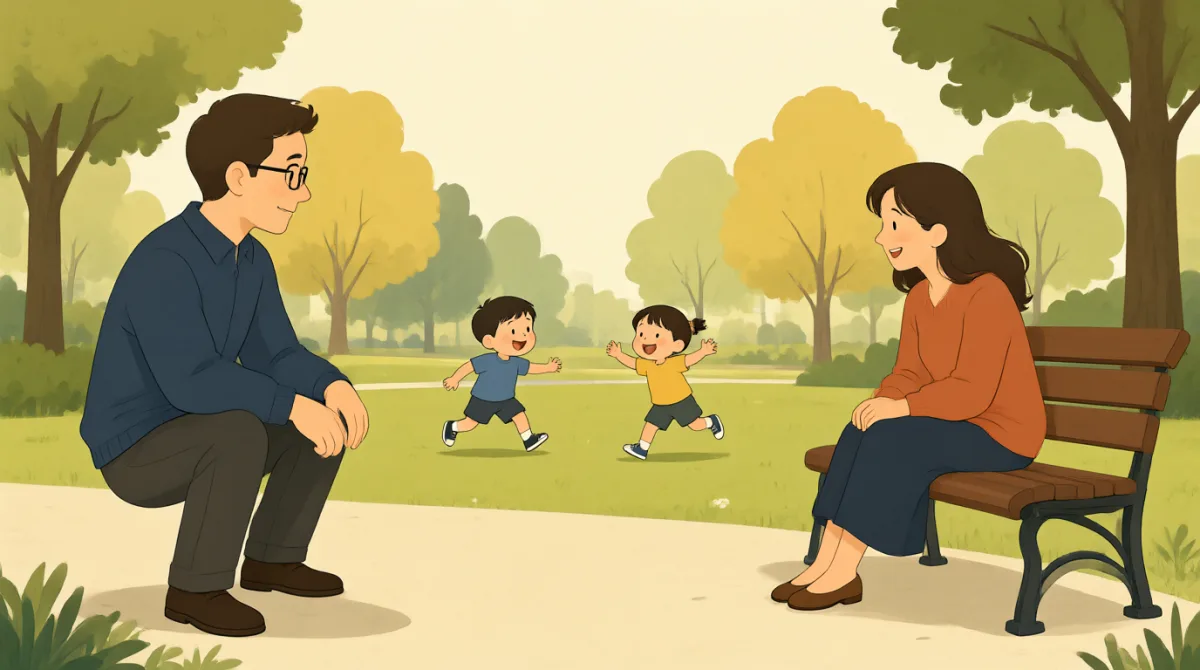

Hi there! Your little one has so much energy. Mine's the one in the blue shirt, climbing the jungle gym like a monkey.
สวัสดีจ้ะ! หนูน้อยของคุณพลังเหลือล้นเลยนะ ลูกฉันใส่เสื้อสีน้ำเงิน กำลังปีนเครื่องเล่นปีนป่ายเหมือนลิงเลย

Oh, hi! Thanks! He definitely keeps me on my toes. And yes, your son looks like he's having a blast up there. This is our first time at this park, actually.
อ๋อ สวัสดีครับ! ขอบคุณครับ! เขาทำให้ผมต้องคอยระวังตลอดเลยครับ แล้วลูกชายคุณก็ดูสนุกสุด ๆ อยู่บนนั้นนะครับ จริง ๆ แล้วนี่เป็นครั้งแรกที่เรามาสวนนี้ครับ
Really? It's a great park, especially for this age group. I'm Emma, by the way. And that's Leo.
จริงเหรอจ๊ะ? สวนนี้ดีมากเลย โดยเฉพาะสำหรับเด็กวัยนี้ ฉันชื่อเอ็มมานะ แล้วนั่นก็ลีโอจ้ะ
Nice to meet you, Emma and Leo! I'm Jack, and this whirlwind is Ben. How old is Leo?
ยินดีที่ได้รู้จักนะครับ เอ็มมากับลีโอ! ผมชื่อแจ็ก ส่วนเจ้าตัวพลังล้นนี่ชื่อเบน ลีโออายุเท่าไหร่ครับ?
Leo just turned four last month. He's really into anything with climbing right now. How about Ben?
ลีโอเพิ่งครบสี่ขวบเมื่อเดือนที่แล้วจ้ะ ช่วงนี้เขาชอบอะไรที่ได้ปีนป่ายมากเลย แล้วเบนล่ะจ๊ะ?
Ben is three and a half. He loves the slides, especially the big one. It's tough keeping up sometimes!
เบนอายุสามขวบครึ่งครับ เขาชอบสไลเดอร์ โดยเฉพาะอันใหญ่ บางทีก็ตามเขาไม่ทันเลยครับ!
I know the feeling! It's great to see them burn off some energy, though. We usually come here a couple of times a week.
เข้าใจเลยจ้ะ! แต่ก็ดีนะที่ได้เห็นพวกเขาเล่นจนหายคึก ปกติเรามาที่นี่สัปดาห์ละสองสามครั้งจ้ะ
Good to know! We're new to the neighborhood, so we're still exploring. Maybe we'll see you around more often.
ดีเลยครับที่รู้! เราเพิ่งย้ายมาอยู่แถวนี้ ก็เลยยังสำรวจไปเรื่อย ๆ ไว้คงได้เจอกันบ่อยขึ้นนะครับ
คำศัพท์7
- energyพลังงาน
Energy means physical or mental strength and activity. In the dialogue, 'so much energy' describes a child's active and lively behavior, common when talking about kids playing.
Energy หมายถึงพลังหรือความกระฉับกระเฉงทั้งทางร่างกายและจิตใจ ในบทสนทนา 'so much energy' ใช้บรรยายเด็กที่ซุกซนและมีชีวิตชีวา ซึ่งเป็นคำพูดที่พบได้บ่อยเวลาคุยเรื่องเด็ก ๆ เล่นกัน
- jungle gymเครื่องเล่นปีนป่าย
A jungle gym is a playground structure with bars and ladders for climbing. It's used here to describe where the child is playing, a fun way to name playground equipment.
Jungle gym คือเครื่องเล่นในสนามเด็กเล่นที่มีโครงเหล็กและบันไดให้เด็กปีน ในที่นี้ใช้เรียกอุปกรณ์ที่เด็กกำลังเล่น เป็นคำเรียกเครื่องเล่นสนามแบบสนุก ๆ
- keeps me on my toesทำให้ต้องคอยระวังตัวอยู่ตลอด
This idiom means something or someone makes you stay alert and busy. Jack uses it to show how his energetic child requires constant attention, useful for expressing parenting challenges.
สำนวน 'keeps me on my toes' หมายถึงทำให้ต้องตื่นตัวและยุ่งอยู่ตลอด แจ็กใช้สำนวนนี้สื่อว่าลูกที่พลังเหลือล้นทำให้เขาต้องคอยดูแลไม่ห่าง เป็นวิธีพูดถึงความท้าทายในการเลี้ยงลูก
- having a blastสนุกสุด ๆ
Having a blast is an informal phrase meaning enjoying something very much. Emma's son is 'having a blast' climbing, a casual way to say someone is having fun.
'Having a blast' เป็นสำนวนไม่เป็นทางการที่หมายถึงสนุกมาก ในบทสนทนาลูกชายของเอ็มมากำลัง 'having a blast' ตอนปีนป่าย เป็นวิธีพูดแบบสบาย ๆ ว่าใครสักคนกำลังสนุก
- whirlwindคนพลังล้น
Whirlwind describes someone very energetic and fast-moving, like a storm. Jack calls his child a 'whirlwind' to highlight Ben's lively personality in a playful way.
Whirlwind ใช้บรรยายคนที่มีพลังมากและเคลื่อนไหวรวดเร็วเหมือนพายุ แจ็กเรียกลูกว่า 'whirlwind' เพื่อเน้นความร่าเริงและซุกซนของเบนอย่างขำ ๆ
- burn offใช้ให้หมด
Burn off means to use up energy through activity. It's used in 'burn off some energy' to explain how playing helps kids release their excess energy, practical for parenting talks.
Burn off หมายถึงใช้พลังงานให้หมดไปด้วยการทำกิจกรรม ในวลี 'burn off some energy' หมายถึงการเล่นช่วยให้เด็กได้ปลดปล่อยพลังงานส่วนเกิน เป็นวลีที่ใช้ได้จริงเวลาคุยเรื่องการเลี้ยงลูก
- neighborhoodละแวกบ้าน
Neighborhood refers to the area around where you live, including nearby houses and parks. Jack mentions being new to the neighborhood when discussing exploring local spots.
Neighborhood หมายถึงบริเวณรอบ ๆ ที่อยู่อาศัย รวมถึงบ้านและสวนสาธารณะใกล้เคียง แจ็กบอกว่าเพิ่งย้ายมาอยู่ในละแวกนี้ตอนพูดถึงการออกไปสำรวจสถานที่ต่าง ๆ
ประโยคสำคัญ8
- 1
Hi there! Your little one has so much energy.
สวัสดีจ้ะ! หนูน้อยของคุณพลังเหลือล้นเลยนะ
This is a friendly greeting and compliment to start a conversation. 'Little one' is a warm term for a young child. Use it to break the ice when meeting other parents at a park; it's casual and positive for small talk.
ประโยคนี้เป็นคำทักทายและคำชมอย่างเป็นมิตร ใช้เริ่มบทสนทนาได้ 'Little one' เป็นคำเรียกเด็กเล็กอย่างเอ็นดู ลองใช้เพื่อเริ่มคุยกับพ่อแม่คนอื่นในสวนสาธารณะ น้ำเสียงเป็นกันเองและฟังดูดี
- 2
He definitely keeps me on my toes.
เขาทำให้ฉันต้องคอยระวังตลอดเลยจ้ะ
This responds to a compliment about a child's energy, using an idiom to agree humorously. 'Definitely' adds emphasis. It's useful for sharing parenting experiences lightly, showing agreement in conversations.
ประโยคนี้ใช้ตอบรับคำชมเรื่องพลังของลูก โดยใช้สำนวนพูดติดตลก 'Definitely' ช่วยเน้นความหมาย เหมาะสำหรับเล่าประสบการณ์การเลี้ยงลูกแบบสบาย ๆ และแสดงความเห็นคล้อยตามในการสนทนา
- 3
Nice to meet you, Emma and Leo!
ยินดีที่ได้รู้จักนะ เอ็มมากับลีโอ!
This is a standard polite response during introductions, addressing both the parent and child. Use it after someone shares their name to build rapport; the grammar is simple present tense for greetings.
นี่เป็นคำตอบรับมาตรฐานอย่างสุภาพเวลาทำความรู้จัก โดยเอ่ยถึงทั้งพ่อแม่และลูก ใช้หลังจากอีกฝ่ายบอกชื่อเพื่อสร้างความคุ้นเคย โครงสร้างประโยคเป็นปัจจุบันกาลอย่างง่ายที่ใช้กล่าวทักทาย
- 4
Leo just turned four last month.
ลีโอเพิ่งครบสี่ขวบเมื่อเดือนที่แล้วจ้ะ
This shares a child's age using 'just turned' for recent events and 'last month' for time reference. It's a common pattern for talking about kids' ages; practice it to ask or answer about children's development in parent chats.
ประโยคนี้บอกอายุเด็ก โดยใช้ 'just turned' สำหรับเหตุการณ์ที่เพิ่งเกิดขึ้น และ 'last month' เพื่อบอกช่วงเวลา นี่เป็นรูปแบบที่ใช้บ่อยเวลาพูดถึงอายุลูก ลองฝึกไว้ใช้ถามหรือตอบเรื่องพัฒนาการของเด็กเวลาคุยกับพ่อแม่คนอื่น
- 5
He's really into anything with climbing right now.
ช่วงนี้เขาชอบอะไรที่ได้ปีนป่ายมากเลยจ้ะ
'Really into' means very interested in something, with 'right now' showing current phase. This sentence describes a child's current hobby; use it to discuss what kids enjoy at certain ages, helpful for bonding over shared experiences.
'Really into' หมายถึงสนใจหรือชอบบางสิ่งมาก ส่วน 'right now' บอกว่าเป็นความสนใจในช่วงนี้ ประโยคนี้ใช้พูดถึงสิ่งที่เด็กชอบทำอยู่ในตอนนี้ เหมาะสำหรับคุยเรื่องกิจกรรมที่เด็กแต่ละวัยชอบและสานสัมพันธ์จากประสบการณ์ร่วมกัน
- 6
It's tough keeping up sometimes!
บางทีก็ตามเขาไม่ทันเลย!
This expresses a challenge in parenting using 'tough' for difficult and 'keeping up' for matching someone's pace. The exclamation adds emotion. Use it to relate to other parents about the demands of active children.
ประโยคนี้พูดถึงความท้าทายในการเลี้ยงลูก โดยใช้ 'tough' ในความหมายว่ายาก และ 'keeping up' ในความหมายว่าตามจังหวะของอีกฝ่ายให้ทัน เครื่องหมายอัศเจรีย์ช่วยเพิ่มอารมณ์ ใช้พูดคุยกับพ่อแม่คนอื่นที่รู้ดีว่าเด็กพลังเยอะดูแลยากแค่ไหน
- 7
We usually come here a couple of times a week.
ปกติเรามาที่นี่สัปดาห์ละสองสามครั้งจ้ะ
This shares a routine with 'usually' for habits and 'a couple of times' meaning two or a few. Present simple tense for regular actions. It's practical for suggesting future meetings or sharing local tips in casual talks.
ประโยคนี้เล่ากิจวัตร โดยใช้ 'usually' เพื่อบอกสิ่งที่ทำเป็นประจำ และ 'a couple of times' หมายถึงสองสามครั้ง ใช้ปัจจุบันกาลธรรมดาสำหรับการกระทำที่ทำเป็นประจำ นำไปใช้ชวนกันนัดเจอครั้งหน้า หรือแบ่งปันเคล็ดลับในละแวกบ้านเวลาคุยกันสบาย ๆ ได้
- 8
Maybe we'll see you around more often.
บางทีเราอาจได้เจอกันบ่อยขึ้นนะ
This is a friendly way to end by suggesting future encounters, using 'maybe' for possibility and 'see you around' informally. It's useful for closing small talk positively, implying interest in more interactions without commitment.
นี่เป็นวิธีปิดบทสนทนาอย่างเป็นมิตร โดยชวนให้คิดว่าอาจได้พบกันอีก ใช้ 'maybe' เพื่อบอกความเป็นไปได้ และ 'see you around' เป็นสำนวนไม่เป็นทางการ เหมาะสำหรับจบบทสนทนาสั้น ๆ ในแง่ดี พร้อมสื่อว่าอยากคุยกันอีกโดยไม่ผูกมัด