First Encounter on the Street/Hallway
พบกันครั้งแรกบนถนน/ในโถงทางเดิน
Two neighbors meet coincidentally outside their homes or in a common area and initiate a brief, polite introduction.
เพื่อนบ้านสองคนบังเอิญพบกันนอกบ้านหรือในพื้นที่ส่วนกลาง แล้วเริ่มทักทายและแนะนำตัวกันอย่างสุภาพสั้น ๆ
บทสนทนา10
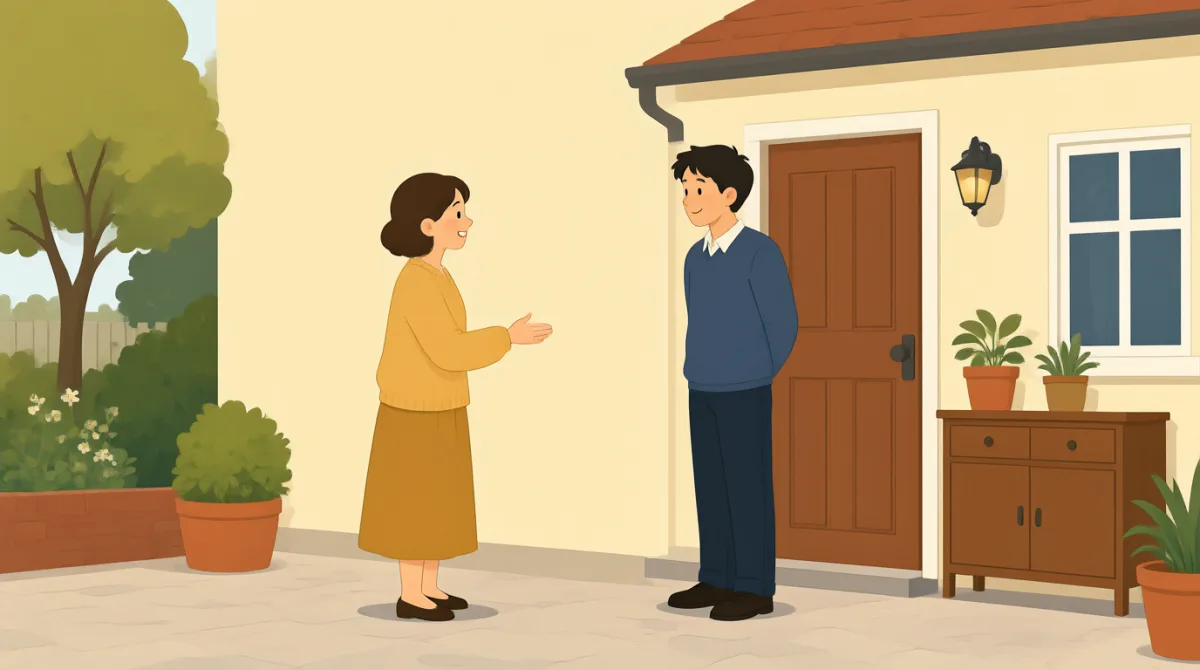

Oh, hello there! You must be one of the new neighbors, right? I'm Mia.
อุ๊ย สวัสดีค่ะ! คุณคงเป็นเพื่อนบ้านคนใหม่ใช่ไหมคะ ฉันชื่อมีอาค่ะ

Hi Mia, yes, that's right. I'm Jack. My wife, Sarah, and I just moved into 12B last week.
สวัสดีครับมีอา ใช่ครับ ผมชื่อแจ็ก ภรรยาผมชื่อซาราห์ เราเพิ่งย้ายเข้ามาอยู่ห้อง 12B เมื่อสัปดาห์ที่แล้วครับ
Welcome to the building! I'm in 12A, so we're right next door. It's so nice to finally meet you.
ยินดีต้อนรับสู่ตึกนี้นะคะ! ฉันอยู่ห้อง 12A ค่ะ เราอยู่ติดกันเลย ดีใจจังที่ในที่สุดก็ได้เจอกันนะคะ
You too! We're still getting everything unpacked, but it's great to know we have friendly faces nearby.
ผมก็ดีใจที่ได้เจอคุณครับ! เรายังจัดของจากกล่องไม่เสร็จเลย แต่ก็ดีใจที่รู้ว่ามีเพื่อนบ้านใจดีอยู่ใกล้ ๆ ครับ
If you need anything at all, don't hesitate to knock. Or if you just want to know where the nearest grocery store is.
ถ้าต้องการอะไร ก็มาหาได้เลยนะคะ ไม่ต้องเกรงใจ จะถามว่าร้านขายของชำที่ใกล้ที่สุดอยู่ตรงไหนก็ได้ค่ะ
That's super kind of you, Mia. We might just take you up on that! Thanks so much.
คุณใจดีมากเลยครับมีอา เราอาจจะขอรบกวนจริง ๆ ก็ได้ครับ ขอบคุณมากนะครับ
No problem at all. Well, I won't keep you. Just wanted to say hello properly.
ไม่เป็นไรเลยค่ะ เอาละ ฉันไม่รบกวนเวลาคุณแล้ว แค่อยากมาทักทายให้เป็นเรื่องเป็นราวน่ะค่ะ
It was great meeting you, Mia. We'll chat again soon, I'm sure.
ยินดีที่ได้รู้จักนะครับมีอา ไว้คงได้คุยกันอีกเร็ว ๆ นี้ครับ
Definitely! Have a great day, Jack.
แน่นอนค่ะ ขอให้วันนี้เป็นวันที่ดีนะคะแจ็ก
You too, Mia!
เช่นกันครับมีอา!
คำศัพท์10
- neighborเพื่อนบ้าน
A person who lives next to you or in the same building. Use this word when talking about people nearby in your community.
หมายถึงคนที่อาศัยอยู่ข้างบ้านหรือในตึกเดียวกัน ใช้คำนี้พูดถึงคนที่อยู่ใกล้ ๆ ในละแวกชุมชนของคุณ
- welcomeต้อนรับ
To greet someone warmly when they arrive somewhere new. It's a polite way to make others feel comfortable in a new place.
หมายถึงการทักทายใครสักคนอย่างอบอุ่นเมื่อเขามาถึงสถานที่ใหม่ เป็นวิธีสุภาพที่ช่วยให้คนอื่นรู้สึกสบายใจในที่ใหม่
- unpackedแกะของออกจากกล่อง
To take items out of boxes after moving. This is common when describing settling into a new home.
หมายถึงการนำข้าวของออกจากกล่องหลังย้ายบ้าน มักใช้พูดถึงการจัดข้าวของให้เข้าที่ในบ้านใหม่
- hesitateลังเล
To pause or feel unsure before doing something. In offers, 'don't hesitate' means feel free to ask anytime.
หมายถึงหยุดคิดหรือรู้สึกไม่แน่ใจก่อนลงมือทำอะไร ในประโยคเสนอความช่วยเหลือ 'don't hesitate' หมายถึงถามได้เลย ไม่ต้องเกรงใจ
- knockเคาะประตู
To tap on a door to get someone's attention. It's a basic way to politely ask to enter someone's home.
หมายถึงการเคาะประตูเพื่อเรียกความสนใจ เป็นวิธีพื้นฐานและสุภาพในการขอเข้าไปในบ้านของใครสักคน
- grocery storeร้านขายของชำ
A shop where you buy food and daily supplies. Useful for asking about local services in a new area.
ร้านที่ขายอาหารและของใช้ในชีวิตประจำวัน คำนี้มีประโยชน์เมื่อต้องถามถึงร้านค้าและบริการในละแวกบ้านใหม่
- super kindใจดีมาก
Very nice and helpful. 'Super' adds emphasis to show strong appreciation for someone's friendliness.
หมายถึงน่ารักและเต็มใจช่วยเหลือ คำว่า 'super' ใช้เน้นว่าซาบซึ้งในความเป็นมิตรของอีกฝ่ายมาก
- take you up on thatรับข้อเสนอของคุณ
To accept someone's offer or help. This is a casual idiom for saying you'll use the suggestion later.
หมายถึงตอบรับข้อเสนอหรือความช่วยเหลือของใครสักคน เป็นสำนวนไม่เป็นทางการที่ใช้บอกว่าอาจจะขอใช้ความช่วยเหลือนั้นในภายหลัง
- no problemไม่เป็นไร
It's not a bother at all. A common response to thanks, showing you're happy to help.
หมายถึงไม่รบกวนหรือไม่เป็นภาระเลย มักใช้ตอบรับคำขอบคุณ เพื่อบอกว่ายินดีช่วย
- definitelyแน่นอน
Certainly or without a doubt. Use it to agree strongly or confirm something will happen.
หมายถึงอย่างแน่ใจหรือไม่มีข้อสงสัย ใช้เมื่อต้องการเห็นด้วยอย่างหนักแน่นหรือยืนยันว่าจะมีบางอย่างเกิดขึ้น
ประโยคสำคัญ8
- 1
Oh, hello there! You must be one of the new neighbors, right? I'm Mia.
อุ๊ย สวัสดีค่ะ! คุณคงเป็นเพื่อนบ้านคนใหม่ใช่ไหมคะ ฉันชื่อมีอาค่ะ
This is a friendly way to start a conversation with someone new. 'You must be' assumes something politely, and 'right?' seeks confirmation. Use it for casual introductions.
ประโยคนี้เป็นวิธีทักทายอย่างเป็นมิตรเมื่อเริ่มคุยกับคนที่เพิ่งพบ 'You must be' ใช้คาดเดาอย่างสุภาพ ส่วน 'right?' ใช้ถามเพื่อยืนยัน เหมาะกับการแนะนำตัวแบบสบาย ๆ
- 2
Welcome to the building! I'm in 12A, so we're right next door.
ยินดีต้อนรับสู่ตึกนี้นะคะ! ฉันอยู่ห้อง 12A ค่ะ เราอยู่ติดกันเลย
A warm greeting for newcomers. It explains location to build connection. Useful for small talk about living arrangements; note 'next door' means adjacent.
เป็นคำทักทายอย่างอบอุ่นสำหรับคนที่เพิ่งย้ายมา การบอกว่าตัวเองอยู่ตรงไหนช่วยสร้างความคุ้นเคย เหมาะสำหรับชวนคุยเรื่องที่อยู่อาศัย และ 'next door' หมายถึงอยู่ติดกัน
- 3
It's so nice to finally meet you.
ดีใจจังที่ในที่สุดก็ได้เจอคุณนะคะ
Expresses pleasure in meeting someone. 'Finally' adds a sense of anticipation. This is a polite closer to introductions and shows friendliness.
ใช้บอกว่าดีใจที่ได้พบใครสักคน คำว่า 'finally' สื่อว่ารอคอยหรือคาดหวังมาสักพักแล้ว ประโยคนี้ใช้ปิดท้ายการแนะนำตัวอย่างสุภาพและเป็นมิตรได้
- 4
If you need anything at all, don't hesitate to knock.
ถ้าต้องการอะไร ก็มาหาได้เลยนะคะ ไม่ต้องเกรงใจ
Offers help openly. 'Don't hesitate' encourages action without worry. Grammar: imperative form for advice. Use when offering support to neighbors.
เป็นการเสนอตัวช่วยอย่างเต็มใจ 'Don't hesitate' กระตุ้นให้อีกฝ่ายลงมือขอความช่วยเหลือโดยไม่ต้องกังวล รูปประโยคเป็นคำสั่งที่ใช้ให้คำแนะนำ เหมาะสำหรับเสนอความช่วยเหลือแก่เพื่อนบ้าน
- 5
That's super kind of you.
คุณใจดีมากเลยค่ะ
Thanks someone for their niceness. 'Kind of you' highlights the positive action. This is a natural response to offers, building rapport.
ใช้ขอบคุณใครสักคนที่มีน้ำใจ วลี 'kind of you' เน้นการกระทำที่ดีของอีกฝ่าย เป็นคำตอบที่ฟังเป็นธรรมชาติเมื่อมีคนเสนอตัวช่วย และช่วยสร้างความสนิทสนม
- 6
We might just take you up on that!
เราอาจจะขอรบกวนจริง ๆ ก็ได้ค่ะ!
Accepts an offer casually. The idiom 'take up on' means to use it later. Useful in conversations to show appreciation without committing immediately.
เป็นการตอบรับข้อเสนออย่างสบาย ๆ สำนวน 'take up on' หมายถึงใช้ข้อเสนอของอีกฝ่ายในภายหลัง เหมาะสำหรับแสดงความขอบคุณโดยยังไม่ต้องตกลงทันที
- 7
No problem at all. Well, I won't keep you.
ไม่เป็นไรเลยค่ะ เอาละ ฉันไม่รบกวนเวลาคุณแล้ว
Dismisses thanks politely and ends the talk. 'Keep you' means hold up your time. This is a courteous way to wrap up small talk without being rude.
ใช้ตอบรับคำขอบคุณอย่างสุภาพและจบการสนทนา 'Keep you' หมายถึงทำให้อีกฝ่ายเสียเวลาหรืออยู่ต่อ ประโยคนี้เป็นวิธีปิดท้ายการคุยเล่นอย่างสุภาพโดยไม่เสียมารยาท
- 8
It was great meeting you. Have a great day.
ยินดีที่ได้รู้จักนะคะ ขอให้วันนี้เป็นวันที่ดีค่ะ
A positive goodbye after meeting. Simple past 'was' for recent events. Use these phrases to end conversations on a friendly note.
เป็นคำอำลาเชิงบวกหลังจากได้พบกัน ใช้ 'was' ซึ่งเป็นอดีตกาลอย่างง่ายกับเหตุการณ์ที่เพิ่งเกิดขึ้น ลองใช้วลีเหล่านี้เพื่อจบบทสนทนาอย่างเป็นมิตร