Saving Money
Jack and Mia discuss how to save money for their plans next year. They decide to make a simple budget and spend less on takeout.
Dialogue8
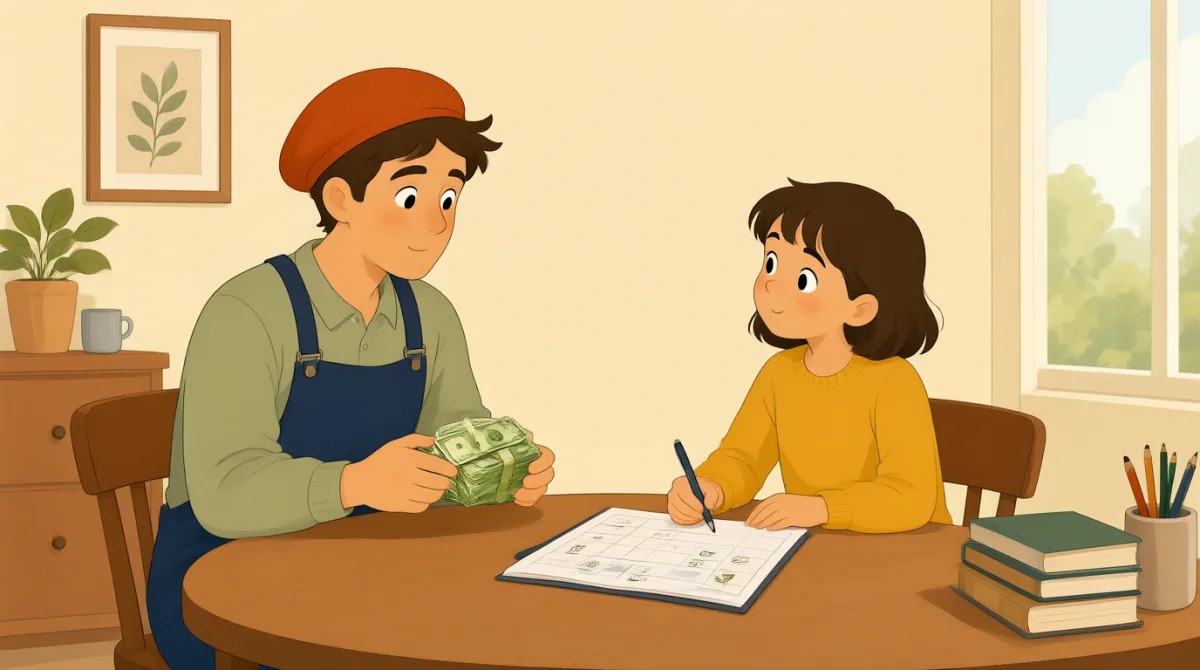

I want to save more money next year, but I spend a lot on takeout.

I have the same problem. We’re going to make a simple budget.
Good idea. I’m going to write down what I spend each week.
Let’s plan our meals at home and buy food once a week.
That should help. I want to order takeout only once a week.
I’m going to bring lunch to work, too. It’s easy to make sandwiches.
Let’s check our budget at the end of each month.
Sounds good. We can save the money for our plans next year.
Vocabulary8
- save more money
To keep more of your money instead of spending it. You can save more money by spending less on things like takeout.
- takeout
Food you buy from a restaurant to eat somewhere else, such as at home or work.
- make a simple budget
To create a basic plan for how you will use your money.
- write down
To record something by writing it on paper or in a note. Here, Jack plans to record his spending.
- plan our meals
To decide in advance what food to eat. Planning meals can help you shop and spend wisely.
- once a week
One time every week. Use this phrase to say how often you do something.
- bring lunch to work
To take food from home to eat at your workplace. This can cost less than buying lunch.
- at the end of each month
During the final part of every month. You can use this phrase to say when you will do something.
Key Sentences8
- 1
I want to save more money next year, but I spend a lot on takeout.
Use this sentence to describe a money goal and explain what makes it difficult. You can replace “save more money” or “takeout” with your own goal or expense.
- 2
We’re going to make a simple budget.
Use “be going to” to talk about a plan or intention. You can replace “make a simple budget” with another planned activity.
- 3
I’m going to write down what I spend each week.
This is a useful way to explain how you plan to track your spending. Use “write down” when you mean record information in writing.
- 4
Let’s plan our meals at home and buy food once a week.
Use “Let’s” to suggest doing something together. You can change the activity or how often you will do it.
- 5
I want to order takeout only once a week.
Use this sentence to say how often you want to do an activity. “Only” helps show that you want to limit it.
- 6
I’m going to bring lunch to work, too.
Use “I’m going to” to share a future plan. You can replace “bring lunch to work” with another action.
- 7
Let’s check our budget at the end of each month.
Use this sentence to suggest reviewing a plan regularly. Replace “budget” or the time phrase to fit your situation.
- 8
We can save the money for our plans next year.
Use “We can” to talk about what is possible. This sentence connects saving money with a future goal.