Saying No, Thank You
いいえ、結構です
Mia offers David her seat at the next stop. He says no, thank you, because he is getting off soon.
ミアは次の停留所でデイビッドに席を譲ろうとします。もうすぐ降りるので、デイビッドは丁寧に断ります。
会話7
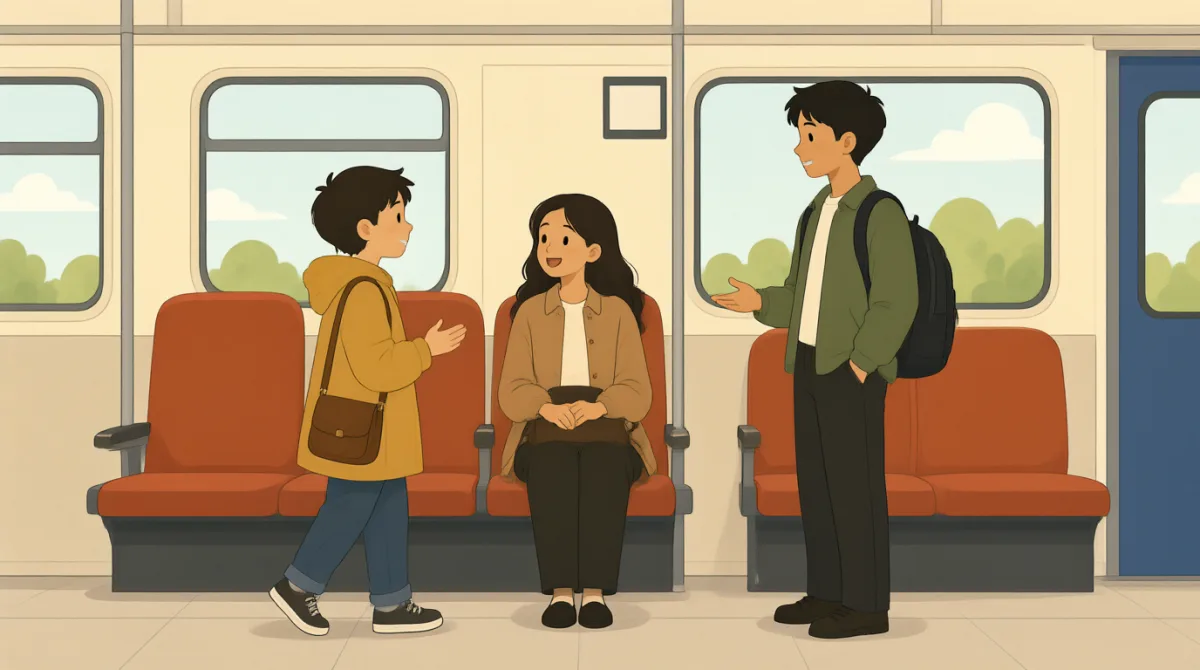

Would you like my seat, David?
デイビッド、席をどうぞ。

No, thank you, Mia.
ありがとう、ミア。でも大丈夫だよ。
I’m getting off soon.
もうすぐ降りるんだ。
Are you sure?
本当にいいの?
Yes, my stop is next.
うん、次が降りる停留所なんだ。
Okay. Have a nice day!
わかった。よい一日を!
Thank you. You too!
ありがとう。ミアもね!
語彙8
- Would you like my seat?Would you like my seat?(席をどうぞ)
This is a polite way to offer someone your seat. You can use “Would you like my ___?” to offer something else.
席を譲るときの丁寧な言い方です。“Would you like my ___?”(私の___はいかがですか?)を使えば、ほかのものを勧めることもできます。
- No, thank you.No, thank you.(いいえ、結構です)
This is a polite way to say no to an offer. You can use it when you do not need or want something.
申し出を丁寧に断る言い方です。何かが必要ないときや、欲しくないときに使えます。
- getting offgetting off(降りる)
On a bus, “getting off” means leaving the bus. You can say “I’m getting off” when your stop is coming.
バスについて使う “getting off” は、バスを降りるという意味です。降りる停留所が近づいているときは “I’m getting off”(降ります)と言えます。
- soonsoon(もうすぐ)
“Soon” means in a short time. You can use it to talk about something that will happen shortly.
“Soon” は、あまり時間がたたないうちに、という意味です。近いうちに起こることについて話すときに使えます。
- Are you sure?Are you sure?(本当にいいの?)
This is a way to check if someone feels certain. You can say it after someone says no or makes a choice.
相手が本当にそう思っているか確かめる言い方です。相手が断ったり、何かを選んだりしたあとに使えます。
- my stop is nextmy stop is next(次が降りる停留所です)
This means the bus will reach your stop after the current one. You can say it to explain why you are getting ready to leave.
今いる停留所の次に、自分が降りる停留所があるという意味です。降りる準備をしている理由を伝えるときに使えます。
- Have a nice day!Have a nice day!(よい一日を!)
This is a friendly way to say goodbye. You can use it when you leave someone.
別れ際に使う、親しみのあるあいさつです。相手と別れるときに使えます。
- You too!You too!(あなたもね!)
This means you wish the same thing to the other person. You can say it after someone says “Have a nice day!”
相手の願いと同じことを相手にも願う表現です。“Have a nice day!”と言われたあとに使えます。
重要な文8
- 1
Would you like my seat, David?
デイビッド、席をどうぞ。
Use this polite question to offer someone your seat. You can replace “my seat” with another thing you want to offer.
席を譲るときに使う丁寧な質問です。差し出したいものに合わせて “my seat” を別のものに置き換えられます。
- 2
No, thank you, Mia.
ありがとう、ミア。でも大丈夫だよ。
This is a polite way to refuse an offer. Say “No, thank you” when you do not want something.
申し出を丁寧に断る言い方です。何かが欲しくないときは “No, thank you” と言います。
- 3
I’m getting off soon.
もうすぐ降りるんだ。
Use this sentence to explain that you will leave the bus shortly. You can also use “I’m getting off soon” in other situations where you are leaving a vehicle.
まもなくバスを降りることを伝える文です。別の乗り物から降りるときにも “I’m getting off soon” を使えます。
- 4
Are you sure?
本当にいいの?
Use this short question to check that someone really means what they said. It is useful when you want to offer help again.
相手の言ったことが本心か確かめるときに使う短い質問です。もう一度手助けを申し出たいときにも便利です。
- 5
Yes, my stop is next.
うん、次が降りる停留所なんだ。
This sentence explains that your bus stop is coming up. You can use “My stop is next” to tell someone why you are getting ready to leave.
自分が降りるバス停が近づいていることを伝える文です。降りる準備をしている理由を説明するときは “My stop is next” と言えます。
- 6
Okay.
わかった。
Use this simple word to show that you understand or accept what someone said. It works in many everyday conversations.
相手の言ったことを理解した、または受け入れたと伝えるシンプルな言葉です。日常会話のさまざまな場面で使えます。
- 7
Have a nice day!
よい一日を!
This is a friendly way to say goodbye. You can use it when ending a conversation during the day.
別れ際に使う、親しみのあるあいさつです。日中に会話を終えるときに使えます。
- 8
Thank you. You too!
ありがとう。あなたもね!
Use “Thank you” to show appreciation, and “You too” to return a kind wish. It is a natural response to “Have a nice day!”
“Thank you” は感謝を伝え、“You too” は相手のうれしい願いを返す表現です。“Have a nice day!” に対する自然な返事です。