Clarifying Usage Rules
नियमों के बारे में जानकारी लेना
A swimmer wants to understand specific rules, such as dive restrictions, use of personal flotation devices, or lap swimming etiquette.
एक तैराक डाइविंग पर पाबंदियों, निजी फ्लोटेशन उपकरणों के इस्तेमाल या लैप स्विमिंग के शिष्टाचार जैसे खास नियमों को समझना चाहता है।
संवाद10
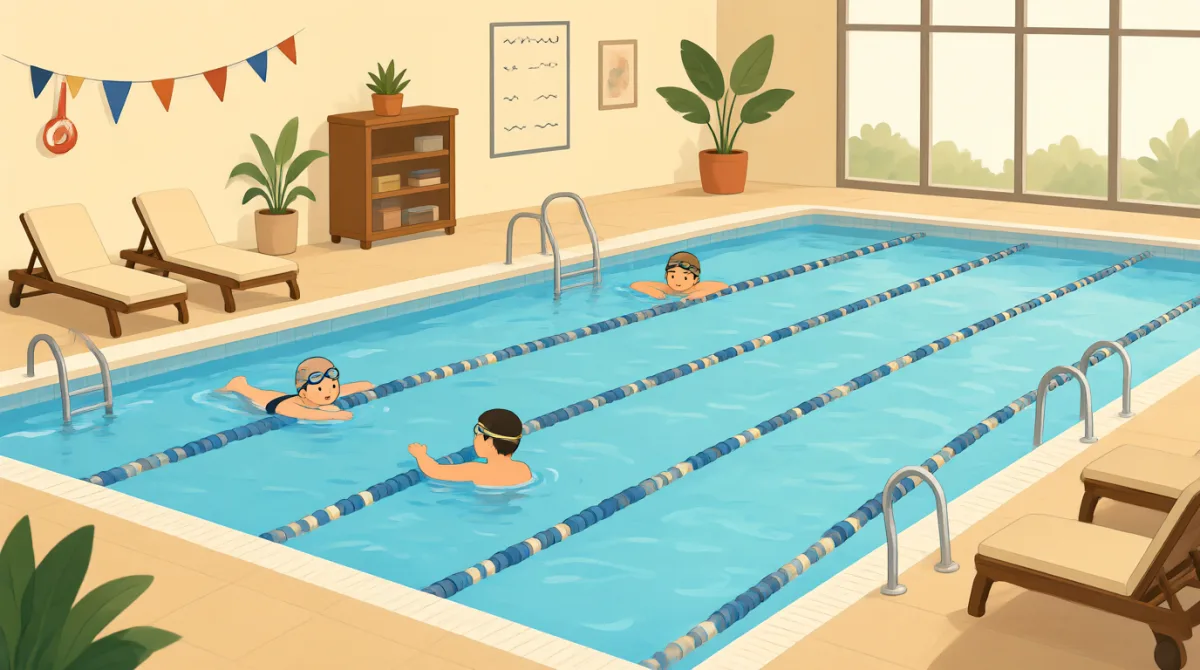

Excuse me, I'm new to this pool. Could you clarify a few things about the rules?
माफ़ कीजिए, मैं इस पूल में नया हूँ। क्या आप नियमों के बारे में कुछ बातें स्पष्ट कर सकते हैं?

Of course! What would you like to know?
बिल्कुल! आप क्या जानना चाहेंगे?
First, are there any dive restrictions here? I'm used to pools that don't allow diving in the shallow end.
सबसे पहले, क्या यहाँ डाइविंग पर कोई पाबंदी है? मैं ऐसे पूलों में तैरने का आदी हूँ जहाँ उथले हिस्से में डाइविंग की अनुमति नहीं होती।
Yes, that's correct. Diving is only permitted in the deep end, and from the diving blocks if they're open. No diving in the shallow section or from the sides anywhere else.
जी हाँ, बिल्कुल। डाइविंग की अनुमति सिर्फ़ गहरे हिस्से में है, और डाइविंग ब्लॉक खुले होने पर उन्हीं से डाइव कर सकते हैं। उथले हिस्से में या कहीं और किनारों से डाइविंग की अनुमति नहीं है।
Got it. And what about personal flotation devices, like kickboards or pull buoys? Are those generally allowed?
समझ गया। और निजी फ्लोटेशन उपकरणों, जैसे किकबोर्ड या पुल बुआय के बारे में क्या नियम हैं? क्या आम तौर पर इनका इस्तेमाल कर सकते हैं?
Yes, kickboards and pull buoys are fine for lap swimming. We just ask that you be mindful of other swimmers and not use them in crowded areas.
जी हाँ, लैप स्विमिंग के लिए किकबोर्ड और पुल बुआय इस्तेमाल कर सकते हैं। बस आपसे अनुरोध है कि दूसरे तैराकों का ध्यान रखें और भीड़भाड़ वाले हिस्सों में इनका इस्तेमाल न करें।
Okay, that makes sense. One last thing – lap swimming etiquette. Is it counter-clockwise, or do we share lanes based on speed?
ठीक है, बात समझ में आती है। एक आख़िरी बात—लैप स्विमिंग के शिष्टाचार के बारे में। क्या तैराकी घड़ी की सुइयों की उलटी दिशा में करनी होती है, या हम अपनी गति के हिसाब से लेन साझा करते हैं?
We typically have designated lanes for different speeds: slow, medium, and fast. If a lane is busy, we encourage circle swimming, which means you swim on the right side of the lane, like driving.
आमतौर पर अलग-अलग गति के लिए लेन तय होती हैं: धीमी, मध्यम और तेज़। अगर किसी लेन में भीड़ हो, तो हम सर्कल स्विमिंग करने को कहते हैं। इसमें आप लेन के दाईं ओर तैरते हैं, ठीक वैसे जैसे गाड़ी चलाते समय।
Perfect! Thanks so much for clarifying everything. That's very helpful.
बहुत अच्छा! सब कुछ स्पष्ट करने के लिए आपका बहुत-बहुत धन्यवाद। इससे मुझे काफ़ी मदद मिली।
You're welcome! Enjoy your swim!
कोई बात नहीं! तैराकी का आनंद लीजिए!
शब्दावली9
- clarifyस्पष्ट करना
To make something clear or easier to understand, often by explaining it again. Use it when you need more details about rules or instructions.
किसी बात को साफ़ तौर पर समझाना या उसे समझना आसान बनाना, अक्सर उसे दोबारा समझाकर। नियमों या निर्देशों के बारे में और जानकारी चाहिए हो, तो इस शब्द का इस्तेमाल करें।
- dive restrictionsडाइविंग पर पाबंदियाँ
Rules that limit where or how you can dive into the water to prevent accidents. Common in pools to ensure safety in shallow areas.
ऐसे नियम जो दुर्घटनाओं से बचने के लिए यह तय करते हैं कि आप पानी में कहाँ या कैसे डाइव कर सकते हैं। उथले हिस्सों में सुरक्षा सुनिश्चित करने के लिए पूलों में ऐसे नियम आम हैं।
- shallow endउथला हिस्सा
The part of the swimming pool where the water is not deep, usually for beginners or wading. Opposite of the deep end.
पूल का वह हिस्सा जहाँ पानी गहरा नहीं होता। आमतौर पर शुरुआती तैराकों या पानी में पैदल चलने के लिए इसका इस्तेमाल होता है। इसका उलटा गहरा हिस्सा है।
- deep endगहरा हिस्सा
The part of the pool with deeper water, suitable for diving or advanced swimming. Always check rules before using it.
पूल का वह हिस्सा जहाँ पानी ज़्यादा गहरा होता है और जो डाइविंग या उन्नत तैराकी के लिए उपयुक्त है। इसका इस्तेमाल करने से पहले हमेशा नियम जाँच लें।
- kickboardsकिकबोर्ड
A floating board used to practice kicking in swimming. It helps beginners focus on leg movements while keeping the upper body afloat.
तैराकी में पैरों से पानी को धकेलने का अभ्यास करने के लिए इस्तेमाल होने वाला तैरता हुआ बोर्ड। इससे शुरुआती तैराक अपने ऊपरी शरीर को पानी पर टिकाए रखते हुए पैरों की गतिविधियों पर ध्यान दे सकते हैं।
- pull buoysपुल बुआय
A flotation device placed between the legs to help swimmers practice arm strokes without kicking. Useful for improving upper body strength.
पैरों के बीच रखा जाने वाला फ्लोटेशन उपकरण, जिससे तैराक बिना पैर चलाए हाथों के स्ट्रोक का अभ्यास कर सकते हैं। यह शरीर के ऊपरी हिस्से की ताकत बढ़ाने में मददगार है।
- lap swimmingलैप स्विमिंग
Swimming back and forth in a pool lane for exercise, like running laps on a track. It's a common way to stay fit.
व्यायाम के लिए पूल की एक लेन में आगे-पीछे तैरना, ठीक वैसे जैसे ट्रैक पर चक्कर लगाकर दौड़ते हैं। फिट रहने का यह एक आम तरीका है।
- etiquetteशिष्टाचार
The expected polite behavior or manners in a specific situation, like sharing space in a pool without disturbing others.
किसी खास परिस्थिति में अपेक्षित सभ्य व्यवहार या तौर-तरीके। जैसे, दूसरों को परेशान किए बिना पूल में जगह साझा करना।
- circle swimmingसर्कल स्विमिंग
A method where swimmers go in a loop in the lane: down one side and back on the other, to avoid collisions in busy lanes.
तैराकों के लेन में चक्कर लगाकर तैरने का तरीका: वे एक तरफ़ से आगे जाते हैं और दूसरी तरफ़ से लौटते हैं। इससे व्यस्त लेनों में टकराव से बचा जा सकता है।
मुख्य वाक्य7
- 1
Could you clarify a few things about the rules?
क्या आप नियमों के बारे में कुछ बातें स्पष्ट कर सकते हैं?
This polite request uses 'could you' for a formal ask, and 'clarify' to seek explanation. Useful when you're new to a place and need to understand guidelines; it shows respect.
इस विनम्र अनुरोध में 'could you' का इस्तेमाल औपचारिक ढंग से कुछ पूछने के लिए और 'clarify' का इस्तेमाल स्पष्टीकरण माँगने के लिए किया गया है। किसी नई जगह पर नियम समझने के लिए यह वाक्य काम आता है और सम्मान भी दिखाता है।
- 2
Diving is only permitted in the deep end.
डाइविंग की अनुमति सिर्फ़ गहरे हिस्से में है।
This sentence uses passive voice 'is permitted' to state a rule clearly. It's useful for describing restrictions in public places like pools; remember, 'permitted' means allowed.
इस वाक्य में किसी नियम को साफ़ तौर पर बताने के लिए passive voice 'is permitted' का इस्तेमाल हुआ है। पूल जैसी सार्वजनिक जगहों पर पाबंदियाँ बताने के लिए यह उपयोगी है। याद रखें, 'permitted' का मतलब है अनुमति होना।
- 3
Are those generally allowed?
क्या आम तौर पर इनका इस्तेमाल करने की अनुमति है?
A simple yes/no question with 'generally' meaning usually or in most cases. Great for checking if something is okay to use; add specifics like items to make it practical.
यह एक सरल हाँ-या-नहीं वाला सवाल है। इसमें 'generally' का मतलब आम तौर पर या ज़्यादातर मामलों में होता है। किसी चीज़ का इस्तेमाल ठीक है या नहीं, यह जानने के लिए यह वाक्य अच्छा है। इसे और व्यावहारिक बनाने के लिए आप चीज़ों के नाम भी जोड़ सकते हैं।
- 4
We just ask that you be mindful of other swimmers.
हम बस आपसे अनुरोध करते हैं कि आप दूसरे तैराकों का ध्यान रखें।
This uses 'ask that' clause with 'be mindful' meaning pay attention or be careful. It's a polite way to give advice on courtesy; common in shared spaces to promote safety.
इस वाक्य में 'ask that' के बाद आने वाले उपवाक्य और 'be mindful' का इस्तेमाल हुआ है, जिसका मतलब है ध्यान रखना या सावधान रहना। शिष्टाचार के बारे में विनम्रता से सलाह देने का यह तरीका है। सुरक्षा को बढ़ावा देने के लिए साझा जगहों में इसका इस्तेमाल आम है।
- 5
Is it counter-clockwise, or do we share lanes based on speed?
क्या तैराकी घड़ी की सुइयों की उलटी दिशा में करनी होती है, या हम गति के आधार पर लेन साझा करते हैं?
This question uses 'or' to offer alternatives and 'based on' for conditions. Useful for asking about procedures in activities; it helps clarify how to follow group norms.
इस सवाल में विकल्प देने के लिए 'or' और शर्त या आधार बताने के लिए 'based on' का इस्तेमाल हुआ है। किसी गतिविधि के नियम पूछने के लिए यह उपयोगी है, क्योंकि इससे आप समूह के तौर-तरीके समझ सकते हैं।
- 6
We encourage circle swimming, which means you swim on the right side of the lane.
हम सर्कल स्विमिंग करने को कहते हैं, जिसका मतलब है कि आप लेन के दाईं ओर तैरते हैं।
This explanatory sentence uses a relative clause 'which means' to define a term. Helpful for teaching rules; 'encourage' softens the instruction, making it advisory rather than strict.
इस व्याख्यात्मक वाक्य में किसी शब्द का अर्थ बताने के लिए संबंधवाचक उपवाक्य 'which means' का इस्तेमाल हुआ है। नियम समझाने में यह मददगार है। 'encourage' निर्देश को थोड़ा नरम बनाता है, जिससे वह सख़्त आदेश के बजाय सलाह जैसा लगता है।
- 7
Thanks so much for clarifying everything.
सब कुछ स्पष्ट करने के लिए आपका बहुत-बहुत धन्यवाद।
A grateful response with 'thanks so much' for emphasis and 'clarifying' as a gerund. Use it to end conversations politely after getting help; shows appreciation in service situations.
मदद मिलने के बाद बातचीत को विनम्रता से समाप्त करने के लिए यह आभार जताने वाला वाक्य इस्तेमाल करें। इसमें ज़ोर देने के लिए 'thanks so much' और संज्ञा के रूप में 'clarifying' का इस्तेमाल हुआ है। सेवा-संबंधी परिस्थितियों में यह आपका आभार दिखाता है।