Greeting a Familiar Face
परिचित चेहरे को नमस्ते कहना
Two individuals who recognize each other (e.g., neighbors in the same building, colleagues at the same company) board the elevator and exchange brief, polite greetings.
दो लोग, जो एक-दूसरे को पहचानते हैं (जैसे एक ही इमारत में रहने वाले पड़ोसी या एक ही कंपनी में काम करने वाले सहकर्मी), लिफ्ट में चढ़ते हैं और संक्षिप्त, शिष्ट अभिवादन करते हैं।
संवाद7
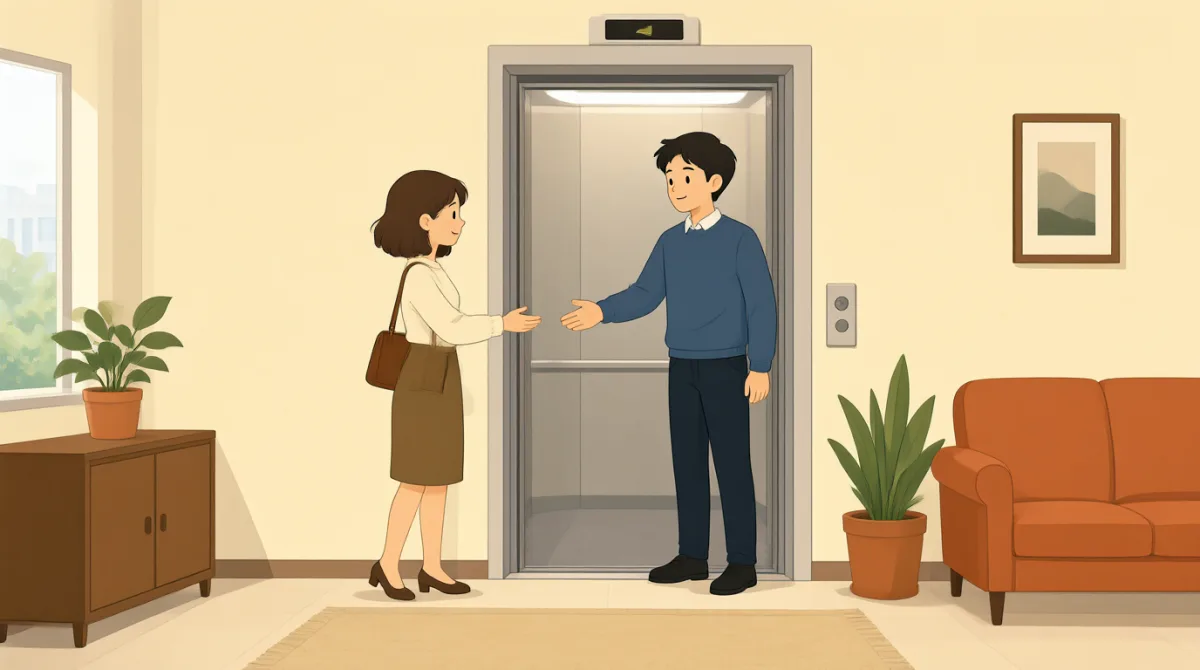

Morning, Mia!
सुप्रभात, मिया!

Oh, Jack! Good morning! Going up?
अरे, जैक! सुप्रभात! ऊपर जा रहे हो?
Yep, to the 10th floor. Busy day ahead?
हाँ, दसवीं मंज़िल पर। आज का दिन व्यस्त रहने वाला है?
Looks like it. Just grabbing a coffee first. You?
लग तो ऐसा ही रहा है। पहले बस कॉफ़ी लेने जा रही हूँ। तुम?
Same here. Always need that morning fuel.
मैं भी। सुबह की शुरुआत के लिए हमेशा उस ऊर्जा की ज़रूरत पड़ती है।
Definitely. Have a good one, Jack!
बिल्कुल। तुम्हारा दिन अच्छा रहे, जैक!
You too, Mia! See ya around.
तुम्हारा भी, मिया! फिर कहीं मुलाक़ात होगी।
शब्दावली6
- Morningसुप्रभात
A casual way to say 'good morning' when greeting someone in the morning. It's short and friendly, often used in informal situations like with neighbors.
सुबह किसी का अभिवादन करने के लिए “good morning” कहने का यह अनौपचारिक तरीका है। यह छोटा और दोस्ताना है, और अक्सर पड़ोसियों जैसी जान-पहचान वालों से अनौपचारिक बातचीत में इस्तेमाल होता है।
- Yepहाँ
An informal version of 'yes' or 'yeah'. Use it in casual conversations to agree quickly, like answering a simple question.
यह “yes” या “yeah” कहने का अनौपचारिक तरीका है। साधारण सवाल का जल्दी से जवाब देते हुए सहमति जताने के लिए इसे अनौपचारिक बातचीत में इस्तेमाल करें।
- Busyव्यस्त
Means having a lot of work or activities. In small talk, ask 'Busy day ahead?' to show interest in someone's schedule.
इसका मतलब है कि आपके पास बहुत सारा काम या कई गतिविधियाँ हैं। छोटी-मोटी बातचीत में किसी की दिनचर्या जानने में दिलचस्पी दिखाने के लिए “Busy day ahead?” पूछें।
- Grabbingलेना
Short for 'getting or taking something quickly'. Like 'grabbing a coffee' means buying one on the way, common in daily routines.
यह “getting or taking something quickly” का छोटा, बोलचाल वाला रूप है। “grabbing a coffee” का मतलब है रास्ते में कॉफ़ी खरीद लेना। यह रोज़मर्रा की दिनचर्या में आम है।
- Fuelऊर्जा
Here, it means energy or something that gives you power to start the day, like coffee. It's a metaphor used in casual talk about mornings.
यहाँ इसका मतलब ऊर्जा या ऐसी चीज़ है जो दिन की शुरुआत करने की ताकत दे, जैसे कॉफ़ी। सुबह के बारे में अनौपचारिक बातचीत में यह रूपक के तौर पर इस्तेमाल होता है।
- Definitelyबिल्कुल
Means 'certainly' or 'absolutely'. Use it to strongly agree with someone, making conversations more engaging.
इसका मतलब “निश्चित रूप से” या “बिल्कुल” है। किसी से पूरी तरह सहमत होने के लिए इसका इस्तेमाल करें; इससे बातचीत अधिक रोचक बनती है।
मुख्य वाक्य8
- 1
Morning, Mia!
सुप्रभात, मिया!
This is a simple, informal greeting for the morning. Use it with people you know slightly, like neighbors. It's shorter than 'Good morning' and feels more natural in quick chats.
यह सुबह का एक सरल, अनौपचारिक अभिवादन है। इसे ऐसे लोगों से कहें जिन्हें आप थोड़ा-बहुत जानते हैं, जैसे पड़ोसी। यह “Good morning” से छोटा है और जल्दी-जल्दी की बातचीत में ज़्यादा स्वाभाविक लगता है।
- 2
Good morning! Going up?
सुप्रभात! ऊपर जा रहे हो?
A polite greeting followed by a question about direction in an elevator. The question uses present continuous 'going up' to ask about current plans. Useful for starting small talk in shared spaces.
यह एक शिष्ट अभिवादन है, जिसके बाद लिफ्ट में जाने की दिशा के बारे में सवाल पूछा जाता है। मौजूदा इरादे के बारे में पूछने के लिए इसमें present continuous “going up” इस्तेमाल हुआ है। साझा जगहों पर छोटी-मोटी बातचीत शुरू करने के लिए यह उपयोगी है।
- 3
Yep, to the 10th floor.
हाँ, दसवीं मंज़िल पर।
A casual response to a yes/no question, adding details. 'Yep' is informal agreement, and specifying the floor keeps the conversation going naturally.
यह हाँ-या-नहीं वाले सवाल का अनौपचारिक जवाब है, जिसमें कुछ और जानकारी भी दी गई है। “Yep” अनौपचारिक सहमति जताता है, और मंज़िल बताने से बातचीत स्वाभाविक रूप से आगे बढ़ती है।
- 4
Busy day ahead?
आज का दिन व्यस्त रहने वाला है?
This asks about someone's future schedule politely. 'Day ahead' means the rest of the day. It's a common way to show interest without being too personal.
इस सवाल से किसी की आगे की दिनचर्या के बारे में शिष्टता से पूछा जाता है। “Day ahead” का मतलब है दिन का बाकी हिस्सा। ज़रूरत से ज़्यादा निजी हुए बिना दिलचस्पी दिखाने का यह आम तरीका है।
- 5
Just grabbing a coffee first. You?
पहले बस कॉफ़ी लेने जा रही हूँ। तुम?
Explains a quick action with 'just' for simplicity, then asks back with 'You?'. This pattern shares info and invites response, great for balanced small talk.
इसमें “just” का इस्तेमाल करके किसी छोटे-से काम के बारे में बताया जाता है, फिर “You?” कहकर सामने वाले से भी पूछा जाता है। यह तरीका अपनी बात साझा करने के साथ जवाब देने का मौका भी देता है, इसलिए संतुलित छोटी-मोटी बातचीत के लिए बढ़िया है।
- 6
Same here.
मैं भी।
Means 'me too' or 'I agree'. It's a short way to show similarity, useful in conversations to build connection without repeating details.
इसका मतलब “मैं भी” या “मैं सहमत हूँ” है। अपनी समानता जताने का यह छोटा तरीका है। बातचीत में वही बातें दोहराए बिना अपनापन बढ़ाने के लिए यह उपयोगी है।
- 7
Have a good one, Jack!
तुम्हारा दिन अच्छा रहे, जैक!
An idiomatic farewell meaning 'have a good day'. 'One' refers to the day. Use it to end chats politely and positively in informal settings.
यह बोलचाल का मुहावरेदार विदाई-वाक्य है, जिसका अर्थ है “तुम्हारा दिन अच्छा रहे”। “One” का मतलब यहाँ दिन है। अनौपचारिक माहौल में बातचीत को शिष्टता और सकारात्मकता के साथ खत्म करने के लिए इसका इस्तेमाल करें।
- 8
See ya around.
फिर कहीं मुलाक़ात होगी।
Casual goodbye meaning 'see you later sometime'. 'Ya' is short for 'you', common in American English. Perfect for ending brief encounters with neighbors.
यह अनौपचारिक विदाई है, जिसका मतलब है “फिर कभी मिलेंगे”। “Ya”, “you” का छोटा रूप है और अमेरिकी अंग्रेज़ी में आम है। पड़ोसियों से संक्षिप्त मुलाक़ात खत्म करने के लिए यह बढ़िया है।