Asking or Offering Floor Assistance
मंज़िल के बारे में पूछना या मदद की पेशकश करना
One person asks another if they are going to the same floor, or offers to press a button for them, especially if their hands are full.
एक व्यक्ति दूसरे से पूछता है कि क्या वह उसी मंज़िल पर जा रहा है, या उसके लिए बटन दबाने की पेशकश करता है—खासकर तब, जब उसके हाथ भरे हों।
संवाद8
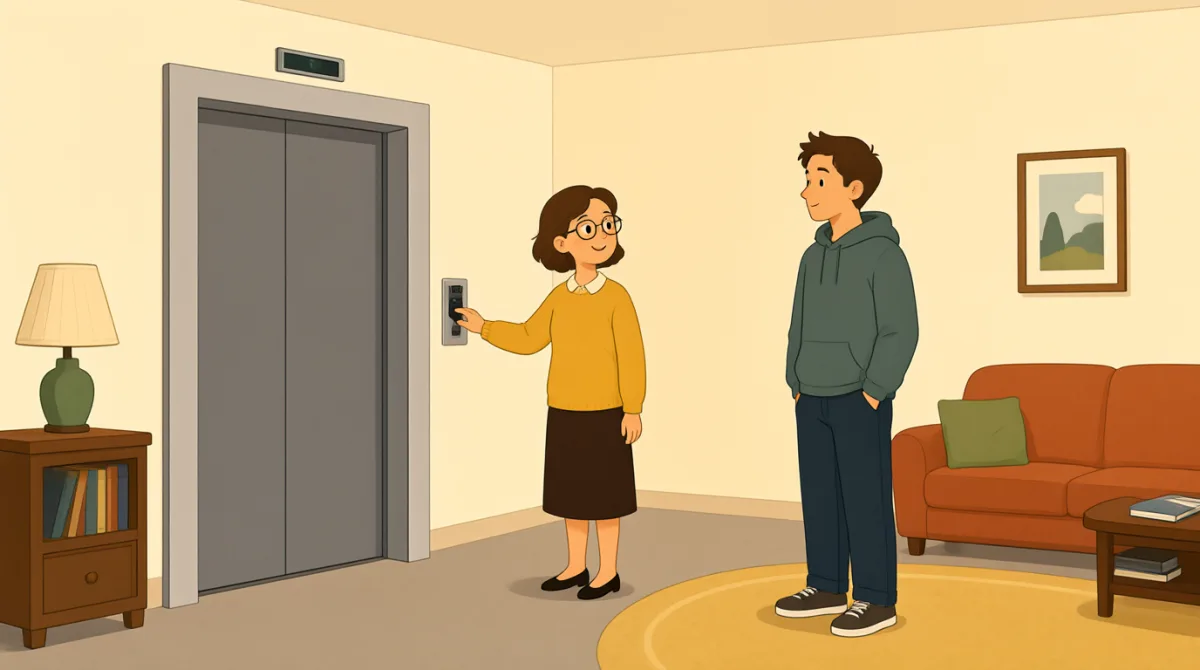

Going up?
ऊपर जा रहे हैं?

Yes, please. Uh, what floor are you going to?
हाँ, कृपया। अच्छा, आप किस मंज़िल पर जा रहे हैं?
I'm going to the fifth. Can I get that for you? Looks like your hands are full.
मैं पाँचवीं मंज़िल पर जा रहा हूँ। क्या मैं आपके लिए वह बटन दबा दूँ? लग रहा है कि आपके हाथ भरे हुए हैं।
Oh, that's so kind of you! I'm going to the third floor. Thank you!
ओह, आपकी बहुत मेहरबानी है! मैं तीसरी मंज़िल पर जा रही हूँ। धन्यवाद!
No problem at all. Third floor, got it.
कोई बात नहीं। तीसरी मंज़िल, ठीक है।
Thanks again! It's difficult with all these groceries.
एक बार फिर धन्यवाद! इतना सारा सामान लेकर मुश्किल हो रहा है।
I understand. Enjoy your evening!
समझ सकता हूँ। आपकी शाम अच्छी गुज़रे!
You too!
आपकी भी!
शब्दावली8
- floorमंज़िल
A level or story of a building, like the ground floor or fifth floor. In elevators, people ask 'what floor' to know which button to press.
इमारत का कोई स्तर, जैसे भूतल या पाँचवीं मंज़िल। लिफ़्ट में लोग पूछते हैं 'what floor' (किस मंज़िल पर) ताकि पता चले कि कौन-सा बटन दबाना है।
- fifthपाँचवाँ
The ordinal number for 5, used to specify the fifth level of a building. Say 'fifth floor' when telling someone your destination in an elevator.
संख्या 5 के क्रमवाचक रूप को कहते हैं। इमारत की पाँचवीं मंज़िल बताने के लिए इसका इस्तेमाल होता है। लिफ़्ट में अपनी मंज़िल बताते समय 'fifth floor' कहें।
- thirdतीसरा
The ordinal number for 3, meaning the third level. It's common in polite small talk to share your floor number quickly.
संख्या 3 के क्रमवाचक रूप को कहते हैं, यानी तीसरा स्तर। विनम्र बातचीत में अपनी मंज़िल का नंबर जल्दी से बताना आम है।
- fullभरा हुआ
Containing as much as possible, like 'hands are full' when carrying many bags. This helps explain why you need help in everyday situations.
जब किसी चीज़ में जितना हो सकता है उतना भरा हो। कई थैले उठाते समय 'hands are full' (हाथ भरे हुए हैं) कह सकते हैं। रोज़मर्रा की स्थितियों में इससे समझ आता है कि आपको मदद की ज़रूरत क्यों है।
- kindदयालु
Nice and helpful, showing consideration for others. Use 'that's kind of you' to thank someone politely for their offer.
दयालु और मददगार होना, दूसरों का ख़याल रखना। किसी की मदद की पेशकश के लिए विनम्रता से धन्यवाद देने के लिए 'that's kind of you' कहें।
- groceriesकिराने का सामान
Food and household items bought from a store. People often carry groceries in bags, making it hard to press elevator buttons.
दुकान से खरीदा गया खाने-पीने और घर में इस्तेमाल होने वाला सामान। लोग अक्सर किराने का सामान थैलों में उठाते हैं, जिससे लिफ़्ट के बटन दबाना मुश्किल हो सकता है।
- understandसमझना
To know or realize a situation. Say 'I understand' to show empathy when someone explains a problem, like carrying heavy items.
किसी स्थिति को जानना या उसका एहसास होना। जब कोई भारी सामान उठाने जैसी परेशानी बताए, तो हमदर्दी दिखाने के लिए 'I understand' कहें।
- eveningशाम
The time from late afternoon until night. Use 'enjoy your evening' as a friendly goodbye in casual conversations.
देर दोपहर से रात तक का समय। अनौपचारिक बातचीत में दोस्ताना विदाई के तौर पर 'enjoy your evening' कह सकते हैं।
मुख्य वाक्य8
- 1
Going up?
ऊपर जा रहे हैं?
A short, casual question to start small talk in an elevator, asking if someone is going to a higher floor. It's useful for polite interactions with strangers and uses a question mark for yes/no answers.
'Going up?' लिफ़्ट में बातचीत शुरू करने का एक छोटा, अनौपचारिक सवाल है। इससे पूछा जाता है कि कोई ऊपर की मंज़िल पर जा रहा है या नहीं। अनजान लोगों से विनम्रता से बात करते समय यह उपयोगी है और इसका जवाब हाँ या नहीं में दिया जा सकता है।
- 2
What floor are you going to?
आप किस मंज़िल पर जा रहे हैं?
A polite way to ask someone's destination in a building. This sentence uses 'what' for questions about specifics and 'going to' for future direction; great for offering help.
'What floor are you going to?' किसी से यह पूछने का विनम्र तरीका है कि वह इमारत की किस मंज़िल पर जा रहा है। इसमें 'what' से किसी ख़ास जानकारी के बारे में पूछा जाता है और 'going to' आगे की दिशा बताता है। मदद की पेशकश करते समय यह वाक्य उपयोगी है।
- 3
Can I get that for you?
क्या मैं आपके लिए वह बटन दबा दूँ?
An offer to help by pressing an elevator button. 'Can I' is a polite request form, and 'get that for you' means to do something instead of the other person; use when you see someone struggling.
'Can I get that for you?' लिफ़्ट का बटन दबाकर मदद की पेशकश करना है। 'Can I' विनम्रता से अनुमति या मदद की पेशकश करने का तरीका है, और 'get that for you' का मतलब है दूसरे व्यक्ति की जगह वह काम कर देना। किसी को परेशानी में देखकर इसका इस्तेमाल करें।
- 4
That's so kind of you!
आपकी बहुत मेहरबानी है!
Expresses thanks for someone's nice action. 'That's so' adds emphasis for politeness, and 'kind of you' highlights the helpfulness; ideal for responding to offers in daily life.
'That's so kind of you!' किसी के अच्छे काम के लिए धन्यवाद जताता है। 'That's so' बात पर ज़ोर देता है और 'kind of you' उसकी मददगार भावना को सराहता है। रोज़मर्रा की ज़िंदगी में किसी की मदद की पेशकश का जवाब देने के लिए यह बढ़िया वाक्य है।
- 5
No problem at all.
कोई बात नहीं।
A friendly way to say helping is easy and no thanks needed. 'No problem' is casual reassurance, and 'at all' strengthens it; use this to downplay your effort after helping.
'No problem at all.' दोस्ताना ढंग से कहने का तरीका है कि मदद करना आसान था और धन्यवाद देने की ज़रूरत नहीं। 'No problem' आश्वस्त करता है और 'at all' इस बात पर ज़ोर देता है। मदद के बाद अपने प्रयास को मामूली बताने के लिए इसका इस्तेमाल करें।
- 6
Thanks again!
एक बार फिर धन्यवाद!
Repeats gratitude to show appreciation. 'Again' means you're thanking a second time; short and useful in quick conversations like elevators to end positively.
'Thanks again!' आभार दोहराकर क़द्रदानी दिखाता है। 'Again' का मतलब है कि आप दूसरी बार धन्यवाद कह रहे हैं। लिफ़्ट जैसी छोटी बातचीत को अच्छे अंदाज़ में ख़त्म करने के लिए यह छोटा और उपयोगी वाक्य है।
- 7
Enjoy your evening!
आपकी शाम अच्छी गुज़रे!
A warm goodbye wishing someone a good time later. It's a common polite closing in small talk; use in the evening to leave a positive impression on strangers or neighbors.
'Enjoy your evening!' किसी के लिए आगे का समय अच्छा बीतने की कामना करते हुए गर्मजोशी से विदा लेने का तरीका है। छोटी बातचीत में यह एक आम विनम्र विदाई है। शाम के समय अनजान लोगों या पड़ोसियों पर अच्छा प्रभाव छोड़ने के लिए इसका इस्तेमाल करें।
- 8
You too!
आपकी भी!
A simple way to return a wish, like after 'enjoy your evening.' It's reciprocal and very casual; perfect for ending brief interactions without much effort.
'You too!' किसी की शुभकामना का जवाब देने का आसान तरीका है, जैसे 'enjoy your evening' सुनने के बाद। यह जवाबी शुभकामना है और बहुत अनौपचारिक है। बिना ज़्यादा कुछ कहे छोटी बातचीत ख़त्म करने के लिए यह बिल्कुल सही है।