Simulating Parallel Parking and Three-Point Turn
समानांतर पार्किंग और तीन-बिंदु मोड़ का अभ्यास
The student practices specific maneuvers required for the driving test, such as parallel parking, reverse parking, or the three-point turn, with feedback from the instructor.
छात्र ड्राइविंग टेस्ट में आवश्यक विशेष चालों का अभ्यास करता है, जैसे समानांतर पार्किंग, रिवर्स पार्किंग या तीन-बिंदु मोड़, और प्रशिक्षक से प्रतिक्रिया लेता है।
संवाद9
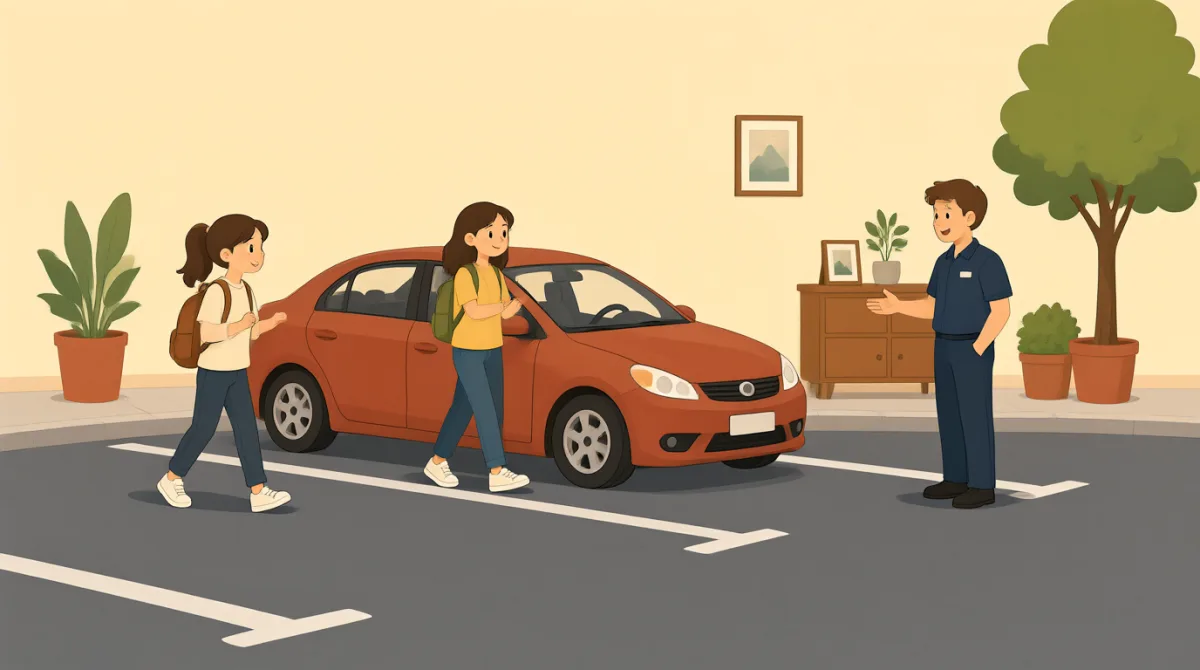

Alright, Emma. Today we're going to focus on the maneuvers. Let's start with parallel parking. Remember the steps we talked about?
ठीक है, एमा। आज हम इन चालों पर ध्यान देंगे। समानांतर पार्किंग से शुरू करते हैं। जिन चरणों के बारे में हमने बात की थी, वे याद हैं?

Yes, I think so. Mirror, signal, then position the car next to the one I want to park behind, right?
हाँ, शायद याद हैं। शीशा, इंडिकेटर, फिर कार को उस कार के बगल में लाना जिसके पीछे मुझे पार्क करना है, सही?
Exactly. And remember to check your blind spots thoroughly. Safety first. Now, try to align your rear bumper with theirs. Take your time.
बिल्कुल। और अपने ब्लाइंड स्पॉट अच्छी तरह से जाँचना याद रखना। सुरक्षा सबसे पहले। अब अपनी पिछली बंपर को उस कार की पिछली बंपर के साथ सीध में लाने की कोशिश करो। आराम से करो।
Okay, got it. Backing up... and turning the wheel. Is this angle good?
ठीक है, समझ गई। पीछे ले जा रही हूँ... और स्टीयरिंग घुमा रही हूँ। क्या यह कोण ठीक है?
A little more. Don't be afraid to use the whole space if it's available. You're doing well. Now, straighten up once your car is at about a 45-degree angle.
थोड़ा और। अगर जगह उपलब्ध हो, तो पूरी जगह इस्तेमाल करने से मत घबराओ। तुम अच्छा कर रही हो। अब, जब तुम्हारी कार लगभग 45 डिग्री के कोण पर आ जाए, तो उसे सीधा कर लेना।
Right, 45 degrees. And then turn the wheel the other way once I see the front bumper of the car behind me in the mirror.
ठीक है, 45 डिग्री। और जब मुझे शीशे में अपने पीछे वाली कार की अगली बंपर दिखाई दे, तब स्टीयरिंग दूसरी दिशा में घुमाना है।
Perfect. You remembered! Keep going until you're straight and centered in the spot. Good. Now, let's practice the three-point turn.
बहुत बढ़िया। तुम्हें याद रहा! तब तक आगे बढ़ती रहो जब तक कार जगह में सीधी और बीचोंबीच न आ जाए। अच्छा। अब तीन-बिंदु मोड़ का अभ्यास करते हैं।
Okay, the three-point turn. That always feels a bit tricky, especially on a narrow street.
ठीक है, तीन-बिंदु मोड़। यह हमेशा थोड़ा मुश्किल लगता है, खासकर किसी संकरी सड़क पर।
It can be. The key is to start as far to the right as possible, make a full turn to the left, then reverse with a full turn to the right. Don't rush it.
ऐसा हो सकता है। सबसे ज़रूरी बात है कि जितना संभव हो दाईं ओर से शुरू करो, बाईं ओर पूरा मोड़ लो, फिर दाईं ओर पूरा मोड़ लेते हुए पीछे जाओ। जल्दी मत करो।
शब्दावली8
- maneuversचालें
Special driving movements or skills, like parking or turning, that you need to practice for a driving test.
ड्राइविंग की ऐसी विशेष गतियाँ या कौशल, जैसे पार्किंग या मोड़ लेना, जिनका ड्राइविंग टेस्ट के लिए अभ्यास करना ज़रूरी होता है।
- parallel parkingसमानांतर पार्किंग
A driving skill where you park your car parallel to the curb between two other cars, common in driving tests.
ड्राइविंग का एक कौशल जिसमें कार को सड़क के किनारे के समानांतर दो दूसरी कारों के बीच पार्क किया जाता है। ड्राइविंग टेस्ट में यह आम है।
- signalइंडिकेटर
To turn on your car's turn signal lights to show other drivers your intended direction, important for safety.
दूसरे ड्राइवरों को अपनी इच्छित दिशा बताने के लिए कार की दिशा-सूचक लाइटें चालू करना। यह सुरक्षा के लिए ज़रूरी है।
- blind spotsब्लाइंड स्पॉट
Areas around the car that you cannot see in the mirrors, so you must check them by turning your head.
कार के आसपास के वे हिस्से जिन्हें आप शीशों में नहीं देख सकते, इसलिए उन्हें देखने के लिए सिर घुमाकर जाँच करनी पड़ती है।
- rear bumperपिछली बंपर
The back part of the car that protects it from minor collisions, often used as a reference point in parking.
कार का पिछला हिस्सा, जो उसे छोटी-मोटी टक्करों से बचाता है और जिसे पार्किंग के दौरान अक्सर संदर्भ बिंदु के रूप में इस्तेमाल किया जाता है।
- backing upपीछे ले जाना
Driving the car in reverse, going backwards, which is a key part of maneuvers like parking.
कार को रिवर्स में चलाकर पीछे की ओर ले जाना। पार्किंग जैसी चालों में यह एक महत्वपूर्ण हिस्सा है।
- three-point turnतीन-बिंदु मोड़
A driving technique to turn the car around in a narrow space using forward and reverse movements in three parts.
कम जगह में कार को घुमाने की एक तकनीक, जिसमें आगे और पीछे चलाकर तीन चरणों में दिशा बदली जाती है।
- reverseरिवर्स करना
To drive the car backwards, often used in parking or turning maneuvers.
कार को पीछे की ओर चलाना। इसका इस्तेमाल अक्सर पार्किंग या मोड़ लेने की चालों में किया जाता है।
मुख्य वाक्य7
- 1
Remember the steps we talked about?
जिन चरणों के बारे में हमने बात की थी, वे याद हैं?
This is a polite question to check if someone recalls previous instructions; use it in lessons or reviews to confirm understanding. It uses the verb 'remember' in present tense for ongoing memory.
यह किसी व्यक्ति को पहले दिए गए निर्देश याद हैं या नहीं, यह पूछने का विनम्र तरीका है। समझ की पुष्टि करने के लिए इसे पाठ या दोहराव के दौरान इस्तेमाल करें। इसमें 'remember' क्रिया का वर्तमान काल इस्तेमाल हुआ है, जो अभी भी बनी हुई याददाश्त को दर्शाता है।
- 2
Mirror, signal, then position the car next to the one I want to park behind, right?
शीशा, इंडिकेटर, फिर कार को उस कार के बगल में लाना जिसके पीछे मुझे पार्क करना है, सही?
This sentence lists actions in sequence with 'then' and ends with 'right?' for confirmation; useful for describing step-by-step processes like driving routines.
इस वाक्य में 'then' के साथ कामों को क्रम से बताया गया है और पुष्टि के लिए अंत में 'right?' लगाया गया है। ड्राइविंग की दिनचर्या जैसी किसी प्रक्रिया के चरण समझाने में यह उपयोगी है।
- 3
Safety first.
सुरक्षा सबसे पहले।
A short, common phrase meaning prioritize safety above all; use it as advice in any risky activity, like driving, to emphasize caution without full sentences.
इस छोटे और आम वाक्य का अर्थ है कि हर चीज़ से पहले सुरक्षा को प्राथमिकता दें। सावधानी पर ज़ोर देने के लिए इसे ड्राइविंग जैसी जोखिम वाली गतिविधियों में सलाह के रूप में इस्तेमाल करें।
- 4
Take your time.
आराम से करो।
An encouraging expression meaning don't hurry; helpful for giving calm instructions during practice, using imperative form to advise slowly.
इस प्रोत्साहित करने वाले वाक्य का अर्थ है कि जल्दी मत करो। अभ्यास के दौरान शांत निर्देश देने के लिए यह उपयोगी है और धीरे-धीरे काम करने की सलाह देता है।
- 5
You're doing well.
तुम अच्छा कर रही हो।
Positive feedback using present continuous 'you're doing' to praise ongoing effort; use it to motivate learners during tasks like driving practice.
यह वर्तमान जारी कार्य 'you're doing' का इस्तेमाल करके सकारात्मक प्रतिक्रिया देता है और लगातार किए जा रहे प्रयास की प्रशंसा करता है। ड्राइविंग अभ्यास जैसे कामों के दौरान सीखने वाले का उत्साह बढ़ाने के लिए इसे इस्तेमाल करें।
- 6
Keep going until you're straight and centered in the spot.
तब तक आगे बढ़ती रहो जब तक कार जगह में सीधी और बीचोंबीच न आ जाए।
An instruction with 'keep going' (continuous action) and 'until' for a condition; useful for guiding completion of a task, like parking, until a goal is met.
इस निर्देश में लगातार जारी कार्रवाई के लिए 'keep going' और किसी शर्त के लिए 'until' का इस्तेमाल हुआ है। पार्किंग जैसे काम को लक्ष्य पूरा होने तक करवाने के लिए यह उपयोगी है।
- 7
Don't rush it.
जल्दी मत करो।
Advice using negative imperative 'don't' with 'rush' to warn against hurrying; common in training situations to promote carefulness.
इस सलाह में 'don't' के साथ 'rush' का इस्तेमाल करके जल्दी करने से मना किया गया है। सावधानी को बढ़ावा देने के लिए प्रशिक्षण की स्थितियों में यह बहुत आम है।