Reviewing Rules of the Road and Traffic Signs
सड़क के नियमों और यातायात संकेतों की समीक्षा
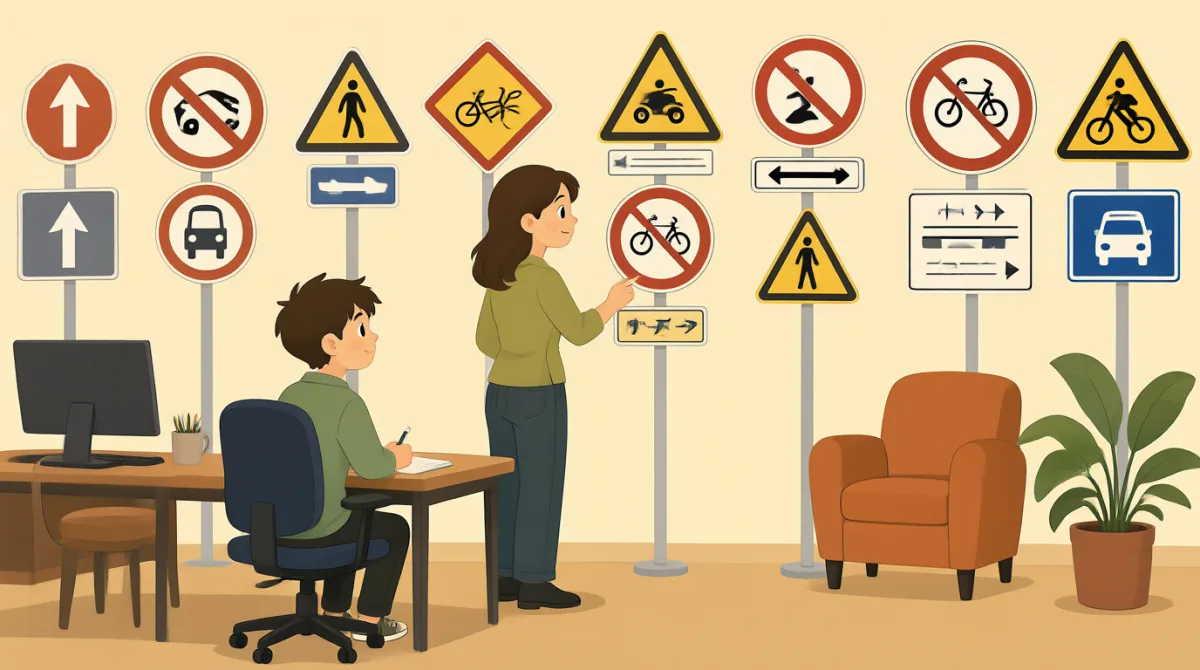
The student and instructor are going over common traffic signs, road markings, and basic traffic laws to prepare for the written theory test or to reinforce observational skills.
लिखित थ्योरी टेस्ट की तैयारी करने या सड़क पर चीज़ों को देखने-समझने के कौशल को बेहतर बनाने के लिए छात्र और प्रशिक्षक आम यातायात संकेतों, सड़क पर बने निशानों और बुनियादी यातायात नियमों की समीक्षा कर रहे हैं।
संवाद9

Alright Emma, let's go over some of the trickier traffic signs and road markings today. These often trip people up on the written test.
ठीक है, एमा, आज कुछ ज़रा मुश्किल यातायात संकेतों और सड़क पर बने निशानों की समीक्षा करते हैं। लिखित परीक्षा में लोग अक्सर इनमें उलझ जाते हैं।

Sounds good, David! I'm ready. I've been reviewing the manual, but some of the subtle differences between signs still confuse me.
बढ़िया, डेविड! मैं तैयार हूँ। मैं नियमावली पढ़ रही हूँ, लेकिन संकेतों के बीच के कुछ बारीक अंतर अब भी मुझे उलझन में डालते हैं।
Perfect. Let's start with 'No Parking' vs. 'No Stopping' signs. What's the key difference you need to remember for the test?
बहुत खूब। चलो, 'No Parking' और 'No Stopping' के संकेतों से शुरू करते हैं। परीक्षा के लिए तुम्हें कौन-सा अहम अंतर याद रखना है?
Okay, 'No Parking' means you can stop briefly to pick up or drop off passengers, but you can't leave your vehicle. 'No Stopping' means you can't stop for any reason, not even for a moment.
ठीक है, 'No Parking' का मतलब है कि यात्रियों को चढ़ाने या उतारने के लिए तुम थोड़ी देर रुक सकती हो, लेकिन गाड़ी छोड़कर नहीं जा सकती। 'No Stopping' का मतलब है कि तुम किसी भी वजह से नहीं रुक सकती, एक पल के लिए भी नहीं।
Excellent! You got it. That's a common one people mix up. Now, tell me about the meaning of a solid white line versus a dashed white line on a multi-lane highway.
बहुत बढ़िया! बिल्कुल सही। लोग अक्सर इसी में गड़बड़ी करते हैं। अब बताओ, कई लेन वाले हाईवे पर लगातार सफेद लाइन और टूटी सफेद लाइन का क्या मतलब होता है?
A solid white line means you shouldn't change lanes, while a dashed white line means you can change lanes if it's safe to do so.
लगातार सफेद लाइन का मतलब है कि तुम्हें लेन नहीं बदलनी चाहिए, जबकि टूटी सफेद लाइन का मतलब है कि सुरक्षित होने पर तुम लेन बदल सकती हो।
Spot on. And where do you typically see solid white lines often used, besides marking the edge of the road?
बिल्कुल सही। सड़क के किनारे को चिह्नित करने के अलावा, आम तौर पर लगातार सफेद लाइनें और कहाँ इस्तेमाल होती हैं?
At intersections, solid white lines are often used as stop lines or crosswalks. And also on bridges, I believe, where lane changes are discouraged.
चौराहों पर लगातार सफेद लाइनों का इस्तेमाल अक्सर रुकने की रेखा या पैदल पार-पथ के लिए होता है। और शायद पुलों पर भी, जहाँ लेन बदलने से बचने की सलाह दी जाती है।
That's right, especially near intersections or in tunnels/bridges where visibility is limited or safety is paramount. You're doing great, Emma. Keep up the good work and you'll ace that theory test!
बिल्कुल सही, खासकर चौराहों के पास या सुरंगों और पुलों में, जहाँ दृश्यता सीमित होती है या सुरक्षा सबसे ज़्यादा अहम होती है। तुम बहुत अच्छा कर रही हो, एमा। इसी तरह मेहनत करती रहो, और थ्योरी टेस्ट में शानदार प्रदर्शन करोगी!
शब्दावली12
- trickierज़्यादा मुश्किल
Means more difficult or complicated than usual. Use it when talking about challenging parts of a test or task, like 'These questions are trickier than I thought.'
इसका मतलब है आम तौर पर होने वाली चीज़ से अधिक कठिन या पेचीदा। परीक्षा या काम के चुनौतीपूर्ण हिस्सों के बारे में बात करते समय इसका इस्तेमाल करें, जैसे: 'These questions are trickier than I thought.' (ये सवाल मेरी सोच से ज़्यादा मुश्किल हैं।)
- traffic signsयातायात संकेत
Signs on roads that give rules, warnings, or directions to drivers. Important for driving tests; for example, 'Always obey traffic signs to stay safe.'
सड़कों पर लगे ऐसे संकेत जो चालकों को नियम, चेतावनी या दिशा बताते हैं। गाड़ी चलाने की परीक्षा के लिए इन्हें जानना ज़रूरी है। उदाहरण: 'Always obey traffic signs to stay safe.' (सुरक्षित रहने के लिए हमेशा यातायात संकेतों का पालन करें।)
- road markingsसड़क पर बने निशान
Lines or symbols painted on the road to guide drivers, like lane lines. Useful in driving contexts: 'Watch the road markings when changing lanes.'
चालकों को रास्ता दिखाने के लिए सड़क पर बनाई गई रेखाएँ या आकृतियाँ, जैसे लेन की रेखाएँ। उदाहरण: 'Watch the road markings when changing lanes.' (लेन बदलते समय सड़क पर बने निशानों पर ध्यान दें।)
- subtleबारीक
Small and not easy to notice. Use when describing small differences: 'The subtle changes in the signs can be confusing at first.'
छोटा और आसानी से नज़र न आने वाला। छोटे-छोटे अंतरों का वर्णन करने के लिए इसका इस्तेमाल करें: 'The subtle changes in the signs can be confusing at first.' (संकेतों में बारीक बदलाव शुरुआत में उलझन पैदा कर सकते हैं।)
- No ParkingNo Parking (पार्किंग मना है)
A traffic sign meaning you cannot leave your vehicle parked there, but you can stop briefly. Common in urban areas; remember it for driving rules.
एक यातायात संकेत, जिसका मतलब है कि वहाँ गाड़ी खड़ी करके नहीं छोड़ सकते, लेकिन थोड़ी देर के लिए रुक सकते हैं। यह आमतौर पर शहरी इलाकों में दिखता है; यातायात नियमों के लिए इसे याद रखें।
- No StoppingNo Stopping (रुकना मना है)
A stricter traffic sign meaning you cannot stop your vehicle at all, even for a short time. Used in dangerous areas; key for safety tests.
एक सख्त यातायात संकेत, जिसका मतलब है कि गाड़ी को बिल्कुल नहीं रोक सकते, थोड़ी देर के लिए भी नहीं। यह खतरनाक जगहों पर लगाया जाता है और सुरक्षा परीक्षा के लिए इसे जानना अहम है।
- solid white lineलगातार सफेद लाइन
A continuous white line on the road that means you should not cross it or change lanes. Often seen at edges or no-passing zones.
सड़क पर बनी बिना टूटे चलने वाली सफेद रेखा, जिसका मतलब है कि इसे पार नहीं करना चाहिए या लेन नहीं बदलनी चाहिए। यह अक्सर सड़क के किनारे या ओवरटेक करने की मनाही वाले क्षेत्रों में दिखती है।
- dashed white lineटूटी सफेद लाइन
A broken white line on the road allowing safe lane changes. Use in sentences like 'You can pass over a dashed white line if clear.'
सड़क पर बनी खंडों में टूटी सफेद रेखा, जिसके होने पर सुरक्षित रहते हुए लेन बदली जा सकती है। इसका इस्तेमाल ऐसे वाक्य में करें: 'You can pass over a dashed white line if clear.' (रास्ता साफ़ हो तो टूटी सफेद लाइन पार कर सकते हैं।)
- intersectionsचौराहे
Places where two or more roads meet and cross. Crucial for driving: 'Be careful at intersections and yield to others.'
ऐसी जगहें जहाँ दो या अधिक सड़कें मिलती और एक-दूसरे को पार करती हैं। गाड़ी चलाते समय इनका ध्यान रखना बहुत ज़रूरी है: 'Be careful at intersections and yield to others.' (चौराहों पर सावधान रहें और दूसरों को रास्ता दें।)
- visibilityदृश्यता
How well you can see ahead, affected by weather or light. In driving: 'Poor visibility means slow down and use lights.'
आप कितनी दूर तक और कितनी साफ़ देख सकते हैं; मौसम और रोशनी से इस पर असर पड़ता है। गाड़ी चलाने के संदर्भ में: 'Poor visibility means slow down and use lights.' (दृश्यता कम हो तो गाड़ी धीमी करें और लाइटें जलाएँ।)
- paramountसर्वाधिक महत्वपूर्ण
Means of the highest importance. Use formally: 'Safety is paramount when driving on bridges.'
इसका मतलब है सबसे ज़्यादा अहम। औपचारिक रूप से इसका इस्तेमाल करें: 'Safety is paramount when driving on bridges.' (पुलों पर गाड़ी चलाते समय सुरक्षा सबसे ज़्यादा अहम होती है।)
- aceशानदार प्रदर्शन करना
Slang for doing something extremely well, like passing a test easily. Informal: 'You'll ace the exam if you study hard.'
किसी काम को बहुत अच्छी तरह करने के लिए इस्तेमाल होने वाला अनौपचारिक शब्द, जैसे परीक्षा आसानी से पास करना। उदाहरण: 'You'll ace the exam if you study hard.' (अगर तुम मन लगाकर पढ़ोगी, तो परीक्षा में शानदार प्रदर्शन करोगी।)
मुख्य वाक्य7
- 1
Alright Emma, let's go over some of the trickier traffic signs and road markings today.
ठीक है, एमा, आज कुछ ज़रा मुश्किल यातायात संकेतों और सड़क पर बने निशानों की समीक्षा करते हैं।
This is a way to start a lesson or review session politely. 'Go over' means to review or discuss. Useful for teachers or students preparing for exams; shows initiative in learning.
यह पाठ या दोहराई की शुरुआत करने का एक विनम्र तरीका है। 'Go over' का मतलब है समीक्षा करना या चर्चा करना। परीक्षा की तैयारी कर रहे शिक्षकों और छात्रों के लिए उपयोगी है; यह सीखने की पहल दिखाता है।
- 2
Sounds good, David! I'm ready.
बढ़िया, डेविड! मैं तैयार हूँ।
A positive response showing agreement and preparedness. 'Sounds good' is casual for 'That seems fine.' Great for conversations when accepting plans; builds rapport in class.
यह सहमति और तैयारी दिखाने वाला सकारात्मक जवाब है। 'Sounds good' का अनौपचारिक मतलब है 'यह ठीक लग रहा है।' योजनाएँ स्वीकार करते समय बातचीत में इसका इस्तेमाल अच्छा रहता है और कक्षा में अपनापन बढ़ाता है।
- 3
What's the key difference you need to remember for the test?
परीक्षा के लिए तुम्हें कौन-सा अहम अंतर याद रखना है?
Asks for the main distinction in rules. 'Key difference' highlights important contrasts. Useful in study sessions to focus on test essentials; practices question forms with 'what's' for contractions.
इस सवाल में नियमों के बीच मुख्य अंतर पूछा गया है। 'Key difference' किसी अहम अंतर पर ज़ोर देता है। पढ़ाई के दौरान परीक्षा के लिए ज़रूरी बातों पर ध्यान देने में यह उपयोगी है; इसमें 'what's' का संक्षिप्त रूप भी है।
- 4
'No Parking' means you can stop briefly to pick up or drop off passengers, but you can't leave your vehicle.
'No Parking' का मतलब है कि यात्रियों को चढ़ाने या उतारने के लिए तुम थोड़ी देर रुक सकती हो, लेकिन गाड़ी छोड़कर नहीं जा सकती।
Explains a rule using 'means' for definition and 'but' for contrast. Practical for describing traffic laws; helps learners understand exceptions in driving regulations.
यह वाक्य नियम समझाने के लिए परिभाषा बताने वाले 'means' और अंतर दिखाने वाले 'but' का इस्तेमाल करता है। यातायात नियमों के बारे में बताने और गाड़ी चलाने के नियमों में अपवाद समझने के लिए यह उपयोगी है।
- 5
A solid white line means you shouldn't change lanes, while a dashed white line means you can change lanes if it's safe to do so.
लगातार सफेद लाइन का मतलब है कि तुम्हें लेन नहीं बदलनी चाहिए, जबकि टूटी सफेद लाइन का मतलब है कि सुरक्षित होने पर तुम लेन बदल सकती हो।
Compares two things using 'while' for contrast and conditional 'if it's safe.' Useful for explaining road rules; teaches relative clauses and safety conditions in driving.
इस वाक्य में अंतर दिखाने के लिए 'while' और शर्त बताने के लिए 'if it's safe' का इस्तेमाल हुआ है। सड़क के नियम समझाने में यह उपयोगी है; साथ ही, यह संबंधवाचक उपवाक्य और गाड़ी चलाने में सुरक्षा की शर्तें सिखाता है।
- 6
Spot on.
बिल्कुल सही।
Idiomatic expression meaning exactly correct. Short and informal praise. Use in feedback situations like tests; common in British English but understood widely for quick approval.
यह मुहावरेदार अभिव्यक्ति है, जिसका मतलब है कि जवाब पूरी तरह सही है। यह छोटी और अनौपचारिक तारीफ़ है। परीक्षा के दौरान प्रतिक्रिया देते समय इसका इस्तेमाल करें; यह ब्रिटिश अंग्रेज़ी में आम है, लेकिन तुरंत सहमति जताने के लिए हर जगह समझी जाती है।
- 7
You're doing great, Emma. Keep up the good work and you'll ace that theory test!
तुम बहुत अच्छा कर रही हो, एमा। इसी तरह मेहनत करती रहो, और थ्योरी टेस्ट में शानदार प्रदर्शन करोगी!
Encourages with compliments and future prediction using 'will.' 'Keep up the good work' means continue performing well. Ideal for motivating learners; includes contraction 'you'll' for natural speech.
इस वाक्य में तारीफ़ करके प्रोत्साहित किया गया है और 'will' से भविष्य के बारे में भरोसा जताया गया है। 'Keep up the good work' का मतलब है अच्छा काम जारी रखना। सीखने वालों का हौसला बढ़ाने के लिए यह बढ़िया है; स्वाभाविक बातचीत में 'you'll' का संक्षिप्त रूप भी आता है।