Initial Introduction and Small Talk
पहली मुलाकात और हल्की-फुल्की बातचीत
Two parents meet for the first time while watching their children play, engaging in light conversation about their kids and the park.
दो माता-पिता पहली बार मिलते हैं और अपने बच्चों को खेलते हुए देखते-देखते उनके बच्चों और पार्क के बारे में हल्की-फुल्की बातचीत करते हैं।
संवाद8
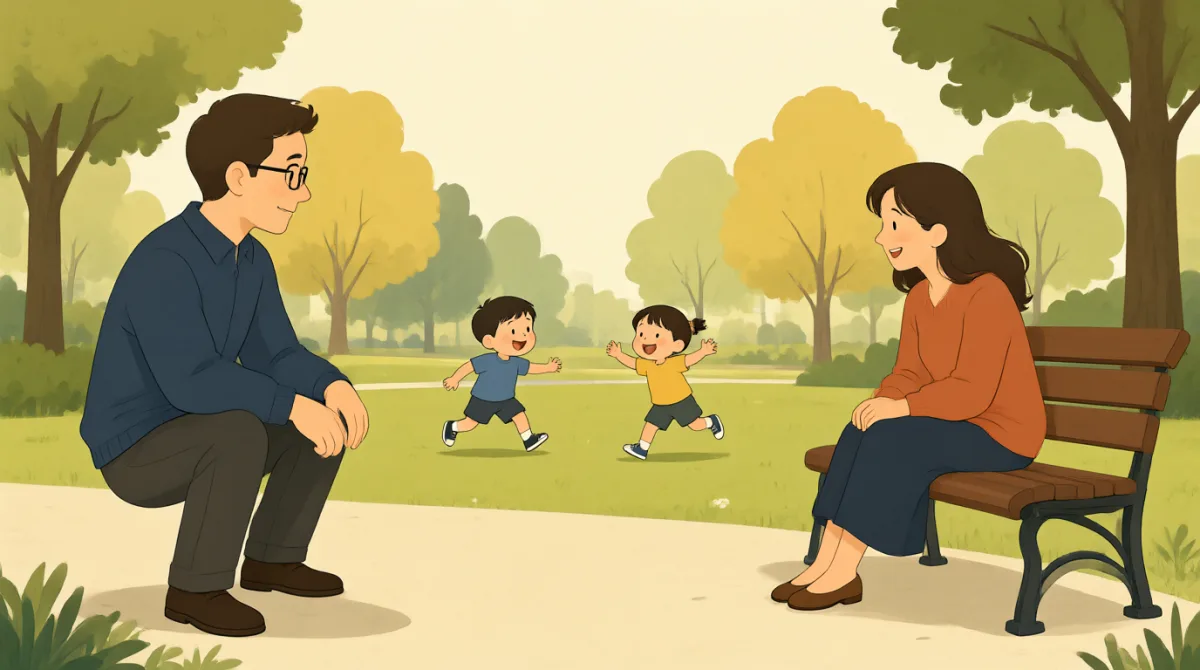

Hi there! Your little one has so much energy. Mine's the one in the blue shirt, climbing the jungle gym like a monkey.
नमस्ते! आपके बच्चे में कितनी ऊर्जा है! नीली कमीज़ वाला मेरा बेटा है, जो बंदर की तरह जंगली झूले पर चढ़ रहा है।

Oh, hi! Thanks! He definitely keeps me on my toes. And yes, your son looks like he's having a blast up there. This is our first time at this park, actually.
ओह, नमस्ते! धन्यवाद! वह सचमुच मुझे हर समय सतर्क रखता है। और हाँ, आपका बेटा वहाँ ऊपर बहुत मज़े करता हुआ लग रहा है। दरअसल, इस पार्क में हमारा यह पहला दिन है।
Really? It's a great park, especially for this age group. I'm Emma, by the way. And that's Leo.
सच में? यह बहुत अच्छा पार्क है, खासकर इस उम्र के बच्चों के लिए। वैसे, मैं Emma हूँ। और यह Leo है।
Nice to meet you, Emma and Leo! I'm Jack, and this whirlwind is Ben. How old is Leo?
आपसे और Leo से मिलकर खुशी हुई, Emma! मैं Jack हूँ और यह तूफ़ान जैसा बच्चा Ben है। Leo की उम्र कितनी है?
Leo just turned four last month. He's really into anything with climbing right now. How about Ben?
Leo पिछले महीने ही चार साल का हुआ है। आजकल उसे चढ़ने वाली हर चीज़ बहुत पसंद है। Ben की उम्र कितनी है?
Ben is three and a half. He loves the slides, especially the big one. It's tough keeping up sometimes!
Ben साढ़े तीन साल का है। उसे फिसलपट्टियाँ बहुत पसंद हैं, खासकर बड़ी वाली। कभी-कभी उसके साथ कदम मिलाकर चलना मुश्किल हो जाता है!
I know the feeling! It's great to see them burn off some energy, though. We usually come here a couple of times a week.
मैं समझ सकती हूँ! फिर भी, उन्हें अपनी थोड़ी ऊर्जा निकालते हुए देखना अच्छा लगता है। हम आमतौर पर हफ़्ते में दो-एक बार यहाँ आते हैं।
Good to know! We're new to the neighborhood, so we're still exploring. Maybe we'll see you around more often.
यह जानकर अच्छा लगा! हम इस इलाके में नए हैं, इसलिए अभी आसपास की जगहें देख रहे हैं। शायद अब हम आपको यहाँ ज़्यादा बार मिलेंगे।
शब्दावली7
- energyऊर्जा
Energy means physical or mental strength and activity. In the dialogue, 'so much energy' describes a child's active and lively behavior, common when talking about kids playing.
Energy का अर्थ शारीरिक या मानसिक ताकत और सक्रियता है। संवाद में 'so much energy' बच्चे के सक्रिय और चंचल व्यवहार को बताता है, जो बच्चों के खेलते समय के बारे में बात करते हुए आम है।
- jungle gymचढ़ने-खेलने का ढाँचा
A jungle gym is a playground structure with bars and ladders for climbing. It's used here to describe where the child is playing, a fun way to name playground equipment.
A jungle gym खेल के मैदान में लगा ऐसा ढाँचा होता है जिसमें चढ़ने के लिए डंडे और सीढ़ियाँ होती हैं। यहाँ इसका इस्तेमाल उस जगह के लिए हुआ है जहाँ बच्चा खेल रहा है—खेल के मैदान के उपकरण का नाम बताने का यह एक मज़ेदार तरीका है।
- keeps me on my toesमुझे हर समय सतर्क और व्यस्त रखता है
This idiom means something or someone makes you stay alert and busy. Jack uses it to show how his energetic child requires constant attention, useful for expressing parenting challenges.
यह मुहावरा बताता है कि कोई चीज़ या व्यक्ति आपको सतर्क और व्यस्त रहने पर मजबूर करता है। Jack इसका इस्तेमाल यह दिखाने के लिए करता है कि उसका ऊर्जावान बच्चा लगातार ध्यान माँगता है। बच्चों की परवरिश की चुनौतियाँ बताने के लिए यह उपयोगी है।
- having a blastबहुत मज़ा करना
Having a blast is an informal phrase meaning enjoying something very much. Emma's son is 'having a blast' climbing, a casual way to say someone is having fun.
Having a blast एक अनौपचारिक वाक्यांश है, जिसका अर्थ है किसी चीज़ का बहुत आनंद लेना। Emma का बेटा चढ़ते हुए 'having a blast' कर रहा है—किसी के मज़े करने की बात कहने का यह सहज तरीका है।
- whirlwindबहुत चंचल और तेज़-तर्रार व्यक्ति
Whirlwind describes someone very energetic and fast-moving, like a storm. Jack calls his child a 'whirlwind' to highlight Ben's lively personality in a playful way.
Whirlwind ऐसे व्यक्ति का वर्णन करता है जो आँधी की तरह बहुत ऊर्जावान और तेज़ी से चलता-फिरता हो। Jack अपने बच्चे को 'whirlwind' कहकर Ben के चंचल स्वभाव पर मज़ेदार ढंग से ज़ोर देता है।
- burn offऊर्जा निकालना
Burn off means to use up energy through activity. It's used in 'burn off some energy' to explain how playing helps kids release their excess energy, practical for parenting talks.
Burn off का अर्थ है गतिविधि के ज़रिए ऊर्जा का इस्तेमाल कर लेना। 'burn off some energy' में इसका मतलब है कि खेलकर बच्चे अपनी अतिरिक्त ऊर्जा निकाल लेते हैं। माता-पिता की बातचीत में यह बहुत काम आने वाला प्रयोग है।
- neighborhoodइलाका
Neighborhood refers to the area around where you live, including nearby houses and parks. Jack mentions being new to the neighborhood when discussing exploring local spots.
Neighborhood का अर्थ है आपके रहने की जगह के आसपास का क्षेत्र, जिसमें पास के घर और पार्क शामिल होते हैं। Jack स्थानीय जगहों को देखने की बात करते हुए बताता है कि वे इस इलाके में नए हैं।
मुख्य वाक्य8
- 1
Hi there! Your little one has so much energy.
नमस्ते! आपके बच्चे में कितनी ऊर्जा है!
This is a friendly greeting and compliment to start a conversation. 'Little one' is a warm term for a young child. Use it to break the ice when meeting other parents at a park; it's casual and positive for small talk.
यह बातचीत शुरू करने के लिए किया गया दोस्ताना अभिवादन और तारीफ़ है। 'Little one' छोटे बच्चे के लिए प्यार भरा शब्द है। पार्क में दूसरे माता-पिता से मिलते समय बातचीत की झिझक दूर करने के लिए इसका इस्तेमाल करें; यह अनौपचारिक और सकारात्मक है।
- 2
He definitely keeps me on my toes.
वह सचमुच मुझे हर समय सतर्क रखता है।
This responds to a compliment about a child's energy, using an idiom to agree humorously. 'Definitely' adds emphasis. It's useful for sharing parenting experiences lightly, showing agreement in conversations.
यह बच्चे की ऊर्जा की तारीफ़ के जवाब में मुहावरे का थोड़ा मज़ाकिया इस्तेमाल करता है। 'Definitely' ज़ोर देने के लिए है। बच्चों की परवरिश के अनुभव हल्के-फुल्के ढंग से साझा करने और बातचीत में सहमति जताने के लिए यह उपयोगी है।
- 3
Nice to meet you, Emma and Leo!
आपसे और Emma से मिलकर खुशी हुई!
This is a standard polite response during introductions, addressing both the parent and child. Use it after someone shares their name to build rapport; the grammar is simple present tense for greetings.
यह परिचय के दौरान दिया जाने वाला एक सामान्य विनम्र जवाब है, जिसमें माता-पिता और बच्चे दोनों को संबोधित किया जाता है। किसी के अपना नाम बताने के बाद संबंध बनाने के लिए इसका इस्तेमाल करें। अभिवादन में यहाँ साधारण वर्तमान काल का सरल व्याकरण है।
- 4
Leo just turned four last month.
Leo पिछले महीने ही चार साल का हुआ है।
This shares a child's age using 'just turned' for recent events and 'last month' for time reference. It's a common pattern for talking about kids' ages; practice it to ask or answer about children's development in parent chats.
इस वाक्य में बच्चे की उम्र बताने के लिए 'just turned' का इस्तेमाल हाल की घटना के लिए और 'last month' का इस्तेमाल समय बताने के लिए किया गया है। बच्चों की उम्र के बारे में बात करने का यह आम ढाँचा है; माता-पिता की बातचीत में बच्चों की उम्र या विकास के बारे में पूछने और जवाब देने के लिए इसका अभ्यास करें।
- 5
He's really into anything with climbing right now.
आजकल उसे चढ़ने वाली हर चीज़ बहुत पसंद है।
'Really into' means very interested in something, with 'right now' showing current phase. This sentence describes a child's current hobby; use it to discuss what kids enjoy at certain ages, helpful for bonding over shared experiences.
'Really into' का अर्थ है किसी चीज़ में बहुत रुचि होना, जबकि 'right now' वर्तमान समय या चरण को दिखाता है। यह वाक्य बच्चे के वर्तमान शौक का वर्णन करता है। अलग-अलग उम्र में बच्चों को क्या पसंद है, इस बारे में बात करने और साझा अनुभवों के ज़रिए जुड़ने के लिए इसका इस्तेमाल करें।
- 6
It's tough keeping up sometimes!
कभी-कभी उसके साथ कदम मिलाकर चलना मुश्किल हो जाता है!
This expresses a challenge in parenting using 'tough' for difficult and 'keeping up' for matching someone's pace. The exclamation adds emotion. Use it to relate to other parents about the demands of active children.
यह वाक्य बच्चों की परवरिश की चुनौती बताता है। 'Tough' का अर्थ कठिन और 'keeping up' का अर्थ किसी की गति के साथ चलना है। विस्मयादिबोधक चिह्न भावना को बढ़ाता है। सक्रिय बच्चों की देखभाल की कठिनाइयों पर दूसरे माता-पिता से जुड़ने के लिए इसका इस्तेमाल करें।
- 7
We usually come here a couple of times a week.
हम आमतौर पर हफ़्ते में दो-एक बार यहाँ आते हैं।
This shares a routine with 'usually' for habits and 'a couple of times' meaning two or a few. Present simple tense for regular actions. It's practical for suggesting future meetings or sharing local tips in casual talks.
इस वाक्य में आदत बताने के लिए 'usually' और दो या कुछ बार के अर्थ में 'a couple of times' का इस्तेमाल हुआ है। नियमित कार्यों के लिए साधारण वर्तमान काल प्रयोग किया गया है। अनौपचारिक बातचीत में आगे मिलने का सुझाव देने या स्थानीय जानकारी साझा करने के लिए यह उपयोगी है।
- 8
Maybe we'll see you around more often.
शायद अब हम आपको यहाँ ज़्यादा बार मिलेंगे।
This is a friendly way to end by suggesting future encounters, using 'maybe' for possibility and 'see you around' informally. It's useful for closing small talk positively, implying interest in more interactions without commitment.
यह आगे कभी मिलने का सुझाव देते हुए बातचीत समाप्त करने का दोस्ताना तरीका है। इसमें संभावना के लिए 'maybe' और अनौपचारिक ढंग से फिर मिलने के लिए 'see you around' का इस्तेमाल हुआ है। यह बिना किसी पक्के वादे के आगे बातचीत में रुचि दिखाते हुए हल्की-फुल्की बातचीत समाप्त करने के लिए उपयोगी है।