Morning Greetings with Neighbors
احوالپرسی صبحگاهی با همسایهها
Exchanging friendly morning greetings with neighbors while leaving home or getting mail
ردوبدل کردن احوالپرسیهای دوستانهٔ صبحگاهی با همسایهها هنگام بیرون رفتن از خانه یا برداشتن نامهها
گفتوگو12
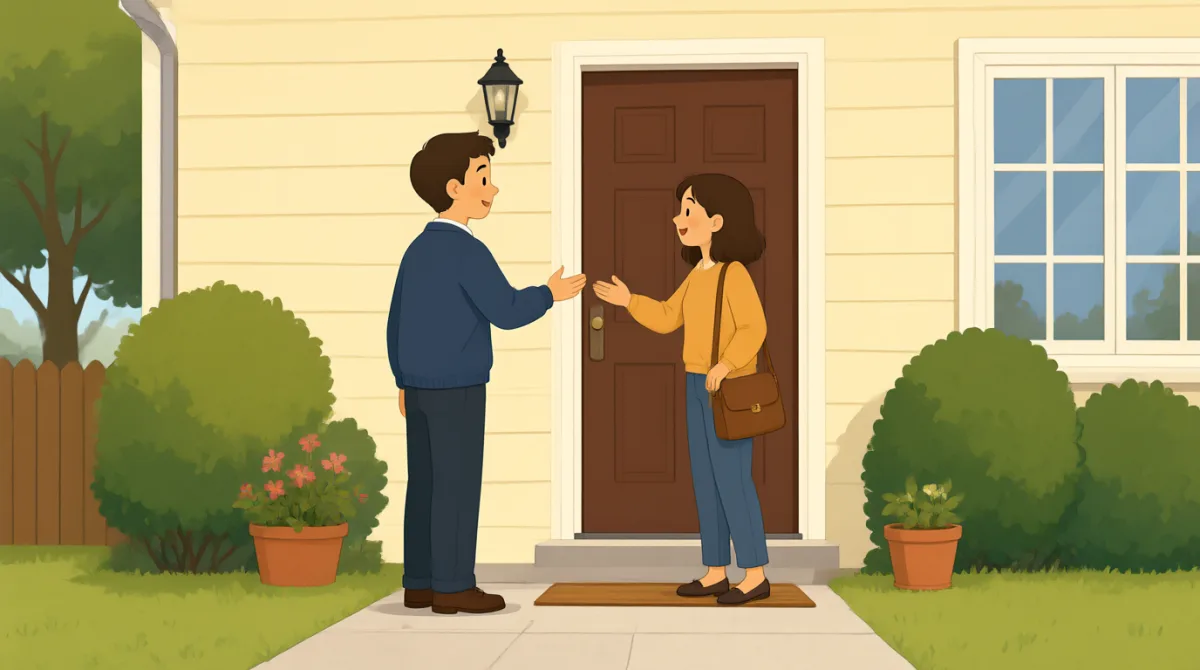

Good morning, Jack! Beautiful day today, isn't it?
صبح بخیر، جک! امروز چه روز قشنگیه، مگه نه؟

Good morning, Emma! Yes, it's lovely. Perfect weather for a morning walk.
صبح بخیر، اِما! آره، خیلی دلپذیره. هوا برای پیادهروی صبحگاهی عالیه.
Are you heading to work early today?
امروز زودتر راهی محل کار میشی؟
Actually, I'm just getting the mail. I have a flexible schedule today. How about you?
راستش، فقط اومدم نامهها رو بردارم. امروز برنامهٔ کاریم انعطافپذیره. تو چطور؟
I'm off to the grocery store. We're having guests for dinner tonight.
دارم میرم فروشگاه مواد غذایی. امشب برای شام مهمون داریم.
That sounds nice! I hope you have a wonderful time.
چه خوب! امیدوارم خیلی بهت خوش بگذره.
Thank you! Oh, by the way, did you hear about the new coffee shop opening on Main Street?
ممنون! راستی، دربارهٔ افتتاح کافهٔ جدید توی خیابون مین چیزی شنیدی؟
No, I didn't! That's great news. I love trying new places.
نه، نشنیده بودم! چه خبر خوبی. عاشق اینم که جاهای جدید رو امتحان کنم.
Maybe we can check it out together sometime next week?
شاید هفتهٔ آینده یه وقتی با هم بریم ببینیم چهجوریه؟
That sounds perfect! Just let me know when you're free.
عالیه! فقط بهم بگو کی وقت داری.
Will do! Well, I better get going. Have a great day, Jack!
حتماً! خب، دیگه بهتره راه بیفتم. روز خوبی داشته باشی، جک!
You too, Emma! Enjoy your shopping and dinner tonight!
تو هم همینطور، اِما! از خرید و شام امشبت لذت ببر!
واژگان6
- lovelyدلپذیر؛ زیبا
This means very pleasant or beautiful. It's often used to describe weather, a person, or a thing. For example, 'What a lovely day!' or 'She looks lovely in that dress.'
یعنی خیلی خوشایند یا زیبا. این واژه را اغلب برای توصیف آبوهوا، آدمها یا چیزها به کار میبریم. مثلاً: 'What a lovely day!' (چه روز دلپذیری!) یا 'She looks lovely in that dress.' (او با آن لباس خیلی زیبا به نظر میرسد.)
- flexible scheduleبرنامهٔ کاری انعطافپذیر
This refers to a work schedule that allows someone to change their working hours or work days. It means you are not stuck with a fixed time.
به برنامهٔ کاریای گفته میشود که به فرد اجازه میدهد ساعتها یا روزهای کاریاش را تغییر دهد؛ یعنی مجبور نیست در ساعت ثابتی کار کند.
- grocery storeفروشگاه مواد غذایی
This is a shop that sells food and household supplies. In British English, it's often called a 'supermarket'.
مغازهای است که مواد غذایی و لوازم خانه میفروشد. در انگلیسی بریتانیایی اغلب به آن 'supermarket' میگویند.
- guestsمهمانها
These are people who are invited to visit someone's house or to an event. For example, 'We are having guests for dinner tonight.'
به کسانی گفته میشود که برای دیدار از خانهٔ کسی یا شرکت در مراسمی دعوت شدهاند. مثلاً: 'We are having guests for dinner tonight.' (امشب برای شام مهمان داریم.)
- by the wayراستی؛ ضمناً
This is a phrase used to introduce a new topic that just came to your mind or to add extra information. It's similar to 'incidentally' or 'speaking of which'.
این عبارت را وقتی به کار میبریم که بخواهیم موضوع تازهای را که به ذهنمان رسیده مطرح کنیم یا اطلاعات بیشتری بدهیم. 'incidentally' و 'speaking of which' هم معنی مشابهی دارند.
- check outسر زدن به؛ رفتن و دیدن
Here, it means to go to a place to see what it's like, often for the first time. For example, 'Let's check out the new restaurant.'
اینجا یعنی به جایی برویم تا ببینیم چهجور جایی است، اغلب برای اولین بار. مثلاً: 'Let's check out the new restaurant.' (بیا بریم رستوران جدید رو ببینیم.)
جملات کلیدی10
- 1
Beautiful day today, isn't it?
امروز چه روز قشنگیه، مگه نه؟
This is a common way to make small talk and agree on something obvious, like the weather. The 'isn't it?' at the end is a tag question, used to invite agreement or confirm information.
این عبارت راهی رایج برای شروع گفتوگوی کوتاه و همنظر شدن دربارهٔ چیزی آشکار، مثل آبوهواست. 'isn't it?' که در پایان میآید، پرسش تأییدی است و برای جلب موافقت یا اطمینان از درستی چیزی به کار میرود.
- 2
Are you heading to work early today?
امروز زودتر راهی محل کار میشی؟
To 'head to' somewhere means to go in that direction. This is a polite way to ask about someone's plans or destination.
'head to' یعنی بهسمت جایی رفتن. این عبارت راهی مؤدبانه برای پرسیدن دربارهٔ برنامه یا مقصد کسی است.
- 3
Actually, I'm just getting the mail.
راستش، فقط اومدم نامهها رو بردارم.
'Actually' is used here to correct a mistaken assumption or to provide a different piece of information. 'Getting the mail' simply means collecting letters or packages from a mailbox.
'Actually' اینجا برای اصلاح یک برداشت اشتباه یا گفتن اطلاعاتی متفاوت به کار میرود. 'Getting the mail' یعنی نامهها یا بستهها را از صندوق پستی برداشتن.
- 4
How about you?
تو چطور؟
This is a very useful and casual way to ask someone the same question they just asked you, or to ask a general question about their situation after sharing your own.
این عبارت روشی بسیار کاربردی و خودمانی است برای اینکه همان سؤالی را که کسی از شما پرسیده از او بپرسید، یا بعد از گفتن چیزی دربارهٔ خودتان، دربارهٔ وضعیت او سؤال کنید.
- 5
That sounds nice!
چه خوب!
This is a positive and polite response when someone tells you about their plans or something happening. It shows you approve or are happy for them.
این پاسخی مثبت و مؤدبانه است که وقتی کسی از برنامههایش یا اتفاقی برایتان میگوید به کار میرود. با این عبارت نشان میدهید که از آن خوشحالید یا از او حمایت میکنید.
- 6
I hope you have a wonderful time.
امیدوارم خیلی بهت خوش بگذره.
This is a common and friendly way to wish someone well, especially when they are about to do something enjoyable like having guests or going to an event.
این عبارت روشی رایج و دوستانه برای آرزوی خوشی برای کسی است، بهخصوص وقتی قرار است کار لذتبخشی انجام دهد؛ مثلاً مهمان داشته باشد یا به مراسمی برود.
- 7
Maybe we can check it out together sometime next week?
شاید هفتهٔ آینده یه وقتی با هم بریم ببینیم چهجوریه؟
'Maybe we can...' is a polite and suggestive way to propose an activity. 'Sometime next week' is a vague but flexible time frame, allowing for different days. This phrase is excellent for making tentative plans.
'Maybe we can...' روشی مؤدبانه و پیشنهادی برای مطرح کردن یک فعالیت است. 'Sometime next week' به زمانی نامشخص اما انعطافپذیر در هفتهٔ آینده اشاره میکند و روزهای مختلف را در نظر میگیرد. این عبارت برای مطرح کردن برنامهای احتمالی بسیار مناسب است.
- 8
Just let me know when you're free.
فقط بهم بگو کی وقت داری.
This is a common and practical way to tell someone to inform you about their availability, especially after making a tentative plan. It puts the responsibility on them to confirm.
این عبارت راهی رایج و کاربردی برای گفتن به کسی است که زمانهای آزادیاش را به شما اطلاع بدهد؛ بهویژه بعد از مطرح کردن یک برنامهٔ احتمالی. با این حرف، مسئولیت تأیید برنامه را به او میسپارید.
- 9
I better get going.
دیگه بهتره راه بیفتم.
This is a casual way to say 'I should leave now' or 'It's time for me to go.' It's often used when you've been chatting and need to end the conversation politely.
این عبارت راهی خودمانی برای گفتن 'I should leave now' (الان باید برم) یا 'It's time for me to go.' (وقت رفتنمه) است. معمولاً وقتی مدتی مشغول صحبت بودهاید و میخواهید مؤدبانه گفتوگو را تمام کنید، از آن استفاده میکنید.
- 10
You too!
تو هم همینطور!
This is a very common and friendly short response, meaning 'The same to you!' or 'You have a great day/time too!'. It's a quick and polite way to return a good wish.
این پاسخ کوتاه و دوستانه بسیار رایج است و یعنی 'The same to you!' (همچنین برای تو!) یا 'You have a great day/time too!' (تو هم روز/اوقات خوبی داشته باشی!). راهی سریع و مؤدبانه برای پاسخ دادن به آرزوی خوب کسی است.