Morning Greetings with Neighbors
पड़ोसियों के साथ सुबह का अभिवादन
Exchanging friendly morning greetings with neighbors while leaving home or getting mail
घर से निकलते या डाक लेने जाते समय पड़ोसियों के साथ सुबह का दोस्ताना अभिवादन
संवाद12
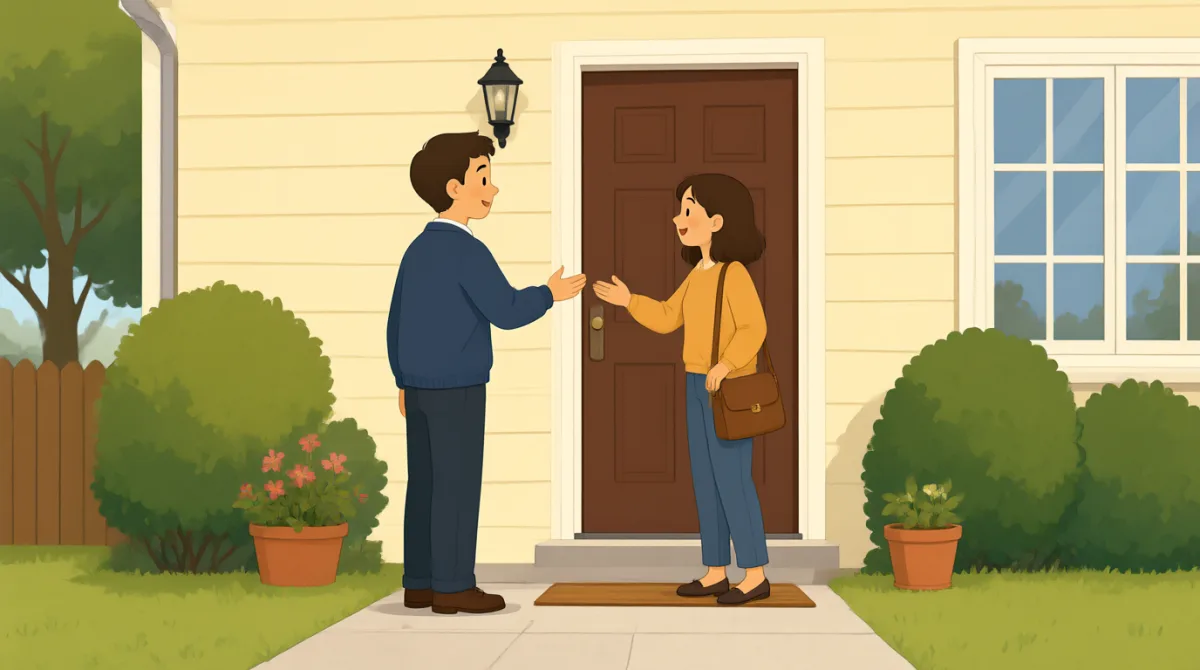

Good morning, Jack! Beautiful day today, isn't it?
सुप्रभात, जैक! आज मौसम कितना सुहावना है, है न?

Good morning, Emma! Yes, it's lovely. Perfect weather for a morning walk.
सुप्रभात, एमा! हाँ, बहुत बढ़िया है। सुबह की सैर के लिए एकदम सही मौसम है।
Are you heading to work early today?
क्या आज तुम जल्दी काम पर जा रहे हो?
Actually, I'm just getting the mail. I have a flexible schedule today. How about you?
दरअसल, मैं बस डाक लेने आया हूँ। आज मेरे काम के समय में काफ़ी लचीलापन है। और तुम?
I'm off to the grocery store. We're having guests for dinner tonight.
मैं किराने की दुकान जा रही हूँ। आज रात हमारे घर मेहमान आ रहे हैं।
That sounds nice! I hope you have a wonderful time.
अच्छा लग रहा है! उम्मीद है तुम्हारी शाम बहुत अच्छी गुज़रेगी।
Thank you! Oh, by the way, did you hear about the new coffee shop opening on Main Street?
शुक्रिया! अच्छा, वैसे, क्या तुमने मेन स्ट्रीट पर खुलने वाली नई कॉफ़ी शॉप के बारे में सुना?
No, I didn't! That's great news. I love trying new places.
नहीं, मैंने नहीं सुना! यह तो बहुत अच्छी खबर है। मुझे नई जगहें आज़माना पसंद है।
Maybe we can check it out together sometime next week?
अगले हफ़्ते किसी दिन हम दोनों वहाँ जाकर देख लें?
That sounds perfect! Just let me know when you're free.
बहुत बढ़िया रहेगा! तुम जब भी खाली हो, बस मुझे बता देना।
Will do! Well, I better get going. Have a great day, Jack!
ज़रूर! अच्छा, अब मुझे चलना चाहिए। तुम्हारा दिन अच्छा गुज़रे, जैक!
You too, Emma! Enjoy your shopping and dinner tonight!
तुम्हारा भी, एमा! खरीदारी और आज रात के खाने का मज़ा लेना!
शब्दावली6
- lovelyसुहावना; मनभावन
This means very pleasant or beautiful. It's often used to describe weather, a person, or a thing. For example, 'What a lovely day!' or 'She looks lovely in that dress.'
इसका मतलब है बहुत सुखद या सुंदर। इसका इस्तेमाल अक्सर मौसम, किसी व्यक्ति या किसी चीज़ का वर्णन करने के लिए होता है। उदाहरण के लिए, 'What a lovely day!' (कितना सुहावना दिन है!) या 'She looks lovely in that dress.' (वह उस पोशाक में बहुत सुंदर लग रही है।)
- flexible scheduleलचीला कार्य-समय
This refers to a work schedule that allows someone to change their working hours or work days. It means you are not stuck with a fixed time.
इससे ऐसे काम के समय का मतलब है जिसमें कोई व्यक्ति अपने काम के घंटे या काम के दिन बदल सकता है। यानी उसे किसी तय समय-सारणी से बँधे रहने की ज़रूरत नहीं होती।
- grocery storeकिराने की दुकान
This is a shop that sells food and household supplies. In British English, it's often called a 'supermarket'.
यह ऐसी दुकान होती है जहाँ खाने-पीने की चीज़ें और घर में इस्तेमाल होने वाला सामान मिलता है। ब्रिटिश अंग्रेज़ी में इसे अक्सर 'supermarket' कहते हैं।
- guestsमेहमान
These are people who are invited to visit someone's house or to an event. For example, 'We are having guests for dinner tonight.'
ये वे लोग होते हैं जिन्हें किसी के घर या किसी कार्यक्रम में आने का न्योता दिया जाता है। उदाहरण के लिए, 'We are having guests for dinner tonight.' (आज रात हमारे घर खाने पर मेहमान आ रहे हैं।)
- by the wayवैसे; एक बात और
This is a phrase used to introduce a new topic that just came to your mind or to add extra information. It's similar to 'incidentally' or 'speaking of which'.
इस वाक्यांश का इस्तेमाल कोई नया विषय छेड़ने के लिए किया जाता है, जो अभी ध्यान में आया हो, या कोई अतिरिक्त जानकारी देने के लिए। इसका मतलब 'incidentally' या 'speaking of which' जैसा है।
- check outजाकर देखना; आज़माकर देखना
Here, it means to go to a place to see what it's like, often for the first time. For example, 'Let's check out the new restaurant.'
यहाँ इसका मतलब है किसी जगह को देखने जाना कि वह कैसी है, अक्सर पहली बार। उदाहरण के लिए, 'Let's check out the new restaurant.' (चलो, नए रेस्टोरेंट को जाकर देखते हैं।)
मुख्य वाक्य10
- 1
Beautiful day today, isn't it?
आज मौसम कितना सुहावना है, है न?
This is a common way to make small talk and agree on something obvious, like the weather. The 'isn't it?' at the end is a tag question, used to invite agreement or confirm information.
यह मौसम जैसी साफ़ नज़र आने वाली बात पर बातचीत शुरू करने और सहमति जताने का एक आम तरीका है। अंत में आने वाला 'isn't it?' एक टैग प्रश्न है, जिसका इस्तेमाल सामने वाले को सहमति जताने के लिए आमंत्रित करने या जानकारी की पुष्टि करने के लिए होता है।
- 2
Are you heading to work early today?
क्या आज तुम जल्दी काम पर जा रहे हो?
To 'head to' somewhere means to go in that direction. This is a polite way to ask about someone's plans or destination.
'head to' का मतलब है किसी जगह की ओर जाना। किसी से उसकी योजना या मंज़िल के बारे में पूछने का यह एक विनम्र तरीका है।
- 3
Actually, I'm just getting the mail.
दरअसल, मैं बस डाक लेने आया हूँ।
'Actually' is used here to correct a mistaken assumption or to provide a different piece of information. 'Getting the mail' simply means collecting letters or packages from a mailbox.
यहाँ 'Actually' का इस्तेमाल किसी गलत धारणा को सुधारने या अलग जानकारी देने के लिए किया गया है। 'Getting the mail' का सीधा मतलब है डाक-पेटी से चिट्ठियाँ या पार्सल लेना।
- 4
How about you?
और तुम?
This is a very useful and casual way to ask someone the same question they just asked you, or to ask a general question about their situation after sharing your own.
किसी के आपसे वही सवाल पूछने के बाद उससे वही सवाल पूछने, या अपनी बात बताने के बाद उसकी स्थिति के बारे में सामान्य रूप से पूछने का यह एक बहुत काम का और अनौपचारिक तरीका है।
- 5
That sounds nice!
अच्छा लग रहा है!
This is a positive and polite response when someone tells you about their plans or something happening. It shows you approve or are happy for them.
कोई अपनी योजना या किसी होने वाली बात के बारे में बताए, तो यह एक सकारात्मक और विनम्र जवाब है। इससे पता चलता है कि आपको उसकी बात अच्छी लगी या आप उसके लिए खुश हैं।
- 6
I hope you have a wonderful time.
उम्मीद है तुम्हारी शाम बहुत अच्छी गुज़रेगी।
This is a common and friendly way to wish someone well, especially when they are about to do something enjoyable like having guests or going to an event.
किसी के लिए शुभकामना देने का यह एक आम और दोस्ताना तरीका है, खासकर जब वह मेहमान बुलाने या किसी कार्यक्रम में जाने जैसी सुखद बात करने वाला हो।
- 7
Maybe we can check it out together sometime next week?
अगले हफ़्ते किसी दिन हम दोनों वहाँ जाकर देख लें?
'Maybe we can...' is a polite and suggestive way to propose an activity. 'Sometime next week' is a vague but flexible time frame, allowing for different days. This phrase is excellent for making tentative plans.
'Maybe we can...' किसी गतिविधि का सुझाव देने का एक विनम्र तरीका है। 'Sometime next week' समय की एक अस्पष्ट लेकिन लचीली अवधि बताता है, जिससे अलग-अलग दिन तय किए जा सकते हैं। कोई योजना पक्की किए बिना सुझाव देने के लिए यह वाक्यांश बहुत अच्छा है।
- 8
Just let me know when you're free.
तुम जब भी खाली हो, बस मुझे बता देना।
This is a common and practical way to tell someone to inform you about their availability, especially after making a tentative plan. It puts the responsibility on them to confirm.
कोई अस्थायी योजना बनाने के बाद सामने वाले से उसका खाली समय बताने के लिए कहने का यह एक आम और व्यावहारिक तरीका है। इससे योजना पक्की करने की ज़िम्मेदारी उसी पर रहती है।
- 9
I better get going.
अच्छा, अब मुझे चलना चाहिए।
This is a casual way to say 'I should leave now' or 'It's time for me to go.' It's often used when you've been chatting and need to end the conversation politely.
यह 'I should leave now' या 'It's time for me to go.' कहने का अनौपचारिक तरीका है। बातचीत करते हुए जब आपको विनम्रता से विदा लेनी हो, तब इसका इस्तेमाल अक्सर किया जाता है।
- 10
You too!
तुम्हारा भी!
This is a very common and friendly short response, meaning 'The same to you!' or 'You have a great day/time too!'. It's a quick and polite way to return a good wish.
यह बहुत आम और दोस्ताना छोटा-सा जवाब है। इसका मतलब है 'तुम्हें भी वही शुभकामना!' या 'तुम्हारा दिन/समय भी अच्छा गुज़रे!' किसी की शुभकामना का जवाब देने का यह एक झटपट और विनम्र तरीका है।