Morning Greetings with Neighbors
Komşularla Sabah Selamlaşması
Exchanging friendly morning greetings with neighbors while leaving home or getting mail
Evden çıkarken ya da postalarını alırken komşularla dostça sabah selamlaşmaları
Diyalog12
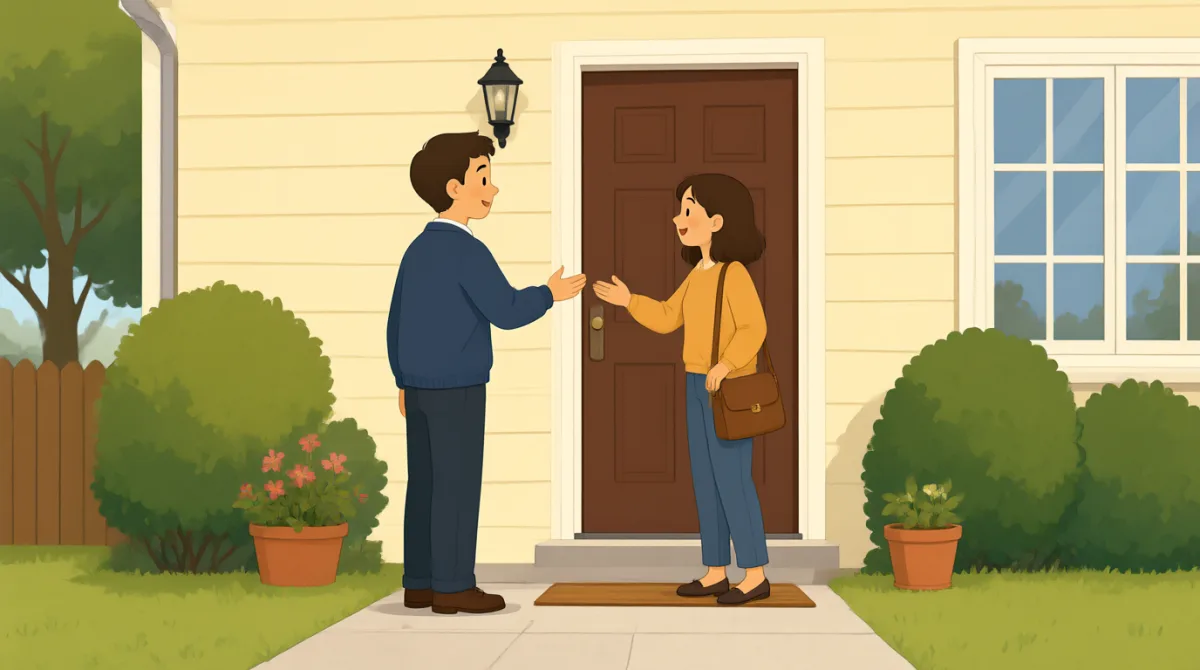

Good morning, Jack! Beautiful day today, isn't it?
Günaydın, Jack! Bugün hava çok güzel, değil mi?

Good morning, Emma! Yes, it's lovely. Perfect weather for a morning walk.
Günaydın, Emma! Evet, hava harika. Sabah yürüyüşü için mükemmel.
Are you heading to work early today?
Bugün işe erkenden mi gidiyorsun?
Actually, I'm just getting the mail. I have a flexible schedule today. How about you?
Aslında sadece postaları almaya çıktım. Bugün çalışma saatlerim esnek. Ya sen?
I'm off to the grocery store. We're having guests for dinner tonight.
Markete gidiyorum. Bu akşam yemeğe misafirlerimiz gelecek.
That sounds nice! I hope you have a wonderful time.
Kulağa hoş geliyor! Umarım çok güzel vakit geçirirsiniz.
Thank you! Oh, by the way, did you hear about the new coffee shop opening on Main Street?
Teşekkürler! Bu arada, Main Street'te açılacak yeni kahve dükkânını duydun mu?
No, I didn't! That's great news. I love trying new places.
Hayır, duymadım! Harika bir haber. Yeni yerler keşfetmeyi seviyorum.
Maybe we can check it out together sometime next week?
Belki gelecek hafta bir ara birlikte gidip bakabiliriz?
That sounds perfect! Just let me know when you're free.
Harika olur! Ne zaman müsait olduğunu haber ver yeter.
Will do! Well, I better get going. Have a great day, Jack!
Tamam! Neyse, artık gitmem gerek. İyi günler, Jack!
You too, Emma! Enjoy your shopping and dinner tonight!
Sana da, Emma! Alışverişin ve bu akşamki yemeğiniz güzel geçsin!
Kelime Bilgisi6
- lovelyhoş, güzel
This means very pleasant or beautiful. It's often used to describe weather, a person, or a thing. For example, 'What a lovely day!' or 'She looks lovely in that dress.'
Çok hoş ya da güzel anlamına gelir. Genellikle havayı, bir kişiyi veya bir şeyi tanımlamak için kullanılır. Örneğin: 'What a lovely day!' (Ne güzel bir gün!) ya da 'She looks lovely in that dress.' (O elbiseyle çok güzel görünüyor.)
- flexible scheduleesnek çalışma saatleri
This refers to a work schedule that allows someone to change their working hours or work days. It means you are not stuck with a fixed time.
Bir kişinin çalışma saatlerini veya çalışma günlerini değiştirebildiği bir çalışma düzenini anlatır. Yani sabit bir programa bağlı değilsinizdir.
- grocery storemarket, bakkal
This is a shop that sells food and household supplies. In British English, it's often called a 'supermarket'.
Yiyecek ve ev ihtiyaçları satan bir dükkândır. Britanya İngilizcesinde buna sık sık 'supermarket' denir.
- guestsmisafirler
These are people who are invited to visit someone's house or to an event. For example, 'We are having guests for dinner tonight.'
Birinin evine ya da bir etkinliğe davet edilen kişilerdir. Örneğin: 'We are having guests for dinner tonight.' (Bu akşam yemeğe misafirlerimiz gelecek.)
- by the waybu arada
This is a phrase used to introduce a new topic that just came to your mind or to add extra information. It's similar to 'incidentally' or 'speaking of which'.
Aklınıza yeni gelen bir konuyu açarken ya da ek bilgi verirken kullanılan bir ifadedir. 'incidentally' veya 'speaking of which' ifadelerine benzer.
- check outgidip bakmak, keşfetmek
Here, it means to go to a place to see what it's like, often for the first time. For example, 'Let's check out the new restaurant.'
Burada, genellikle ilk kez olmak üzere bir yerin nasıl olduğunu görmek için oraya gitmek anlamına gelir. Örneğin: 'Let's check out the new restaurant.' (Yeni restorana gidip bakalım.)
Önemli Cümleler10
- 1
Beautiful day today, isn't it?
Bugün hava çok güzel, değil mi?
This is a common way to make small talk and agree on something obvious, like the weather. The 'isn't it?' at the end is a tag question, used to invite agreement or confirm information.
Bu, hava durumu gibi herkesin görebileceği bir şey hakkında sohbet başlatmanın ve karşıdakiyle aynı fikirde olmanın yaygın bir yoludur. Sondaki 'isn't it?' bir soru ekidir; karşıdakini onaylamaya davet etmek veya bir bilgiyi doğrulamak için kullanılır.
- 2
Are you heading to work early today?
Bugün işe erkenden mi gidiyorsun?
To 'head to' somewhere means to go in that direction. This is a polite way to ask about someone's plans or destination.
'Head to' bir yere doğru gitmek anlamına gelir. Birine planlarını ya da nereye gittiğini sormanın nazik bir yoludur.
- 3
Actually, I'm just getting the mail.
Aslında sadece postaları almaya çıktım.
'Actually' is used here to correct a mistaken assumption or to provide a different piece of information. 'Getting the mail' simply means collecting letters or packages from a mailbox.
'Actually' burada yanlış bir varsayımı düzeltmek ya da farklı bir bilgi vermek için kullanılır. 'Getting the mail' ise posta kutusundaki mektupları veya paketleri almak demektir.
- 4
How about you?
Ya sen?
This is a very useful and casual way to ask someone the same question they just asked you, or to ask a general question about their situation after sharing your own.
Bu, birinin size sorduğu sorunun aynısını ona yöneltmenin ya da kendinizden bahsettikten sonra onun durumunu genel olarak sormanın çok kullanışlı ve samimi bir yoludur.
- 5
That sounds nice!
Kulağa hoş geliyor!
This is a positive and polite response when someone tells you about their plans or something happening. It shows you approve or are happy for them.
Birisi planlarından ya da olacak bir şeyden söz ettiğinde verilen olumlu ve nazik bir karşılıktır. Onayladığınızı veya onun adına sevindiğinizi gösterir.
- 6
I hope you have a wonderful time.
Umarım çok güzel vakit geçirirsin.
This is a common and friendly way to wish someone well, especially when they are about to do something enjoyable like having guests or going to an event.
Birine, özellikle misafir ağırlamak ya da bir etkinliğe katılmak gibi keyifli bir şey yapmak üzereyken, iyi dileklerde bulunmanın yaygın ve samimi bir yoludur.
- 7
Maybe we can check it out together sometime next week?
Belki gelecek hafta bir ara birlikte gidip bakabiliriz?
'Maybe we can...' is a polite and suggestive way to propose an activity. 'Sometime next week' is a vague but flexible time frame, allowing for different days. This phrase is excellent for making tentative plans.
'Maybe we can...' bir etkinlik önermek için kullanılan nazik ve yumuşak bir ifadedir. 'Sometime next week' belirli bir gün belirtmeden gelecek hafta içinde esnek bir zaman aralığı anlatır. Kesinleşmemiş planlar yapmak için çok uygundur.
- 8
Just let me know when you're free.
Ne zaman müsait olduğunu haber ver yeter.
This is a common and practical way to tell someone to inform you about their availability, especially after making a tentative plan. It puts the responsibility on them to confirm.
Özellikle henüz kesinleşmemiş bir plan yaptıktan sonra, birinden ne zaman müsait olduğunu bildirmesini istemenin yaygın ve pratik bir yoludur. Kesinleştirme işini karşı tarafa bırakır.
- 9
I better get going.
Artık gitmem gerek.
This is a casual way to say 'I should leave now' or 'It's time for me to go.' It's often used when you've been chatting and need to end the conversation politely.
'I should leave now' ya da 'It's time for me to go' demenin samimi bir yoludur. Sohbet ederken ayrılmanız gerektiğinde konuşmayı nazikçe bitirmek için sıkça kullanılır.
- 10
You too!
Sana da!
This is a very common and friendly short response, meaning 'The same to you!' or 'You have a great day/time too!'. It's a quick and polite way to return a good wish.
'The same to you!' ya da 'You have a great day/time too!' anlamına gelen çok yaygın ve samimi bir kısa karşılıktır. İyi dileğe hızlı ve nazikçe karşılık vermek için kullanılır.