Weighing Vegetables
称蔬菜
Emma needs to weigh some vegetables. Jack helps her find them on the machine screen.
Emma需要称一些蔬菜。Jack帮她在机器屏幕上找到蔬菜选项。
对话7
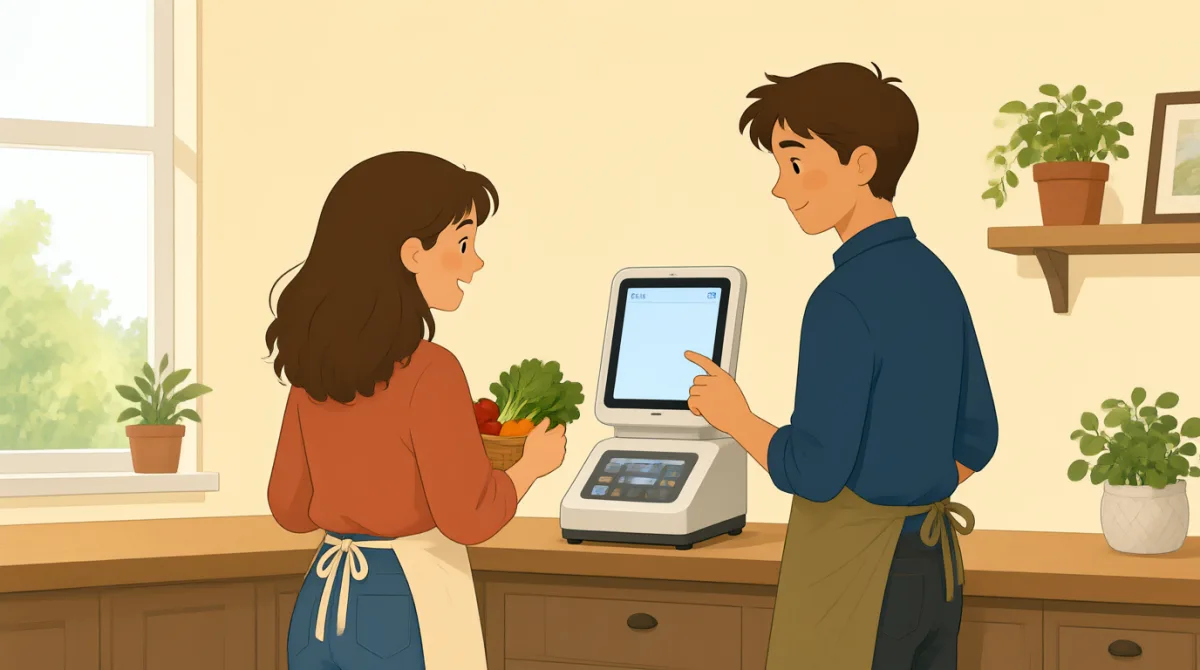

I need to weigh these apples. Where do I start?
我需要称一下这些苹果。我从哪里开始?

Choose “Fruit” on the screen.
在屏幕上选择“水果”。
I see it. What do I do next?
我看到了。接下来怎么做?
Tap “Apples,” then put them on the scale.
点“苹果”,然后把苹果放在秤上。
Okay. Now I scan this label?
好的。现在我扫这个标签吗?
Yes. Scan the label on the bag.
对。扫描袋子上的标签。
Great, it worked. Thanks for your help!
太好了,成功了。谢谢你帮忙!
词汇7
- weigh称重
To find how heavy something is. Here, Emma wants to find the weight of the apples.
指称出某样东西有多重。这里,艾玛想知道这些苹果的重量。
- on the screen在屏幕上
Shown on the machine's display. You can choose an option on the screen.
显示在机器的屏幕上。你可以在屏幕上选择一个选项。
- next接下来
The thing that comes after this. Use “What do I do next?” to ask for the next step.
指紧接着发生或要做的事。可以用“What do I do next?”来询问下一步该做什么。
- put them on the scale把它们放在秤上
Place the items on the machine that measures weight. You can say this when you need to weigh something.
把物品放到称重的机器上。需要称东西时,可以这样说。
- scan the label扫描标签
Use the scanner to read the label. At self-checkout, the label can show the item's price.
用扫描器读取标签。在自助结账时,标签上可能会显示商品的价格。
- worked成功了
Means that something did what you wanted. You can say “It worked” when a machine or action is successful.
表示某件事达到了你想要的效果。机器或某个操作成功时,可以说“It worked”。
- Thanks for your help!谢谢你帮忙!
A polite way to thank someone for helping you. Use it when someone gives you assistance.
这是感谢别人帮助你的礼貌说法。有人帮了你时可以这样说。
重点句子8
- 1
I need to weigh these apples.
我需要称一下这些苹果。
Use “I need to” to say what you have to do. Replace “weigh” and “these apples” with another task and item.
用“I need to”来表达自己需要做什么。你可以把“weigh”和“these apples”换成其他任务和物品。
- 2
Where do I start?
我从哪里开始?
Use this question when you do not know the first step. It is useful with a new machine or activity.
不知道第一步该做什么时,可以用这个问题。使用新机器或参加新活动时,这句话很实用。
- 3
Choose “Fruit” on the screen.
在屏幕上选择“Fruit”。
This gives a simple instruction for selecting an option. Replace “Fruit” with the option you need.
这是一个简单的指示,告诉别人选择某个选项。你可以把“Fruit”换成需要的选项。
- 4
What do I do next?
接下来我该做什么?
Use this to ask for the next step. It is helpful when someone is guiding you through a task.
用这句话询问下一步该做什么。有人在指导你完成一项任务时,这句话很实用。
- 5
Tap “Apples,” then put them on the scale.
点“Apples”,然后把它们放在秤上。
This sentence gives two steps in order. Use “then” to show what to do after the first action.
这句话按顺序说明了两个步骤。用“then”表示第一步之后要做什么。
- 6
Now I scan this label?
现在我扫这个标签吗?
This is a simple way to check if you should do something now. You can replace “scan this label” with another action.
这是一种简单的问法,用来确认现在是否应该做某件事。你可以把“scan this label”换成其他操作。
- 7
Yes. Scan the label on the bag.
对。扫描袋子上的标签。
Use this to confirm and give a short instruction. Replace “the label on the bag” with the item or place to scan.
用这句话确认对方的做法,并给出简短指示。你可以把“the label on the bag”换成要扫描的物品或位置。
- 8
Great, it worked.
太好了,成功了。
Say this when something is successful. You can use it after a machine or action does what you want.
事情顺利完成时可以这样说。机器或某个操作达到了你想要的效果后,也可以用这句话。