Understanding the Instructions
理解操作說明
A user arrives at the self-service car wash and tries to understand the instructions displayed on the machine or a sign for the first time.
使用者第一次到達自助洗車場,試圖理解機器或指示牌上顯示的操作說明。
對話8
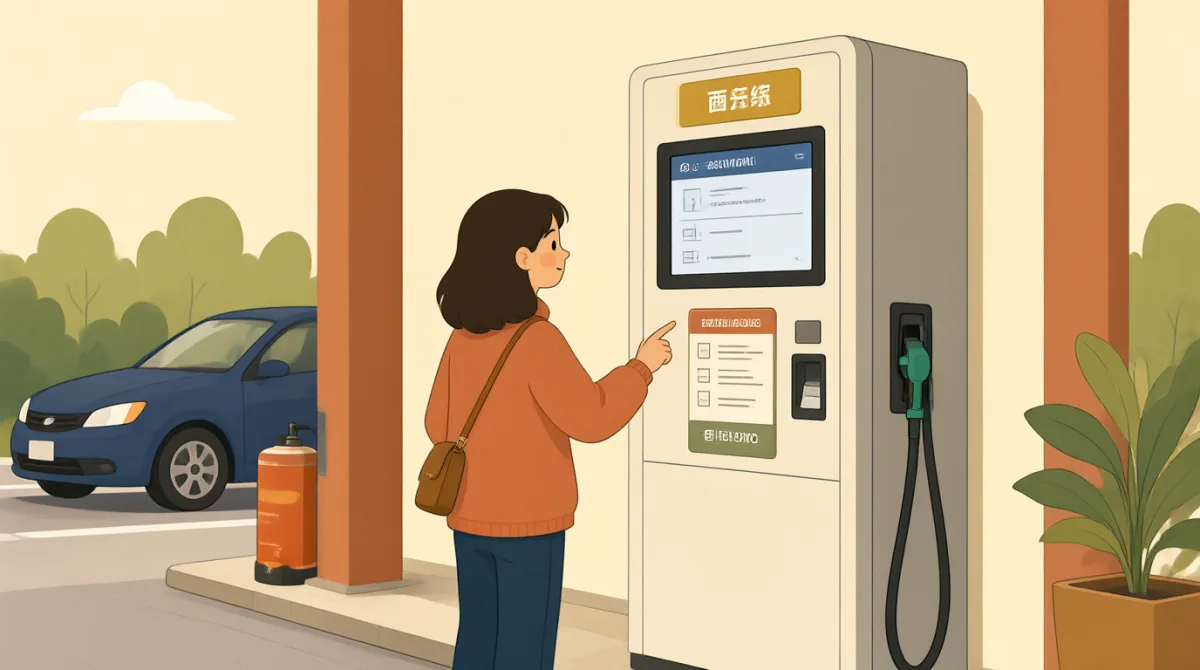

Hmm, okay. So, it says 'Insert Coins or Card' first. Got it.
嗯,好的。所以,它先說“投入硬幣或刷卡”。明白了。

What about the different wash options? I'm not sure if I need the 'Super Foam' or just the 'Rinse'.
那不同的洗車選項呢?我不確定我需要“超級泡沫”還是隻是“沖洗”。
Looks like the 'Super Foam' is for a deeper clean, probably. And 'Rinse' just gets the soap off.
看起來“超級泡沫”是用於更深層的清潔,大概吧。“沖洗”只是沖掉肥皂。
And there's a 'Wax' option too. Do we need that?
還有一個“打蠟”選項。我們需要那個嗎?
It says 'Protective Wax'. Probably good for keeping the car shiny for longer. But let's just focus on getting it clean first. We can skip the wax this time.
上面寫著“保護蠟”。大概能讓車身保持光亮更久。但我們還是先專注於把它洗乾淨吧。這次可以跳過打蠟。
Okay, so insert money, then pick 'Super Foam', then 'Rinse'. Is that the right order?
好的,那就是先投錢,然後選“超級泡沫”,再選“沖洗”。這個順序對嗎?
Yeah, that seems to be the logical flow. The instructions are a bit small to read from here, but I think we've got it.
是的,這看起來是合乎邏輯的順序。說明書從這裡看有點小,但我認為我們明白了。
Alright, let's try it. Hope I don't mess it up!
好的,我們試試看。希望我別搞砸了!
詞彙7
- insert投入
To put something into a machine or slot, like coins into a vending machine. In this dialogue, it means putting money into the car wash machine to start it.
把東西放進機器或投入口裡,比如把硬幣投進自動售貨機。在這段對話裡,它指把錢投入洗車機來啟動機器。
- coins硬幣
Small metal pieces of money used for payments. Here, they are inserted into the car wash machine as payment.
用於付款的小塊金屬錢幣。這裡指投入洗車機作為付款方式的硬幣。
- rinse沖洗
To wash something with clean water to remove soap or dirt. In car washing, it means spraying water to clean off the foam.
用乾淨的水沖洗東西,去掉肥皂或汙垢。洗車時,它指噴水把泡沫沖掉。
- wax蠟
A substance applied to a car to make it shiny and protect the paint. The 'wax' option in the dialogue adds a protective layer.
塗在車上、讓車身發亮並保護車漆的物質。對話裡的“wax”選項會給車身新增一層保護膜。
- skip跳過
To choose not to do something or pass over it. In the conversation, it means not using the wax option this time.
指選擇不做某事,或略過某個步驟。在這段對話裡,它指這次不使用打蠟選項。
- logical合乎邏輯的
Something that makes sense or follows a reasonable order. Here, it describes the step-by-step instructions for using the machine.
指講得通或符合合理的順序。這裡用來形容使用機器的步驟安排得有條理。
- mess up搞砸
An informal phrase meaning to make a mistake or do something wrong. Emma uses it to express worry about operating the machine incorrectly.
一個非正式說法,意思是犯錯或把事情做錯。艾瑪用它來表達自己擔心操作機器時出錯。
關鍵句7
- 1
Insert Coins or Card first. Got it.
先投入硬幣或刷卡。明白了。
This sentence gives a simple instruction and confirms understanding. 'Got it' is a casual way to say 'I understand.' It's useful for following steps in machines or apps, and the structure is imperative (command form) followed by confirmation.
這句話先給出一個簡單的指示,然後表示自己聽懂了。“Got it”是很隨意的“我明白了”的說法。跟著機器或應用程式上的步驟操作時很實用。句型是祈使句(命令形式)加上確認回應。
- 2
I'm not sure if I need the 'Super Foam' or just the 'Rinse'.
我不確定我需要“超級泡沫”還是隻要“沖洗”。
This expresses uncertainty about choices using 'I'm not sure if' and 'or' for alternatives. It's practical for asking about options in services like car washes or restaurants, showing how to compare basic vs. advanced features.
這句話用“I'm not sure if”和“or”來表達對選項拿不準,並列出不同選擇。在洗車、餐廳等服務場景中詢問選項時很實用,也能用來比較基礎功能和高階功能。
- 3
Looks like the 'Super Foam' is for a deeper clean, probably.
看起來“超級泡沫”是用來深度清潔的,大概吧。
This uses 'looks like' to give an opinion based on reading instructions, with 'probably' to show it's not certain. It's useful for explaining product purposes and softens statements to avoid sounding too sure.
這句話用“looks like”表達根據說明得出的看法,再用“probably”表示不太確定。解釋產品用途時很實用,也能讓語氣聽起來不那麼肯定。
- 4
Do we need that?
我們需要那個嗎?
A short question using 'do we need' to ask for advice on whether something is necessary. It's a common pattern for decision-making in group situations, like shopping or services, and encourages discussion.
這是一個簡短的問題,用“do we need”詢問某樣東西是否有必要。在購物或使用服務等需要一起做決定的場合,這種句型很常見,也能引發討論。
- 5
We can skip the wax this time.
這次我們可以跳過打蠟。
This suggests avoiding an option using 'can skip' for permission or choice. It's helpful for prioritizing tasks and politely declining extras, with 'this time' implying it might be done later.
這句話用“can skip”表示可以選擇不做某個選項。安排事情的優先順序或禮貌地婉拒額外專案時很實用。“this time”表示以後可能會做,只是這次不做。
- 6
Is that the right order?
這個順序對嗎?
This questions the sequence of steps with 'is that the right' structure. It's essential for confirming instructions in processes like cooking or using machines, emphasizing the importance of order in English.
這句話用“is that the right”來確認步驟的先後順序。在做飯或使用機器等需要按步驟操作的過程中,這種問法很重要,能強調順序是否正確。
- 7
Hope I don't mess it up!
希望我別搞砸了!
An informal expression of hope using 'hope' with a negative clause. 'Mess it up' is slang for failing. It's useful for showing nervousness before trying something new, common in casual conversations.
這是一個非正式的表達,用“hope”加上否定從句來表達希望。“Mess it up”是表示搞砸的口語說法。嘗試新事物前想表達緊張時,這種說法很實用,在輕鬆的日常對話中也很常見。