Using the Foam Brush
使用泡沫刷
The user switches to the foam brush feature to lather the car with soap, focusing on cleaning stubborn dirt.
使用者切換到泡沫刷功能,用肥皂給汽車打泡沫,專注於清潔頑固汙垢。
對話7
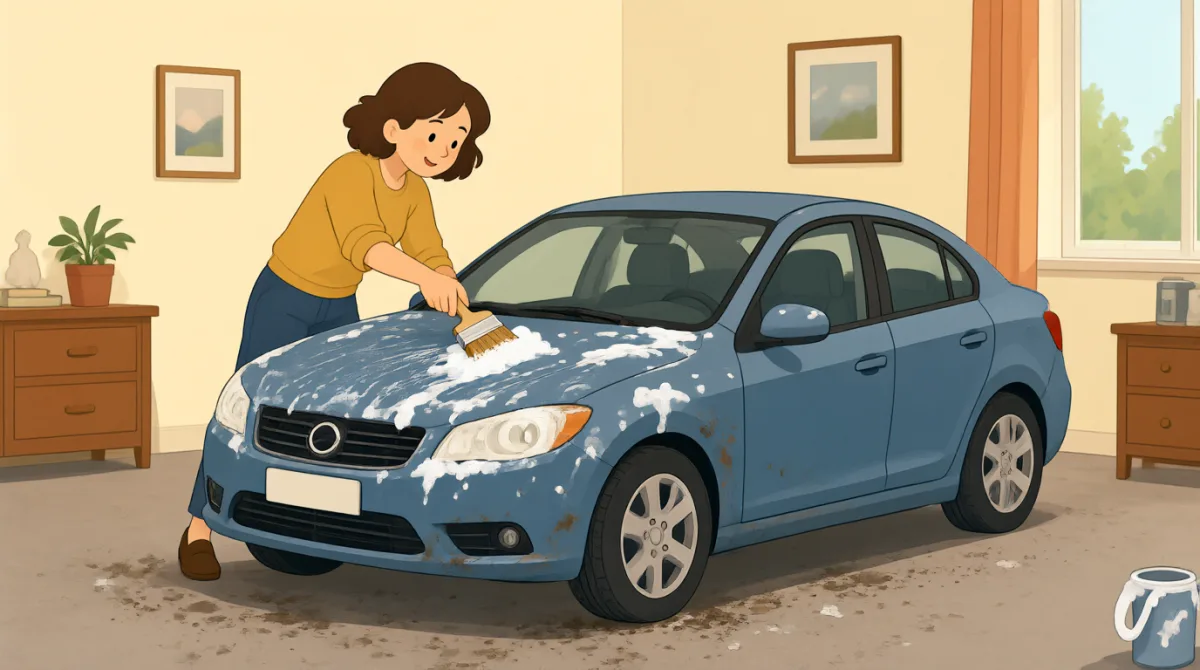

Okay, time to switch to the foam brush. This is where the magic happens for tough spots.
好的,是時候換泡沫刷了。頑固的汙漬就靠它了。

Oh, that's the one that really lathers up the soap, right? I always forget which setting does what.
哦,這個是能打出很多泡沫的那個,對吧?我總是忘了哪個設定是幹什麼的。
Exactly. You get a thick layer of soap, which helps break down all the grime and dirt that's really stuck on.
沒錯。它能產生厚厚的泡沫,有助於分解所有頑固的汙垢和泥土。
So, do you just go over the whole car with it, or focus on specific areas?
那你是用它刷整個車,還是隻專注於特定區域?
I usually do a quick pass over the whole car first, then go back and scrub the really dirty spots, like around the wheel wells or the lower panels.
我通常會先快速地刷一遍整個車,然後再回去仔細刷那些特別髒的地方,比如輪拱周圍或者下部面板。
That makes sense. I always find the bottom of the doors get really grubby.
有道理。我總是覺得車門底部特別髒。
Yep, especially during winter. Just make sure to rinse off all the soap thoroughly afterwards, or you'll get streaks.
是的,尤其是在冬天。刷完後一定要徹底沖洗掉所有肥皂,不然會有水痕的。
詞彙8
- foam brush泡沫刷
A tool at a self-service car wash that applies soapy foam to clean the car; it's like a big brush with soap bubbles for better cleaning.
自助洗車場裡用來給汽車塗抹肥皂泡沫的工具。它就像一把沾滿肥皂泡的大刷子,能幫助洗得更乾淨。
- lathers up起泡
Means to create a lot of thick foam or bubbles with soap; useful when describing how to make soap foamy for washing.
指用肥皂產生大量濃密的泡沫或氣泡。描述洗車時怎樣讓肥皂起泡很有用。
- grime汙垢
Dirty marks or filth that are hard to remove, like built-up dirt on a car; common in cleaning contexts.
指難以清除的髒汙,比如積在汽車上的泥垢;常用於清潔相關的語境。
- scrub刷洗
To rub hard with a brush to clean something thoroughly; often used for tough dirt on surfaces like cars.
用刷子用力擦洗,把東西徹底洗乾淨;常用來描述清除汽車表面等處的頑固汙垢。
- wheel wells輪拱內側
The areas around the wheels of a car where dirt collects easily; important part to clean in car washing.
汽車車輪周圍容易積攢汙垢的區域,是洗車時需要清潔的部位。
- grubby髒兮兮的
Very dirty or covered in grime; a casual word to describe something that's not clean, like car parts.
形容東西很髒或沾滿汙垢,是個比較口語的說法,可以用來描述汽車部件。
- rinse off沖洗掉
To wash away soap or dirt with water; essential step after soaping to avoid residue on the car.
用水把肥皂或汙垢沖掉。給車打完泡沫後一定要衝洗乾淨,以免留下殘留物。
- streaks水痕
Marks or lines left on a surface from drying soap or water; something to avoid by rinsing well.
肥皂或水乾了以後留在表面上的痕跡或條紋;沖洗乾淨就能避免留下水痕。
關鍵句6
- 1
Okay, time to switch to the foam brush. This is where the magic happens for tough spots.
好,該換泡沫刷了。對付頑固汙漬,就靠它了。
This sentence introduces a change in action and uses 'magic happens' idiomatically to mean 'real effectiveness starts'; useful for explaining steps in a process, like car washing, and shows casual excitement. Grammar: Imperative 'switch to' for instructions.
這句話表示要開始做下一步,用“magic happens”來形象地說真正有效的清潔從這一步開始。洗車這類流程中可以用這種說法來介紹步驟,語氣也顯得輕鬆又有點興奮。語法上,“switch to”可用於說明要改用某種工具或方法。
- 2
Oh, that's the one that really lathers up the soap, right?
哦,就是那個能讓肥皂起很多泡沫的,對吧?
A confirmation question using 'right?' to check understanding; practical for conversations when seeking agreement or clarification. It demonstrates tag questions for natural dialogue in learning situations.
這是用“right?”來確認自己是否理解正確的疑問句。在對話中想確認或徵求對方認同時,可以這樣問。這種表達讓交流聽起來更自然。
- 3
You get a thick layer of soap, which helps break down all the grime and dirt that's really stuck on.
它能形成一層厚厚的泡沫,有助於分解粘在車上的頑固汙垢和泥土。
Explains a benefit with a relative clause 'which helps'; useful for describing how something works in cleaning. 'Break down' means to dissolve; good for intermediate learners to express cause and effect.
這句話用“which helps”引出事物帶來的好處,適合用來描述某種東西的作用。“break down”在這裡指分解或瓦解汙垢,能幫助你表達原因和結果。
- 4
I usually do a quick pass over the whole car first, then go back and scrub the really dirty spots.
我通常會先快速地刷一遍整輛車,然後再回去仔細刷那些特別髒的地方。
Describes a sequence of actions with 'first, then'; practical for giving step-by-step advice. 'Quick pass' means a fast overall action; helps learners talk about routines or methods.
這句話用“first, then”按順序說明一連串動作,適合用來給出分步驟的建議。“quick pass”指快速地整體刷一遍,可以用來談論日常做法或清潔方法。
- 5
That makes sense. I always find the bottom of the doors get really grubby.
有道理。我總覺得車門底部特別髒。
Agrees and shares personal observation; 'makes sense' is a common idiom for understanding. Useful in casual talks to respond and add details; shows simple present for habits with 'always find'.
這句話先表示贊同,再分享自己的觀察。“makes sense”是常見表達,意思是“有道理”。在輕鬆的交談中,可以用它回應對方並補充自己的看法。“always find”則表示經常有這樣的感覺或發現。
- 6
Just make sure to rinse off all the soap thoroughly afterwards, or you'll get streaks.
之後一定要把肥皂徹底沖洗乾淨,不然車上會留下水痕。
Gives advice with 'make sure to' and a warning using 'or' for condition; essential for instructions to prevent problems. Practical in service scenarios; grammar includes imperative and future 'you'll get'.
這句話用“make sure to”提醒對方務必做某事,並用“or”引出不這麼做可能出現的問題。在給出操作建議、避免麻煩時,這種表達很實用。句子用了祈使結構,後半句的“you'll get”則說明可能出現的結果。