Understanding the Instructions
Hiểu hướng dẫn
A user arrives at the self-service car wash and tries to understand the instructions displayed on the machine or a sign for the first time.
Một người đến tiệm rửa xe tự phục vụ và lần đầu cố gắng hiểu hướng dẫn trên máy hoặc biển báo.
Hội thoại8
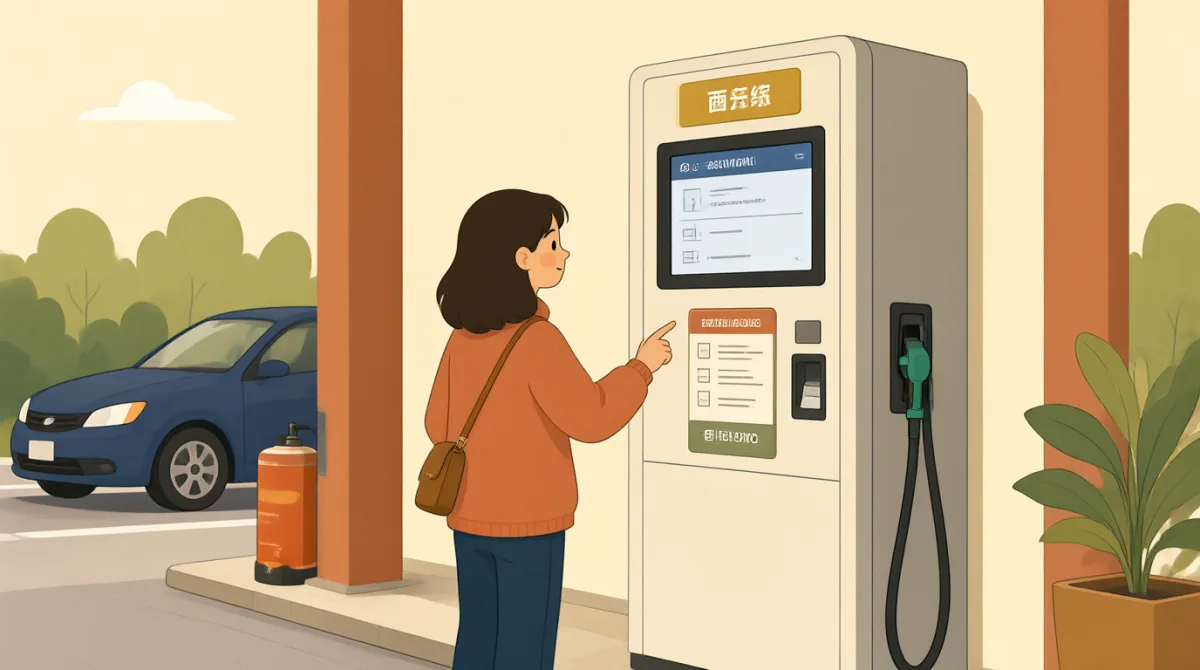

Hmm, okay. So, it says 'Insert Coins or Card' first. Got it.
Ừm, được rồi. Vậy đầu tiên là ghi “Insert Coins or Card”. Hiểu rồi.

What about the different wash options? I'm not sure if I need the 'Super Foam' or just the 'Rinse'.
Còn các chế độ rửa khác thì sao? Em không biết mình cần chọn “Super Foam” hay chỉ cần “Rinse” nữa.
Looks like the 'Super Foam' is for a deeper clean, probably. And 'Rinse' just gets the soap off.
Có vẻ “Super Foam” giúp rửa sạch sâu hơn. Còn “Rinse” chỉ xả sạch xà phòng thôi.
And there's a 'Wax' option too. Do we need that?
Còn có cả chế độ “Wax” nữa. Mình có cần dùng không?
It says 'Protective Wax'. Probably good for keeping the car shiny for longer. But let's just focus on getting it clean first. We can skip the wax this time.
Ở đây ghi “Protective Wax”. Chắc là giúp xe bóng lâu hơn. Nhưng mình cứ tập trung rửa sạch xe trước đã. Lần này mình bỏ qua bước phủ sáp nhé.
Okay, so insert money, then pick 'Super Foam', then 'Rinse'. Is that the right order?
Được rồi, vậy là cho tiền vào, rồi chọn “Super Foam”, sau đó chọn “Rinse”. Đúng thứ tự chưa anh?
Yeah, that seems to be the logical flow. The instructions are a bit small to read from here, but I think we've got it.
Ừ, có vẻ thứ tự đó hợp lý. Hướng dẫn hơi nhỏ nên đứng đây đọc không rõ lắm, nhưng anh nghĩ mình hiểu rồi.
Alright, let's try it. Hope I don't mess it up!
Được rồi, thử thôi. Hy vọng em không làm hỏng việc!
Từ vựng7
- insertcho vào
To put something into a machine or slot, like coins into a vending machine. In this dialogue, it means putting money into the car wash machine to start it.
“Insert” có nghĩa là cho vật gì đó vào máy hoặc khe, chẳng hạn như cho tiền xu vào máy bán hàng tự động. Trong đoạn hội thoại này, từ đó có nghĩa là cho tiền vào máy rửa xe để khởi động máy.
- coinstiền xu
Small metal pieces of money used for payments. Here, they are inserted into the car wash machine as payment.
Những miếng kim loại nhỏ dùng làm tiền để thanh toán. Ở đây, tiền xu được cho vào máy rửa xe để trả phí.
- rinsexả
To wash something with clean water to remove soap or dirt. In car washing, it means spraying water to clean off the foam.
Rửa một thứ bằng nước sạch để loại bỏ xà phòng hoặc bụi bẩn. Khi rửa xe, từ này có nghĩa là xịt nước để rửa trôi bọt xà phòng.
- waxsáp
A substance applied to a car to make it shiny and protect the paint. The 'wax' option in the dialogue adds a protective layer.
Chất được phủ lên xe để làm xe bóng và bảo vệ lớp sơn. Tùy chọn “wax” trong đoạn hội thoại giúp tạo một lớp bảo vệ.
- skipbỏ qua
To choose not to do something or pass over it. In the conversation, it means not using the wax option this time.
“Skip” có nghĩa là chọn không làm việc gì đó hoặc bỏ qua việc đó. Trong cuộc trò chuyện, từ này có nghĩa là lần này không dùng chế độ phủ sáp.
- logicalhợp lý
Something that makes sense or follows a reasonable order. Here, it describes the step-by-step instructions for using the machine.
“Logical” mô tả điều gì đó có lý hoặc diễn ra theo một trình tự hợp lý. Ở đây, từ này nói về các bước hướng dẫn sử dụng máy.
- mess uplàm hỏng việc
An informal phrase meaning to make a mistake or do something wrong. Emma uses it to express worry about operating the machine incorrectly.
“Mess up” là cách nói thân mật, có nghĩa là mắc lỗi hoặc làm sai điều gì đó. Emma dùng cụm này để thể hiện sự lo lắng rằng mình sẽ thao tác máy không đúng.
Câu trọng tâm7
- 1
Insert Coins or Card first. Got it.
Cho tiền xu hoặc thẻ vào trước. Hiểu rồi.
This sentence gives a simple instruction and confirms understanding. 'Got it' is a casual way to say 'I understand.' It's useful for following steps in machines or apps, and the structure is imperative (command form) followed by confirmation.
Câu này đưa ra một hướng dẫn đơn giản rồi xác nhận là đã hiểu. “Got it” là cách nói thân mật có nghĩa là “Tôi hiểu rồi”. Câu này hữu ích khi làm theo các bước trên máy móc hoặc ứng dụng. Cấu trúc gồm câu mệnh lệnh rồi đến lời xác nhận.
- 2
I'm not sure if I need the 'Super Foam' or just the 'Rinse'.
Em không biết mình cần chọn “Super Foam” hay chỉ cần “Rinse” nữa.
This expresses uncertainty about choices using 'I'm not sure if' and 'or' for alternatives. It's practical for asking about options in services like car washes or restaurants, showing how to compare basic vs. advanced features.
Câu này diễn tả sự không chắc chắn về các lựa chọn bằng “I'm not sure if” và dùng “or” để nêu các phương án. Cách nói này hữu ích khi hỏi về các lựa chọn trong những dịch vụ như rửa xe hoặc nhà hàng, đồng thời giúp so sánh tính năng cơ bản với tính năng nâng cao.
- 3
Looks like the 'Super Foam' is for a deeper clean, probably.
Có vẻ “Super Foam” giúp rửa sạch sâu hơn, chắc vậy.
This uses 'looks like' to give an opinion based on reading instructions, with 'probably' to show it's not certain. It's useful for explaining product purposes and softens statements to avoid sounding too sure.
Câu này dùng “looks like” để đưa ra nhận xét dựa trên hướng dẫn đã đọc, còn “probably” cho thấy người nói chưa hoàn toàn chắc chắn. Cách nói này hữu ích khi giải thích công dụng của sản phẩm và giúp nhận xét nghe bớt quả quyết.
- 4
Do we need that?
Mình có cần dùng cái đó không?
A short question using 'do we need' to ask for advice on whether something is necessary. It's a common pattern for decision-making in group situations, like shopping or services, and encourages discussion.
Câu hỏi ngắn này dùng “do we need” để hỏi xem một thứ có cần thiết hay không. Đây là cấu trúc thường dùng khi cùng nhau đưa ra quyết định, chẳng hạn như lúc mua sắm hoặc sử dụng dịch vụ, và giúp mọi người cùng trao đổi.
- 5
We can skip the wax this time.
Lần này mình có thể bỏ qua bước phủ sáp.
This suggests avoiding an option using 'can skip' for permission or choice. It's helpful for prioritizing tasks and politely declining extras, with 'this time' implying it might be done later.
Câu này gợi ý bỏ qua một lựa chọn bằng “can skip”, mang nghĩa có thể lựa chọn không làm việc đó. Cách nói này hữu ích khi quyết định việc nào cần ưu tiên hoặc từ chối nhẹ nhàng một dịch vụ thêm. “This time” cho thấy có thể lần sau sẽ làm.
- 6
Is that the right order?
Đó có phải là thứ tự đúng không?
This questions the sequence of steps with 'is that the right' structure. It's essential for confirming instructions in processes like cooking or using machines, emphasizing the importance of order in English.
Câu này dùng cấu trúc “is that the right” để hỏi về trình tự các bước. Câu này rất hữu ích khi xác nhận hướng dẫn trong những quy trình như nấu ăn hoặc sử dụng máy móc, vì trình tự rất quan trọng.
- 7
Hope I don't mess it up!
Hy vọng em không làm hỏng việc!
An informal expression of hope using 'hope' with a negative clause. 'Mess it up' is slang for failing. It's useful for showing nervousness before trying something new, common in casual conversations.
Đây là cách nói thân mật để bày tỏ hy vọng, dùng “hope” với một mệnh đề phủ định. “Mess it up” là cách nói không trang trọng, có nghĩa là làm hỏng việc. Câu này hữu ích để thể hiện sự hồi hộp trước khi thử điều gì đó mới, thường gặp trong những cuộc trò chuyện thân mật.