Understanding the Instructions
निर्देशों को समझना
A user arrives at the self-service car wash and tries to understand the instructions displayed on the machine or a sign for the first time.
एक व्यक्ति पहली बार सेल्फ़-सर्विस कार वॉश पर आता है और मशीन या किसी साइन पर दिए निर्देशों को समझने की कोशिश करता है।
संवाद8
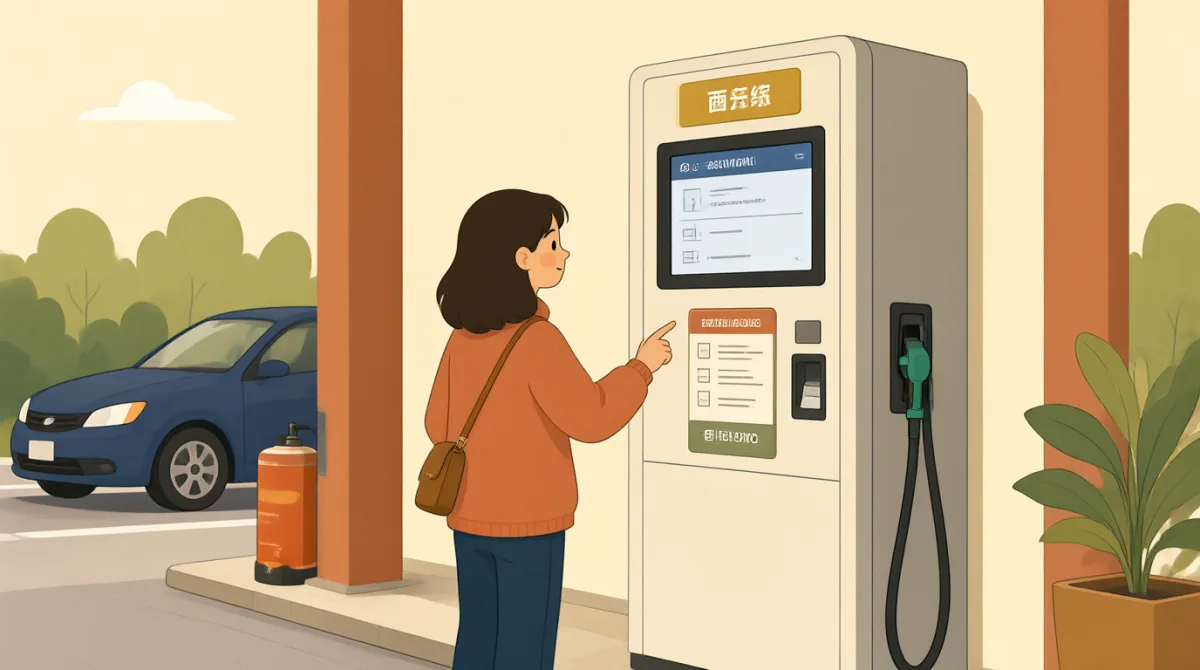

Hmm, okay. So, it says 'Insert Coins or Card' first. Got it.
हम्म, ठीक है। तो पहले इस पर लिखा है 'Insert Coins or Card'। समझ गया।

What about the different wash options? I'm not sure if I need the 'Super Foam' or just the 'Rinse'.
अलग-अलग वॉश विकल्पों का क्या? मुझे समझ नहीं आ रहा कि 'Super Foam' चाहिए या सिर्फ़ 'Rinse'।
Looks like the 'Super Foam' is for a deeper clean, probably. And 'Rinse' just gets the soap off.
लगता है 'Super Foam' से गाड़ी ज़्यादा अच्छी तरह साफ़ होती है। और 'Rinse' बस साबुन को धोकर हटा देता है।
And there's a 'Wax' option too. Do we need that?
और 'Wax' का विकल्प भी है। क्या हमें उसकी ज़रूरत है?
It says 'Protective Wax'. Probably good for keeping the car shiny for longer. But let's just focus on getting it clean first. We can skip the wax this time.
इस पर 'Protective Wax' लिखा है। शायद इससे गाड़ी ज़्यादा समय तक चमकती रहेगी। लेकिन पहले इसे साफ़ करने पर ध्यान देते हैं। इस बार वैक्स छोड़ सकते हैं।
Okay, so insert money, then pick 'Super Foam', then 'Rinse'. Is that the right order?
ठीक है, तो पहले पैसे डालें, फिर 'Super Foam' चुनें, और उसके बाद 'Rinse'। क्या यही सही क्रम है?
Yeah, that seems to be the logical flow. The instructions are a bit small to read from here, but I think we've got it.
हाँ, यही सही तरीका लगता है। यहाँ से निर्देश थोड़े छोटे दिख रहे हैं, लेकिन लगता है हमें समझ आ गया।
Alright, let's try it. Hope I don't mess it up!
ठीक है, चलो करके देखते हैं। उम्मीद है मुझसे गड़बड़ नहीं होगी!
शब्दावली7
- insertडालना
To put something into a machine or slot, like coins into a vending machine. In this dialogue, it means putting money into the car wash machine to start it.
किसी चीज़ को मशीन या स्लॉट के अंदर रखना, जैसे वेंडिंग मशीन में सिक्के डालना। इस बातचीत में इसका मतलब कार वॉश मशीन चालू करने के लिए उसमें पैसे डालना है।
- coinsसिक्के
Small metal pieces of money used for payments. Here, they are inserted into the car wash machine as payment.
धातु के छोटे टुकड़े जिनका इस्तेमाल पैसे के रूप में भुगतान करने के लिए होता है। यहाँ इन्हें भुगतान के तौर पर कार वॉश मशीन में डाला जाता है।
- rinseपानी से धोना
To wash something with clean water to remove soap or dirt. In car washing, it means spraying water to clean off the foam.
साबुन या गंदगी हटाने के लिए किसी चीज़ को साफ़ पानी से धोना। कार धोने में इसका मतलब झाग हटाने के लिए पानी का छिड़काव करना है।
- waxवैक्स
A substance applied to a car to make it shiny and protect the paint. The 'wax' option in the dialogue adds a protective layer.
गाड़ी को चमकाने और उसके पेंट की सुरक्षा के लिए उस पर लगाई जाने वाली चीज़। बातचीत में 'wax' का विकल्प सुरक्षा की एक परत चढ़ाता है।
- skipछोड़ देना
To choose not to do something or pass over it. In the conversation, it means not using the wax option this time.
किसी काम को न करने या उसे छोड़कर आगे बढ़ने का मतलब। बातचीत में इसका अर्थ है कि इस बार वैक्स का विकल्प इस्तेमाल नहीं करना।
- logicalतर्कसंगत
Something that makes sense or follows a reasonable order. Here, it describes the step-by-step instructions for using the machine.
ऐसी चीज़ जो समझ में आए या जिसका क्रम उचित हो। यहाँ यह मशीन इस्तेमाल करने के चरण-दर-चरण निर्देशों के बारे में है।
- mess upगड़बड़ कर देना
An informal phrase meaning to make a mistake or do something wrong. Emma uses it to express worry about operating the machine incorrectly.
गलती करने या कुछ गलत कर देने के लिए इस्तेमाल होने वाला अनौपचारिक वाक्यांश। एमा इसका इस्तेमाल मशीन गलत तरीके से चलाने की चिंता जताने के लिए करती है।
मुख्य वाक्य7
- 1
Insert Coins or Card first. Got it.
पहले सिक्के या कार्ड डालें। समझ गया।
This sentence gives a simple instruction and confirms understanding. 'Got it' is a casual way to say 'I understand.' It's useful for following steps in machines or apps, and the structure is imperative (command form) followed by confirmation.
इस वाक्य में एक आसान निर्देश दिया जाता है और फिर बताया जाता है कि बात समझ आ गई है। 'Got it' कहने का अनौपचारिक तरीका है 'I understand' (मैं समझ गया/गई)। मशीन या ऐप पर दिए चरणों का पालन करते समय यह काम आता है। इसमें पहले आदेश देने वाला रूप और फिर समझ की पुष्टि आती है।
- 2
I'm not sure if I need the 'Super Foam' or just the 'Rinse'.
मुझे समझ नहीं आ रहा कि मुझे 'Super Foam' चाहिए या सिर्फ़ 'Rinse'।
This expresses uncertainty about choices using 'I'm not sure if' and 'or' for alternatives. It's practical for asking about options in services like car washes or restaurants, showing how to compare basic vs. advanced features.
'I'm not sure if' और विकल्प बताने के लिए 'or' का इस्तेमाल करके यह वाक्य अनिश्चितता जताता है। कार वॉश या रेस्तराँ जैसी जगहों पर विकल्पों के बारे में पूछते समय यह काम आता है। इससे बुनियादी और बेहतर सुविधाओं की तुलना की जा सकती है।
- 3
Looks like the 'Super Foam' is for a deeper clean, probably.
लगता है 'Super Foam' से ज़्यादा अच्छी तरह सफ़ाई होती है। शायद।
This uses 'looks like' to give an opinion based on reading instructions, with 'probably' to show it's not certain. It's useful for explaining product purposes and softens statements to avoid sounding too sure.
निर्देश पढ़कर अपनी राय बताने के लिए इसमें 'looks like' का इस्तेमाल है, और 'probably' से पता चलता है कि बात पक्की नहीं है। किसी उत्पाद का उपयोग बताने के लिए यह उपयोगी है और बात को नरम बनाता है, ताकि आप ज़रूरत से ज़्यादा यक़ीन से बोलते हुए न लगें।
- 4
Do we need that?
क्या हमें उसकी ज़रूरत है?
A short question using 'do we need' to ask for advice on whether something is necessary. It's a common pattern for decision-making in group situations, like shopping or services, and encourages discussion.
'do we need' का इस्तेमाल करके यह छोटा-सा सवाल पूछता है कि किसी चीज़ की ज़रूरत है या नहीं। खरीदारी या सेवाओं जैसी सामूहिक स्थितियों में फ़ैसला लेते समय यह आम वाक्य-रचना है और चर्चा को बढ़ावा देती है।
- 5
We can skip the wax this time.
हम इस बार वैक्स छोड़ सकते हैं।
This suggests avoiding an option using 'can skip' for permission or choice. It's helpful for prioritizing tasks and politely declining extras, with 'this time' implying it might be done later.
'can skip' का इस्तेमाल करके यह किसी विकल्प को न चुनने का सुझाव देता है। कामों को प्राथमिकता देने और अतिरिक्त चीज़ों के लिए विनम्रता से मना करने में यह मददगार है। 'this time' से संकेत मिलता है कि शायद इसे बाद में किया जा सकता है।
- 6
Is that the right order?
क्या यही सही क्रम है?
This questions the sequence of steps with 'is that the right' structure. It's essential for confirming instructions in processes like cooking or using machines, emphasizing the importance of order in English.
'is that the right' वाली बनावट से इसमें चरणों के क्रम के बारे में पूछा जाता है। खाना पकाने या मशीन चलाने जैसी प्रक्रियाओं के निर्देशों की पुष्टि करने के लिए यह बहुत काम का है। अंग्रेज़ी में इससे क्रम के महत्व पर ज़ोर दिया जाता है।
- 7
Hope I don't mess it up!
उम्मीद है मुझसे गड़बड़ नहीं होगी!
An informal expression of hope using 'hope' with a negative clause. 'Mess it up' is slang for failing. It's useful for showing nervousness before trying something new, common in casual conversations.
इस अनौपचारिक वाक्य में 'hope' के साथ नकारात्मक उपवाक्य जोड़कर उम्मीद जताई जाती है। 'Mess it up' का मतलब है नाकाम होना या गड़बड़ कर देना। कुछ नया आज़माने से पहले घबराहट जताने के लिए यह उपयोगी है और आम तौर पर अनौपचारिक बातचीत में सुनाई देता है।