Greeting a Familiar Face
問候熟人
Two individuals who recognize each other (e.g., neighbors in the same building, colleagues at the same company) board the elevator and exchange brief, polite greetings.
兩個彼此認識的人(例如:同一棟樓的鄰居、同一公司的同事)進入電梯,並進行簡短禮貌的問候。
對話7
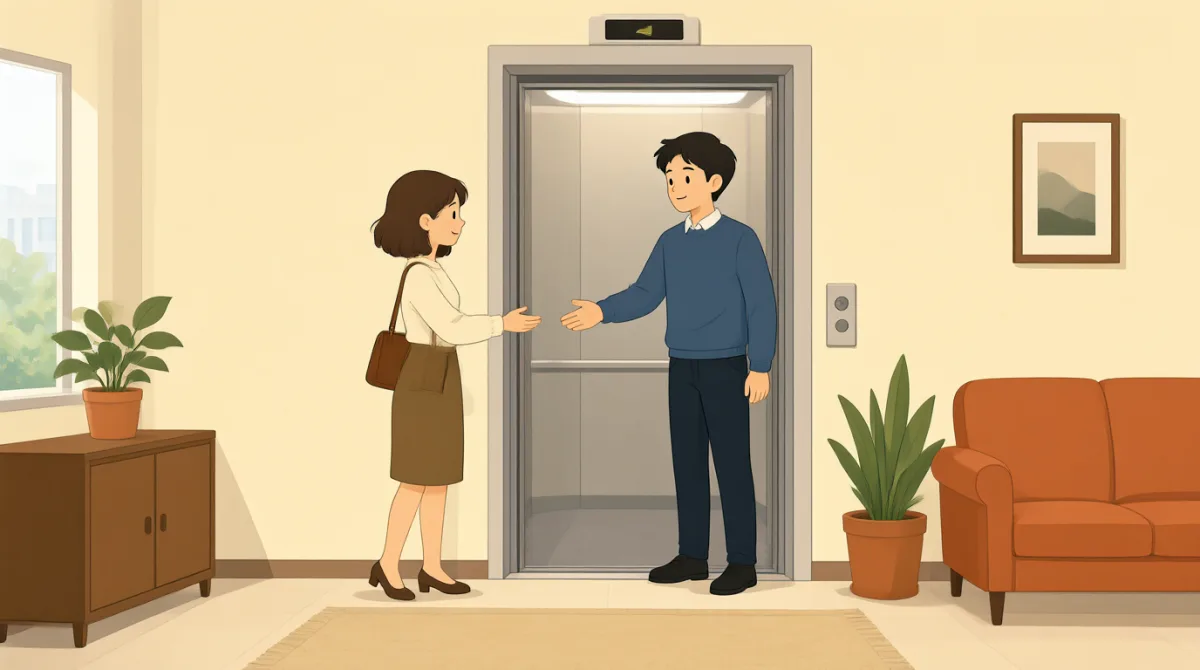

Morning, Mia!
早上好,米婭!

Oh, Jack! Good morning! Going up?
哦,傑克!早上好!上樓嗎?
Yep, to the 10th floor. Busy day ahead?
是啊,去10樓。今天會很忙嗎?
Looks like it. Just grabbing a coffee first. You?
看起來是。我得先去買杯咖啡。你呢?
Same here. Always need that morning fuel.
我也一樣。早上總需要那點兒精神動力。
Definitely. Have a good one, Jack!
那是肯定的。祝你有個美好的一天,傑克!
You too, Mia! See ya around.
你也是,米婭!回頭見。
詞彙6
- Morning早上好
A casual way to say 'good morning' when greeting someone in the morning. It's short and friendly, often used in informal situations like with neighbors.
這是早上問候別人時說“早上好”的隨意說法。簡短又友好,常用於鄰居之間這樣的非正式場合。
- Yep是啊
An informal version of 'yes' or 'yeah'. Use it in casual conversations to agree quickly, like answering a simple question.
這是“yes”或“yeah”的非正式說法。在輕鬆的對話中,可以用它快速表示贊同,比如回答一個簡單的問題。
- Busy忙碌的
Means having a lot of work or activities. In small talk, ask 'Busy day ahead?' to show interest in someone's schedule.
意思是有很多工作或事情要做。閒聊時可以問“Busy day ahead?”(今天會很忙嗎?),表示你關心對方的日程安排。
- Grabbing順便買
Short for 'getting or taking something quickly'. Like 'grabbing a coffee' means buying one on the way, common in daily routines.
這是“get or take something quickly”(快速拿到或買到某樣東西)的簡略說法。比如“grabbing a coffee”是指順路買杯咖啡,是日常生活中常見的表達。
- Fuel能量
Here, it means energy or something that gives you power to start the day, like coffee. It's a metaphor used in casual talk about mornings.
這裡指精力,或能讓你開啟新一天的動力,比如咖啡。這是在輕鬆聊天中談論早晨時使用的比喻說法。
- Definitely當然
Means 'certainly' or 'absolutely'. Use it to strongly agree with someone, making conversations more engaging.
意思是“肯定”或“絕對”。用它可以強烈表示贊同,讓對話更有互動感。
關鍵句8
- 1
Morning, Mia!
早上好,米婭!
This is a simple, informal greeting for the morning. Use it with people you know slightly, like neighbors. It's shorter than 'Good morning' and feels more natural in quick chats.
這是早上簡單、隨意的問候語。可以對不太陌生的人使用,比如鄰居。它比“Good morning”更簡短,在匆匆打招呼時聽起來更自然。
- 2
Good morning! Going up?
早上好!上樓嗎?
A polite greeting followed by a question about direction in an elevator. The question uses present continuous 'going up' to ask about current plans. Useful for starting small talk in shared spaces.
這是禮貌的問候,後面接著詢問對方在電梯裡要去哪個方向。這裡用現在進行時“going up”詢問對方眼下要去哪裡。這句話很適合在公共空間開啟閒聊。
- 3
Yep, to the 10th floor.
是啊,去10樓。
A casual response to a yes/no question, adding details. 'Yep' is informal agreement, and specifying the floor keeps the conversation going naturally.
這是對一般疑問句的隨意回答,並補充了具體資訊。“Yep”表示非正式的贊同,說出樓層也能讓對話自然地繼續下去。
- 4
Busy day ahead?
今天會很忙嗎?
This asks about someone's future schedule politely. 'Day ahead' means the rest of the day. It's a common way to show interest without being too personal.
這句話禮貌地詢問對方接下來的日程。“Day ahead”指當天接下來的時間。這是表示關心、又不顯得過於打探隱私的常見說法。
- 5
Just grabbing a coffee first. You?
我先去買杯咖啡。你呢?
Explains a quick action with 'just' for simplicity, then asks back with 'You?'. This pattern shares info and invites response, great for balanced small talk.
這句話用“just”簡潔地說明馬上要做的事,然後用“You?”反問對方。這種表達既分享了自己的情況,也邀請對方回應,很適合輕鬆的雙向閒聊。
- 6
Same here.
我也一樣。
Means 'me too' or 'I agree'. It's a short way to show similarity, useful in conversations to build connection without repeating details.
意思是“我也是”或“我也這麼覺得”。這是一種簡短的表達,可以表示彼此情況相同,既拉近距離,也不用重複具體細節。
- 7
Have a good one, Jack!
祝你今天愉快,傑克!
An idiomatic farewell meaning 'have a good day'. 'One' refers to the day. Use it to end chats politely and positively in informal settings.
這是一個習慣用語,意思是“祝你今天愉快”。“One”指的是這一天。在非正式場合結束聊天時,可以用它禮貌又友好地道別。
- 8
See ya around.
回頭見。
Casual goodbye meaning 'see you later sometime'. 'Ya' is short for 'you', common in American English. Perfect for ending brief encounters with neighbors.
這是隨意的道別語,意思是“以後再見”。“Ya”是“you”的簡略說法,在美式英語中很常見。它很適合鄰居之間短暫交談後道別。