Asking Staff for Advice
向工作人員尋求建議
A gym member approaches a trainer or staff member to ask for advice on exercises, form, or general fitness questions.
一位健身會員走近教練或工作人員,就鍛鍊、姿勢或一般的健身問題尋求建議。
對話8
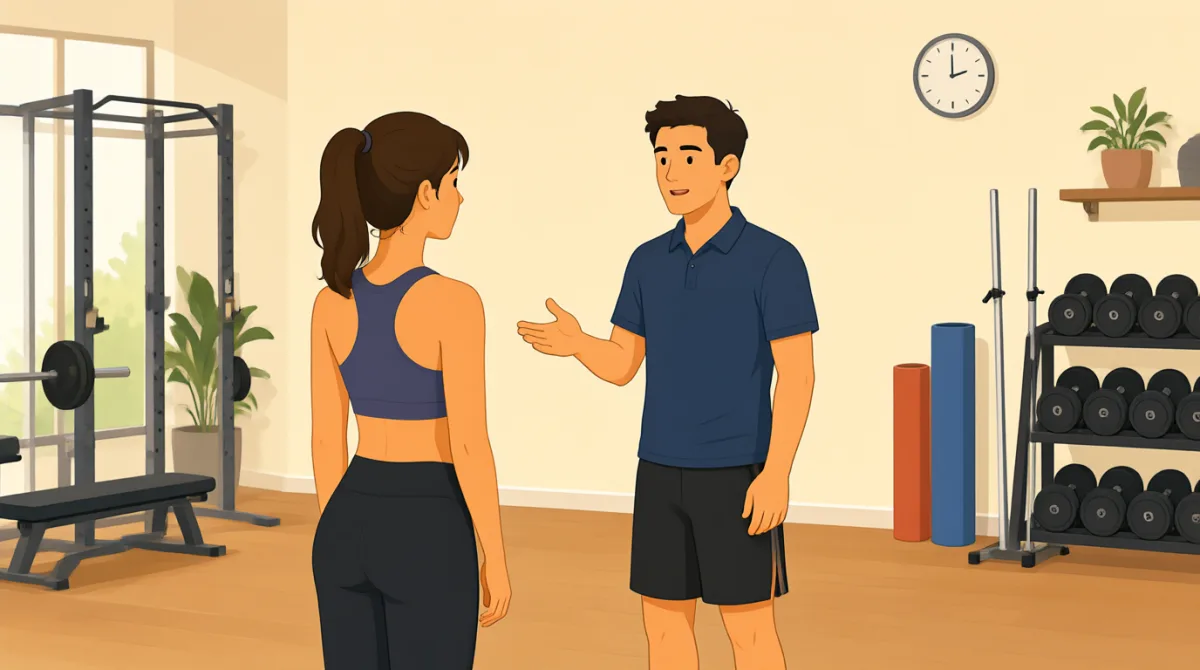

Excuse me, do you have a moment? I had a quick question about my workout routine.
打擾一下,您現在有空嗎?我有一個關於我鍛鍊計劃的小問題。

Certainly! I'm happy to help. What's on your mind?
當然!我很樂意幫忙。您有什麼問題?
I've been trying to improve my upper body strength, particularly my chest and shoulders. I'm doing bench presses and overhead presses, but I feel like I'm not seeing results as quickly as I'd hoped. Am I doing something wrong?
我一直在努力鍛鍊上半身力量,特別是胸部和肩部。我做槓鈴臥推和過頭推舉,但感覺效果沒有我期望的那麼快。我是不是做錯了什麼?
That's a common challenge. Sometimes it's about form, and other times it's about varying your exercises. Could you show me your typical form for the bench press?
那是個常見的問題。有時候是姿勢,有時候是需要調整你的訓練專案。你能給我演示一下你平常做槓鈴臥推的姿勢嗎?
Sure, I can. Also, I was wondering if there are any specific accessory exercises you'd recommend to complement those main lifts?
好的,我可以。另外,我想知道有沒有什麼特別的輔助練習您可以推薦來補充這些主要的舉重動作?
Absolutely. For chest, incline dumbbell presses and cable flyes can really target different parts of the muscle. For shoulders, lateral raises and face pulls are great for overall development and injury prevention. Let's start with your form, and then we can discuss integrating these.
當然。對於胸部,上斜啞鈴推舉和繩索飛鳥可以很好地鍛鍊肌肉的不同部位。對於肩部,側平舉和麵拉對於整體發展和預防受傷都很有好處。我們先從你的姿勢開始,然後我們可以討論如何融入這些動作。
That sounds great! Thanks so much for your help.
聽起來很棒!非常感謝您的幫助。
You're welcome. That's what I'm here for. Let's head over to the bench press now.
不客氣。這是我在這裡的目的。我們現在去臥推架吧。
詞彙8
- workout routine鍛鍊計劃
A plan or schedule of exercises you do regularly to stay fit. Use this when talking about your exercise habits at the gym.
指你為了保持健康而定期進行的鍛鍊計劃或安排。在健身房談論自己的鍛鍊習慣時可以使用這個詞。
- upper body strength上半身力量
The power in the muscles of your chest, shoulders, arms, and back. Important for describing fitness goals involving the top half of your body.
指胸部、肩部、手臂和背部肌肉的力量。描述涉及上半身的健身目標時,這個詞非常有用。
- bench press槓鈴臥推
A weightlifting exercise where you lie on a bench and push weights up from your chest. Common in gym conversations about building chest muscles.
一種舉重練習:躺在臥推凳上,將重量從胸部向上推起。在健身房談論增強胸部肌肉時經常會提到它。
- overhead press過頭推舉
An exercise where you lift weights from shoulder height up over your head. Helps target shoulder muscles and is useful for strength training discussions.
一種將重量從肩部高度向上舉過頭頂的練習。它有助於鍛鍊肩部肌肉,談論力量訓練時很常用。
- form姿勢
The correct way or posture to perform an exercise to avoid injury and get better results. Often discussed when seeking gym advice.
進行某項練習時正確的動作方式或身體姿勢,可以幫助避免受傷並獲得更好的效果。尋求健身建議時經常會討論這個詞。
- accessory exercises輔助練習
Additional smaller exercises that support your main lifts by targeting specific muscles. Use this term when asking for ways to improve a workout plan.
配合主要舉重動作、針對特定肌肉群的額外小型練習。想了解如何改進鍛鍊計劃時,可以使用這個說法。
- complement補充
To add something that completes or improves another thing. In fitness, it means exercises that work well with your main ones for better results.
新增某種東西,使另一件事更加完整或得到改善。在健身語境中,它指與主要練習配合良好、能帶來更好效果的練習。
- injury prevention預防受傷
Actions or exercises that help avoid getting hurt during workouts. Essential in gym talks to emphasize safe training practices.
幫助避免在鍛鍊過程中受傷的行為或練習。在健身房交談中,這個詞強調安全訓練非常重要。
關鍵句7
- 1
Excuse me, do you have a moment?
打擾一下,您現在有空嗎?
This is a polite way to interrupt someone and ask if they have time to talk. Use it when approaching a busy person like gym staff. The question form with 'do you have' makes it indirect and courteous.
這是禮貌地打斷別人並詢問對方是否有時間交談的說法。接近一位可能正忙著的健身房工作人員時,可以使用這句話。使用疑問形式“do you have”會讓表達更委婉、更禮貌。
- 2
I'm happy to help. What's on your mind?
我很樂意幫忙。您有什麼想問的嗎?
A friendly response offering assistance and inviting the question. Useful for service roles like trainers. 'What's on your mind?' is an idiomatic way to ask about someone's concern without being too direct.
這是一個友好的回應,表示願意提供幫助並邀請對方提問。它適合教練等服務崗位使用。“What's on your mind?”是一種習慣表達,用來詢問對方有什麼困惑或想了解的事情,同時不會顯得過於直接。
- 3
I've been trying to improve my upper body strength.
我一直在努力增強上半身力量。
This uses present perfect continuous ('I've been trying') to describe ongoing efforts. Great for sharing fitness goals; it shows persistence and invites advice.
這裡使用現在完成進行時“I've been trying”,描述一直持續到現在的努力。分享健身目標時,這種表達很有用,因為它體現了堅持,也自然地引出尋求建議的內容。
- 4
Could you show me your typical form for the bench press?
您能給我演示一下您平常做槓鈴臥推時的姿勢嗎?
A polite request using 'could you' for demonstration. 'Typical form' means usual way of doing it. Use this when seeking feedback on technique in instructional settings.
這是使用“could you”提出演示請求的禮貌說法。“Typical form”指平時進行這項練習的方式。想在教學或指導場合請別人評價動作技巧時,可以使用這句話。
- 5
I was wondering if there are any specific accessory exercises you'd recommend.
我想問一下,您有沒有特別推薦的輔助練習?
'I was wondering if' is a soft way to ask for suggestions, making it less direct. Useful for gym advice; 'you'd recommend' uses contraction for natural speech.
“I was wondering if”是一種委婉地徵求建議的方式,因此不像直接提問那麼生硬。在尋求健身建議時很實用;“you'd recommend”使用了縮寫,聽起來更符合自然口語。
- 6
That sounds great! Thanks so much for your help.
聽起來很棒!非常感謝您的幫助。
Expresses positive agreement and gratitude. 'That sounds great' is enthusiastic; 'thanks so much' emphasizes appreciation. Perfect for ending helpful conversations politely.
這句話表達了積極的認同和感謝。“That sounds great”帶有熱情的語氣,“thanks so much”則加強了感激之情。結束一段得到幫助的對話時,這句話既自然又禮貌。
- 7
You're welcome. That's what I'm here for.
不客氣。這正是我在這裡的職責。
A standard reply to thanks, meaning 'no problem.' 'That's what I'm here for' explains the purpose of the role. Use in service situations to show willingness to help.
這是回應他人感謝的常用說法,意思是“沒關係”。“That's what I'm here for”說明了自己擔任這一角色的目的。在服務場合使用這句話,可以表達自己很願意提供幫助。