Asking Staff for Advice
कर्मचारियों से सलाह लेना
A gym member approaches a trainer or staff member to ask for advice on exercises, form, or general fitness questions.
जिम का एक सदस्य व्यायाम, सही तकनीक या फिटनेस से जुड़े सामान्य सवालों पर सलाह लेने के लिए किसी ट्रेनर या कर्मचारी से बात करता है।
संवाद8
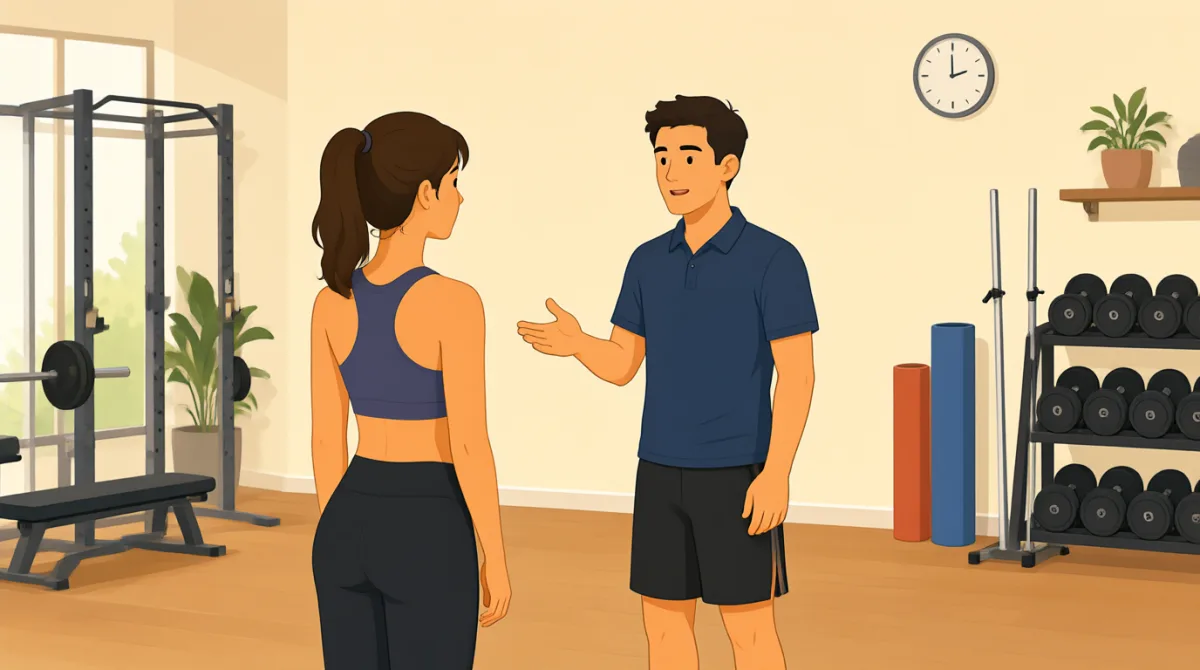

Excuse me, do you have a moment? I had a quick question about my workout routine.
माफ़ कीजिए, क्या आपके पास एक मिनट है? मुझे अपने वर्कआउट रूटीन के बारे में एक छोटा-सा सवाल पूछना था।

Certainly! I'm happy to help. What's on your mind?
बिल्कुल! मुझे आपकी मदद करके खुशी होगी। बताइए, क्या पूछना है?
I've been trying to improve my upper body strength, particularly my chest and shoulders. I'm doing bench presses and overhead presses, but I feel like I'm not seeing results as quickly as I'd hoped. Am I doing something wrong?
मैं अपने शरीर के ऊपरी हिस्से की ताकत बढ़ाने की कोशिश कर रहा हूँ, खासकर छाती और कंधों की। मैं बेंच प्रेस और ओवरहेड प्रेस कर रहा हूँ, लेकिन मुझे लग रहा है कि मुझे उतनी जल्दी नतीजे नहीं मिल रहे, जितनी उम्मीद थी। क्या मैं कुछ गलत कर रहा हूँ?
That's a common challenge. Sometimes it's about form, and other times it's about varying your exercises. Could you show me your typical form for the bench press?
यह आम समस्या है। कभी-कभी इसकी वजह व्यायाम करने का तरीका होता है, और कभी-कभी व्यायामों में बदलाव की ज़रूरत होती है। क्या आप मुझे बेंच प्रेस करते समय अपना आम तरीका दिखा सकते हैं?
Sure, I can. Also, I was wondering if there are any specific accessory exercises you'd recommend to complement those main lifts?
ज़रूर, दिखा सकता हूँ। मैं यह भी पूछना चाहता था कि क्या आप कुछ खास सहायक व्यायाम सुझाएँगी, जो इन मुख्य लिफ्टों के साथ अच्छे रहें?
Absolutely. For chest, incline dumbbell presses and cable flyes can really target different parts of the muscle. For shoulders, lateral raises and face pulls are great for overall development and injury prevention. Let's start with your form, and then we can discuss integrating these.
बिल्कुल। छाती के लिए इनक्लाइन डंबल प्रेस और केबल फ्लाईज़ मांसपेशियों के अलग-अलग हिस्सों पर अच्छा काम कर सकते हैं। कंधों के लिए लेटरल रेज़ और फेस पुल पूरे विकास और चोट से बचाव के लिए बढ़िया हैं। पहले आपकी तकनीक देखते हैं, फिर इन व्यायामों को आपके रूटीन में शामिल करने पर बात करेंगे।
That sounds great! Thanks so much for your help.
यह बहुत अच्छा रहेगा! आपकी मदद के लिए बहुत-बहुत धन्यवाद।
You're welcome. That's what I'm here for. Let's head over to the bench press now.
कोई बात नहीं। मैं इसी काम के लिए यहाँ हूँ। चलिए, अब बेंच प्रेस की तरफ चलते हैं।
शब्दावली8
- workout routineवर्कआउट रूटीन
A plan or schedule of exercises you do regularly to stay fit. Use this when talking about your exercise habits at the gym.
फिट रहने के लिए नियमित रूप से किए जाने वाले व्यायामों की योजना या समय-सारणी। जिम में अपनी व्यायाम की आदतों के बारे में बात करते समय इस शब्द का इस्तेमाल करें।
- upper body strengthशरीर के ऊपरी हिस्से की ताकत
The power in the muscles of your chest, shoulders, arms, and back. Important for describing fitness goals involving the top half of your body.
छाती, कंधों, बाँहों और पीठ की मांसपेशियों की ताकत। शरीर के ऊपरी हिस्से से जुड़े फिटनेस लक्ष्यों के बारे में बताते समय यह काम आता है।
- bench pressबेंच प्रेस
A weightlifting exercise where you lie on a bench and push weights up from your chest. Common in gym conversations about building chest muscles.
वज़न उठाने का एक व्यायाम, जिसमें आप बेंच पर लेटकर छाती से वज़न ऊपर धकेलते हैं। छाती की मांसपेशियाँ मज़बूत करने की बात करते समय जिम में इसका ज़िक्र आम है।
- overhead pressओवरहेड प्रेस
An exercise where you lift weights from shoulder height up over your head. Helps target shoulder muscles and is useful for strength training discussions.
एक व्यायाम जिसमें आप वज़न को कंधों की ऊँचाई से सिर के ऊपर तक उठाते हैं। यह कंधों की मांसपेशियों पर काम करता है और ताकत बढ़ाने की चर्चा में काम आता है।
- formसही तकनीक
The correct way or posture to perform an exercise to avoid injury and get better results. Often discussed when seeking gym advice.
किसी व्यायाम को चोट से बचने और बेहतर नतीजे पाने के लिए सही ढंग या मुद्रा में करना। जिम में सलाह लेते समय अक्सर इस पर बात होती है।
- accessory exercisesसहायक व्यायाम
Additional smaller exercises that support your main lifts by targeting specific muscles. Use this term when asking for ways to improve a workout plan.
ऐसे अतिरिक्त, छोटे व्यायाम जो खास मांसपेशियों पर काम करके मुख्य वज़न उठाने वाले व्यायामों में मदद करते हैं। वर्कआउट योजना बेहतर करने के तरीके पूछते समय इस शब्द का इस्तेमाल करें।
- complementपूरक होना
To add something that completes or improves another thing. In fitness, it means exercises that work well with your main ones for better results.
ऐसी चीज़ जोड़ना जो किसी दूसरी चीज़ को पूरा करे या बेहतर बनाए। फिटनेस में इसका मतलब है ऐसे व्यायाम जो बेहतर नतीजों के लिए आपके मुख्य व्यायामों के साथ अच्छे से काम करें।
- injury preventionचोट से बचाव
Actions or exercises that help avoid getting hurt during workouts. Essential in gym talks to emphasize safe training practices.
ऐसे कदम या व्यायाम जो वर्कआउट के दौरान चोट लगने से बचाते हैं। सुरक्षित तरीके से ट्रेनिंग करने पर ज़ोर देने के लिए जिम की बातचीत में यह ज़रूरी शब्द है।
मुख्य वाक्य7
- 1
Excuse me, do you have a moment?
माफ़ कीजिए, क्या आपके पास एक मिनट है?
This is a polite way to interrupt someone and ask if they have time to talk. Use it when approaching a busy person like gym staff. The question form with 'do you have' makes it indirect and courteous.
किसी की बात विनम्रता से बीच में रोककर यह पूछने का तरीका कि क्या उसके पास बात करने का समय है। जिम के व्यस्त कर्मचारियों से बात शुरू करते समय इसका इस्तेमाल करें। 'do you have' से बना सवाल इसे सीधे पूछने के बजाय विनम्र और अप्रत्यक्ष बनाता है।
- 2
I'm happy to help. What's on your mind?
मुझे आपकी मदद करके खुशी होगी। बताइए, क्या पूछना है?
A friendly response offering assistance and inviting the question. Useful for service roles like trainers. 'What's on your mind?' is an idiomatic way to ask about someone's concern without being too direct.
यह मदद की पेशकश करने और सामने वाले को अपना सवाल पूछने के लिए आमंत्रित करने का दोस्ताना जवाब है। ट्रेनर जैसी सेवा से जुड़ी भूमिकाओं में यह उपयोगी है। 'What's on your mind?' किसी की परेशानी पूछने का मुहावरेदार तरीका है, जो बहुत सीधा नहीं लगता।
- 3
I've been trying to improve my upper body strength.
मैं अपने शरीर के ऊपरी हिस्से की ताकत बढ़ाने की कोशिश कर रहा हूँ।
This uses present perfect continuous ('I've been trying') to describe ongoing efforts. Great for sharing fitness goals; it shows persistence and invites advice.
इसमें वर्तमान पूर्ण निरंतर काल ('I've been trying') का इस्तेमाल लगातार जारी कोशिश बताने के लिए किया गया है। फिटनेस के लक्ष्य साझा करते समय यह वाक्य बढ़िया है; इससे आपकी लगन दिखती है और सलाह माँगने का मौका मिलता है।
- 4
Could you show me your typical form for the bench press?
क्या आप मुझे बेंच प्रेस करते समय अपना आम तरीका दिखा सकते हैं?
A polite request using 'could you' for demonstration. 'Typical form' means usual way of doing it. Use this when seeking feedback on technique in instructional settings.
यह 'could you' का इस्तेमाल करके किसी से तरीका दिखाने का विनम्र अनुरोध है। 'Typical form' का मतलब है इसे करने का आपका आम तरीका। निर्देश या प्रशिक्षण के दौरान तकनीक पर राय माँगते समय इसका इस्तेमाल करें।
- 5
I was wondering if there are any specific accessory exercises you'd recommend.
मैं यह पूछना चाहता था कि क्या आप कुछ खास सहायक व्यायाम सुझाएँगे।
'I was wondering if' is a soft way to ask for suggestions, making it less direct. Useful for gym advice; 'you'd recommend' uses contraction for natural speech.
'I was wondering if' सुझाव माँगने का नरम और कम सीधा तरीका है। जिम में सलाह माँगते समय यह उपयोगी है। 'you'd recommend' में संक्षिप्त रूप का इस्तेमाल बोलचाल की स्वाभाविक अंग्रेज़ी के लिए किया गया है।
- 6
That sounds great! Thanks so much for your help.
यह बहुत अच्छा रहेगा! आपकी मदद के लिए बहुत-बहुत धन्यवाद।
Expresses positive agreement and gratitude. 'That sounds great' is enthusiastic; 'thanks so much' emphasizes appreciation. Perfect for ending helpful conversations politely.
यह सहमति जताने और आभार व्यक्त करने का तरीका है। 'That sounds great' से उत्साह झलकता है, जबकि 'thanks so much' आभार पर ज़ोर देता है। मददगार बातचीत को विनम्रता से खत्म करने के लिए यह बढ़िया है।
- 7
You're welcome. That's what I'm here for.
कोई बात नहीं। मैं इसी काम के लिए यहाँ हूँ।
A standard reply to thanks, meaning 'no problem.' 'That's what I'm here for' explains the purpose of the role. Use in service situations to show willingness to help.
यह धन्यवाद के जवाब में कहा जाने वाला आम वाक्य है, जिसका मतलब है 'कोई समस्या नहीं।' 'That's what I'm here for' बताता है कि आपकी भूमिका का उद्देश्य क्या है। मदद करने की इच्छा जताने के लिए सेवा से जुड़ी बातचीत में इसका इस्तेमाल करें।