Using Shopping Cart and Basket
使用購物車和購物籃
Getting a shopping cart or basket, navigating through the store, and organizing items while shopping
取購物車或購物籃,在商店內移動,購物時整理物品
對話8
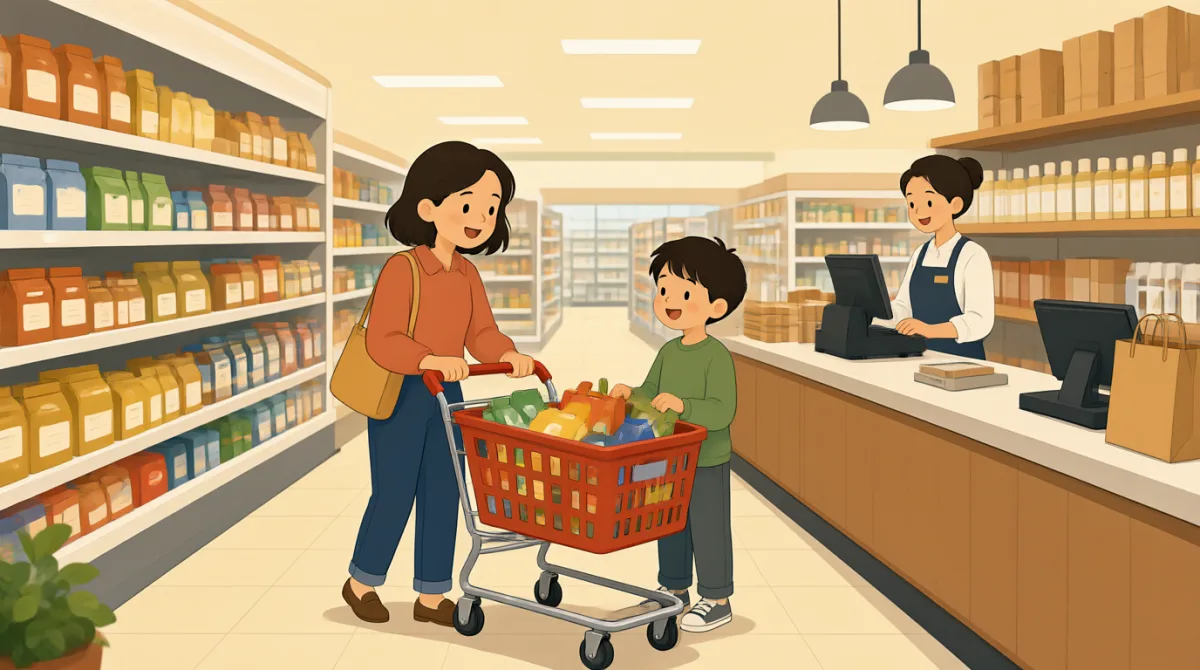

Okay, we're here. We definitely need a cart, we have quite a list today.
好了,我們到了。我們肯定需要一個購物車,今天我們有很多東西要買。

Good call. I'll grab one from over there. Do you want to start with produce or pantry items?
好主意。我去那邊拿一個。你想從農產品區開始還是儲藏室商品區?
Produce first, so we don't crush anything. And then maybe we can grab a few baskets for smaller items later, if we split up.
先買農產品,這樣就不會壓壞任何東西。然後,如果我們分開逛,也許我們可以拿幾個購物籃裝小件物品。
Sounds like a plan. I'll get the cart and meet you by the entrance.
聽起來不錯。我去拿購物車,在入口處等你。
Great! Oh, this cart is a bit wobbly. Maybe we should try another one.
太好了!哦,這購物車有點晃。也許我們應該換一個。
You're right. Let me swap it out. We don't want to lose our groceries mid-aisle!
你說得對。我把它換掉。我們可不想在過道中間把商品弄丟了!
Definitely not! Okay, this one feels much better. Let's make sure we put the heavier items at the bottom.
當然不想!好的,這個感覺好多了。我們確保把重物放在底部。
Agreed. And the delicate stuff on top. Ready to tackle this list?
同意。易碎品放上面。準備好應對這個清單了嗎?
詞彙9
- cart購物車
A shopping cart is a large metal basket on wheels used to carry items around a supermarket. It's essential for buying many things to avoid carrying them by hand.
購物車是超市裡用來裝東西的大型帶輪金屬籃子。買很多東西時,用購物車就不用一直用手拿著。
- produce生鮮區
Produce refers to fresh fruits and vegetables in the grocery store. It's a common term in American English for the fresh food section.
“Produce”指雜貨店裡的新鮮水果和蔬菜。在美式英語中,它常用來指新鮮食品區。
- pantry items耐儲存食品
Pantry items are non-perishable foods like canned goods, pasta, and snacks stored in the kitchen pantry. They are staples for everyday cooking.
“Pantry items”指不容易變質的食品,比如罐頭、義大利麵和零食,通常會存放在廚房的食品櫃裡。這些都是日常烹飪常用的食材。
- basket購物籃
A shopping basket is a smaller handheld container for carrying a few items. Use it when you don't need a full cart for light shopping.
購物籃是一種較小的手提容器,可以用來裝幾樣東西。買的東西不多時,不需要推購物車,用購物籃就可以了。
- wobbly搖晃的
Wobbly means unstable or shaky, like a cart that doesn't roll smoothly. It's useful for describing faulty equipment in stores.
“Wobbly”表示不穩、搖搖晃晃的,比如不太好推的購物車。這個詞也可以用來描述商店裡有故障的裝置。
- swap更換
To swap means to exchange one thing for another. In shopping, it often means trading a bad item for a better one, like changing carts.
“Swap”表示用一件東西換另一件。在購物時,它常指把有問題的東西換成更好的,比如換一輛購物車。
- groceries購買的食品和日用品
Groceries are food and household items bought at a supermarket. It's a general term for what you purchase during shopping trips.
“Groceries”指在超市買的食品和日用品。它是購物時購買物品的統稱。
- delicate易碎的
Delicate means fragile or easily damaged, like eggs or bread. Place delicate items carefully to avoid breaking them.
“Delicate”表示易碎或容易損壞,比如雞蛋或麵包。要小心放置易碎物品,以免它們受損。
- tackle著手處理
To tackle means to deal with or start working on a task energetically. Use it for approaching a big shopping list or challenge.
“Tackle”表示積極地著手處理一項任務。可以用它來形容開始應對一長串購物清單或一項挑戰。
關鍵句8
- 1
We definitely need a cart, we have quite a list today.
我們肯定需要一輛購物車,今天要買的東西不少。
This sentence uses 'definitely' for emphasis and 'quite a list' to mean a long shopping list. It's useful for suggesting tools based on the amount of shopping; practice it when planning a big trip.
這句話用“definitely”來加強語氣,“quite a list”表示購物清單很長。購物東西多時,可以用這句話說明為什麼需要購物車;也可以在計劃一次大采購時練習使用。
- 2
Do you want to start with produce or pantry items?
你想先去生鮮區,還是先買耐儲存食品?
This is a question using 'or' to offer choices between two options. It's practical for organizing shopping routes; the structure helps in decision-making conversations.
這句話用“or”在兩個選項之間詢問對方的選擇。購物時可以用它來安排逛店路線,也適合在討論計劃時使用。
- 3
Produce first, so we don't crush anything.
先買生鮮食品,這樣就不會壓壞東西了。
Here, 'so' introduces a reason clause explaining why to do something first. Useful for logical planning in shopping to prevent damage; note the causal grammar.
這裡的“so”引出原因,說明為什麼要先做某件事。購物時可以用這種表達來解釋安排的理由,避免物品受損。
- 4
This cart is a bit wobbly. Maybe we should try another one.
這輛購物車有點搖晃。也許我們應該換一輛。
This expresses a mild complaint with 'a bit' to soften it, and 'maybe' suggests a solution. Great for politely pointing out problems and proposing fixes in stores.
這句話用“a bit”委婉地表達輕微的不滿,再用“maybe”提出解決辦法。在商店裡指出問題並建議解決方法時,可以這樣說。
- 5
Let me swap it out.
我來把它換掉吧。
An offer to help using 'let me' for politeness, with 'swap out' as a phrasal verb meaning exchange. Use this when volunteering to fix a shopping issue quickly.
這句話用“let me”禮貌地提出幫忙。“Swap out”是一個短語動詞,意思是把某樣東西換掉。購物時遇到問題,想主動幫忙解決,可以用這句話。
- 6
We don't want to lose our groceries mid-aisle!
我們可不想在過道中間把買的東西弄丟了!
This uses 'don't want to' for expressing avoidance of a bad outcome, with 'mid-aisle' meaning in the middle of a store walkway. It's exclamatory for emphasis on safety.
這句話用“don't want to”表達不希望發生某種不好的情況。“Mid-aisle”指商店過道的中間。感嘆的語氣強調了避免這種情況的重要性。
- 7
Let's make sure we put the heavier items at the bottom.
我們把重一點的東西放在底部吧。
Imperative with 'let's' for suggestions, and 'make sure' to ensure something happens. Practical for organizing carts; teaches conditional placement for stability.
這句話用“let's”提出建議,用“make sure”表示確保某件事做到。整理購物車時,可以用它來提醒大家把東西放在合適的位置,讓購物車更穩。
- 8
Ready to tackle this list?
準備好開始對付這張清單了嗎?
A yes/no question with 'ready to' infinitive for preparedness, and 'tackle' for starting a task. Use it to motivate or check enthusiasm before beginning shopping.
這是一個用“ready to”加動詞原形構成的一般疑問句,用來詢問對方是否準備好做某事。“Tackle”表示著手處理一項任務。開始購物前,可以用這句話鼓勵對方或看看對方是否準備好了。