Interacting with a Delivery Driver
รับอาหารจากพนักงานส่งอาหาร
The customer receives their food from the delivery driver, confirming the order, handling payment (if not prepaid), giving instructions for delivery, or resolving minor issues upon arrival.
ลูกค้ารับอาหารจากพนักงานส่งอาหาร ตรวจสอบรายการสั่งซื้อ ชำระเงินหากยังไม่ได้จ่ายล่วงหน้า แจ้งคำแนะนำในการส่ง หรือแก้ไขปัญหาเล็กน้อยเมื่ออาหารมาถึง
บทสนทนา6
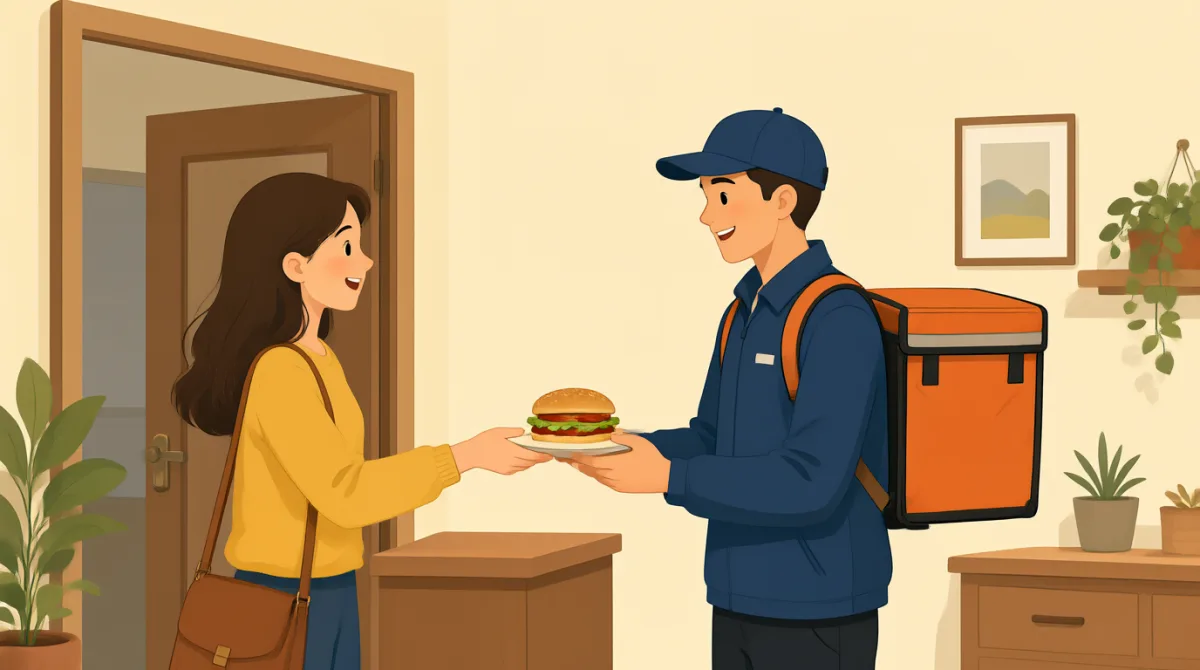

Hi, I have a delivery for Leo. Is that you?
สวัสดีครับ/ค่ะ ผม/ฉันมีอาหารมาส่งให้ลีโอ ใช่คุณไหมครับ/คะ

Yes, that's me. Thanks, I've been waiting for this.
ใช่ค่ะ/ครับ ฉัน/ผมเอง ขอบคุณนะคะ/ครับ รออยู่พอดีเลย
Great. Here's your order: one large pizza and a soda. Could you just confirm it's all there for me?
ดีเลยครับ/ค่ะ นี่คือรายการที่คุณสั่งนะครับ/คะ พิซซ่าถาดใหญ่หนึ่งถาดกับน้ำอัดลมหนึ่งขวด ช่วยตรวจสอบให้หน่อยได้ไหมครับ/คะว่าครบหรือเปล่า
Let me see... Yep, looks like everything's here. Thanks so much.
ขอดูก่อนนะคะ/ครับ... อืม ดูเหมือนว่าจะครบแล้วค่ะ/ครับ ขอบคุณมากนะคะ/ครับ
Perfect. Your order was prepaid, so no need for cash. Enjoy your meal!
เรียบร้อยครับ/ค่ะ คุณจ่ายเงินล่วงหน้าแล้ว ไม่ต้องจ่ายเงินสดนะครับ/คะ ขอให้อร่อยนะครับ/คะ
Thanks, you too! Have a good evening.
ขอบคุณค่ะ/ครับ เช่นกันนะคะ/ครับ ขอให้เย็นนี้เป็นวันที่ดีนะคะ/ครับ
คำศัพท์7
- deliveryบริการส่งถึงที่
The service of bringing food or items to your home or location, common in food apps like Uber Eats.
บริการนำอาหารหรือสิ่งของไปส่งถึงบ้านหรือสถานที่ที่คุณอยู่ มักใช้กับแอปสั่งอาหารอย่าง Uber Eats
- orderรายการสั่งซื้อ
What a customer requests to buy, like food items from a menu; in this context, it's the pizza and soda.
สิ่งที่ลูกค้าสั่งซื้อ เช่น อาหารจากเมนู ในบทสนทนานี้หมายถึงพิซซ่ากับน้ำอัดลม
- confirmตรวจสอบ
To check and make sure something is correct or complete, often used when receiving packages or food.
เช็กให้แน่ใจว่าบางอย่างถูกต้องหรือครบถ้วน มักใช้เมื่อตรวจรับพัสดุหรืออาหาร
- prepaidจ่ายเงินล่วงหน้าแล้ว
Paid for in advance, usually online or by card, so no extra payment is needed upon arrival.
ชำระเงินไว้ก่อนแล้ว โดยปกติจ่ายทางออนไลน์หรือบัตร จึงไม่ต้องจ่ายเพิ่มเมื่อของมาถึง
- cashเงินสด
Physical money like bills and coins, as opposed to digital payments like cards or apps.
เงินที่จับต้องได้ เช่น ธนบัตรและเหรียญ ต่างจากการจ่ายเงินดิจิทัลด้วยบัตรหรือแอป
- enjoyเพลิดเพลิน
To get pleasure from something, like eating a meal; a polite way to wish someone well.
รู้สึกมีความสุขกับบางอย่าง เช่น การรับประทานอาหาร และยังใช้เป็นคำอวยพรอย่างสุภาพได้ด้วย
- mealมื้ออาหาร
A portion of food eaten at a specific time, such as lunch or dinner.
อาหารที่รับประทานในช่วงเวลาหนึ่ง เช่น มื้อกลางวันหรือมื้อเย็น
ประโยคสำคัญ6
- 1
Hi, I have a delivery for Leo. Is that you?
สวัสดีครับ/ค่ะ ผม/ฉันมีอาหารมาส่งให้ลีโอ ใช่คุณไหมครับ/คะ
This is a polite greeting from the driver to confirm the recipient's name. Use it when arriving at a customer's door to verify identity. The question 'Is that you?' uses 'that' to refer to the person mentioned.
นี่เป็นคำทักทายสุภาพที่พนักงานส่งอาหารใช้เพื่อยืนยันชื่อผู้รับ ใช้เมื่อมาถึงหน้าบ้านลูกค้าเพื่อตรวจสอบว่าเป็นคนที่ถูกต้องหรือไม่ ในประโยค 'Is that you?' ใช้ 'that' เพื่อหมายถึงคนที่พูดถึง
- 2
Yes, that's me. Thanks, I've been waiting for this.
ใช่ค่ะ/ครับ ฉัน/ผมเอง ขอบคุณนะคะ/ครับ รออยู่พอดีเลย
A simple confirmation and expression of thanks. 'That's me' means 'I am that person.' 'I've been waiting' is present perfect continuous tense, showing an action that started in the past and continues. Useful for acknowledging delivery.
เป็นการยืนยันสั้น ๆ พร้อมกล่าวขอบคุณ 'That's me' หมายถึง 'ฉัน/ผมคือคนนั้น' ส่วน 'I've been waiting' เป็นรูป present perfect continuous แสดงการกระทำที่เริ่มในอดีตและดำเนินต่อเนื่องมาจนถึงตอนนี้ ใช้ตอบรับเมื่อได้รับของที่มาส่งได้
- 3
Great. Here's your order: one large pizza and a soda. Could you just confirm it's all there for me?
ดีเลยครับ/ค่ะ นี่คือรายการที่คุณสั่งนะครับ/คะ พิซซ่าถาดใหญ่หนึ่งถาดกับน้ำอัดลมหนึ่งขวด ช่วยตรวจสอบให้หน่อยได้ไหมครับ/คะว่าครบหรือเปล่า
Handing over the items while listing them. 'Could you just...' is a polite request using modal 'could' for asking favors. 'For me' means to help the speaker. This sentence is useful for drivers to ensure customer satisfaction.
เป็นการส่งมอบของพร้อมบอกรายการ 'Could you just...' เป็นคำขอร้องสุภาพ โดยใช้ modal verb 'could' เพื่อขอให้ช่วยทำบางอย่าง ส่วน 'for me' หมายถึงช่วยผู้พูด ประโยคนี้เหมาะสำหรับพนักงานส่งอาหารที่ต้องการให้แน่ใจว่าลูกค้าได้รับของครบ
- 4
Let me see... Yep, looks like everything's here. Thanks so much.
ขอดูก่อนนะคะ/ครับ... อืม ดูเหมือนว่าจะครบแล้วค่ะ/ครับ ขอบคุณมากนะคะ/ครับ
Checking the order casually. 'Let me see' means 'allow me to look.' 'Yep' is informal for 'yes,' and 'looks like' expresses an opinion based on appearance. Contraction 'everything's' for 'everything is.' Great for responding when inspecting food.
เป็นการตรวจสอบรายการสั่งซื้อแบบสบาย ๆ 'Let me see' หมายถึง 'ขอดูหน่อย' 'Yep' เป็นรูปไม่เป็นทางการของ 'yes' และ 'looks like' ใช้แสดงความเห็นจากสิ่งที่เห็น ส่วน 'everything's' เป็นรูปย่อของ 'everything is' ใช้ตอบเมื่อกำลังตรวจดูอาหารที่ได้รับได้ดี
- 5
Perfect. Your order was prepaid, so no need for cash. Enjoy your meal!
เรียบร้อยครับ/ค่ะ คุณจ่ายเงินล่วงหน้าแล้ว ไม่ต้องจ่ายเงินสดนะครับ/คะ ขอให้อร่อยนะครับ/คะ
Confirming payment and wishing well. 'Was prepaid' is past simple passive voice. 'So' connects cause and result. 'No need for' means 'not necessary.' Use this to end the interaction politely after delivery.
เป็นการยืนยันเรื่องการชำระเงินและกล่าวอวยพร 'Was prepaid' เป็นรูป passive voice ใน past simple 'So' ใช้เชื่อมเหตุและผล ส่วน 'no need for' หมายถึง 'ไม่จำเป็นต้อง...' ใช้พูดปิดท้ายอย่างสุภาพหลังส่งอาหารแล้วได้
- 6
Thanks, you too! Have a good evening.
ขอบคุณค่ะ/ครับ เช่นกันนะคะ/ครับ ขอให้เย็นนี้เป็นวันที่ดีนะคะ/ครับ
A friendly response to a farewell. 'You too' mirrors the well-wish back to the speaker. 'Have a good evening' is a common polite goodbye in the late afternoon or night. Useful for ending conversations positively.
เป็นคำตอบที่เป็นมิตรเมื่ออีกฝ่ายกล่าวลา 'You too' ใช้กล่าวอวยพรกลับไปยังผู้พูด 'Have a good evening' เป็นคำกล่าวลาสุภาพที่ใช้กันทั่วไปในช่วงบ่ายแก่ ๆ หรือช่วงค่ำ เหมาะสำหรับจบบทสนทนาด้วยความรู้สึกดี ๆ