Playground Supervision
ดูแลเด็กที่สนามเด็กเล่น
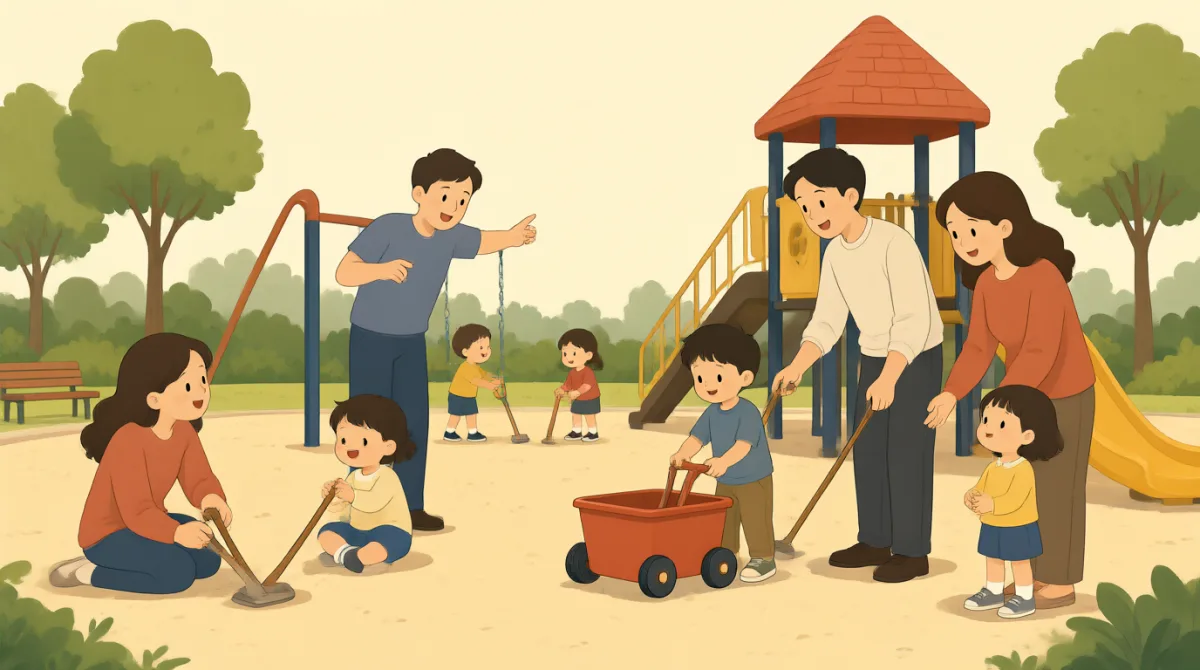
Parents or caregivers are supervising children at a playground, engaging in brief interactions about safety, sharing, and children's activities.
พ่อแม่หรือผู้ดูแลคอยดูแลเด็ก ๆ ที่สนามเด็กเล่น พร้อมพูดคุยสั้น ๆ เรื่องความปลอดภัย การแบ่งปัน และกิจกรรมของเด็ก ๆ
บทสนทนา8

Hi Jack! Looks like the kids are having a blast on the swings.
หวัดดีแจ็ก! ดูเด็ก ๆ สนุกกับชิงช้ากันมากเลยนะ

Hey Mia! They sure are. Mine just discovered the slide, so I'm keeping an eye on him there.
หวัดดีมีอา! ใช่เลย ลูกฉันเพิ่งค้นพบสไลเดอร์ ฉันเลยคอยจับตาดูเขาอยู่ตรงนั้น
Oh, the slide is always a hit! Just make sure he doesn't cut in line. My daughter is very particular about taking turns.
อ๋อ เด็ก ๆ ชอบสไลเดอร์กันเสมอเลย! อย่าลืมดูให้เขาไม่แซงคิวนะ ลูกสาวฉันเคร่งเรื่องการผลัดกันเล่นมาก
Good point. I'll remind him to wait his turn. Kids can get so excited, they forget sometimes.
พูดถูกเลย ฉันจะเตือนให้เขารอถึงตาของตัวเอง เด็ก ๆ ตื่นเต้นกันมากจนบางทีก็ลืมไป
Absolutely. My little one is trying to share her toy truck, which is a big step for her. She usually guards her toys.
จริงด้วย ลูกสาวตัวน้อยของฉันกำลังพยายามแบ่งรถของเล่นให้คนอื่น ซึ่งถือว่าเป็นก้าวสำคัญสำหรับเธอเลย ปกติเธอหวงของเล่นมาก
That's wonderful progress! Sharing at the playground is a great life lesson. It's nice to see them learning those social skills.
พัฒนาการดีมากเลย! การแบ่งปันที่สนามเด็กเล่นเป็นบทเรียนชีวิตที่ดีมาก ดีจังที่ได้เห็นพวกเขาเรียนรู้ทักษะการเข้าสังคม
It really is. Well, I'm going to grab a water bottle for her. It's getting pretty warm out here.
ใช่เลย เอาละ ฉันจะไปหยิบขวดน้ำให้เธอ อากาศข้างนอกร้อนขึ้นมากแล้ว
Good idea. We should probably head home soon too. They're starting to look a bit tired.
ดีเลย พวกเราก็น่าจะกลับบ้านกันเร็ว ๆ นี้เหมือนกัน พวกเขาเริ่มดูเหนื่อยนิดหน่อยแล้ว
คำศัพท์8
- blastสนุกสุดเหวี่ยง
A 'blast' means a lot of fun. We say 'having a blast' when someone is enjoying themselves very much, like kids playing at the playground.
'blast' หมายถึงสนุกมาก ๆ เราใช้ 'having a blast' เมื่อพูดถึงคนที่กำลังสนุกสุด ๆ เช่น เด็ก ๆ ที่เล่นอยู่ในสนามเด็กเล่น
- keeping an eye onคอยจับตาดู
This idiom means watching someone carefully to make sure they are safe. It's useful when supervising children in public places.
สำนวนนี้หมายถึงคอยดูใครสักคนอย่างใกล้ชิดเพื่อให้แน่ใจว่าปลอดภัย มีประโยชน์เวลาเราดูแลเด็กในที่สาธารณะ
- cut in lineแซงคิว
To 'cut in line' means to go ahead of others who are waiting their turn. It's polite to avoid this and wait patiently.
'cut in line' หมายถึงแซงหน้าคนอื่นที่กำลังรอคิวอยู่ ควรหลีกเลี่ยงการทำแบบนี้และรอคิวอย่างอดทน
- particular aboutเคร่งเรื่อง
Being 'particular about' something means caring a lot about it or having strict rules for it. For example, being particular about fairness in games.
'particular about' หมายถึงใส่ใจกับเรื่องใดเรื่องหนึ่งมาก หรือมีกฎเกณฑ์ที่เข้มงวดเกี่ยวกับเรื่องนั้น เช่น เคร่งเรื่องความยุติธรรมในการเล่นเกม
- taking turnsผลัดกัน
This phrase means sharing time or activities one after another. It's a key social skill taught to children during play.
วลีนี้หมายถึงแบ่งเวลา或กิจกรรมกันทำทีละคน เป็นทักษะทางสังคมสำคัญที่สอนเด็ก ๆ ระหว่างเล่นด้วยกัน
- shareแบ่งปัน
To 'share' means to let others use or have some of what you have, like toys. It's important for building friendships.
'share' หมายถึงให้คนอื่นใช้หรือแบ่งบางส่วนของสิ่งที่เรามี เช่น ของเล่น การแบ่งปันสำคัญต่อการสร้างมิตรภาพ
- progressพัฒนาการ
Progress means improvement or moving forward in learning a skill, like a child learning to share toys.
Progress หมายถึงการพัฒนาหรือก้าวหน้าในการเรียนรู้ทักษะ เช่น เด็กเรียนรู้ที่จะแบ่งของเล่นให้คนอื่น
- social skillsทักษะการเข้าสังคม
Social skills are abilities to interact well with others, such as sharing, waiting, and being polite. They help in everyday situations like playgrounds.
Social skills คือความสามารถในการมีปฏิสัมพันธ์กับผู้อื่นได้ดี เช่น การแบ่งปัน การรอคิว และการมีมารยาท ทักษะเหล่านี้ช่วยให้เราใช้ชีวิตประจำวันได้ดีขึ้น รวมถึงเวลาอยู่ที่สนามเด็กเล่น
ประโยคสำคัญ8
- 1
Looks like the kids are having a blast on the swings.
ดูเด็ก ๆ สนุกกับชิงช้ากันมากเลยนะ
This is a casual greeting sentence using 'looks like' to observe something obvious. It's useful for starting conversations about what you see, and 'having a blast' is an idiomatic way to say enjoying fun.
ประโยคทักทายแบบสบาย ๆ นี้ใช้ 'looks like' เพื่อบอกสิ่งที่เห็นได้ชัด เหมาะสำหรับเริ่มบทสนทนาเกี่ยวกับสิ่งที่กำลังเห็น ส่วน 'having a blast' เป็นสำนวนที่หมายถึงกำลังสนุกมาก
- 2
I'm keeping an eye on him there.
ฉันคอยจับตาดูเขาอยู่ตรงนั้น
This sentence uses the present continuous tense to describe an ongoing action of watching for safety. It's practical for talking about supervision in childcare situations.
ประโยคนี้ใช้ present continuous เพื่อบอกว่ากำลังคอยดูแลความปลอดภัยอยู่ เหมาะสำหรับพูดถึงการดูแลเด็ก
- 3
Just make sure he doesn't cut in line.
อย่าลืมดูให้เขาไม่แซงคิวนะ
Here, 'make sure' is used to give advice or a reminder, followed by a negative clause. This pattern is common for suggesting polite behavior, especially with children.
ในประโยคนี้ 'make sure' ใช้เพื่อให้คำแนะนำหรือเตือน ตามด้วยอนุประโยคปฏิเสธ รูปแบบนี้ใช้กันบ่อยเมื่อต้องการแนะนำมารยาทที่ดี โดยเฉพาะกับเด็ก ๆ
- 4
My daughter is very particular about taking turns.
ลูกสาวฉันเคร่งเรื่องการผลัดกันเล่นมาก
This uses 'be particular about' to describe someone's preference or rule. The present simple tense shows a general habit, useful for explaining children's personalities.
ประโยคนี้ใช้ 'be particular about' เพื่อบอกความชอบหรือกฎเกณฑ์ของใครบางคน และใช้ present simple เพื่อพูดถึงนิสัยที่เป็นประจำ เหมาะสำหรับอธิบายลักษณะนิสัยของเด็ก ๆ
- 5
Kids can get so excited, they forget sometimes.
เด็ก ๆ ตื่นเต้นกันมากจนบางทีก็ลืมไป
This is a compound sentence with 'can get' for possibility and 'so...that' implied for result. It's a natural way to explain why children might not follow rules during play.
นี่คือประโยคความรวมที่ใช้ 'can get' เพื่อพูดถึงสิ่งที่อาจเกิดขึ้น และละส่วน 'so...that' ที่บอกผลลัพธ์ไว้ เป็นวิธีพูดอย่างเป็นธรรมชาติว่าทำไมเด็ก ๆ อาจไม่ทำตามกฎระหว่างเล่น
- 6
Sharing at the playground is a great life lesson.
การแบ่งปันที่สนามเด็กเล่นเป็นบทเรียนชีวิตที่ดีมาก
The sentence uses 'is' for a general truth and 'life lesson' for something valuable learned in daily life. It's useful for discussing positive behaviors in parenting talks.
ประโยคนี้ใช้ 'is' เพื่อบอกความจริงทั่วไป และใช้ 'life lesson' หมายถึงสิ่งมีค่าที่ได้เรียนรู้ในชีวิตประจำวัน เหมาะสำหรับพูดคุยถึงพฤติกรรมที่ดีในการเลี้ยงลูก
- 7
It's getting pretty warm out here.
ข้างนอกร้อนขึ้นมากแล้ว
Present continuous 'is getting' shows a changing situation, and 'out here' specifies location. This is a common way to comment on weather and suggest actions like drinking water.
present continuous ใน 'is getting' แสดงว่าสถานการณ์กำลังเปลี่ยนแปลง ส่วน 'out here' ระบุสถานที่ วิธีพูดแบบนี้ใช้บ่อยเมื่อต้องการพูดถึงสภาพอากาศและชวนให้ทำอะไรบางอย่าง เช่น ดื่มน้ำ
- 8
They're starting to look a bit tired.
พวกเขาเริ่มดูเหนื่อยนิดหน่อยแล้ว
'Starting to' indicates the beginning of a change, with 'a bit' softening the description. It's practical for observing children's energy levels and deciding to end activities.
'Starting to' บอกว่าการเปลี่ยนแปลงกำลังเริ่มขึ้น ส่วน 'a bit' ช่วยให้คำบรรยายฟังดูนุ่มนวลขึ้น ใช้สังเกตระดับพลังงานของเด็ก ๆ และตัดสินใจว่าจะจบกิจกรรมเมื่อไรได้