School Pickup Conversation
บทสนทนาตอนรับลูกที่โรงเรียน
Parents are picking up their children from school or daycare, having brief exchanges with teachers or other parents about the child's day.
พ่อแม่มารับลูกจากโรงเรียนหรือศูนย์รับเลี้ยงเด็ก และพูดคุยสั้น ๆ กับครูหรือผู้ปกครองคนอื่นเกี่ยวกับเรื่องราวของลูกในวันนั้น
บทสนทนา8
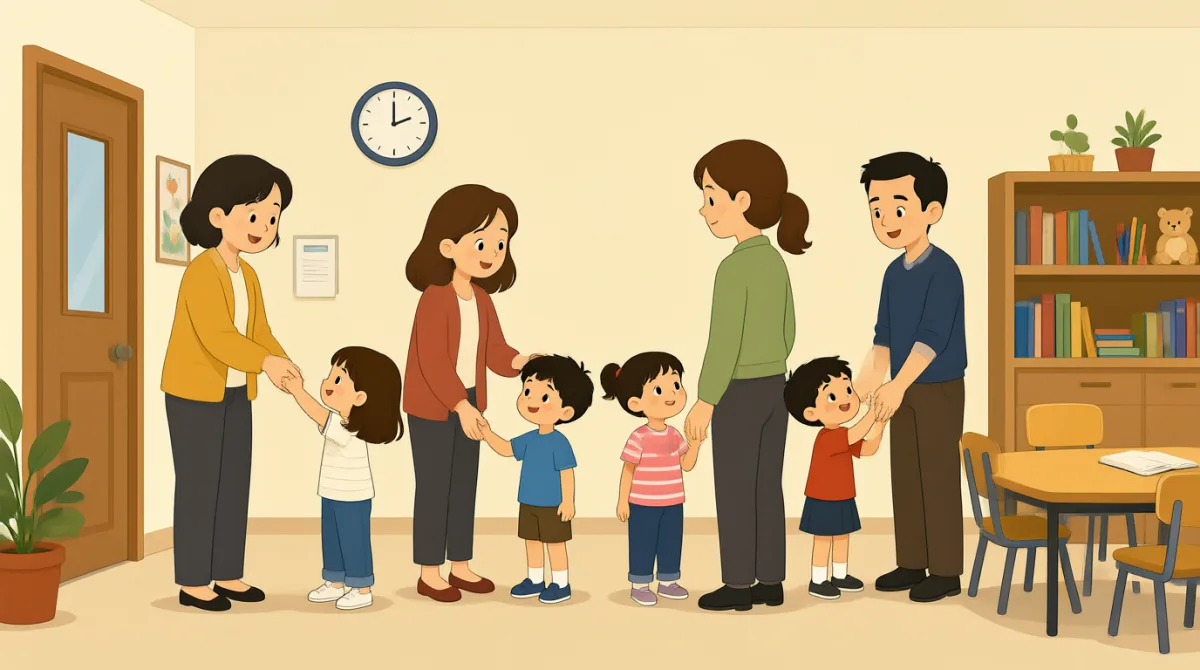

Hi Mia! How was your day? Just picking up Maya.
หวัดดีมีอา! วันนี้เป็นยังไงบ้าง? แวะมารับมายาน่ะ

Hey Emma! My day was good, thanks. How about you? Oh, Maya was great today. She really enjoyed arts and crafts.
หวัดดีเอมมา! วันนี้ก็ดีนะ ขอบใจ แล้วเธอล่ะ? อ้อ วันนี้มายาทำได้ดีมากเลย เธอสนุกกับงานศิลปะและงานประดิษฐ์มาก
That's lovely to hear! She loves drawing. Did she finish her science project?
ดีจังเลยที่ได้ยินแบบนั้น! เธอชอบวาดรูปนี่ ทำโครงงานวิทยาศาสตร์เสร็จหรือยัง?
Yes, she did! She worked really well with James on it. They make a good team.
เสร็จแล้ว! เธอทำงานกับเจมส์ได้ดีมากเลย ทั้งคู่เข้าขากันดี
Oh, that's wonderful! I'll have to ask her all about it on the way home.
โอ้ เยี่ยมไปเลย! กลับบ้านแล้วฉันต้องถามเธอให้ละเอียดเลย
She was quite proud of it. And she ate all her vegetables at lunch today, which is always a bonus!
เธอภูมิใจกับผลงานมากเลยนะ แล้ววันนี้ตอนมื้อกลางวันก็กินผักหมดด้วย ถือเป็นโบนัสเลยล่ะ!
Haha, that's definitely a bonus! Thanks for the update, Mia. See you tomorrow!
ฮ่า ๆ นั่นเป็นโบนัสจริง ๆ! ขอบใจที่เล่าให้ฟังนะมีอา แล้วเจอกันพรุ่งนี้!
You're welcome, Emma! Have a great evening with Maya. Bye!
ยินดีจ้ะเอมมา! ขอให้ใช้เวลาช่วงเย็นกับมายาให้สนุกนะ บ๊ายบาย!
คำศัพท์8
- picking upแวะไปรับ
This phrase means collecting or fetching someone, like a child from school. It's commonly used in childcare situations to talk about getting kids after school or activities.
วลีนี้หมายถึงไปรับใครสักคน เช่น ไปรับลูกที่โรงเรียน มักใช้พูดถึงการไปรับเด็กหลังเลิกเรียนหรือหลังทำกิจกรรม
- arts and craftsงานศิลปะและงานประดิษฐ์
This refers to creative activities like drawing, painting, or making things with paper and glue. It's a fun way to describe children's playtime or school lessons.
หมายถึงกิจกรรมสร้างสรรค์ เช่น วาดรูป ระบายสี หรือทำของจากกระดาษและกาว ใช้พูดถึงเวลาเล่นหรือบทเรียนสนุก ๆ ของเด็กได้
- enjoyedสนุกกับ
Past tense of 'enjoy,' meaning to like something and have fun doing it. Use it to talk about positive experiences, like 'I enjoyed the movie.'
เป็นรูปอดีตของ 'enjoy' หมายถึงชอบและสนุกกับการทำอะไรบางอย่าง ใช้พูดถึงประสบการณ์ดี ๆ เช่น 'I enjoyed the movie.' (ฉันดูหนังแล้วสนุกมาก)
- science projectโครงงานวิทยาศาสตร์
A school assignment where children do experiments or build models related to science. It's practical for discussing kids' homework or classwork.
งานที่โรงเรียนมอบหมายให้เด็กทำการทดลองหรือสร้างแบบจำลองเกี่ยวกับวิทยาศาสตร์ ใช้พูดถึงการบ้านหรืองานในชั้นเรียนของเด็กได้
- teamทีม
A group of people working together towards a goal. In this context, it describes children collaborating on a task, like 'They make a good team.'
กลุ่มคนที่ร่วมมือกันเพื่อให้บรรลุเป้าหมาย ในบริบทนี้ใช้พูดถึงเด็ก ๆ ที่ช่วยกันทำงาน เช่น 'They make a good team.' (พวกเขาเข้าขากันดี)
- bonusโบนัส
Something extra and positive that you didn't expect, like a reward. Parents often use it for good behavior, such as 'Eating vegetables is a bonus!'
สิ่งดี ๆ เพิ่มเติมที่ไม่ได้คาดไว้ คล้ายกับรางวัล พ่อแม่มักใช้พูดถึงพฤติกรรมดี ๆ เช่น 'Eating vegetables is a bonus!' (กินผักได้ด้วยถือเป็นโบนัสเลย!)
- updateข่าวคราวล่าสุด
The latest information about something. In conversations with teachers or parents, say 'Thanks for the update' to show appreciation for news about your child.
ข้อมูลล่าสุดเกี่ยวกับเรื่องใดเรื่องหนึ่ง เวลาคุยกับครูหรือผู้ปกครองคนอื่น พูดว่า 'Thanks for the update' (ขอบคุณที่เล่าให้ฟังนะ) เพื่อแสดงความขอบคุณที่บอกข่าวเกี่ยวกับลูก
- proudภูมิใจ
Feeling happy and satisfied about an achievement. Use it to describe emotions, like 'She was proud of her drawing,' in family or school talks.
รู้สึกดีใจและพอใจกับความสำเร็จ ใช้บอกความรู้สึกได้ เช่น 'She was proud of her drawing,' (เธอภูมิใจกับรูปที่วาด) ในบทสนทนาเกี่ยวกับครอบครัวหรือโรงเรียน
ประโยคสำคัญ8
- 1
Hi Mia! How was your day? Just picking up Maya.
หวัดดีมีอา! วันนี้เป็นยังไงบ้าง? แวะมารับมายาน่ะ
This is a friendly greeting combined with a casual explanation of your purpose. It's useful for starting conversations at school pickups. The question 'How was your day?' is a common way to show interest in someone.
ประโยคนี้เป็นคำทักทายเป็นกันเอง พร้อมบอกสั้น ๆ ว่ามาทำอะไร เหมาะสำหรับเริ่มคุยตอนมารับลูกที่โรงเรียน คำถาม 'How was your day?' เป็นวิธีถามไถ่ที่ใช้กันทั่วไป
- 2
My day was good, thanks. How about you?
วันนี้ก็ดีนะ ขอบใจ แล้วเธอล่ะ?
A polite response to a greeting question, followed by returning the question. 'How about you?' is a simple pattern to keep the conversation going. Use this in everyday chats with friends or parents.
เป็นคำตอบอย่างสุภาพเมื่อมีคนถามไถ่ แล้วถามกลับเพื่อชวนคุยต่อ 'How about you?' เป็นรูปประโยคง่าย ๆ ที่ช่วยให้บทสนทนาดำเนินต่อ ใช้คุยทั่วไปกับเพื่อนหรือผู้ปกครองคนอื่นได้
- 3
She really enjoyed arts and crafts.
เธอสนุกกับงานศิลปะและงานประดิษฐ์มาก
This shares positive news about a child's activity using 'really' for emphasis. It's great for updating parents on school fun. The past tense 'enjoyed' describes completed actions.
ประโยคนี้เล่าข่าวดีเกี่ยวกับกิจกรรมของเด็ก โดยใช้ 'really' เพื่อเน้นความรู้สึก เหมาะสำหรับเล่าให้ผู้ปกครองฟังว่าเด็กสนุกกับอะไร ส่วน 'enjoyed' เป็นอดีต ใช้พูดถึงสิ่งที่ทำเสร็จไปแล้ว
- 4
That's lovely to hear! She loves drawing.
ดีจังเลยที่ได้ยินแบบนั้น! เธอชอบวาดรูป
An appreciative response showing happiness. 'That's lovely to hear' is a warm expression for good news. 'Loves' uses present simple for habits or preferences, useful in parenting talks.
เป็นคำตอบที่แสดงความยินดีและชื่นชม 'That's lovely to hear' เป็นสำนวนอบอุ่นที่ใช้ตอบรับข่าวดี ส่วน 'loves' ใช้รูปปัจจุบันธรรมดาเพื่อพูดถึงสิ่งที่ชอบหรือทำเป็นประจำ เหมาะกับบทสนทนาเรื่องลูก
- 5
Did she finish her science project?
เธอทำโครงงานวิทยาศาสตร์เสร็จหรือยัง?
A yes/no question using past tense 'did...finish' to ask about completion. It's practical for checking on homework. Questions like this help gather details in school conversations.
เป็นคำถามที่ตอบได้ว่าใช่หรือไม่ โดยใช้รูปอดีต 'did...finish' เพื่อถามว่างานเสร็จหรือยัง เหมาะสำหรับถามเรื่องการบ้าน และช่วยให้ได้รายละเอียดเพิ่มเติมเวลาคุยเรื่องโรงเรียน
- 6
They make a good team.
พวกเขาเข้าขากันดี
This praises group work in present simple tense, meaning they cooperate well. Use it to highlight positive social skills in children during playdates or school reports.
ประโยคนี้ชมการทำงานร่วมกัน โดยใช้รูปปัจจุบันธรรมดา และหมายความว่าพวกเขาร่วมมือกันได้ดี ใช้พูดถึงทักษะการเข้าสังคมที่ดีของเด็กระหว่างเล่นด้วยกันหรือในรายงานจากโรงเรียนได้
- 7
Thanks for the update, Mia. See you tomorrow!
ขอบใจที่เล่าให้ฟังนะมีอา แล้วเจอกันพรุ่งนี้!
A thankful closing with a future goodbye. 'Thanks for the update' expresses gratitude for information. 'See you tomorrow' is a common farewell for daily routines like school pickups.
เป็นคำกล่าวขอบคุณพร้อมบอกลา 'Thanks for the update' ใช้ขอบคุณที่บอกข้อมูลให้ฟัง ส่วน 'See you tomorrow' เป็นคำลาที่ใช้กันทั่วไปในกิจวัตรประจำวัน เช่น ตอนรับลูกที่โรงเรียน
- 8
You're welcome, Emma! Have a great evening with Maya. Bye!
ยินดีจ้ะเอมมา! ขอให้ใช้เวลาช่วงเย็นกับมายาให้สนุกนะ บ๊ายบาย!
A polite reply to thanks, plus a well-wish. 'You're welcome' is standard after 'thanks.' 'Have a great evening' is a friendly way to end chats, showing care in childcare scenarios.
เป็นคำตอบรับคำขอบคุณพร้อมคำอวยพร 'You're welcome' เป็นคำตอบมาตรฐานหลังมีคนพูดว่า 'thanks' ส่วน 'Have a great evening' เป็นวิธีอำลาอย่างเป็นกันเองและแสดงความห่วงใยในสถานการณ์เกี่ยวกับการดูแลเด็ก