Asking Permission to Photograph a Display or Exhibit
การขออนุญาตถ่ายภาพสิ่งจัดแสดงหรือนิทรรศการ
Someone is at a museum, art gallery, or exhibition and sees an interesting display or piece of art. They notice a 'no photography' sign or are unsure, so they ask a staff member if photography is permitted.
มีคนอยู่ในพิพิธภัณฑ์ หอศิลป์ หรือนิทรรศการ และเห็นสิ่งจัดแสดงหรือผลงานศิลปะที่น่าสนใจ เมื่อเห็นป้ายห้ามถ่ายภาพหรือไม่แน่ใจ จึงถามเจ้าหน้าที่ว่าสามารถถ่ายภาพได้หรือไม่
บทสนทนา8
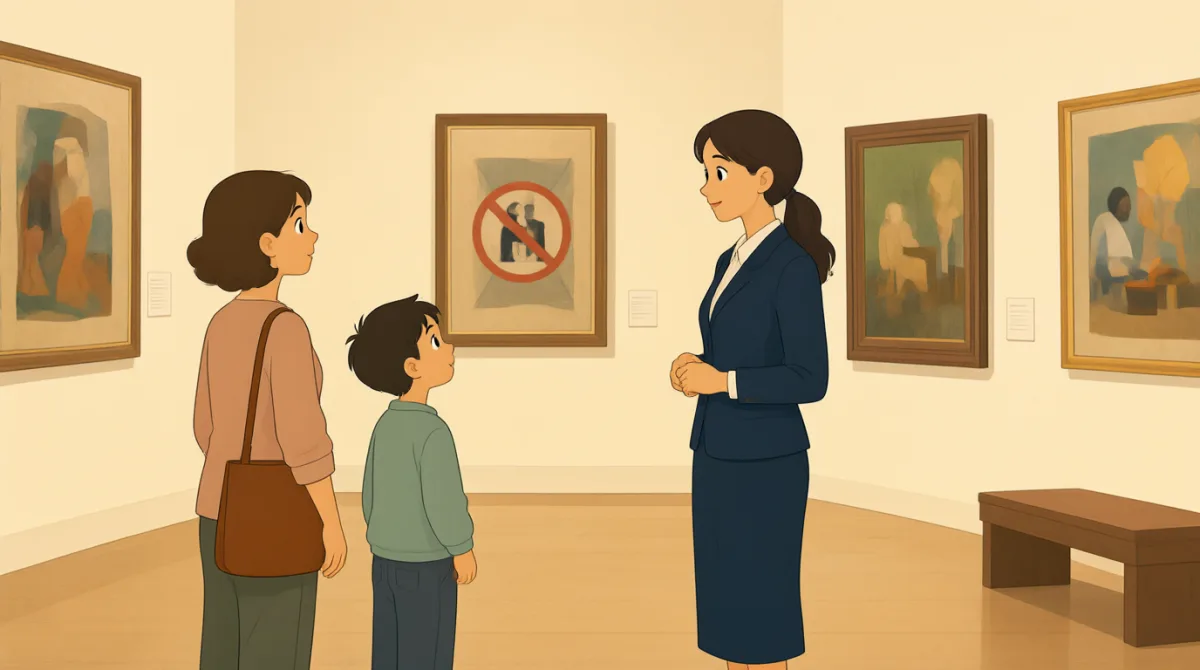

Excuse me, I have a quick question. I'm really enjoying this exhibit.
ขอโทษนะคะ ขอถามอะไรสักหน่อยค่ะ ฉันกำลังเพลินกับนิทรรศการนี้มากเลยค่ะ

Certainly, how can I help you?
ได้เลยครับ มีอะไรให้ผมช่วยไหมครับ
I was wondering, is it okay to take photos of the display? I see some signs, but I'm not entirely sure about this section.
อยากสอบถามค่ะ ถ่ายภาพสิ่งจัดแสดงได้ไหมคะ เห็นป้ายอยู่บ้าง แต่ไม่แน่ใจว่าบริเวณนี้มีกฎอย่างไรค่ะ
For this particular exhibit, photography is generally allowed for personal use without flash. However, some individual pieces may have specific restrictions indicated on their labels.
สำหรับนิทรรศการส่วนนี้ โดยทั่วไปอนุญาตให้ถ่ายภาพเพื่อใช้ส่วนตัวได้โดยไม่ใช้แฟลชครับ อย่างไรก็ตาม ผลงานบางชิ้นอาจมีข้อจำกัดเฉพาะ ซึ่งระบุไว้บนป้ายกำกับครับ
Oh, I see. So no flash, that's important to remember. And I should check individual labels?
อ๋อ เข้าใจแล้วค่ะ ห้ามใช้แฟลช ต้องจำไว้เลย แล้วก็ควรตรวจดูป้ายของแต่ละชิ้นด้วยใช่ไหมคะ
Exactly. Most pieces are fine, but there are a few sensitive artifacts. We appreciate your understanding and cooperation.
ใช่ครับ ผลงานส่วนใหญ่ถ่ายได้ แต่มีโบราณวัตถุที่ต้องระมัดระวังอยู่สองสามชิ้นครับ ขอบคุณที่เข้าใจและให้ความร่วมมือนะครับ
Understood. Thank you very much for clarifying that for me.
เข้าใจแล้วค่ะ ขอบคุณมากนะคะที่ช่วยอธิบายให้ฟัง
You're welcome. Enjoy the rest of your visit!
ยินดีครับ ขอให้เพลิดเพลินกับการเที่ยวชมต่อครับ
คำศัพท์8
- excuse meขอโทษนะคะ/ครับ
A polite phrase used to get someone's attention or interrupt politely, common in public places like museums.
วลีสุภาพที่ใช้เรียกความสนใจหรือขัดจังหวะผู้อื่นอย่างสุภาพ มักใช้ในสถานที่สาธารณะ เช่น พิพิธภัณฑ์
- exhibitนิทรรศการ
A display of art, objects, or information in a museum or gallery; useful when talking about shows or displays.
การจัดแสดงผลงานศิลปะ สิ่งของ หรือข้อมูลในพิพิธภัณฑ์หรือหอศิลป์ ใช้พูดถึงงานแสดงหรือสิ่งจัดแสดงได้
- wonderingสงสัย
The present continuous form of 'wonder,' used to express curiosity or uncertainty about something, like asking if something is allowed.
รูป Present Continuous ของ 'wonder' ใช้บอกความสงสัยหรือความไม่แน่ใจเกี่ยวกับบางสิ่ง เช่น การถามว่าอนุญาตให้ทำสิ่งนั้นหรือไม่
- photographyการถ่ายภาพ
The act of taking photos; in this context, it refers to rules about using cameras in places like museums.
การถ่ายรูป ในบริบทนี้หมายถึงกฎเกี่ยวกับการใช้กล้องในสถานที่อย่างพิพิธภัณฑ์
- flashแฟลช
The bright light from a camera; often not allowed in exhibits to protect sensitive items.
แสงสว่างจ้าที่ออกมาจากกล้อง มักห้ามใช้ในนิทรรศการเพื่อปกป้องสิ่งของที่อาจเสียหายได้ง่าย
- restrictionsข้อจำกัด
Rules or limits on what you can do; here, it means limits on taking photos of certain items.
กฎหรือข้อกำหนดที่จำกัดสิ่งที่ทำได้ ในที่นี้หมายถึงข้อจำกัดในการถ่ายภาพสิ่งของบางชิ้น
- labelsป้ายกำกับ
Small tags or signs attached to items providing information or rules; check them for specific instructions.
ป้ายเล็ก ๆ ที่ติดกับสิ่งของเพื่อให้ข้อมูลหรือแจ้งกฎ ควรอ่านเพื่อดูคำแนะนำเฉพาะ
- cooperationความร่วมมือ
Working together politely to follow rules; used to thank someone for following guidelines.
การร่วมมือกันอย่างสุภาพเพื่อปฏิบัติตามกฎ ใช้กล่าวขอบคุณผู้ที่ทำตามข้อกำหนด
ประโยคสำคัญ7
- 1
Excuse me, I have a quick question.
ขอโทษนะคะ/ครับ ขอถามอะไรสักหน่อยค่ะ/ครับ
This is a polite way to start a conversation and ask for information. Use it in public to get attention without being rude. 'Quick' shows it's not time-consuming.
นี่เป็นวิธีสุภาพในการเริ่มบทสนทนาและขอข้อมูล ใช้เรียกความสนใจในที่สาธารณะโดยไม่เสียมารยาท คำว่า 'Quick' สื่อว่าจะใช้เวลาไม่นาน
- 2
I was wondering, is it okay to take photos of the display?
อยากสอบถามค่ะ/ครับ ถ่ายภาพสิ่งจัดแสดงได้ไหมคะ/ครับ
A soft, indirect way to ask for permission. 'I was wondering' makes the question polite and less direct. Useful for situations where you're unsure about rules. Grammar: Past continuous for ongoing thought.
เป็นวิธีขออนุญาตที่ฟังดูนุ่มนวลและไม่ตรงเกินไป 'I was wondering' ทำให้คำถามสุภาพขึ้น เหมาะกับสถานการณ์ที่ไม่แน่ใจเกี่ยวกับกฎ ไวยากรณ์: ใช้ Past Continuous เพื่อกล่าวถึงความคิดที่กำลังดำเนินอยู่
- 3
For this particular exhibit, photography is generally allowed for personal use without flash.
สำหรับนิทรรศการส่วนนี้ โดยทั่วไปอนุญาตให้ถ่ายภาพเพื่อใช้ส่วนตัวได้โดยไม่ใช้แฟลช
This explains rules clearly. 'Generally allowed' means usually okay but with conditions. Use this pattern to give permissions with limits. 'Particular' specifies one thing among many.
ประโยคนี้อธิบายกฎได้อย่างชัดเจน 'Generally allowed' หมายถึงโดยปกติแล้วทำได้ แต่อาจมีเงื่อนไข ใช้รูปแบบนี้เพื่อแจ้งการอนุญาตที่มีข้อจำกัด ส่วน 'Particular' ใช้ระบุสิ่งหนึ่งจากหลายสิ่ง
- 4
Oh, I see. So no flash, that's important to remember.
อ๋อ เข้าใจแล้วค่ะ/ครับ งั้นห้ามใช้แฟลช เรื่องนี้ต้องจำไว้เลย
Shows understanding and repeats key info for confirmation. 'Oh, I see' is a common response to new information. Useful for clarifying and showing you're listening.
แสดงว่าเข้าใจและทวนข้อมูลสำคัญเพื่อยืนยัน 'Oh, I see' เป็นคำตอบที่ใช้กันทั่วไปเมื่อได้รับข้อมูลใหม่ เหมาะสำหรับยืนยันความเข้าใจและแสดงว่ากำลังตั้งใจฟัง
- 5
Exactly. Most pieces are fine, but there are a few sensitive artifacts.
ใช่เลยค่ะ/ครับ ผลงานส่วนใหญ่ถ่ายได้ แต่มีโบราณวัตถุที่ต้องระมัดระวังอยู่สองสามชิ้น
Agrees and adds details. 'Exactly' confirms the previous point. Use this to build on someone's understanding. 'Most... but' structure contrasts general and specific rules.
ใช้ยืนยันสิ่งที่อีกฝ่ายพูดและให้รายละเอียดเพิ่มเติม 'Exactly' เป็นการยืนยันประเด็นก่อนหน้า ใช้ต่อยอดจากความเข้าใจของอีกฝ่ายได้ โครงสร้าง 'Most... but' ใช้เปรียบเทียบกฎทั่วไปกับข้อยกเว้นเฉพาะ
- 6
Understood. Thank you very much for clarifying that for me.
เข้าใจแล้วค่ะ/ครับ ขอบคุณมากที่ช่วยอธิบายให้ฟัง
Polite way to end by showing comprehension and gratitude. 'Clarifying' means making something clear. Use after explanations to wrap up conversations nicely.
เป็นวิธีสุภาพในการปิดท้ายบทสนทนา โดยแสดงความเข้าใจและขอบคุณ 'Clarifying' หมายถึงการทำให้บางสิ่งชัดเจนขึ้น ใช้หลังจากได้รับคำอธิบายเพื่อจบบทสนทนาอย่างราบรื่น
- 7
You're welcome. Enjoy the rest of your visit!
ยินดีค่ะ/ครับ ขอให้เพลิดเพลินกับการเที่ยวชมต่อ!
Standard polite response to thanks, with a friendly wish. Use this in service situations like museums to end positively. 'You're welcome' is a common reply to 'thank you.'
เป็นคำตอบสุภาพทั่วไปเมื่อมีคนกล่าวขอบคุณ พร้อมอวยพรอย่างเป็นมิตร ใช้ในงานบริการ เช่น ในพิพิธภัณฑ์ เพื่อจบบทสนทนาในแง่ดี 'You're welcome' เป็นคำตอบที่ใช้กันทั่วไปเมื่อมีคนพูดว่า 'thank you.'