Asking Permission to Photograph a Display or Exhibit
詢問是否可以拍攝展覽或展品
Someone is at a museum, art gallery, or exhibition and sees an interesting display or piece of art. They notice a 'no photography' sign or are unsure, so they ask a staff member if photography is permitted.
有人在博物館、美術館或展覽會,看到一個有趣的陳列或藝術品。他們注意到“禁止拍照”的標誌或不確定,於是詢問工作人員是否允許拍照。
對話8
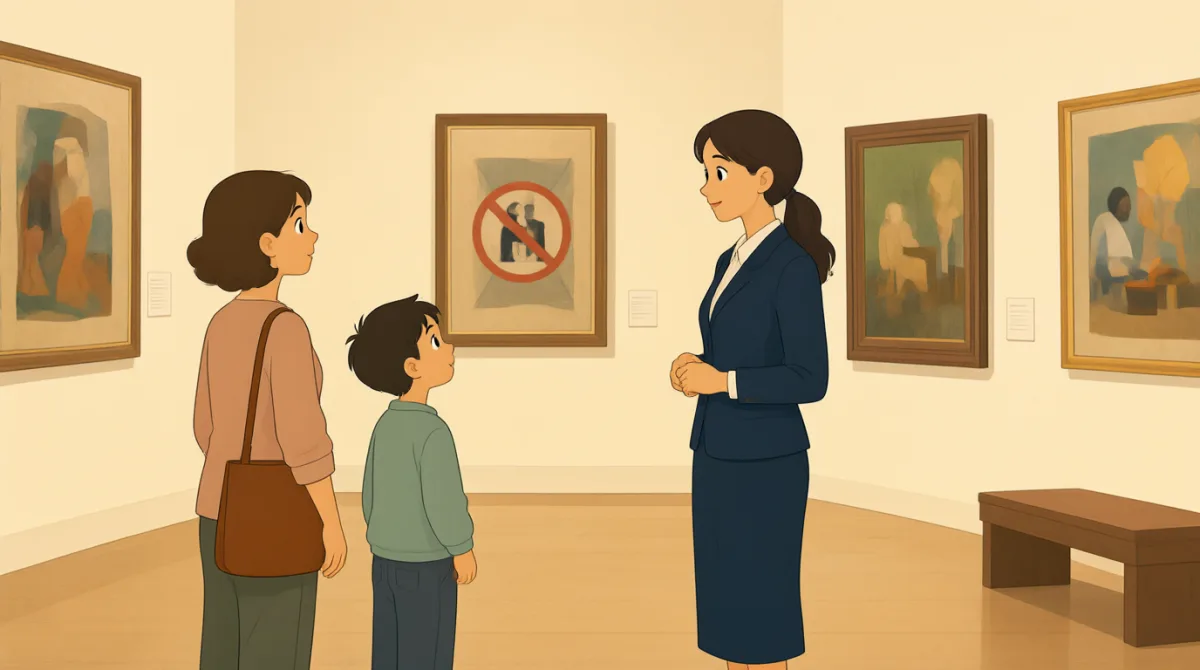

Excuse me, I have a quick question. I'm really enjoying this exhibit.
打擾一下,我有個小問題。我非常喜歡這個展覽。" を行いましょう"

Certainly, how can I help you?
當然,有什麼可以幫您的嗎?
I was wondering, is it okay to take photos of the display? I see some signs, but I'm not entirely sure about this section.
我想知道,這裡可以拍照嗎?我看到了一些標誌,但對於這個區域我不是很確定。
For this particular exhibit, photography is generally allowed for personal use without flash. However, some individual pieces may have specific restrictions indicated on their labels.
對於這個特別的展覽,通常允許個人用途的無閃光燈拍照。但是,一些單獨的展品可能在它們的標籤上標明瞭特定的限制。
Oh, I see. So no flash, that's important to remember. And I should check individual labels?
哦,我明白了。不能使用閃光燈,這點很重要。我應該檢查單獨的標籤?
Exactly. Most pieces are fine, but there are a few sensitive artifacts. We appreciate your understanding and cooperation.
沒錯。大多數作品都可以,但有一些文物比較脆弱。感謝您的理解與配合。
Understood. Thank you very much for clarifying that for me.
明白了。非常感謝您為我澄清這一點。
You're welcome. Enjoy the rest of your visit!
不客氣。祝您參觀愉快!
詞彙8
- excuse me打擾一下
A polite phrase used to get someone's attention or interrupt politely, common in public places like museums.
這是一個用於引起他人注意或禮貌地打斷對方的禮貌短語,在博物館等公共場所很常見。
- exhibit展品
A display of art, objects, or information in a museum or gallery; useful when talking about shows or displays.
指博物館或美術館中展出的藝術品、物品或資訊;談論展覽或陳列時很有用。
- wondering想知道
The present continuous form of 'wonder,' used to express curiosity or uncertainty about something, like asking if something is allowed.
這是 'wonder' 的現在進行時形式,用於表達對某事的好奇或不確定,例如詢問某件事是否被允許。
- photography攝影
The act of taking photos; in this context, it refers to rules about using cameras in places like museums.
指拍照這一行為;在本課語境中,指博物館等場所關於使用相機的規定。
- flash閃光燈
The bright light from a camera; often not allowed in exhibits to protect sensitive items.
指相機發出的強光;為了保護敏感物品,展品區域通常不允許使用閃光燈。
- restrictions限制
Rules or limits on what you can do; here, it means limits on taking photos of certain items.
指對你可以做什麼設定的規定或限制;這裡指對某些展品拍照的限制。
- labels標籤
Small tags or signs attached to items providing information or rules; check them for specific instructions.
指貼在物品上的小標籤或標牌,用於提供資訊或規定;請檢視它們以瞭解具體說明。
- cooperation配合
Working together politely to follow rules; used to thank someone for following guidelines.
指禮貌地共同遵守規定;當對方遵守相關指引時,可以用這個詞表示感謝。
關鍵句7
- 1
Excuse me, I have a quick question.
打擾一下,我有個小問題。
This is a polite way to start a conversation and ask for information. Use it in public to get attention without being rude. 'Quick' shows it's not time-consuming.
這是一個禮貌地開始交談並詢問資訊的說法。在公共場所想引起他人注意時,可以使用它而不會顯得無禮。'Quick' 表示不會佔用太多時間。
- 2
I was wondering, is it okay to take photos of the display?
我想知道,這裡可以拍攝這個展品嗎?
A soft, indirect way to ask for permission. 'I was wondering' makes the question polite and less direct. Useful for situations where you're unsure about rules. Grammar: Past continuous for ongoing thought.
這是一個委婉、間接地請求許可的說法。'I was wondering' 讓問題聽起來更禮貌、更不直接。在不確定規定的情況下,這種表達很有用。語法上使用過去進行時來表示持續的想法。
- 3
For this particular exhibit, photography is generally allowed for personal use without flash.
對於這個特別的展品,通常允許無閃光燈拍照,僅限個人使用。
This explains rules clearly. 'Generally allowed' means usually okay but with conditions. Use this pattern to give permissions with limits. 'Particular' specifies one thing among many.
這句話清楚地說明了規定。'Generally allowed' 表示通常可以,但需要遵守一些條件。說明有限制的許可時,可以使用這種句型。'Particular' 用於從多個事物中明確指出其中一個。
- 4
Oh, I see. So no flash, that's important to remember.
哦,我明白了。所以不能使用閃光燈,這點很重要,要記住。
Shows understanding and repeats key info for confirmation. 'Oh, I see' is a common response to new information. Useful for clarifying and showing you're listening.
這句話表示理解,並重復關鍵資訊來確認。'Oh, I see' 是對新資訊作出回應時常用的說法。它有助於澄清資訊,也能表示你在認真聽。
- 5
Exactly. Most pieces are fine, but there are a few sensitive artifacts.
沒錯。大多數展品都可以,但有一些文物比較敏感。
Agrees and adds details. 'Exactly' confirms the previous point. Use this to build on someone's understanding. 'Most... but' structure contrasts general and specific rules.
這句話先表示同意,再補充細節。'Exactly' 用於確認對方剛才說的內容。你可以用它來進一步說明對方已經理解的內容。'Most... but' 這一結構用於對比一般規定和特殊規定。
- 6
Understood. Thank you very much for clarifying that for me.
明白了。非常感謝您為我解釋清楚。
Polite way to end by showing comprehension and gratitude. 'Clarifying' means making something clear. Use after explanations to wrap up conversations nicely.
這是一種禮貌地結束談話的說法,表示理解和感謝。'Clarifying' 表示使某事變得清楚。在對方解釋完之後,可以使用它來得體地結束談話。
- 7
You're welcome. Enjoy the rest of your visit!
不客氣。祝您接下來的參觀愉快!
Standard polite response to thanks, with a friendly wish. Use this in service situations like museums to end positively. 'You're welcome' is a common reply to 'thank you.'
這是對他人道謝的標準禮貌回應,並附上友好的祝願。在博物館等服務場合,可以用它積極地結束談話。'You're welcome' 是回應 'thank you' 的常見說法。