Asking Permission for Street Photography (Subtle)
ขออนุญาตถ่ายภาพสตรีทอย่างแนบเนียน
An aspiring street photographer is subtly taking photos in an urban environment and spots an interesting scene involving people. Before openly framing the shot, they make eye contact and give a subtle gesture to ask if it's okay to capture the moment, or simply apologize if noticed and not given permission.
ช่างภาพสตรีทมือใหม่กำลังถ่ายภาพในเมืองอย่างแนบเนียน และเห็นฉากที่น่าสนใจซึ่งมีผู้คนอยู่ด้วย ก่อนจะยกกล้องขึ้นจัดองค์ประกอบภาพอย่างเปิดเผย เขาสบตาและส่งสัญญาณเล็กน้อยเพื่อถามว่าถ่ายภาพช่วงเวลานั้นได้ไหม หรือขอโทษหากอีกฝ่ายสังเกตเห็นและไม่อนุญาต
บทสนทนา8
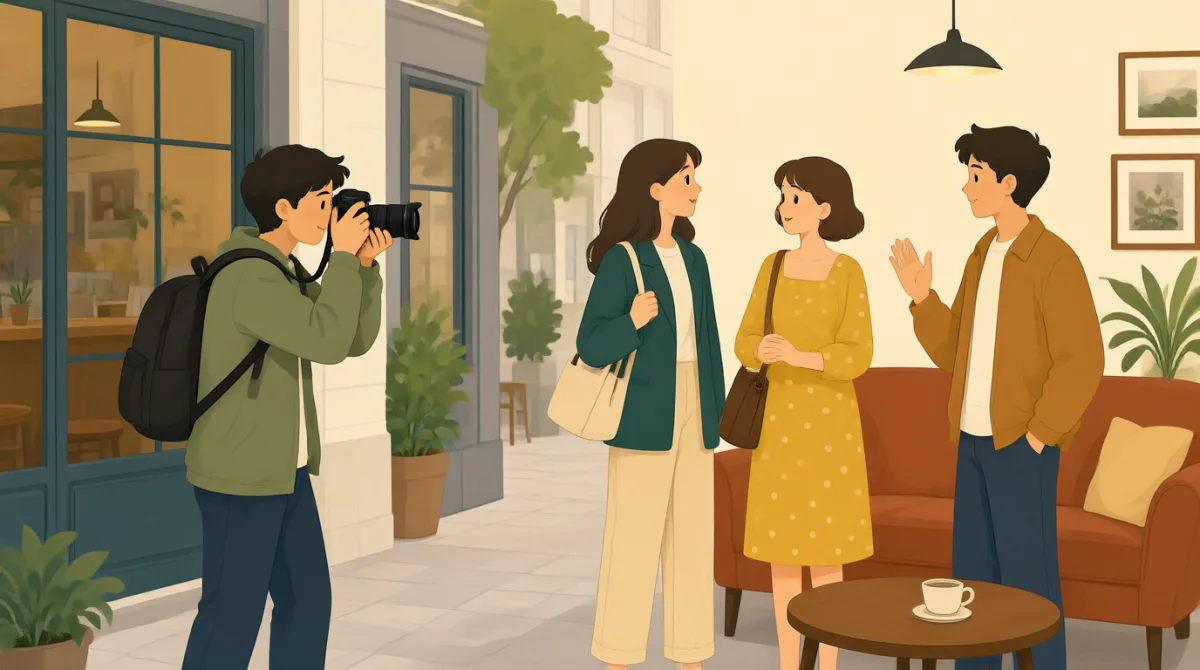

(Makes eye contact and gestures subtly towards his camera, then towards the scene, with a questioning look.)
(สบตาและผายมือไปทางกล้องเล็กน้อย จากนั้นชี้ไปยังฉากตรงหน้า พร้อมทำสีหน้าราวกับกำลังถาม)

(Looks at the camera, then at her friend, then back at Leo, understandingly.) Oh, you want to take a photo of us?
(มองกล้อง แล้วมองเพื่อน ก่อนจะหันกลับมามองเลโออย่างเข้าใจ) อ๋อ อยากถ่ายรูปพวกเราเหรอ?
(Nods slightly, with a polite smile, indicating the interesting interaction.) Yes, if it's okay. It's a really charming moment.
(พยักหน้าเล็กน้อยพร้อมยิ้มอย่างสุภาพ พลางชี้ไปยังช่วงเวลาที่น่าสนใจ) ใช่ ถ้าไม่เป็นไรนะ เป็นช่วงเวลาที่น่าประทับใจมากเลย
Hmm, sure, go ahead. Just a quick one, please.
อืม ได้เลย ถ่ายได้ ขอแค่เร็ว ๆ รูปเดียวนะ
Thank you! I appreciate it. Won't take long at all. (Raises camera to quickly frame a shot.)
ขอบคุณนะ ซาบซึ้งใจจริง ๆ ใช้เวลาไม่นานเลย (ยกกล้องขึ้นจัดองค์ประกอบภาพอย่างรวดเร็ว)
(Smiles and nudges her friend to subtly pose.)
(ยิ้มแล้วสะกิดเพื่อนให้โพสท่าอย่างแนบเนียน)
Perfect! Got it. Thanks again!
เยี่ยมเลย ได้แล้ว ขอบคุณอีกครั้งนะ!
No problem! Have a good day.
ไม่เป็นไร ขอให้วันนี้เป็นวันที่ดีนะ
คำศัพท์7
- subtlyอย่างแนบเนียน
Subtly means in a gentle or indirect way, without being obvious. Use it when describing actions like making a gesture without drawing too much attention, like in street photography to be polite.
Subtly หมายถึงทำอย่างนุ่มนวลหรืออ้อม ๆ โดยไม่ให้ใครสังเกตเห็นชัดเจน ใช้พูดถึงการกระทำอย่างการส่งสัญญาณเล็กน้อยโดยไม่ดึงดูดความสนใจมากเกินไป เช่น การถ่ายภาพสตรีทอย่างสุภาพ
- gestureท่าทาง
A gesture is a movement of your body, like a hand signal, to communicate something without words. In this dialogue, Leo uses a subtle gesture to ask permission for a photo.
Gesture คือการเคลื่อนไหวร่างกาย เช่น การส่งสัญญาณด้วยมือ เพื่อสื่อสารโดยไม่ต้องพูด ในบทสนทนานี้ เลโอใช้ท่าทางเล็กน้อยเพื่อขออนุญาตถ่ายรูป
- charmingน่าประทับใจ
Charming means very pleasant and attractive. It's used here to describe a nice moment, helping to politely explain why you want to take a photo.
Charming หมายถึงน่าพอใจและมีเสน่ห์มาก ในที่นี้ใช้บรรยายช่วงเวลาที่น่าประทับใจ เพื่ออธิบายอย่างสุภาพว่าทำไมถึงอยากถ่ายรูป
- go aheadเชิญเลย
Go ahead is a phrase meaning 'you can start' or 'please do it.' It's a polite way to give permission, common in casual situations like allowing someone to take a photo.
Go ahead เป็นวลีที่หมายถึง “เริ่มได้เลย” หรือ “ทำได้เลย” เป็นวิธีอนุญาตอย่างสุภาพที่ใช้กันบ่อยในสถานการณ์สบาย ๆ เช่น อนุญาตให้ใครสักคนถ่ายรูป
- appreciateซาบซึ้ง
Appreciate means to be grateful for something. Say 'I appreciate it' to show thanks politely, especially when someone does a favor like allowing a photo.
Appreciate หมายถึงรู้สึกขอบคุณสำหรับบางสิ่ง พูดว่า 'I appreciate it' เพื่อแสดงความขอบคุณอย่างสุภาพ โดยเฉพาะเมื่อมีคนช่วยเหลือ เช่น อนุญาตให้ถ่ายรูป
- frameจัดองค์ประกอบภาพ
In photography, to frame a shot means to position the camera to compose the picture nicely. It's a useful term for describing taking photos.
ในทางการถ่ายภาพ to frame a shot หมายถึงจัดตำแหน่งกล้องเพื่อจัดองค์ประกอบภาพให้ออกมาสวย เป็นคำที่มีประโยชน์เมื่อพูดถึงการถ่ายรูป
- poseโพสท่า
To pose means to position your body in a certain way for a photo. People do this to look good in pictures, as Emma nudges her friend to do.
To pose หมายถึงจัดท่าทางร่างกายในแบบใดแบบหนึ่งเพื่อถ่ายรูป ผู้คนทำเช่นนี้เพื่อให้ตัวเองดูดีในภาพ อย่างที่เอ็มมาสะกิดให้เพื่อนทำ
ประโยคสำคัญ6
- 1
Oh, you want to take a photo of us?
อ๋อ อยากถ่ายรูปพวกเราเหรอ?
This is a casual question to confirm someone's request. It's useful for understanding or clarifying in social situations. Notice the question structure with 'want to' for expressing desire.
นี่เป็นคำถามสบาย ๆ ที่ใช้ถามยืนยันคำขอของใครบางคน มีประโยชน์เมื่ออยากทำความเข้าใจหรือถามให้ชัดเจนในสถานการณ์ทางสังคม สังเกตโครงสร้างคำถามที่ใช้ 'want to' เพื่อบอกความต้องการ
- 2
Yes, if it's okay. It's a really charming moment.
ใช่ ถ้าไม่เป็นไรนะ เป็นช่วงเวลาที่น่าประทับใจมากเลย
This politely asks for permission while giving a reason. 'If it's okay' is a soft way to request, and 'it's a really charming moment' adds flattery. Use this pattern to make requests more acceptable.
ประโยคนี้ใช้ขออนุญาตอย่างสุภาพพร้อมบอกเหตุผล 'If it's okay' เป็นวิธีขอที่ฟังดูนุ่มนวล ส่วน 'it's a really charming moment' เป็นการกล่าวชม ใช้รูปแบบนี้เพื่อให้คำขอฟังดูน่าตอบรับมากขึ้น
- 3
Hmm, sure, go ahead. Just a quick one, please.
อืม ได้เลย ถ่ายได้ ขอแค่เร็ว ๆ รูปเดียวนะ
This gives permission hesitantly but positively. 'Hmm' shows thinking, 'sure, go ahead' means okay, and 'just a quick one' sets a limit. It's practical for agreeing with conditions in everyday interactions.
ประโยคนี้เป็นการอนุญาตอย่างลังเลเล็กน้อยแต่ก็ยินดี 'Hmm' แสดงว่ากำลังคิด 'sure, go ahead' หมายถึงตกลง ทำได้เลย ส่วน 'just a quick one' เป็นการกำหนดขอบเขต ประโยคนี้ใช้ได้จริงเมื่อตอบตกลงโดยมีเงื่อนไขในชีวิตประจำวัน
- 4
Thank you! I appreciate it. Won't take long at all.
ขอบคุณนะ ซาบซึ้งใจจริง ๆ ใช้เวลาไม่นานเลย
This expresses gratitude and reassures the other person. 'I appreciate it' is more formal than just 'thank you,' and 'won't take long' calms any worry. Use after getting permission to be polite.
ประโยคนี้แสดงความขอบคุณและช่วยให้อีกฝ่ายสบายใจ 'I appreciate it' ฟังดูสุภาพกว่าแค่พูดว่า 'thank you' ส่วน 'won't take long' ช่วยคลายความกังวล ใช้พูดอย่างสุภาพหลังได้รับอนุญาต
- 5
Perfect! Got it. Thanks again!
เยี่ยมเลย ได้แล้ว ขอบคุณอีกครั้งนะ!
This shows the action is done successfully. 'Got it' means captured the photo, and 'thanks again' reinforces politeness. It's a cheerful way to end a short interaction like this.
ประโยคนี้แสดงว่าทำสิ่งนั้นสำเร็จแล้ว 'Got it' หมายถึงถ่ายภาพได้แล้ว ส่วน 'thanks again' ช่วยเน้นความสุภาพ เป็นวิธีจบบทสนทนาสั้น ๆ แบบนี้อย่างร่าเริง
- 6
No problem! Have a good day.
ไม่เป็นไร ขอให้วันนี้เป็นวันที่ดีนะ
This is a friendly response to thanks, meaning 'you're welcome.' 'Have a good day' is a common goodbye. Use it to end conversations positively in public settings.
นี่เป็นคำตอบอย่างเป็นมิตรเมื่อมีคนขอบคุณ มีความหมายว่า “ยินดี” ส่วน 'Have a good day' เป็นคำกล่าวลาแบบที่ใช้กันทั่วไป ใช้จบบทสนทนาในที่สาธารณะด้วยความรู้สึกดี ๆ