Locating a Common Item
หาสินค้าทั่วไปในซูเปอร์มาร์เก็ต
A customer asks an employee where to find a commonly stocked item like milk, bread, or fresh produce, which might be in a less obvious section.
ลูกค้าถามพนักงานว่าจะหาสินค้าที่มีขายทั่วไป เช่น นม ขนมปัง หรือผักผลไม้สดได้ที่ไหน ซึ่งอาจอยู่ในโซนที่คาดไม่ถึง
บทสนทนา8
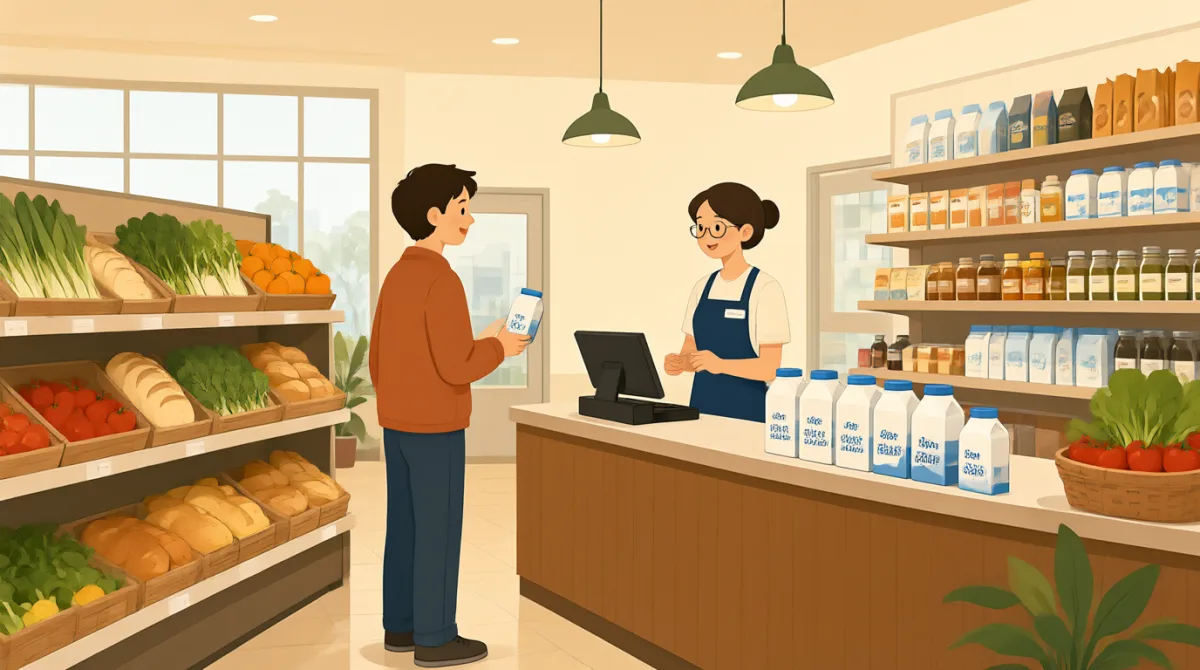

Excuse me, I'm trying to find the fresh produce section. Could you point me in the right direction?
ขอโทษนะคะ ฉันกำลังหาโซนผักผลไม้สดอยู่ค่ะ ช่วยบอกทางหน่อยได้ไหมคะ

Certainly! The fresh produce is actually right around the corner, just past the dairy section. You'll see all the fruits and vegetables there.
ได้เลยครับ! จริง ๆ แล้วโซนผักผลไม้อยู่ตรงหัวมุมนี่เองเลยจากโซนผลิตภัณฑ์นมไปนิดเดียวครับ ตรงนั้นมีผลไม้กับผักทุกชนิดเลยครับ
Oh, perfect! I thought it might be closer to the entrance. So, just past dairy, you said?
อ๋อ ดีเลยค่ะ! ฉันนึกว่าอาจจะอยู่ใกล้ทางเข้ามากกว่านี้ งั้นเลยโซนผลิตภัณฑ์นมไปนิดเดียวใช่ไหมคะ
That's right. If you follow this main aisle, you'll see the dairy on your left, and then just take a quick right at the end of that aisle. Can't miss it!
ใช่ครับ เดินตามทางเดินหลักนี้ไป จะเห็นโซนผลิตภัณฑ์นมอยู่ทางซ้ายมือ แล้วเลี้ยวขวานิดเดียวตรงสุดทางเดินนั้นครับ หาเจอแน่นอน!
Great, thanks so much for your help! I really appreciate it.
ดีเลยค่ะ ขอบคุณมากนะคะที่ช่วย ฉันซาบซึ้งใจจริง ๆ ค่ะ
No problem at all! Is there anything else I can help you find today?
ยินดีครับ! วันนี้มีอะไรอย่างอื่นที่ให้ผมช่วยหาอีกไหมครับ
Not at the moment, but thank you. You've been very helpful!
ตอนนี้ยังไม่มีค่ะ แต่ขอบคุณนะคะ คุณช่วยได้มากเลยค่ะ
You're welcome. Have a good day of shopping!
ยินดีครับ ขอให้ช้อปปิ้งอย่างมีความสุขนะครับ
คำศัพท์8
- fresh produceผักผลไม้สด
Refers to fruits and vegetables that are freshly picked and sold in the supermarket. Use this when asking for the section with healthy, raw foods like apples or lettuce.
หมายถึงผักและผลไม้ที่เก็บสดใหม่และนำมาขายในซูเปอร์มาร์เก็ต ใช้คำนี้เมื่อต้องการถามหาโซนที่ขายอาหารสดเพื่อสุขภาพ เช่น แอปเปิลหรือผักกาดหอม
- dairy sectionโซนผลิตภัณฑ์นม
The area in a store where milk, cheese, yogurt, and other milk-based products are kept. It's often cool to keep items fresh.
บริเวณในร้านที่เก็บนม ชีส โยเกิร์ต และผลิตภัณฑ์อื่น ๆ ที่ทำจากนม มักจะเป็นพื้นที่เย็นเพื่อช่วยรักษาความสดของสินค้า
- around the cornerตรงหัวมุม
Means very close by, just after turning at a bend. Use this to describe something nearby in a store or building.
หมายถึงอยู่ใกล้ ๆ เลยจากจุดที่ต้องเลี้ยว ใช้บอกว่าสิ่งใดสิ่งหนึ่งอยู่ไม่ไกลในร้านหรืออาคาร
- aisleทางเดินระหว่างชั้นวางสินค้า
A long pathway between shelves in a supermarket where products are displayed. Common in stores for walking and shopping.
ทางเดินยาวระหว่างชั้นวางสินค้าในซูเปอร์มาร์เก็ต มักใช้เรียกทางที่ลูกค้าเดินเลือกซื้อของ
- on your leftทางซ้ายมือ
Indicates the direction to the left side as you face forward. Helpful for giving or following directions in places like stores.
ใช้บอกทิศทางด้านซ้ายเมื่อมองตรงไปข้างหน้า เป็นประโยชน์ในการบอกหรือทำตามเส้นทางในสถานที่ต่าง ๆ เช่น ร้านค้า
- take a rightเลี้ยวขวา
Means to turn to the right. A basic direction word used when guiding someone, like in a supermarket layout.
หมายถึงหันไปทางขวา เป็นคำบอกทางพื้นฐานที่ใช้แนะนำเส้นทางให้คนอื่น เช่น ในซูเปอร์มาร์เก็ต
- appreciateซาบซึ้งใจ
To feel grateful for help or kindness. Use it to politely thank someone, showing good manners in English-speaking situations.
รู้สึกขอบคุณสำหรับความช่วยเหลือหรือความมีน้ำใจ ใช้คำนี้เพื่อขอบคุณอย่างสุภาพและแสดงมารยาทที่ดีในสถานการณ์ที่ใช้ภาษาอังกฤษ
- can't miss itหาเจอแน่นอน
Means it's very easy to find and obvious. Use this to reassure someone that a location is clear and simple to spot.
หมายถึงมองเห็นได้ชัดและหาได้ง่าย ใช้พูดให้อีกฝ่ายมั่นใจว่าสถานที่นั้นสังเกตเห็นได้ง่าย
ประโยคสำคัญ7
- 1
Excuse me, I'm trying to find the fresh produce section. Could you point me in the right direction?
ขอโทษนะคะ ฉันกำลังหาโซนผักผลไม้สดอยู่ค่ะ ช่วยบอกทางหน่อยได้ไหมคะ
This is a polite way to start asking for help in a store. 'Excuse me' gets attention, and 'point me in the right direction' idiomatically means 'tell me where to go.' Useful for beginners asking locations; practice the question form for directions.
นี่เป็นวิธีเริ่มต้นขอความช่วยเหลือในร้านอย่างสุภาพ 'Excuse me' ใช้เรียกความสนใจ ส่วน 'point me in the right direction' เป็นสำนวนที่หมายถึง 'บอกฉันหน่อยว่าต้องไปทางไหน' เหมาะสำหรับผู้เริ่มต้นที่ต้องการถามทาง ลองฝึกใช้รูปประโยคคำถามเพื่อขอเส้นทางดูนะคะ
- 2
The fresh produce is actually right around the corner, just past the dairy section.
จริง ๆ แล้วโซนผักผลไม้อยู่ตรงหัวมุมนี่เองเลยจากโซนผลิตภัณฑ์นมไปนิดเดียวค่ะ
Gives clear directions using location words like 'around the corner' and 'past.' 'Actually' adds emphasis or correction. Great for responding to questions; helps learners describe nearby places relative to landmarks.
ประโยคนี้บอกทางอย่างชัดเจนโดยใช้คำบอกตำแหน่งอย่าง 'around the corner' และ 'past' คำว่า 'actually' ใช้เน้นข้อมูลหรือแก้ความเข้าใจ เหมาะสำหรับตอบคำถามและฝึกบอกตำแหน่งของสถานที่ใกล้เคียงโดยอ้างอิงจุดสังเกตค่ะ
- 3
If you follow this main aisle, you'll see the dairy on your left, and then just take a quick right at the end of that aisle.
ถ้าเดินตามทางเดินหลักนี้ไป คุณจะเห็นโซนผลิตภัณฑ์นมอยู่ทางซ้ายมือ แล้วเลี้ยวขวานิดเดียวตรงสุดทางเดินนั้นค่ะ
Uses imperative verbs like 'follow' and 'take' for step-by-step directions. 'You'll see' predicts what happens next. Essential pattern for guiding; intermediate learners can use it to give or follow multi-step instructions.
ประโยคนี้ใช้คำกริยาบอกคำสั่งอย่าง 'follow' และ 'take' เพื่อบอกทางเป็นลำดับ ส่วน 'You'll see' ใช้บอกสิ่งที่จะเห็นต่อไป เป็นรูปแบบสำคัญสำหรับการแนะนำเส้นทาง ผู้เรียนระดับกลางนำไปใช้บอกหรือทำตามคำแนะนำหลายขั้นตอนได้ค่ะ
- 4
Can't miss it!
หาเจอแน่นอนค่ะ!
A short, reassuring phrase meaning it's impossible to overlook. Informal and friendly; use at the end of directions to build confidence. No complex grammar, but shows contraction for natural speech.
'Can't miss it!' เป็นวลีสั้น ๆ ที่ช่วยให้อีกฝ่ายมั่นใจว่าหาเจอได้ง่ายและไม่มีทางมองข้าม ใช้พูดอย่างเป็นกันเองและเป็นมิตรเมื่อตอนท้ายของการบอกทาง แม้ไม่มีไวยากรณ์ซับซ้อน แต่มีรูปย่อที่ทำให้ฟังเป็นธรรมชาติค่ะ
- 5
Great, thanks so much for your help! I really appreciate it.
ดีเลยค่ะ ขอบคุณมากนะคะที่ช่วย ฉันซาบซึ้งใจจริง ๆ ค่ะ
Expresses thanks politely. 'Thanks so much' is emphatic gratitude, and 'I really appreciate it' shows deeper thanks. Useful closing sentence after receiving help; teaches polite expressions for service interactions.
ใช้กล่าวขอบคุณอย่างสุภาพ 'Thanks so much' แสดงความขอบคุณอย่างมาก ส่วน 'I really appreciate it' แสดงความขอบคุณที่ลึกซึ้งยิ่งขึ้น เหมาะสำหรับกล่าวขอบคุณหลังได้รับความช่วยเหลือ และเป็นสำนวนสุภาพที่ใช้เมื่อติดต่อกับพนักงานบริการค่ะ
- 6
No problem at all! Is there anything else I can help you find today?
ยินดีครับ! วันนี้มีอะไรอย่างอื่นที่ให้ผมช่วยหาอีกไหมครับ
Responds to thanks casually ('No problem at all') and offers more help with a question. Shows customer service politeness; learners can use this in roles like shop assistant to keep conversations open.
ตอบรับคำขอบคุณอย่างเป็นกันเองด้วย 'No problem at all' แล้วเสนอความช่วยเหลือเพิ่มเติมด้วยคำถาม ประโยคนี้แสดงความสุภาพในการบริการลูกค้า พนักงานร้านค้าสามารถใช้เพื่อชวนให้สนทนาต่อได้ครับ
- 7
You're welcome. Have a good day of shopping!
ยินดีครับ ขอให้ช้อปปิ้งอย่างมีความสุขนะครับ
Standard reply to 'thank you' ('You're welcome') followed by a friendly wish. 'Have a good day' is a common farewell; adapt to context like 'shopping' for specificity. Teaches ending conversations positively.
'You're welcome' เป็นคำตอบมาตรฐานเมื่อมีคนพูดว่า 'thank you' แล้วตามด้วยคำอวยพรที่เป็นมิตร 'Have a good day' เป็นคำบอกลาที่ใช้กันทั่วไป และปรับให้เข้ากับสถานการณ์ได้ เช่น เติมคำว่า 'shopping' เพื่อระบุให้ชัดเจนขึ้น ประโยคนี้ช่วยให้จบบทสนทนาในแง่ดีครับ