Document Review and Clarification
การตรวจทานและชี้แจงเอกสาร
Pertains to the lawyer and client reviewing specific legal documents (e.g., contracts, notices, evidence) together, with the client asking questions for clarification and the lawyer explaining jargons or implications.
ทนายความและลูกค้าร่วมกันตรวจดูเอกสารทางกฎหมาย เช่น สัญญา หนังสือแจ้ง หรือหลักฐาน โดยลูกค้าสอบถามเพื่อให้เข้าใจชัดเจนขึ้น และทนายความอธิบายศัพท์เฉพาะหรือผลที่อาจเกิดขึ้น
บทสนทนา10
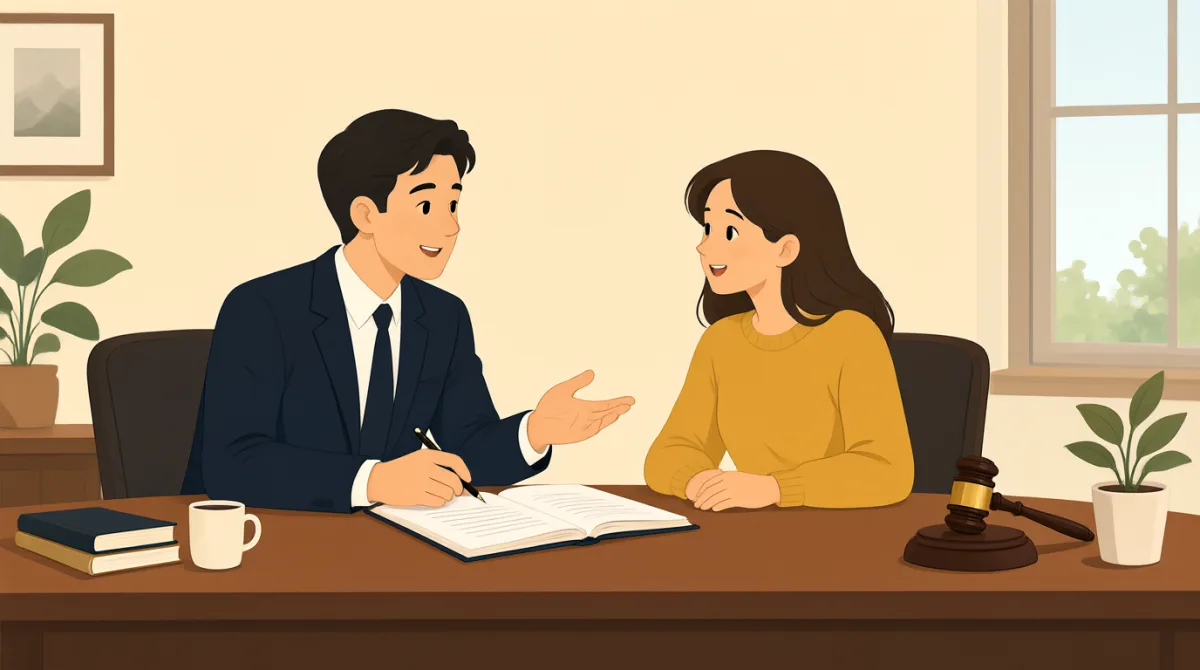

Thanks for seeing me, Mr. Miller. I’ve brought the contract we discussed. I'm a bit overwhelmed by some of the legal jargon here.
ขอบคุณที่สละเวลาพบฉันนะคะ คุณมิลเลอร์ ฉันนำสัญญาที่เราคุยกันไว้มาด้วยค่ะ ฉันรู้สึกสับสนกับศัพท์กฎหมายบางคำในนี้นิดหน่อย

Not a problem at all, Ms. Carter. Let's go through it together. Where would you like to start? Just point out anything that's unclear.
ไม่เป็นไรเลยครับ คุณคาร์เตอร์ เรามาดูไปด้วยกันนะครับ อยากเริ่มตรงไหนครับ ตรงไหนไม่เข้าใจก็ชี้ให้ผมดูได้เลย
Okay, on page three, section 4.1. It mentions 'indemnification.' What exactly does that mean in practical terms for me?
ค่ะ หน้า 3 ข้อ 4.1 มีคำว่า 'indemnification' หมายความว่าอย่างไรในทางปฏิบัติสำหรับฉันคะ
Good question. 'Indemnification' essentially means one party agrees to protect the other from financial loss or legal liability if certain events occur. In your case, it's about protecting you from potential losses stemming from the other party's actions or negligence as outlined in the contract.
เป็นคำถามที่ดีครับ 'Indemnification' โดยหลักแล้วหมายถึงฝ่ายหนึ่งตกลงที่จะคุ้มครองอีกฝ่ายจากความเสียหายทางการเงินหรือความรับผิดทางกฎหมาย หากเกิดเหตุการณ์บางอย่างขึ้น ในกรณีของคุณคือการคุ้มครองคุณจากความเสียหายที่อาจเกิดจากการกระทำหรือความประมาทของอีกฝ่าย ตามที่ระบุไว้ในสัญญาครับ
So, if they mess up, I won't be on the hook for their mistakes, provided it falls under this clause?
ถ้าอย่างนั้น ถ้าพวกเขาทำพลาด ฉันก็ไม่ต้องรับผิดชอบต่อความผิดพลาดของพวกเขา ตราบใดที่กรณีนั้นอยู่ภายใต้ข้อกำหนดนี้ใช่ไหมคะ
Precisely. It shifts the risk. Now, moving on to section 6.2, 'force majeure.' Are you clear on that?
ถูกต้องครับ เป็นการโอนความเสี่ยง ทีนี้มาดูข้อ 6.2 เรื่อง 'force majeure' กัน คุณเข้าใจเรื่องนี้ไหมครับ
I think so. It's for unforeseen events like natural disasters, right? Things that prevent either party from fulfilling their obligations?
คิดว่าเข้าใจค่ะ เป็นเหตุการณ์ที่คาดไม่ถึงอย่างภัยธรรมชาติใช่ไหมคะ เหตุการณ์ที่ทำให้ฝ่ายใดฝ่ายหนึ่งทำตามหน้าที่ไม่ได้
That's exactly right. It typically excuses non-performance due to circumstances beyond the parties' control. We should also look closely at the 'Limitation of Liability' clause in section 8.1; that's often critical.
ถูกต้องเลยครับ โดยทั่วไปข้อนี้จะยกเว้นความรับผิดกรณีไม่สามารถปฏิบัติตามสัญญาได้ เนื่องจากเหตุการณ์ที่อยู่นอกเหนือการควบคุมของคู่สัญญา เรายังควรตรวจดูข้อ 'Limitation of Liability' ในข้อ 8.1 อย่างละเอียดด้วยนะครับ ข้อนี้มักสำคัญมาก
Got it. So it limits how much financial damage either side can claim? I'd like to make sure that's reasonable for my situation.
เข้าใจแล้วค่ะ ถ้าอย่างนั้นข้อนี้ก็จำกัดจำนวนค่าเสียหายที่แต่ละฝ่ายจะเรียกร้องได้ใช่ไหมคะ ฉันอยากแน่ใจว่าข้อนี้เหมาะสมกับสถานการณ์ของฉัน
Absolutely. We'll examine if the caps are fair and customary for your industry. Let's go through the entire document slowly to ensure every aspect is clear and protects your interests.
แน่นอนครับ เราจะตรวจดูว่าเพดานความรับผิดนั้นเป็นธรรมหรือไม่ และเป็นไปตามธรรมเนียมของอุตสาหกรรมคุณหรือเปล่า เรามาค่อย ๆ ตรวจดูเอกสารทั้งหมดด้วยกัน เพื่อให้แน่ใจว่าทุกส่วนชัดเจนและคุ้มครองผลประโยชน์ของคุณครับ
คำศัพท์8
- jargonศัพท์เฉพาะ
Special words or expressions used by a particular profession or group; in legal contexts, it refers to technical terms that can be hard for non-experts to understand.
คำหรือสำนวนเฉพาะที่คนในวิชาชีพหรือกลุ่มใดกลุ่มหนึ่งใช้ ในบริบททางกฎหมาย หมายถึงคำทางเทคนิคที่ผู้ไม่มีความเชี่ยวชาญอาจเข้าใจได้ยาก
- overwhelmedรู้สึกสับสนจนรับมือไม่ไหว
Feeling unable to deal with something because it is too much or too complicated; useful when describing confusion with complex documents.
รู้สึกว่ารับมือกับบางสิ่งไม่ไหว เพราะมีมากเกินไปหรือซับซ้อนเกินไป ใช้บรรยายความสับสนเมื่อเจอเอกสารที่ซับซ้อนได้
- indemnificationการชดใช้ค่าเสียหาย
A legal agreement where one party promises to compensate the other for losses or damages; common in contracts to protect against risks.
ข้อตกลงทางกฎหมายที่ฝ่ายหนึ่งสัญญาว่าจะชดเชยความสูญเสียหรือความเสียหายให้อีกฝ่าย มักพบในสัญญาเพื่อคุ้มครองจากความเสี่ยง
- liabilityความรับผิด
Responsibility for something, especially legal responsibility for one's actions or debts; often used in business to discuss who pays for mistakes.
ความรับผิดชอบต่อบางสิ่ง โดยเฉพาะความรับผิดทางกฎหมายจากการกระทำหรือหนี้สินของตน ในทางธุรกิจมักใช้พูดถึงว่าใครต้องจ่ายเมื่อเกิดข้อผิดพลาด
- negligenceความประมาท
Failure to take proper care, leading to harm or loss; in contracts, it means carelessness by one party that could affect the other.
การไม่ใช้ความระมัดระวังอย่างเหมาะสมจนก่อให้เกิดความเสียหายหรือความสูญเสีย ในสัญญาหมายถึงความสะเพร่าของฝ่ายหนึ่งซึ่งอาจส่งผลกระทบต่ออีกฝ่าย
- force majeureเหตุสุดวิสัย
A clause in a contract that frees parties from responsibility if extraordinary events like disasters prevent fulfillment; from French, meaning 'superior force'.
ข้อสัญญาที่ปลดเปลื้องคู่สัญญาจากความรับผิด หากเหตุการณ์ร้ายแรง เช่น ภัยพิบัติ ทำให้ไม่สามารถปฏิบัติตามสัญญาได้ คำนี้มาจากภาษาฝรั่งเศส หมายถึง “กำลังที่เหนือกว่า”
- obligationหน้าที่
A duty or responsibility to do something, as required by law or contract; important for understanding what each party must do.
หน้าที่หรือความรับผิดชอบที่ต้องทำตามที่กฎหมายหรือสัญญากำหนด คำนี้สำคัญต่อการทำความเข้าใจว่าแต่ละฝ่ายต้องทำอะไรบ้าง
- clauseข้อกำหนด
A specific part of a contract or legal document that outlines a particular rule or condition; helps in referring to sections during discussions.
ส่วนหนึ่งของสัญญาหรือเอกสารทางกฎหมายที่ระบุกฎหรือเงื่อนไขเฉพาะ ช่วยให้อ้างถึงส่วนต่าง ๆ ระหว่างการพูดคุยได้
ประโยคสำคัญ8
- 1
I'm a bit overwhelmed by some of the legal jargon here.
ฉันรู้สึกสับสนกับศัพท์กฎหมายบางคำในนี้นิดหน่อยค่ะ
This sentence expresses confusion politely; useful for admitting when something is too complex. 'A bit' softens the statement, and 'jargon' specifies the type of difficulty. Use it in professional settings to ask for help without seeming unprepared.
ประโยคนี้ใช้บอกอย่างสุภาพว่าคุณไม่เข้าใจ และใช้ได้ดีเมื่อเนื้อหาซับซ้อนเกินไป คำว่า 'a bit' ช่วยให้ฟังดูนุ่มนวล ส่วน 'jargon' ระบุว่าปัญหาคือศัพท์เฉพาะ ใช้ในสถานการณ์ทางวิชาชีพเพื่อขอความช่วยเหลือโดยไม่ทำให้ดูเหมือนไม่เตรียมตัว
- 2
What exactly does that mean in practical terms for me?
คำนี้หมายความว่าอย่างไรในทางปฏิบัติสำหรับฉันคะ
Asks for a simple, real-world explanation of a term; great for clarification in consultations. 'In practical terms' means 'how it applies in everyday situations.' Use this to get concrete examples instead of abstract definitions.
ใช้ขอคำอธิบายที่เข้าใจง่ายและนำไปใช้ได้จริง เหมาะสำหรับขอคำชี้แจงระหว่างการปรึกษา 'In practical terms' หมายถึง “เมื่อนำไปใช้ในชีวิตจริงแล้วเป็นอย่างไร” ใช้ประโยคนี้เพื่อขอตัวอย่างที่เป็นรูปธรรมแทนคำอธิบายที่เป็นนามธรรม
- 3
It shifts the risk.
เป็นการโอนความเสี่ยงครับ
A concise way to explain how responsibility moves from one party to another; useful in business talks. 'Shifts' is present simple tense for general truth. Use it when discussing contracts to highlight protection mechanisms.
เป็นวิธีพูดสั้น ๆ เพื่ออธิบายว่าความรับผิดชอบเปลี่ยนจากฝ่ายหนึ่งไปยังอีกฝ่ายหนึ่ง ใช้ได้ดีในการพูดคุยทางธุรกิจ 'Shifts' อยู่ในรูป present simple เพื่อบอกข้อเท็จจริงทั่วไป ใช้เมื่อพูดถึงสัญญาเพื่อเน้นกลไกการคุ้มครอง
- 4
If they mess up, I won't be on the hook for their mistakes.
ถ้าพวกเขาทำพลาด ฉันก็ไม่ต้องรับผิดชอบต่อความผิดพลาดของพวกเขาค่ะ
Informal way to confirm understanding: 'mess up' means make a mistake, 'on the hook' is an idiom for being responsible. Useful in casual legal chats to verify details. The conditional 'if' clause shows hypothetical situations.
เป็นวิธียืนยันความเข้าใจแบบไม่เป็นทางการ 'Mess up' หมายถึงทำผิดพลาด ส่วน 'on the hook' เป็นสำนวนที่หมายถึงต้องรับผิดชอบ ใช้ในการพูดคุยเรื่องกฎหมายแบบสบาย ๆ เพื่อตรวจสอบรายละเอียด อนุประโยคที่ขึ้นต้นด้วย 'if' ใช้กล่าวถึงสถานการณ์สมมติ
- 5
It's for unforeseen events like natural disasters, right?
เป็นกรณีเหตุการณ์ที่คาดไม่ถึงอย่างภัยธรรมชาติใช่ไหมคะ
Seeks confirmation on a definition; 'unforeseen' means unexpected. 'Right?' is a tag question for agreement. Use this pattern to check your understanding politely during explanations.
ใช้ถามเพื่อยืนยันความเข้าใจเกี่ยวกับคำจำกัดความ 'Unforeseen' หมายถึงคาดไม่ถึง ส่วน 'Right?' เป็นคำถามต่อท้ายเพื่อขอให้ยืนยัน ใช้รูปแบบนี้ตรวจสอบความเข้าใจอย่างสุภาพระหว่างที่อีกฝ่ายอธิบายได้
- 6
It typically excuses non-performance due to circumstances beyond the parties' control.
โดยทั่วไปข้อนี้จะยกเว้นความรับผิดกรณีไม่สามารถปฏิบัติตามสัญญาได้ เนื่องจากเหตุการณ์ที่อยู่นอกเหนือการควบคุมของคู่สัญญาครับ
Explains a legal concept clearly; 'typically' means usually, 'excuses' means forgives or releases from duty. Useful for describing contract protections. The structure uses passive voice to focus on the action, not the doer.
ใช้อธิบายแนวคิดทางกฎหมายอย่างชัดเจน 'Typically' หมายถึงโดยทั่วไป ส่วน 'excuses' หมายถึงยกเว้นหรือปลดเปลื้องจากหน้าที่ ประโยคนี้เหมาะสำหรับอธิบายการคุ้มครองในสัญญา โครงสร้างประโยคใช้รูป passive voice เพื่อเน้นการกระทำ ไม่ใช่ผู้กระทำ
- 7
We'll examine if the caps are fair and customary for your industry.
เราจะตรวจดูว่าเพดานความรับผิดนั้นเป็นธรรมและเป็นไปตามธรรมเนียมของอุตสาหกรรมคุณหรือไม่ครับ
Promises a review; 'caps' refer to limits on liability, 'customary' means standard practice. 'If' introduces a condition. Use this in advisory roles to assure thoroughness and relevance to the client's field.
เป็นการรับรองว่าจะตรวจสอบให้ 'Caps' หมายถึงเพดานหรือวงเงินจำกัดความรับผิด ส่วน 'Customary' หมายถึงเป็นแนวปฏิบัติตามปกติ 'If' ใช้ขึ้นต้นเงื่อนไข ใช้ประโยคนี้เมื่อให้คำปรึกษาเพื่อให้ลูกค้ามั่นใจว่าจะตรวจสอบอย่างรอบคอบและคำนึงถึงแวดวงธุรกิจของลูกค้า
- 8
Let's go through the entire document slowly to ensure every aspect is clear.
เรามาค่อย ๆ ตรวจดูเอกสารทั้งหมด เพื่อให้แน่ใจว่าทุกส่วนชัดเจนกันนะครับ
Suggests a careful review; 'go through' means examine step by step, 'ensure' means make sure. Imperative 'let's' invites collaboration. Useful for guiding discussions on complex materials to build confidence.
ใช้เสนอให้ตรวจทานอย่างรอบคอบ 'Go through' หมายถึงตรวจดูทีละส่วน ส่วน 'Ensure' หมายถึงทำให้แน่ใจ รูปประโยคชวนทำบางอย่างด้วยกันที่ขึ้นต้นด้วย 'Let's' เปิดโอกาสให้อีกฝ่ายมีส่วนร่วม ใช้เมื่อนำการพูดคุยเกี่ยวกับเนื้อหาซับซ้อนเพื่อช่วยให้อีกฝ่ายมั่นใจขึ้น