Showing Your New Home
Pokazujesz nowe mieszkanie
Leo shows Emma his new apartment on the video call. He walks around the rooms and explains what he likes about the new place.
Leo pokazuje Emmie swoje nowe mieszkanie podczas rozmowy wideo. Oprowadza ją po pokojach i opowiada, co mu się podoba w nowym miejscu.
Dialog8
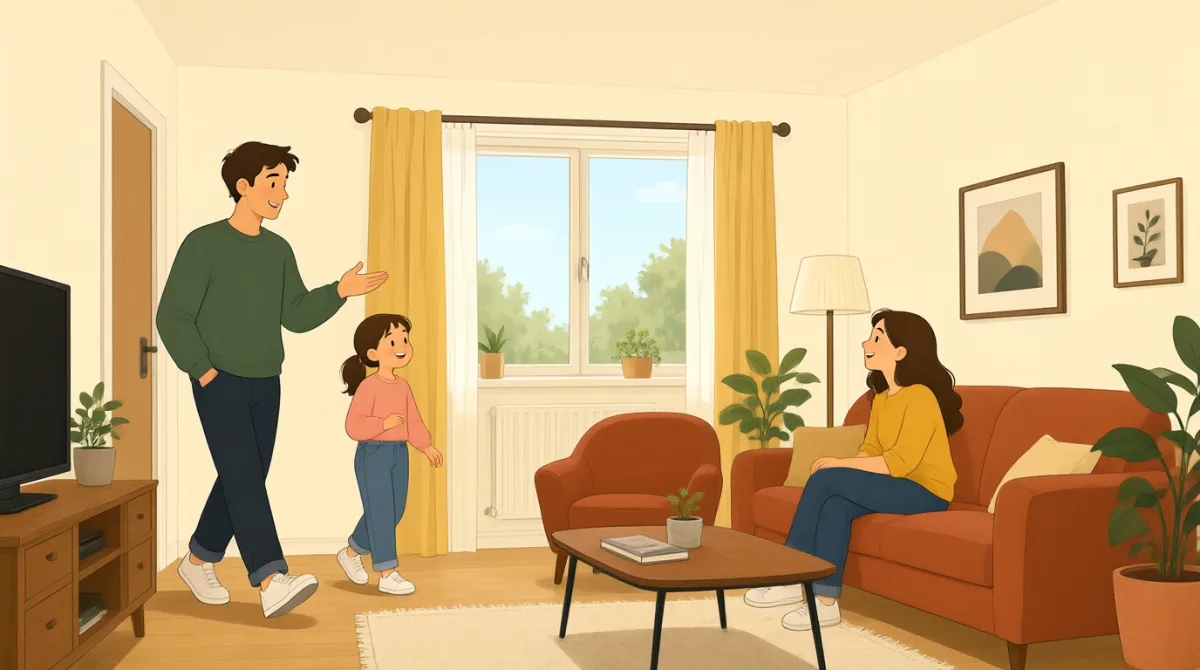

Hey, Emma! Let me show you my new apartment. It’s not very big, but I like it.
Hej, Emma! Pokażę ci moje nowe mieszkanie. Nie jest zbyt duże, ale mi się podoba.

Wow, it looks bright! Is this the living room?
Wow, ale tu jasno! To jest salon?
Yes. The sofa is new, and the window gets lots of sun in the morning.
Tak. Sofa jest nowa, a rano przez okno wpada dużo słońca.
That’s nice! Can you show me the kitchen?
Super! Pokażesz mi kuchnię?
Sure. It’s small, but there’s enough room to cook. Look, I have a little table here.
Jasne. Jest mała, ale jest wystarczająco dużo miejsca, żeby gotować. Zobacz, mam tu mały stolik.
I like it! What’s that room behind you?
Podoba mi się! Co to za pokój za tobą?
That’s my bedroom. I still need to unpack some boxes, but the bed is ready.
To moja sypialnia. Muszę jeszcze rozpakować kilka pudeł, ale łóżko jest już gotowe.
Your new place looks great. I’m happy you found an apartment you like!
Twoje nowe mieszkanie wygląda świetnie. Cieszę się, że znalazłeś mieszkanie, które ci się podoba!
Słownictwo7
- show youpokazać ci
To let someone see something. You can say, “Let me show you my room.”
Pozwolić komuś coś zobaczyć. Możesz powiedzieć: „Let me show you my room.” (Pozwól, że pokażę ci mój pokój).
- brightjasny
Full of light. You can use it to describe a room with lots of natural light.
Pełen światła. Możesz tak opisać pokój, do którego wpada dużo naturalnego światła.
- living roomsalon
The room in a home where people relax or spend time together.
Pokój w domu, w którym ludzie odpoczywają lub spędzają czas razem.
- lots of sundużo słońca
A lot of sunlight. You can say a window or room gets lots of sun.
Dużo światła słonecznego. Możesz powiedzieć, że przez okno wpada dużo słońca albo że w pokoju jest go dużo.
- enough roomwystarczająco dużo miejsca
Sufficient space for something. For example, “There’s enough room to sit.”
Tyle przestrzeni, ile potrzeba do czegoś. Na przykład: „There’s enough room to sit.” (Jest wystarczająco dużo miejsca, żeby usiąść).
- unpackrozpakować
To take things out of boxes or bags after moving or traveling. You can say, “I need to unpack my boxes.”
Wyjąć rzeczy z pudeł lub toreb po przeprowadzce albo podróży. Możesz powiedzieć: „I need to unpack my boxes.” (Muszę rozpakować swoje pudła).
- new placenowe miejsce
An informal way to talk about a new home or apartment.
Potoczne określenie nowego domu lub mieszkania.
Kluczowe zdania7
- 1
Let me show you my new apartment.
Pokażę ci moje nowe mieszkanie.
Use this to offer to show someone your home. You can replace “my new apartment” with another place or thing.
Użyj tego zdania, gdy proponujesz komuś pokazanie swojego domu. Zamiast „my new apartment” możesz wstawić inne miejsce lub rzecz.
- 2
It’s not very big, but I like it.
Nie jest zbyt duże, ale mi się podoba.
This is a simple way to describe something and share how you feel about it. Use “but” to connect two different ideas.
To prosty sposób, żeby coś opisać i powiedzieć, co o tym myślisz. Użyj „but”, aby połączyć dwie różne myśli.
- 3
Is this the living room?
To jest salon?
Use this question to check what a room is called. You can replace “the living room” with another room.
Użyj tego pytania, żeby upewnić się, jak nazywa się dany pokój. Zamiast „the living room” możesz wstawić nazwę innego pomieszczenia.
- 4
The window gets lots of sun in the morning.
Rano przez okno wpada dużo słońca.
Use this sentence to describe how much sunlight a room gets and when it gets it. You can change “in the morning” to another time.
Użyj tego zdania, żeby opisać, ile światła słonecznego dociera do pokoju i kiedy. Zamiast „in the morning” możesz podać inną porę.
- 5
There’s enough room to cook.
Jest wystarczająco dużo miejsca, żeby gotować.
Use “There’s enough room to” to say there is sufficient space for an activity. For example, “There’s enough room to sit.”
Użyj „There’s enough room to”, żeby powiedzieć, że jest wystarczająco dużo miejsca na jakąś czynność. Na przykład: „There’s enough room to sit.” (Jest wystarczająco dużo miejsca, żeby usiąść).
- 6
I still need to unpack some boxes, but the bed is ready.
Muszę jeszcze rozpakować kilka pudeł, ale łóżko jest już gotowe.
This sentence explains what you have not finished and what is already prepared. You can use “I still need to” to talk about something you must do later.
To zdanie mówi o tym, czego jeszcze nie udało ci się skończyć, i o tym, co jest już gotowe. Możesz użyć „I still need to”, gdy mówisz o czymś, co musisz zrobić później.
- 7
I’m happy you found an apartment you like!
Cieszę się, że znalazłeś mieszkanie, które ci się podoba!
Use this to show someone you are glad about their good news. You can replace “found an apartment you like” with another positive result.
Użyj tego zdania, żeby pokazać komuś, że cieszysz się z jego dobrych wiadomości. Zamiast „found an apartment you like” możesz wstawić inny pozytywny rezultat.