Talking About the Weather
Rozmowa o pogodzie
Mia joins them at the bus stop. They talk about the rain while they wait.
Mia dołącza do nich na przystanku. Czekając, rozmawiają o deszczu.
Dialog7
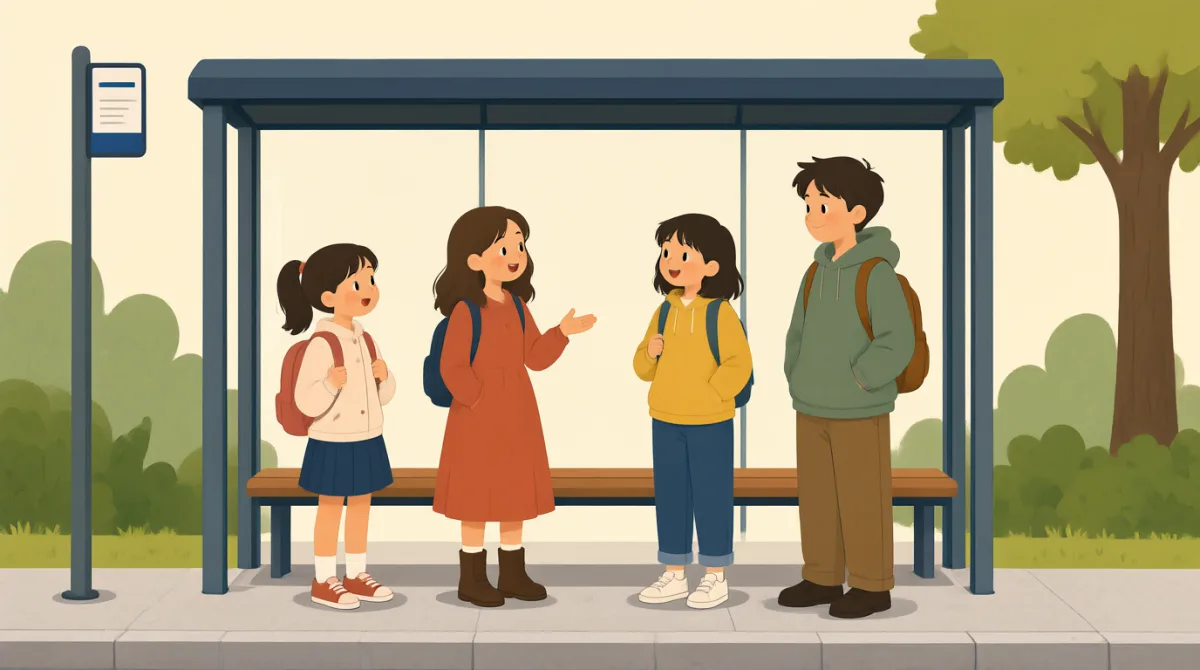

Hi, Mia. The bus is still late.
Cześć, Mia. Autobus nadal się spóźnia.

Yes. And now it is raining.
Tak. A teraz jeszcze pada.

I have an umbrella. We can share it.
Mam parasol. Możemy się nim podzielić.
Thanks, Jack. The rain is very cold.
Dzięki, Jack. Deszcz jest bardzo zimny.
I hope the bus comes soon.
Mam nadzieję, że autobus wkrótce przyjedzie.
Me too. I don't want to get wet.
Ja też. Nie chcę zmoknąć.
Look, the rain is getting lighter.
Patrzcie, deszcz robi się słabszy.
Słownictwo6
- still latenadal się spóźnia
The bus has not arrived yet. Use “still” to say that something continues.
Autobus jeszcze nie przyjechał. Użyj “still”, żeby powiedzieć, że coś nadal trwa.
- rainingpadać
Rain is falling from the sky. You can say “It is raining” to describe the weather now.
Deszcz spada z nieba. Możesz powiedzieć “It is raining”, żeby opisać aktualną pogodę.
- umbrellaparasol
An umbrella keeps rain off you. You can carry one when it rains.
Parasol chroni przed deszczem. Możesz go zabrać ze sobą, kiedy pada.
- share itpodzielić się nim
Use this when two or more people use the same thing. Here, Jack offers to use his umbrella with the others.
Użyj tego wyrażenia, gdy dwie lub więcej osób korzysta z tej samej rzeczy. Tutaj Jack proponuje, że podzieli się parasolem z pozostałymi.
- get wetzmoknąć
This means to have water or rain on your clothes or body. You can say, “I don’t want to get wet.”
To znaczy mieć wodę lub deszcz na ubraniu albo ciele. Możesz powiedzieć: “I don’t want to get wet.”
- getting lighterrobić się słabszy
Here, this means the rain is becoming less strong. Use “getting” to talk about a change happening now.
Tutaj oznacza to, że deszcz staje się mniej intensywny. Użyj “getting”, żeby opisać zmianę, która zachodzi teraz.
Kluczowe zdania8
- 1
The bus is still late.
Autobus nadal się spóźnia.
Use this to say a bus or another person has not arrived on time. You can replace “the bus” with another subject, such as “The train is still late.”
Użyj tego zdania, żeby powiedzieć, że autobus lub ktoś inny nie przyjechał na czas. Zamiast “the bus” możesz użyć innego podmiotu, na przykład “The train is still late.”
- 2
And now it is raining.
A teraz pada.
This is a simple way to talk about the weather. Replace “raining” with another weather word, such as “snowing.”
To prosty sposób na rozmowę o pogodzie. Zamiast “raining” możesz użyć innego określenia pogody, na przykład “snowing.”
- 3
I have an umbrella.
Mam parasol.
Use this sentence to say what you have with you. You can replace “an umbrella” with another useful item.
Użyj tego zdania, żeby powiedzieć, co masz przy sobie. Zamiast “an umbrella” możesz wymienić inną przydatną rzecz.
- 4
We can share it.
Możemy się nim podzielić.
Use this to offer to use something together. Replace “it” with the thing you want to share.
Użyj tego zdania, żeby zaproponować wspólne korzystanie z czegoś. Zamiast “it” wstaw nazwę rzeczy, którą chcesz się podzielić.
- 5
The rain is very cold.
Deszcz jest bardzo zimny.
Use “The [weather] is very [adjective]” to describe how the weather feels. You can say, “The wind is very cold.”
Użyj wzoru “The [weather] is very [adjective]”, żeby opisać, jakie odczucia wywołuje pogoda. Możesz powiedzieć: “The wind is very cold.”
- 6
I hope the bus comes soon.
Mam nadzieję, że autobus wkrótce przyjedzie.
Use “I hope” to say what you want to happen. Replace “the bus comes” with another event, such as “the rain stops.”
Użyj “I hope”, żeby powiedzieć, czego chcesz. Zamiast “the bus comes” możesz wstawić inne wydarzenie, na przykład “the rain stops.”
- 7
I don't want to get wet.
Nie chcę zmoknąć.
Use “I don’t want to” to say what you do not wish to happen. You can use it with other actions, such as “I don’t want to wait.”
Użyj “I don’t want to”, żeby powiedzieć, czego nie chcesz. Możesz połączyć to z innymi czynnościami, na przykład “I don’t want to wait.”
- 8
Look, the rain is getting lighter.
Patrzcie, deszcz robi się słabszy.
Use “Look” to point out something you notice. “It is getting lighter” describes the rain becoming less strong.
Użyj “Look”, żeby zwrócić czyjąś uwagę na coś, co zauważasz. “It is getting lighter” opisuje, że deszcz staje się mniej intensywny.