Late-Night Calls When You Need Sleep
잠이 필요한 늦은 밤에 걸려 오는 전화
Leo calls Emma late at night to talk through another problem. Emma tells him she cares about him, but asks him to check first and avoid calling after a set time unless it’s an emergency.
레오는 또 다른 고민을 털어놓으려고 늦은 밤 에마에게 전화해. 에마는 레오를 아끼지만, 전화하기 전에 먼저 물어보고 응급 상황이 아니라면 정해 둔 시간 이후에는 전화하지 말아 달라고 부탁해.
대화10
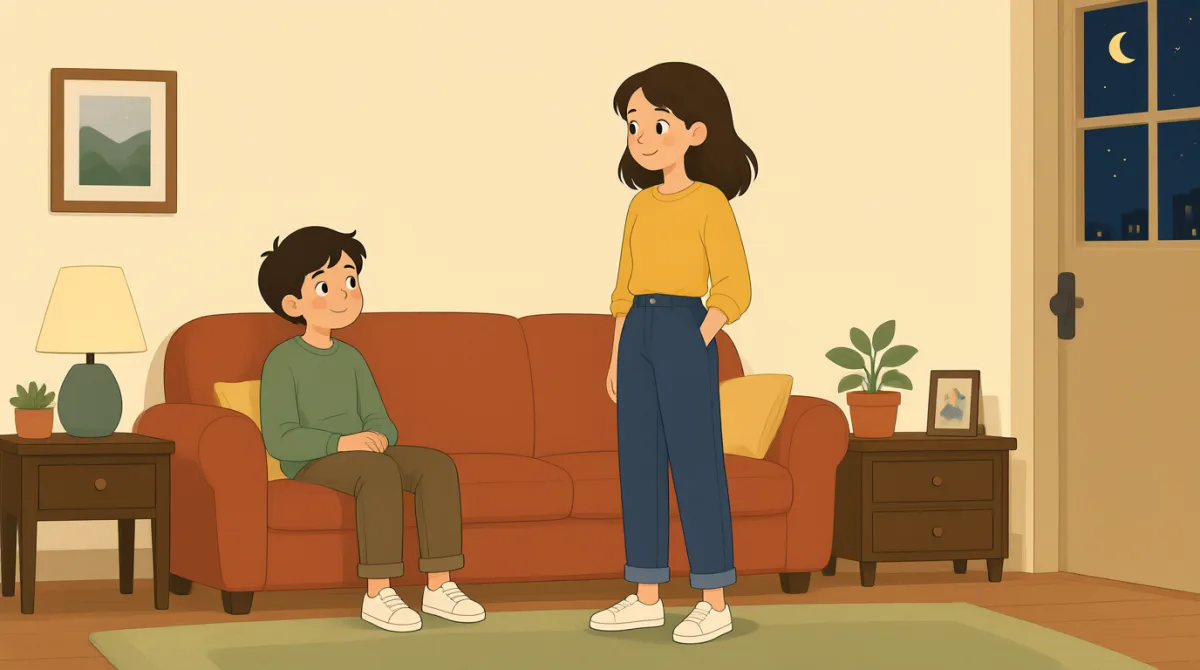

Emma, sorry to call so late. I know it’s almost midnight, but I’ve had another rough day and really need to talk this through with someone.
에마, 너무 늦게 전화해서 미안해. 거의 자정인 거 아는데, 오늘도 힘든 하루를 보냈고 누군가랑 이 얘기를 꼭 나누고 싶어.

I’m sorry things have been rough, Leo. I care about you, and I want to be there for you, but I have to be up early and can’t talk tonight.
요즘 힘든 일이 많다니 안됐네, 레오. 난 널 아끼고 네 곁에 있어 주고 싶지만, 내일 일찍 일어나야 해서 오늘 밤엔 얘기 못 해.
Oh, right. I should’ve checked first. I just figured you’d be awake, since you sometimes stay up late anyway.
아, 그렇지. 먼저 물어봤어야 했는데. 너도 가끔 늦게까지 깨어 있잖아. 그래서 깨어 있을 줄 알았어.
I get why you thought that, but being awake doesn’t always mean I’m available. When I get late calls, it’s hard for me to wind down and get enough sleep.
왜 그렇게 생각했는지는 알아. 하지만 깨어 있다고 해서 항상 통화할 수 있는 건 아니야. 늦게 전화가 오면 긴장을 풀고 충분히 자기가 힘들어.
That makes sense. I didn’t realize it was affecting your sleep. I wasn’t trying to take advantage of you or anything.
그렇구나. 네 잠에 영향을 주는 줄 몰랐어. 널 이용하려거나 그런 뜻은 아니었어.
I know you weren’t, and I’m not upset with you. Could you check with me before calling, and avoid calling after ten unless it’s an emergency?
그런 뜻 아니었던 거 알아. 너한테 화난 것도 아니야. 전화하기 전에 먼저 괜찮은지 물어보고, 응급 상황이 아니면 밤 10시 이후엔 전화하지 말아 줄래?
Yeah, absolutely. I can text first and see if you’re free. And if it’s not urgent, I’ll save it for the next day.
응, 당연하지. 먼저 문자 보내서 통화 괜찮은지 물어볼게. 급한 일이 아니면 다음 날 얘기할게.
Thanks, I’d appreciate that. If I’m available, I’ll let you know; if not, we can find a time that works for both of us.
고마워. 그렇게 해 주면 좋겠어. 내가 괜찮으면 알려 줄게. 아니면 우리 둘 다 괜찮은 시간을 찾아보자.
Fair enough. I’ll text you tomorrow, then. For tonight, I’ll try to sort out what’s bothering me and get some sleep myself.
알겠어. 그럼 내일 문자할게. 오늘 밤에는 뭐가 마음에 걸리는지 혼자 정리해 보고 나도 좀 자도록 할게.
That sounds good. I hope tomorrow feels a little easier. I’m glad you called to talk, and I’m glad we figured out a better way to handle it.
좋아. 내일은 조금 더 수월하게 느껴지길 바라. 얘기하려고 전화해 줘서 고맙고, 더 좋은 방법을 함께 찾을 수 있어서 다행이야.
어휘7
- talk this through차근차근 이야기를 나누다
To talk about a problem carefully in order to understand it or decide what to do. Here, Leo wants to discuss what happened with someone he trusts.
문제를 이해하거나 어떻게 할지 정하기 위해 충분히 이야기를 나누는 거예요. 여기서 레오는 믿을 수 있는 사람과 무슨 일이 있었는지 의논하고 싶어 해요.
- wind down긴장을 풀다
To relax gradually before going to sleep. In this context, late calls make it harder for Emma to settle down for the night.
잠들기 전에 차츰 편안한 상태가 되는 거예요. 이 상황에서는 늦은 전화 때문에 에마가 밤에 긴장을 풀고 잠자리에 들기가 더 어려워져요.
- take advantage of you널 이용하다
To treat someone unfairly or use their kindness for your own benefit. Leo uses this phrase to reassure Emma that he did not mean to impose on her.
누군가를 부당하게 대하거나 그 사람의 친절을 자기 이익을 위해 이용하는 거예요. 레오는 에마에게 부담을 주려는 의도가 아니었다고 안심시키려고 이 표현을 써요.
- unless it’s an emergency응급 상황이 아니라면
This means something is allowed only if there is an emergency. It is a useful way to set a clear limit while making an exception for urgent situations.
응급 상황일 때만 허용된다는 뜻이에요. 긴급한 상황은 예외로 두면서 명확한 한계를 정할 때 유용한 표현이에요.
- save it for the next day다음 날로 미루다
To wait until the following day to discuss or deal with something. You can use this when a conversation can wait until a more suitable time.
어떤 일을 의논하거나 처리하는 것을 다음 날까지 기다리는 거예요. 대화를 좀 더 적절한 시간에 해도 될 때 사용할 수 있어요.
- works for both of us우리 둘 다에게 괜찮다
Suitable or convenient for two people. This phrase is helpful when arranging a time that respects everyone’s schedule.
두 사람 모두에게 적절하거나 편리하다는 뜻이에요. 모두의 일정을 고려해 시간을 정할 때 유용한 표현이에요.
- sort out정리하다, 해결하다
To understand, organize, or deal with a problem. Here, Leo plans to try to work through what is bothering him on his own.
문제를 이해하고 정리하거나 처리하는 거예요. 여기서 레오는 마음에 걸리는 일을 혼자 해결해 보려고 해요.
핵심 문장8
- 1
I care about you, and I want to be there for you, but I have to be up early and can’t talk tonight.
난 널 아끼고 네 곁에 있어 주고 싶지만, 내일 일찍 일어나야 해서 오늘 밤엔 얘기 못 해.
This combines reassurance with a clear limit. Reuse the pattern “I want to [help], but I have to [reason]” to decline kindly.
상대에게 마음을 전하면서 분명하게 선을 긋는 표현이에요. 친절하게 거절하고 싶을 때 “I want to [help], but I have to [reason]” 패턴을 활용해 보세요.
- 2
I get why you thought that, but being awake doesn’t always mean I’m available.
왜 그렇게 생각했는지는 알아. 하지만 깨어 있다고 해서 항상 통화할 수 있는 건 아니야.
This acknowledges the other person’s point while explaining a boundary. Use “I get why you thought that, but…” to respond tactfully when someone has made an understandable assumption.
상대의 생각을 이해한다고 인정하면서 자신의 경계를 설명하는 표현이에요. 상대가 이해할 만한 추측을 했을 때는 “I get why you thought that, but…”을 사용하면 재치 있게 답할 수 있어요.
- 3
When I get late calls, it’s hard for me to wind down and get enough sleep.
늦게 전화가 오면 긴장을 풀고 충분히 자기가 힘들어.
This explains the effect of someone’s behavior without blaming them. You can adapt “When [situation], it’s hard for me to [result]” to describe how a boundary protects your needs.
상대방을 탓하지 않고 그 사람의 행동이 자신에게 미치는 영향을 설명하는 문장이에요. 경계를 세우는 것이 왜 필요한지 말할 때 “When [situation], it’s hard for me to [result]”를 응용해 보세요.
- 4
Could you check with me before calling, and avoid calling after ten unless it’s an emergency?
전화하기 전에 먼저 괜찮은지 물어보고, 응급 상황이 아니면 밤 10시 이후엔 전화하지 말아 줄래?
This is a polite but specific request that states both what to do and when an exception applies. Reuse “Could you…?” to make a considerate request.
무엇을 해 달라는지와 어떤 경우에 예외가 적용되는지를 구체적으로 말하는 정중한 부탁이에요. 배려하는 마음을 담아 부탁할 때 “Could you…?”를 활용해 보세요.
- 5
I can text first and see if you’re free.
먼저 문자 보내서 통화 괜찮은지 물어볼게.
This offers a practical way to respect someone’s availability. Use “I can [action] first and see if…” when suggesting how to check before making plans.
상대방이 가능한지 확인하는 실용적인 방법을 제안하는 표현이에요. 약속을 잡기 전에 확인하는 방법을 제안할 때 “I can [action] first and see if…”를 활용해 보세요.
- 6
If I’m available, I’ll let you know; if not, we can find a time that works for both of us.
내가 괜찮으면 알려 줄게. 아니면 우리 둘 다 괜찮은 시간을 찾아보자.
This uses a conditional to explain what will happen in either case and keeps the tone cooperative. Reuse “If…, I’ll…; if not, we can…” when making flexible arrangements.
조건문을 사용해 어느 쪽이든 어떻게 할지 설명하면서 협조적인 태도를 보여 줘요. 유연하게 약속을 정할 때 “If…, I’ll…; if not, we can…” 패턴을 활용해 보세요.
- 7
For tonight, I’ll try to sort out what’s bothering me and get some sleep myself.
오늘 밤에는 뭐가 마음에 걸리는지 혼자 정리해 보고 나도 좀 자도록 할게.
This shows that the speaker accepts the boundary and has a plan for handling the situation. Use “I’ll try to [action]” to describe a constructive next step.
상대가 경계를 받아들이고 상황을 해결할 계획이 있음을 보여 주는 문장이에요. 건설적인 다음 단계를 말할 때 “I’ll try to [action]”을 사용해 보세요.
- 8
I’m glad you called to talk, and I’m glad we figured out a better way to handle it.
얘기하려고 전화해 줘서 고맙고, 더 좋은 방법을 함께 찾을 수 있어서 다행이야.
This ends a difficult conversation warmly and reinforces that the relationship is still positive. You can use “I’m glad we figured out…” after reaching a solution together.
어려운 대화를 따뜻하게 마무리하면서 두 사람의 관계가 여전히 좋다는 점을 확인해 주는 표현이에요. 함께 해결책을 찾은 뒤에는 “I’m glad we figured out…”을 사용할 수 있어요.