Late-Night Calls When You Need Sleep
जब तुम्हें सोना हो और देर रात फ़ोन आए
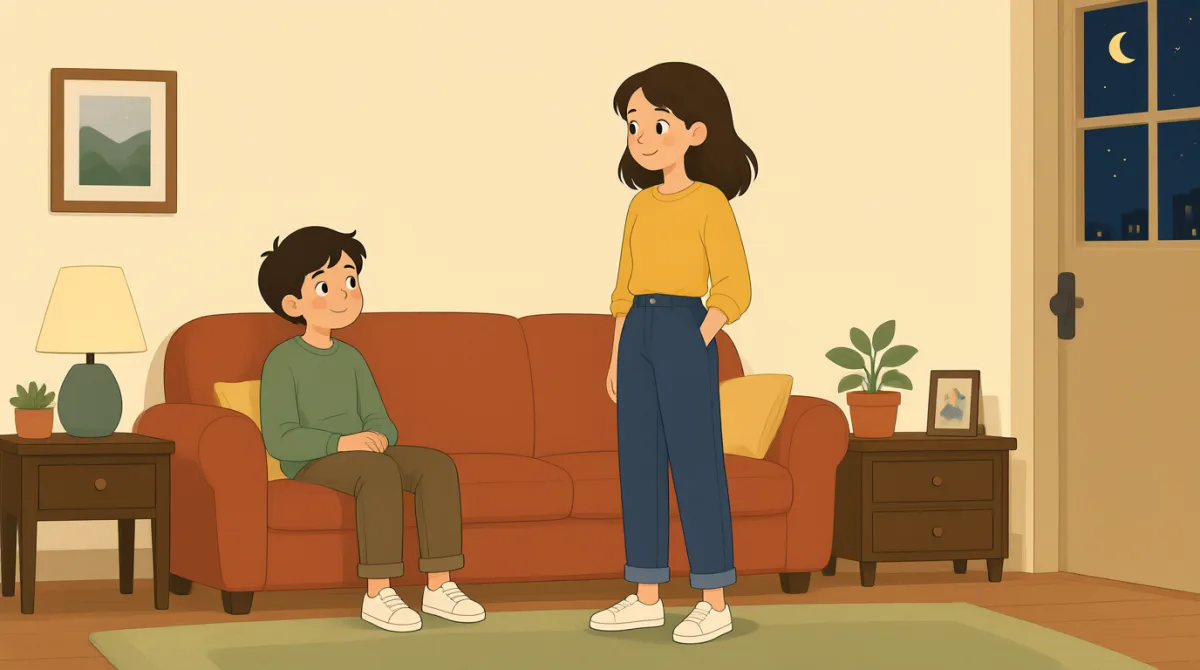
Leo calls Emma late at night to talk through another problem. Emma tells him she cares about him, but asks him to check first and avoid calling after a set time unless it’s an emergency.
लियो देर रात एम्मा को फ़ोन करके अपनी एक और परेशानी के बारे में बात करना चाहता है। एम्मा उसे बताती है कि उसे उसकी परवाह है, लेकिन उससे कहती है कि फ़ोन करने से पहले पूछ लिया करे और तय समय के बाद फ़ोन न करे—जब तक कोई आपातकाल न हो।
संवाद10

Emma, sorry to call so late. I know it’s almost midnight, but I’ve had another rough day and really need to talk this through with someone.
एम्मा, इतनी देर से फ़ोन करने के लिए माफ़ करना। पता है, आधी रात होने वाली है, लेकिन आज का दिन फिर बहुत मुश्किल रहा और मुझे किसी से इस बारे में बात करने की सच में ज़रूरत है।

I’m sorry things have been rough, Leo. I care about you, and I want to be there for you, but I have to be up early and can’t talk tonight.
मुझे अफ़सोस है कि तुम्हारे लिए चीज़ें इतनी मुश्किल रही हैं, लियो। मुझे तुम्हारी परवाह है और मैं तुम्हारे साथ रहना चाहती हूँ, लेकिन मुझे सुबह जल्दी उठना है और आज रात बात नहीं कर सकती।
Oh, right. I should’ve checked first. I just figured you’d be awake, since you sometimes stay up late anyway.
ओह, हाँ। मुझे पहले पूछ लेना चाहिए था। मैंने बस सोचा कि तुम जाग रही होगी, क्योंकि तुम कभी-कभी वैसे भी देर तक जागती हो।
I get why you thought that, but being awake doesn’t always mean I’m available. When I get late calls, it’s hard for me to wind down and get enough sleep.
मैं समझती हूँ कि तुम्हें ऐसा क्यों लगा, लेकिन जागने का मतलब हमेशा यह नहीं होता कि मैं बात करने के लिए खाली हूँ। देर रात फ़ोन आने पर मेरे लिए शांत होकर सोने की तैयारी करना और पूरी नींद लेना मुश्किल हो जाता है।
That makes sense. I didn’t realize it was affecting your sleep. I wasn’t trying to take advantage of you or anything.
हाँ, बात तो सही है। मुझे एहसास नहीं था कि इससे तुम्हारी नींद पर असर पड़ रहा है। मेरा फ़ायदा उठाने या ऐसा कुछ करने का मेरा इरादा नहीं था।
I know you weren’t, and I’m not upset with you. Could you check with me before calling, and avoid calling after ten unless it’s an emergency?
मुझे पता है, तुम्हारा ऐसा इरादा नहीं था और मैं तुमसे नाराज़ भी नहीं हूँ। क्या तुम फ़ोन करने से पहले मुझसे पूछ सकते हो, और दस बजे के बाद फ़ोन करने से बच सकते हो—जब तक कोई आपातकाल न हो?
Yeah, absolutely. I can text first and see if you’re free. And if it’s not urgent, I’ll save it for the next day.
हाँ, बिल्कुल। मैं पहले मैसेज करके पूछ सकता हूँ कि तुम बात करने के लिए खाली हो या नहीं। और अगर बात ज़रूरी नहीं है, तो अगले दिन तक रुक जाऊँगा।
Thanks, I’d appreciate that. If I’m available, I’ll let you know; if not, we can find a time that works for both of us.
धन्यवाद, मुझे अच्छा लगेगा। अगर मैं खाली हुई तो तुम्हें बता दूँगी; नहीं तो हम ऐसा समय निकाल लेंगे जो हम दोनों के लिए ठीक हो।
Fair enough. I’ll text you tomorrow, then. For tonight, I’ll try to sort out what’s bothering me and get some sleep myself.
ठीक है। फिर कल तुम्हें मैसेज करूँगा। आज रात मैं अपनी परेशानी सुलझाने की कोशिश करूँगा और खुद भी कुछ नींद ले लूँगा।
That sounds good. I hope tomorrow feels a little easier. I’m glad you called to talk, and I’m glad we figured out a better way to handle it.
यह अच्छा रहेगा। उम्मीद है कल का दिन थोड़ा आसान लगेगा। मुझे खुशी है कि तुमने बात करने के लिए फ़ोन किया, और यह भी कि हमने इससे निपटने का एक बेहतर तरीका ढूँढ़ लिया।
शब्दावली7
- talk this throughइस बारे में बात करके समझना
To talk about a problem carefully in order to understand it or decide what to do. Here, Leo wants to discuss what happened with someone he trusts.
किसी समस्या को ध्यान से समझने या यह तय करने के लिए उस पर बात करना कि आगे क्या करना है। यहाँ, लियो किसी ऐसे व्यक्ति से बात करना चाहता है जिस पर उसे भरोसा है।
- wind downधीरे-धीरे शांत होना
To relax gradually before going to sleep. In this context, late calls make it harder for Emma to settle down for the night.
सोने से पहले धीरे-धीरे आराम की स्थिति में आना। इस संदर्भ में, देर रात की फ़ोन कॉल से एम्मा के लिए रात को शांत होकर सोने की तैयारी करना मुश्किल हो जाता है।
- take advantage of youतुम्हारी भलमनसाहत का फ़ायदा उठाना
To treat someone unfairly or use their kindness for your own benefit. Leo uses this phrase to reassure Emma that he did not mean to impose on her.
किसी के साथ नाइंसाफ़ी करना या अपने फ़ायदे के लिए उसकी मददगार स्वभाव का इस्तेमाल करना। लियो इस वाक्यांश का इस्तेमाल एम्मा को भरोसा दिलाने के लिए करता है कि उसका उस पर बोझ डालने का इरादा नहीं था।
- unless it’s an emergencyजब तक कोई आपातकाल न हो
This means something is allowed only if there is an emergency. It is a useful way to set a clear limit while making an exception for urgent situations.
इसका मतलब है कि कोई काम केवल आपातकाल की स्थिति में ही किया जा सकता है। यह ज़रूरी परिस्थितियों के लिए अपवाद रखते हुए एक स्पष्ट सीमा तय करने का अच्छा तरीका है।
- save it for the next dayअगले दिन तक टाल देना
To wait until the following day to discuss or deal with something. You can use this when a conversation can wait until a more suitable time.
किसी बात पर चर्चा करने या उससे निपटने के लिए अगले दिन तक इंतज़ार करना। जब बातचीत किसी ज़्यादा सही समय तक टल सकती हो, तब यह वाक्यांश इस्तेमाल कर सकते हो।
- works for both of usजो हम दोनों के लिए ठीक हो
Suitable or convenient for two people. This phrase is helpful when arranging a time that respects everyone’s schedule.
दो लोगों के लिए उपयुक्त या सुविधाजनक। ऐसा समय तय करते हुए यह वाक्यांश काम आता है जो सबके कार्यक्रम का ध्यान रखे।
- sort outसुलझाना
To understand, organize, or deal with a problem. Here, Leo plans to try to work through what is bothering him on his own.
किसी समस्या को समझना, व्यवस्थित करना या उससे निपटना। यहाँ, लियो अपनी परेशानी को खुद समझने और उससे निपटने की कोशिश करने का सोचता है।
मुख्य वाक्य8
- 1
I care about you, and I want to be there for you, but I have to be up early and can’t talk tonight.
मुझे तुम्हारी परवाह है और मैं तुम्हारे साथ रहना चाहती हूँ, लेकिन मुझे सुबह जल्दी उठना है और आज रात बात नहीं कर सकती।
This combines reassurance with a clear limit. Reuse the pattern “I want to [help], but I have to [reason]” to decline kindly.
इस वाक्य में सामने वाले को भरोसा दिलाने के साथ एक स्पष्ट सीमा भी रखी गई है। प्यार से मना करने के लिए “I want to [help], but I have to [reason]” (मैं [मदद] करना चाहता/चाहती हूँ, लेकिन मुझे [कारण] से ऐसा करना है) वाले ढाँचे का फिर से इस्तेमाल कर सकते हो।
- 2
I get why you thought that, but being awake doesn’t always mean I’m available.
मैं समझती हूँ कि तुम्हें ऐसा क्यों लगा, लेकिन जागने का मतलब हमेशा यह नहीं होता कि मैं बात करने के लिए खाली हूँ।
This acknowledges the other person’s point while explaining a boundary. Use “I get why you thought that, but…” to respond tactfully when someone has made an understandable assumption.
यह सामने वाले की बात को स्वीकार करते हुए अपनी सीमा समझाता है। जब किसी ने ऐसी धारणा बना ली हो जो समझ में आती है, तो विनम्रता से जवाब देने के लिए “I get why you thought that, but…” (मैं समझता/समझती हूँ कि तुम्हें ऐसा क्यों लगा, लेकिन…) का इस्तेमाल करो।
- 3
When I get late calls, it’s hard for me to wind down and get enough sleep.
देर रात फ़ोन आने पर मेरे लिए शांत होकर सोने की तैयारी करना और पूरी नींद लेना मुश्किल हो जाता है।
This explains the effect of someone’s behavior without blaming them. You can adapt “When [situation], it’s hard for me to [result]” to describe how a boundary protects your needs.
यह बिना किसी पर दोष लगाए उसके व्यवहार का असर बताता है। अपनी ज़रूरतों की रक्षा के लिए सीमा क्यों ज़रूरी है, यह समझाने में “When [situation], it’s hard for me to [result]” (जब [स्थिति] होती है, तो मेरे लिए [नतीजा] मुश्किल हो जाता है) वाले ढाँचे को अपने हिसाब से बदलकर इस्तेमाल कर सकते हो।
- 4
Could you check with me before calling, and avoid calling after ten unless it’s an emergency?
क्या तुम फ़ोन करने से पहले मुझसे पूछ सकते हो, और दस बजे के बाद फ़ोन करने से बच सकते हो—जब तक कोई आपातकाल न हो?
This is a polite but specific request that states both what to do and when an exception applies. Reuse “Could you…?” to make a considerate request.
यह एक विनम्र लेकिन स्पष्ट अनुरोध है, जिसमें बताया गया है कि क्या करना है और कब अपवाद लागू होता है। सोच-समझकर अनुरोध करने के लिए “Could you…?” (क्या तुम…?) का इस्तेमाल करो।
- 5
I can text first and see if you’re free.
मैं पहले मैसेज करके पूछ सकता हूँ कि तुम बात करने के लिए खाली हो या नहीं।
This offers a practical way to respect someone’s availability. Use “I can [action] first and see if…” when suggesting how to check before making plans.
यह किसी के पास समय है या नहीं, इसका सम्मान करने का एक व्यावहारिक तरीका बताता है। कोई योजना बनाने से पहले पूछने का सुझाव देते हुए “I can [action] first and see if…” (मैं पहले [काम] कर सकता/सकती हूँ और देख सकता/सकती हूँ कि…) का इस्तेमाल करो।
- 6
If I’m available, I’ll let you know; if not, we can find a time that works for both of us.
अगर मैं खाली हुई तो तुम्हें बता दूँगी; नहीं तो हम ऐसा समय निकाल लेंगे जो हम दोनों के लिए ठीक हो।
This uses a conditional to explain what will happen in either case and keeps the tone cooperative. Reuse “If…, I’ll…; if not, we can…” when making flexible arrangements.
यह दोनों ही स्थितियों में क्या होगा, यह बताने के लिए शर्त का इस्तेमाल करता है और बातचीत का लहजा सहयोगपूर्ण रखता है। लचीली योजना बनाते हुए “If…, I’ll…; if not, we can…” (अगर…, तो मैं…; नहीं तो हम…) का फिर से इस्तेमाल करो।
- 7
For tonight, I’ll try to sort out what’s bothering me and get some sleep myself.
आज रात मैं अपनी परेशानी सुलझाने की कोशिश करूँगा और खुद भी कुछ नींद ले लूँगा।
This shows that the speaker accepts the boundary and has a plan for handling the situation. Use “I’ll try to [action]” to describe a constructive next step.
यह दिखाता है कि बोलने वाला सीमा को स्वीकार करता है और स्थिति से निपटने की उसकी अपनी योजना है। आगे का कोई अच्छा कदम बताने के लिए “I’ll try to [action]” (मैं [काम] करने की कोशिश करूँगा/करूँगी) का इस्तेमाल करो।
- 8
I’m glad you called to talk, and I’m glad we figured out a better way to handle it.
मुझे खुशी है कि तुमने बात करने के लिए फ़ोन किया, और यह भी कि हमने इससे निपटने का एक बेहतर तरीका ढूँढ़ लिया।
This ends a difficult conversation warmly and reinforces that the relationship is still positive. You can use “I’m glad we figured out…” after reaching a solution together.
यह मुश्किल बातचीत का अंत गर्मजोशी से करता है और जताता है कि रिश्ता अब भी अच्छा है। मिलकर कोई हल निकालने के बाद “I’m glad we figured out…” (मुझे खुशी है कि हमने… का हल ढूँढ़ लिया) कह सकते हो।