Late-Night Calls When You Need Sleep
المكالمات في وقت متأخر من الليل عندما تحتاج إلى النوم
Leo calls Emma late at night to talk through another problem. Emma tells him she cares about him, but asks him to check first and avoid calling after a set time unless it’s an emergency.
يتصل ليو بإيما في وقت متأخر من الليل ليتحدث معها عن مشكلة أخرى. تخبره إيما بأنها تهتم به، لكنها تطلب منه أن يستأذن أولًا وأن يتجنب الاتصال بعد وقت محدد، إلا إذا كانت هناك حالة طارئة.
حوار10
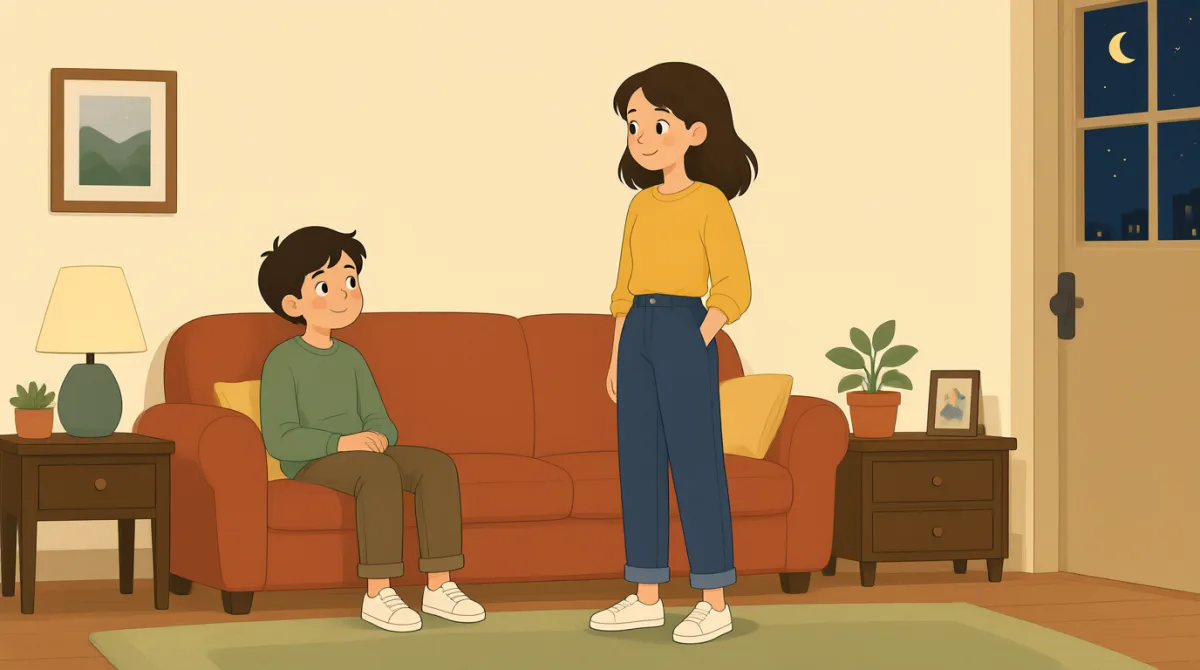

Emma, sorry to call so late. I know it’s almost midnight, but I’ve had another rough day and really need to talk this through with someone.
إيما، آسف لأنني اتصلت في وقت متأخر هكذا. أعلم أن الوقت أوشك أن يكون منتصف الليل، لكنني مررت بيوم صعب آخر وأحتاج حقًا إلى التحدث عن هذا الأمر مع شخص ما.

I’m sorry things have been rough, Leo. I care about you, and I want to be there for you, but I have to be up early and can’t talk tonight.
آسفة لأن الأمور كانت صعبة يا ليو. أنا أهتم بك وأريد أن أكون إلى جانبك، لكن عليّ أن أستيقظ مبكرًا ولا أستطيع التحدث الليلة.
Oh, right. I should’ve checked first. I just figured you’d be awake, since you sometimes stay up late anyway.
آه، صحيح. كان ينبغي أن أستأذن أولًا. ظننت فقط أنك ستكونين مستيقظة، بما أنك تسهرين أحيانًا على أي حال.
I get why you thought that, but being awake doesn’t always mean I’m available. When I get late calls, it’s hard for me to wind down and get enough sleep.
أفهم سبب ظنك ذلك، لكن كونِي مستيقظة لا يعني دائمًا أنني متاحة. عندما تصلني مكالمات متأخرة، يصعب عليّ أن أسترخي وأنال قسطًا كافيًا من النوم.
That makes sense. I didn’t realize it was affecting your sleep. I wasn’t trying to take advantage of you or anything.
هذا منطقي. لم أدرك أن الأمر يؤثر في نومك. لم أكن أحاول استغلالك أو فرض نفسي عليك.
I know you weren’t, and I’m not upset with you. Could you check with me before calling, and avoid calling after ten unless it’s an emergency?
أعلم أنك لم تكن تقصد ذلك، ولست غاضبة منك. هل يمكنك أن تستأذنني قبل الاتصال، وأن تتجنب الاتصال بعد الساعة العاشرة إلا إذا كانت هناك حالة طارئة؟
Yeah, absolutely. I can text first and see if you’re free. And if it’s not urgent, I’ll save it for the next day.
نعم، بالتأكيد. يمكنني أن أرسل رسالة أولًا وأرى إن كنتِ متفرغة. وإذا لم يكن الأمر عاجلًا، فسأؤجله إلى اليوم التالي.
Thanks, I’d appreciate that. If I’m available, I’ll let you know; if not, we can find a time that works for both of us.
شكرًا، سأقدّر ذلك. إذا كنت متاحة فسأخبرك، وإذا لم أكن، فيمكننا أن نجد وقتًا يناسب كلينا.
Fair enough. I’ll text you tomorrow, then. For tonight, I’ll try to sort out what’s bothering me and get some sleep myself.
هذا عادل. سأرسل لك رسالة غدًا إذن. أما الليلة، فسأحاول أن أرتب ما يزعجني وأنام قليلًا أنا أيضًا.
That sounds good. I hope tomorrow feels a little easier. I’m glad you called to talk, and I’m glad we figured out a better way to handle it.
يبدو هذا جيدًا. آمل أن يكون الغد أسهل قليلًا. يسعدني أنك اتصلت للتحدث، ويسعدني أننا توصلنا إلى طريقة أفضل للتعامل مع الأمر.
المفردات7
- talk this throughالتحدث في الأمر بالتفصيل
To talk about a problem carefully in order to understand it or decide what to do. Here, Leo wants to discuss what happened with someone he trusts.
التحدث عن مشكلة بعناية بهدف فهمها أو تحديد ما ينبغي فعله. هنا، يريد ليو مناقشة ما حدث مع شخص يثق به.
- wind downالاسترخاء تدريجيًا
To relax gradually before going to sleep. In this context, late calls make it harder for Emma to settle down for the night.
الاسترخاء تدريجيًا قبل النوم. في هذا السياق، تجعل المكالمات المتأخرة من الصعب على إيما أن تهدأ وتستعد للنوم.
- take advantage of youاستغلالك
To treat someone unfairly or use their kindness for your own benefit. Leo uses this phrase to reassure Emma that he did not mean to impose on her.
معاملة شخص بطريقة غير عادلة أو استغلال لطفه لتحقيق مصلحة شخصية. يستخدم ليو هذه العبارة ليطمئن إيما إلى أنه لم يقصد أن يفرض نفسه عليها.
- unless it’s an emergencyإلا إذا كانت هناك حالة طارئة
This means something is allowed only if there is an emergency. It is a useful way to set a clear limit while making an exception for urgent situations.
يعني هذا أن الشيء مسموح به فقط إذا كانت هناك حالة طارئة. وهي طريقة مفيدة لوضع حد واضح مع ترك استثناء للمواقف العاجلة.
- save it for the next dayتأجيل الأمر إلى اليوم التالي
To wait until the following day to discuss or deal with something. You can use this when a conversation can wait until a more suitable time.
الانتظار حتى اليوم التالي لمناقشة شيء أو التعامل معه. يمكنك استخدام هذه العبارة عندما يكون من الممكن تأجيل المحادثة إلى وقت أنسب.
- works for both of usيناسب كلينا
Suitable or convenient for two people. This phrase is helpful when arranging a time that respects everyone’s schedule.
ملائم أو مناسب لشخصين. تفيد هذه العبارة عند تحديد وقت يحترم جدولَي الشخصين.
- sort outيرتب الأمر
To understand, organize, or deal with a problem. Here, Leo plans to try to work through what is bothering him on his own.
يفهم مشكلة أو ينظمها أو يتعامل معها. هنا، يخطط ليو لمحاولة التعامل بنفسه مع ما يزعجه.
الجمل الأساسية8
- 1
I care about you, and I want to be there for you, but I have to be up early and can’t talk tonight.
أنا أهتم بك وأريد أن أكون إلى جانبك، لكن عليّ أن أستيقظ مبكرًا ولا أستطيع التحدث الليلة.
This combines reassurance with a clear limit. Reuse the pattern “I want to [help], but I have to [reason]” to decline kindly.
تجمع هذه الجملة بين الطمأنة ووضع حد واضح. أعد استخدام النمط “I want to [help], but I have to [reason]” (أريد أن [أساعد]، لكن عليّ أن [أذكر السبب]) للاعتذار عن تلبية طلب بطريقة لطيفة.
- 2
I get why you thought that, but being awake doesn’t always mean I’m available.
أفهم سبب ظنك ذلك، لكن كونِي مستيقظة لا يعني دائمًا أنني متاحة.
This acknowledges the other person’s point while explaining a boundary. Use “I get why you thought that, but…” to respond tactfully when someone has made an understandable assumption.
تقر هذه الجملة بوجهة نظر الطرف الآخر مع توضيح حد معين. استخدم “I get why you thought that, but…” (أفهم سبب ظنك ذلك، لكن...) للرد بلباقة عندما يكون افتراض شخص ما مفهومًا.
- 3
When I get late calls, it’s hard for me to wind down and get enough sleep.
عندما تصلني مكالمات متأخرة، يصعب عليّ أن أسترخي وأنال قسطًا كافيًا من النوم.
This explains the effect of someone’s behavior without blaming them. You can adapt “When [situation], it’s hard for me to [result]” to describe how a boundary protects your needs.
تشرح هذه الجملة تأثير سلوك شخص ما من دون إلقاء اللوم عليه. يمكنك تكييف النمط “When [situation], it’s hard for me to [result]” (عندما يحدث [الموقف]، يصعب عليّ أن [أحقق النتيجة]) لوصف الطريقة التي يحمي بها الحد احتياجاتك.
- 4
Could you check with me before calling, and avoid calling after ten unless it’s an emergency?
هل يمكنك أن تستأذنني قبل الاتصال، وأن تتجنب الاتصال بعد الساعة العاشرة إلا إذا كانت هناك حالة طارئة؟
This is a polite but specific request that states both what to do and when an exception applies. Reuse “Could you…?” to make a considerate request.
هذا طلب مهذب ومحدد يوضح ما ينبغي فعله ومتى ينطبق الاستثناء. أعد استخدام “Could you…?” (هل يمكنك...؟) لتقديم طلب يراعي الطرف الآخر.
- 5
I can text first and see if you’re free.
يمكنني أن أرسل رسالة أولًا وأرى إن كنتِ متفرغة.
This offers a practical way to respect someone’s availability. Use “I can [action] first and see if…” when suggesting how to check before making plans.
يقدم هذا طريقة عملية لاحترام مدى تفرغ شخص ما. استخدم “I can [action] first and see if…” (يمكنني أن [أفعل شيئًا] أولًا وأرى إن كان...) عند اقتراح طريقة للاستئذان قبل وضع خطط.
- 6
If I’m available, I’ll let you know; if not, we can find a time that works for both of us.
إذا كنت متاحة فسأخبرك، وإذا لم أكن، فيمكننا أن نجد وقتًا يناسب كلينا.
This uses a conditional to explain what will happen in either case and keeps the tone cooperative. Reuse “If…, I’ll…; if not, we can…” when making flexible arrangements.
تستخدم هذه الجملة أسلوب الشرط لتوضيح ما سيحدث في كلتا الحالتين، وتحافظ على نبرة تعاونية. أعد استخدام “If…, I’ll…; if not, we can…” (إذا حدث كذا فسأفعل كذا؛ وإذا لم يحدث، فيمكننا أن...) عند وضع ترتيبات مرنة.
- 7
For tonight, I’ll try to sort out what’s bothering me and get some sleep myself.
أما الليلة، فسأحاول أن أرتب ما يزعجني وأنام قليلًا أنا أيضًا.
This shows that the speaker accepts the boundary and has a plan for handling the situation. Use “I’ll try to [action]” to describe a constructive next step.
يوضح هذا أن المتحدث يتقبل الحد وأن لديه خطة للتعامل مع الموقف. استخدم “I’ll try to [action]” (سأحاول أن [أفعل شيئًا]) لوصف خطوة بناءة تالية.
- 8
I’m glad you called to talk, and I’m glad we figured out a better way to handle it.
يسعدني أنك اتصلت للتحدث، ويسعدني أننا توصلنا إلى طريقة أفضل للتعامل مع الأمر.
This ends a difficult conversation warmly and reinforces that the relationship is still positive. You can use “I’m glad we figured out…” after reaching a solution together.
تُنهي هذه الجملة محادثة صعبة بطريقة ودية، وتؤكد أن العلاقة ما زالت إيجابية. يمكنك استخدام “I’m glad we figured out…” (يسعدني أننا توصلنا إلى...) بعد التوصل إلى حل معًا.