Late-Night Calls When You Need Sleep
眠りたい夜の深夜の電話
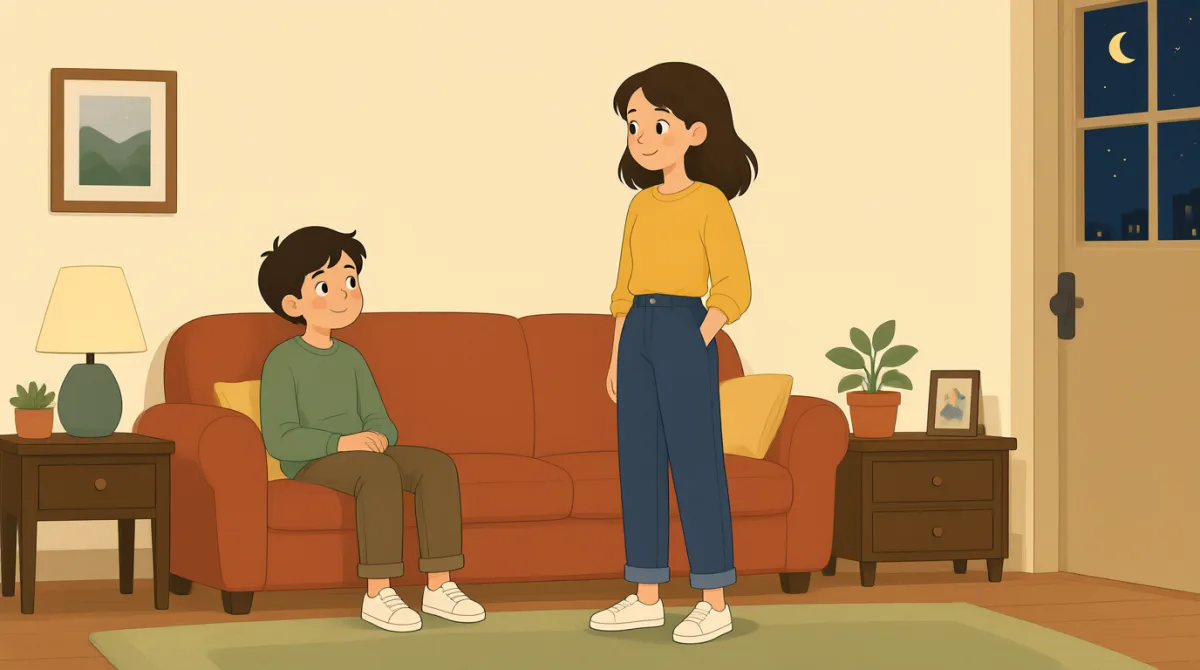
Leo calls Emma late at night to talk through another problem. Emma tells him she cares about him, but asks him to check first and avoid calling after a set time unless it’s an emergency.
レオは夜遅く、また悩みを相談しようとエマに電話します。エマはレオを大切に思っていると伝えつつ、電話する前にまず連絡して、緊急の場合を除いて決まった時間以降は電話を控えてほしいと頼みます。
会話10

Emma, sorry to call so late. I know it’s almost midnight, but I’ve had another rough day and really need to talk this through with someone.
エマ、こんなに遅くに電話してごめん。もうすぐ真夜中なのは分かってるんだけど、今日はまた大変な一日で、誰かに話を聞いてもらって一緒に整理したいんだ。

I’m sorry things have been rough, Leo. I care about you, and I want to be there for you, but I have to be up early and can’t talk tonight.
大変なことがあったんだね、レオ。あなたのことを大切に思ってるし、力になりたいけど、明日は早起きしなきゃいけないから、今夜は話せないんだ。
Oh, right. I should’ve checked first. I just figured you’d be awake, since you sometimes stay up late anyway.
ああ、そうだよね。先に聞くべきだった。君はたまに夜更かしするから、起きてると思っちゃったんだ。
I get why you thought that, but being awake doesn’t always mean I’m available. When I get late calls, it’s hard for me to wind down and get enough sleep.
そう思ったのは分かるよ。でも、起きてるからっていつでも話せるわけじゃないんだ。夜遅くに電話があると、なかなか気持ちを落ち着けられなくて、十分に眠れないんだよね。
That makes sense. I didn’t realize it was affecting your sleep. I wasn’t trying to take advantage of you or anything.
そうだよね。君の睡眠に影響してるなんて気づかなかった。迷惑をかけたり、君の優しさにつけ込んだりするつもりはなかったんだ。
I know you weren’t, and I’m not upset with you. Could you check with me before calling, and avoid calling after ten unless it’s an emergency?
そうじゃないって分かってるし、怒ってもいないよ。電話する前に連絡してくれる?それと、緊急の場合を除いて、10時以降は電話しないでほしいんだ。
Yeah, absolutely. I can text first and see if you’re free. And if it’s not urgent, I’ll save it for the next day.
うん、もちろん。まずメッセージして、話せるかどうか聞くよ。急ぎじゃなければ、次の日に話すことにするね。
Thanks, I’d appreciate that. If I’m available, I’ll let you know; if not, we can find a time that works for both of us.
ありがとう、そうしてくれると助かるよ。話せるときは知らせるね。無理なら、お互いに都合のいい時間を見つけよう。
Fair enough. I’ll text you tomorrow, then. For tonight, I’ll try to sort out what’s bothering me and get some sleep myself.
分かった。じゃあ明日メッセージするね。今夜は、自分で悩みを整理して、僕もちゃんと寝るようにするよ。
That sounds good. I hope tomorrow feels a little easier. I’m glad you called to talk, and I’m glad we figured out a better way to handle it.
それがいいね。明日は少しでも気持ちが楽になるといいな。電話して話してくれてうれしいし、これからどうするか一緒に決められてよかった。
語彙7
- talk this throughじっくり話し合う
To talk about a problem carefully in order to understand it or decide what to do. Here, Leo wants to discuss what happened with someone he trusts.
問題を理解したり、どうするか決めたりするために、詳しく話すことです。ここでは、レオは信頼している人に何があったのか相談したいと思っています。
- wind down気持ちを落ち着ける
To relax gradually before going to sleep. In this context, late calls make it harder for Emma to settle down for the night.
眠る前に少しずつリラックスすることです。この場面では、夜遅くの電話のせいで、エマは夜に気持ちを落ち着けにくくなっています。
- take advantage of you人の優しさにつけ込む
To treat someone unfairly or use their kindness for your own benefit. Leo uses this phrase to reassure Emma that he did not mean to impose on her.
相手を不公平に扱ったり、その親切を自分の利益のために利用したりすることです。レオはこの表現を使って、エマに迷惑をかけるつもりはなかったと伝えています。
- unless it’s an emergency緊急の場合を除いて
This means something is allowed only if there is an emergency. It is a useful way to set a clear limit while making an exception for urgent situations.
緊急の場合に限って許される、という意味です。急を要する場合は例外にしながら、はっきりとした境界線を示すのに便利な表現です。
- save it for the next day次の日に回す
To wait until the following day to discuss or deal with something. You can use this when a conversation can wait until a more suitable time.
話し合ったり対処したりするのを翌日まで待つことです。もっと都合のいい時間まで待てる話題について使えます。
- works for both of us二人にとって都合がいい
Suitable or convenient for two people. This phrase is helpful when arranging a time that respects everyone’s schedule.
二人にとって適切、または都合がいいという意味です。お互いの予定を尊重しながら時間を決めるときに便利な表現です。
- sort out整理する
To understand, organize, or deal with a problem. Here, Leo plans to try to work through what is bothering him on his own.
問題を理解したり、整理したり、対処したりすることです。ここでは、レオは自分を悩ませていることを一人で整理してみようとしています。
重要な文8
- 1
I care about you, and I want to be there for you, but I have to be up early and can’t talk tonight.
あなたのことを大切に思ってるし、力になりたいけど、明日は早起きしなきゃいけないから、今夜は話せないんだ。
This combines reassurance with a clear limit. Reuse the pattern “I want to [help], but I have to [reason]” to decline kindly.
相手を大切に思っていると伝えながら、はっきりと限界を示す表現です。「I want to [help], but I have to [reason]」([手助け]したいけど、[理由]があってできない)という形を使うと、相手を気遣いながら断れます。
- 2
I get why you thought that, but being awake doesn’t always mean I’m available.
そう思ったのは分かるよ。でも、起きてるからっていつでも話せるわけじゃないんだ。
This acknowledges the other person’s point while explaining a boundary. Use “I get why you thought that, but…” to respond tactfully when someone has made an understandable assumption.
相手の考えを受け止めたうえで、自分の境界線を説明しています。相手がそう考えたのも無理はないと思えるとき、「I get why you thought that, but…」(そう思ったのは分かるけど……)を使うと、角を立てずに返答できます。
- 3
When I get late calls, it’s hard for me to wind down and get enough sleep.
夜遅くに電話があると、なかなか気持ちを落ち着けられなくて、十分に眠れないんだよね。
This explains the effect of someone’s behavior without blaming them. You can adapt “When [situation], it’s hard for me to [result]” to describe how a boundary protects your needs.
相手を責めずに、その人の行動が自分に与える影響を説明しています。「When [situation], it’s hard for me to [result]」([状況]だと、[結果]するのが難しい)という形を応用すると、自分にとって必要な境界線を説明できます。
- 4
Could you check with me before calling, and avoid calling after ten unless it’s an emergency?
電話する前に連絡してくれる?それと、緊急の場合を除いて、10時以降は電話しないでほしいんだ。
This is a polite but specific request that states both what to do and when an exception applies. Reuse “Could you…?” to make a considerate request.
何をしてほしいか、またどんな場合なら例外なのかを伝える、丁寧で具体的な頼み方です。「Could you…?」(~してくれる?)を使うと、相手に配慮しながらお願いできます。
- 5
I can text first and see if you’re free.
まずメッセージして、話せるかどうか聞くよ。
This offers a practical way to respect someone’s availability. Use “I can [action] first and see if…” when suggesting how to check before making plans.
相手の都合を尊重するための具体的な方法を提案しています。予定を立てる前に確認する方法を提案するときは、「I can [action] first and see if…」(まず[行動]して、~かどうか確かめるよ)という形が使えます。
- 6
If I’m available, I’ll let you know; if not, we can find a time that works for both of us.
話せるときは知らせるね。無理なら、お互いに都合のいい時間を見つけよう。
This uses a conditional to explain what will happen in either case and keeps the tone cooperative. Reuse “If…, I’ll…; if not, we can…” when making flexible arrangements.
条件に応じてどうするかを伝えながら、協力的な雰囲気を保つ表現です。柔軟に予定を決めるときは、「If…, I’ll…; if not, we can…」(もし~なら…するね。そうでなければ、…できるよ)という形を使えます。
- 7
For tonight, I’ll try to sort out what’s bothering me and get some sleep myself.
今夜は、自分で悩みを整理して、僕もちゃんと寝るようにするよ。
This shows that the speaker accepts the boundary and has a plan for handling the situation. Use “I’ll try to [action]” to describe a constructive next step.
相手の境界線を受け入れ、その状況に対処する方法を考えていることが伝わります。次に前向きな行動を取るときは、「I’ll try to [action]」([行動]してみるよ)を使えます。
- 8
I’m glad you called to talk, and I’m glad we figured out a better way to handle it.
電話して話してくれてうれしいし、これからどうするか一緒に決められてよかった。
This ends a difficult conversation warmly and reinforces that the relationship is still positive. You can use “I’m glad we figured out…” after reaching a solution together.
難しい話し合いを温かく締めくくり、二人の関係が変わらず良好だと伝える表現です。一緒に解決策を見つけたあとに、「I’m glad we figured out…」(一緒に~を見つけられてよかった)と言えます。