Talking It Through Honestly
正直に話し合う
Emma asks Leo to sit down and talk about the pattern behind the money requests, late-night calls, and canceled plans. She uses specific examples and explains what she needs in order to feel the friendship is reciprocal.
エマはレオに、座って話そうと声をかけ、お金を借りたいという頼みや深夜の電話、直前の予定キャンセルが続いていることについて話します。具体例を挙げながら、対等な友情だと感じるために自分が何を必要としているかを伝えます。
会話10
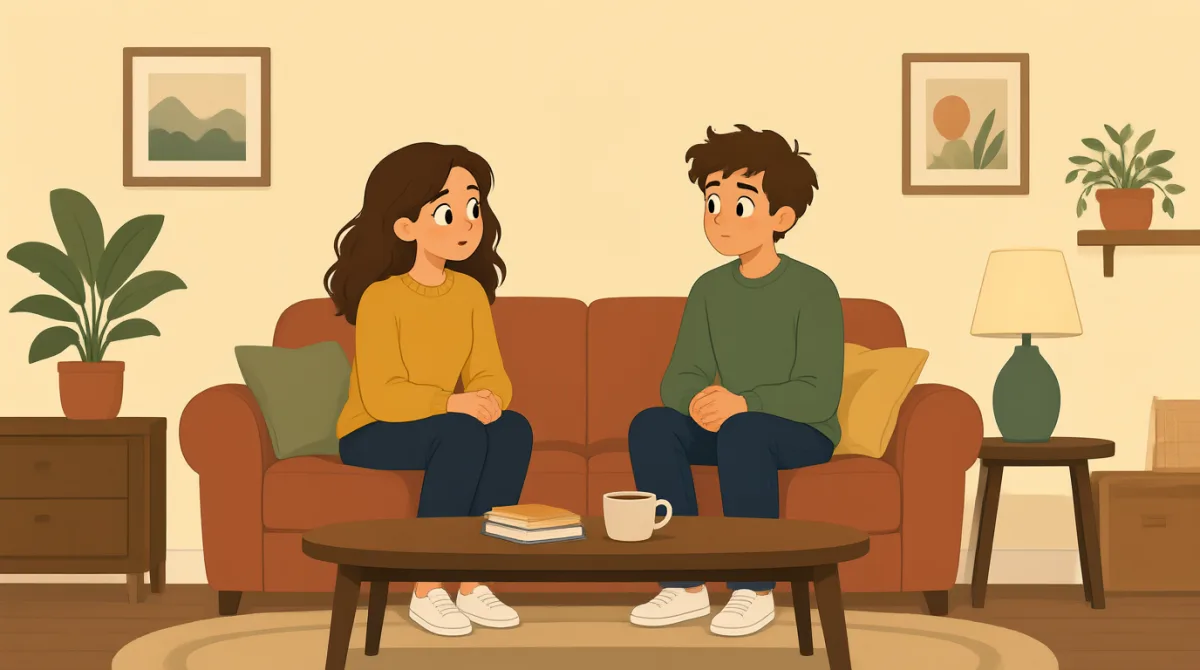

Leo, could we sit down and talk honestly about something? I value our friendship, and I’m not bringing this up to blame you. I just want us to understand each other better.
レオ、ちょっと座って、あることについて正直に話せる?私たちの友情を大切に思ってるし、あなたを責めたくてこの話をするわけじゃないんだ。ただ、お互いのことをもっとわかり合いたいの。

Sure. You sound serious, though. Is this about the money I asked to borrow last week? I know I’ve been leaning on you a lot lately.
いいよ。でも、なんだか真剣そうだね。先週、お金を貸してって頼んだこと?最近、ずいぶん君に頼ってるよね。
That’s part of it. I’ve covered your expenses a few times, and you’ve called late at night when you were stressed. Then our plans got canceled at the last minute twice.
それもあるよ。これまで何度かあなたの出費を立て替えたし、ストレスがたまると夜遅くに電話してきたよね。それに、予定が直前になって2回もキャンセルになった。
I hadn’t realized those things were adding up for you. The cancellations weren’t meant to send a message; I’ve just been overwhelmed and bad at planning.
そういうことが重なって、君にとって負担になってたなんて気づかなかった。予定をキャンセルしたのは、何か伝えたかったわけじゃないんだ。ただ、いっぱいいっぱいで、予定を立てるのが苦手だったんだ。
I get that things have been difficult, and I’m not saying you do any of this on purpose. But when it keeps happening, I start feeling like my time and support are taken for granted.
大変な状況なのはわかってるし、わざとやってるって言ってるわけじゃないよ。でも、何度も続くと、私の時間やサポートを当たり前だと思われてるように感じ始めるんだ。
That’s fair. I suppose I’ve been focused on getting through one problem at a time, without thinking about how it affects you. What would help you feel things are more balanced?
それはもっともだね。目の前の問題をひとつずつ乗り切ることばかり考えてて、君にどう影響してるか考えてなかったんだと思う。どうしたら、もっと釣り合いが取れてるって感じられる?
I need to be able to say no to lending money without feeling guilty, and I’d like you to check before calling late. If we make plans, please give me as much notice as you can if they need to change.
罪悪感を感じずに、お金を貸すのは無理だって言えるようになりたい。それと、夜遅くに電話する前に、まず連絡してほしい。予定を立てたあとで変更が必要になったら、できるだけ早く知らせてね。
I can do that. I also don’t want you to feel like you’re responsible for sorting out my problems. I’ll look at other options when I’m short on money, and I’ll be more careful about making plans.
わかった。君に僕の問題を解決する責任があるなんて思ってほしくないしね。お金が足りないときは別の方法を探すし、予定を立てるときももっと気をつけるよ。
Thanks. I’m happy to listen and spend time together, but I need it to go both ways. I want us to keep being close without either of us feeling stretched too thin.
ありがとう。話を聞くのも、一緒に時間を過ごすのも喜んでするよ。でも、お互いにそうできる関係でいたいんだ。どちらかが無理をしすぎることなく、これからも仲良くしていたい。
I hear you, Emma. I’m sorry I let things get lopsided. I care about our friendship too, and I’ll make an effort to respect those limits instead of assuming you’ll always be available.
わかったよ、エマ。関係が一方的になるままにしてしまってごめん。僕もこの友情を大切に思ってる。君がいつでも応じてくれると思い込まずに、その境界を尊重するよう努力するよ。
語彙8
- leaning on you頼りにしている
Relying on you for help or support. Here, Leo recognizes that he has depended on Emma a lot lately.
助けや支えを求めて相手に頼ることです。ここではレオが、最近エマにずいぶん頼っていたと認めています。
- adding up積み重なる
Becoming significant when several things happen over time. Emma means that the requests, calls, and canceled plans have built up and affected her.
いくつものことが時間とともに重なり、無視できないものになることです。エマは、お金の頼みや電話、予定のキャンセルが積み重なって、自分に影響していると言っています。
- at the last minute直前に
Very close to the time something is supposed to happen. Use it when plans change or get canceled with little warning.
何かが予定されている時刻のすぐ前に、という意味です。予定がほとんど前触れなく変更されたり、キャンセルされたりするときに使います。
- taken for granted当たり前だと思われる
Treated as if your help or time will always be available and does not need to be appreciated. It describes how Emma feels when the pattern continues.
助けや時間をいつでも提供してもらえるものとして扱われ、感謝する必要もないと思われることです。問題が続いているときのエマの気持ちを表しています。
- feel things are more balancedもっと釣り合いが取れていると感じる
Feel that each person is giving and receiving a fair amount. This phrase can open a conversation about making a relationship more reciprocal.
お互いが公平なだけ与えたり受け取ったりしていると感じることです。この表現を使うと、関係をもっと対等にする方法について話し合いを始められます。
- go both waysお互いにそうである
Be mutual, with both people contributing or benefiting. Emma uses it to explain that she wants the friendship to include support in both directions.
双方にとって同じように成り立ち、お互いが支えたり、恩恵を受けたりすることです。エマは、友情では一方通行ではなく、お互いに支え合いたいと伝えるために使っています。
- stretched too thin無理をしすぎている
Under too much pressure because you have taken on more than you can manage. It is a useful way to describe feeling overcommitted without blaming someone.
自分で対処できる以上のことを引き受け、プレッシャーを感じていることです。誰かを責めずに、抱えきれないほどのことを引き受けている気持ちを表すのに便利な表現です。
- get lopsided一方的になる
Become uneven or unfairly balanced in one direction. Leo uses it to acknowledge that he has been relying on Emma more than he should.
バランスが崩れ、一方に偏って不公平になることです。レオは、自分がエマに頼りすぎていたことを認めるために使っています。
重要な文7
- 1
I value our friendship, and I’m not bringing this up to blame you.
私たちの友情を大切に思ってるし、あなたを責めたくてこの話をするわけじゃないんだ。
This reassures someone that a difficult conversation is meant to solve a problem, not attack them. Replace “our friendship” with what you value in another relationship.
難しい話をするのは、相手を責めるためではなく、問題を解決するためだと伝える表現です。“our friendship” を、別の関係で大切にしているものに置き換えて使えます。
- 2
But when it keeps happening, I start feeling like my time and support are taken for granted.
でも、何度も続くと、私の時間やサポートを当たり前だと思われてるように感じ始めるんだ。
This describes the effect of a repeated behavior without claiming the other person intended to cause harm. You can adapt it by naming the pattern and how it makes you feel.
相手に傷つける意図があったと決めつけずに、繰り返される行動が自分にどう影響しているかを伝える表現です。続いていることと、それによってどう感じるかを具体的にして使えます。
- 3
What would help you feel things are more balanced?
どうしたら、もっと釣り合いが取れてるって感じられる?
This invites the other person to suggest practical changes and keeps the conversation collaborative. Use it when you want to discuss how to make a situation fairer.
相手に具体的な改善案を考えてもらい、協力しながら話し合うための問いかけです。状況をもっと公平にする方法を話し合いたいときに使えます。
- 4
I need to be able to say no to lending money without feeling guilty, and I’d like you to check before calling late.
罪悪感を感じずに、お金を貸すのは無理だって言えるようになりたい。それと、夜遅くに電話する前に、まず連絡してほしい。
This combines a clear boundary with a specific request. The structure “I need to be able to...” is useful for explaining what you require, while “I’d like you to...” makes a polite request.
明確な境界線と、具体的なお願いを組み合わせた表現です。“I need to be able to...” は自分に必要なことを説明するときに便利で、“I’d like you to...” を使うと丁寧にお願いできます。
- 5
If we make plans, please give me as much notice as you can if they need to change.
予定を立てたあとで変更が必要になったら、できるだけ早く知らせてね。
This sets an expectation while allowing for situations the other person may not control. Use “If..., please...” to make a practical request about future plans.
相手がどうにもできない事情も考慮しながら、期待することを伝える表現です。“If..., please...” は、これからの予定について具体的にお願いするときに使えます。
- 6
I’m happy to listen and spend time together, but I need it to go both ways.
話を聞くのも、一緒に時間を過ごすのも喜んでするよ。でも、お互いにそうできる関係でいたいんだ。
This shows that you still care while explaining that support should be mutual. It is useful when setting a boundary without ending the relationship.
相手を大切に思っていることを伝えながら、支え合う関係でありたいと説明する表現です。関係を終わらせることなく、境界線を伝えたいときに役立ちます。
- 7
I’ll make an effort to respect those limits instead of assuming you’ll always be available.
君がいつでも応じてくれると思い込まずに、その境界を尊重するよう努力するよ。
This is a thoughtful way to acknowledge someone’s boundaries and commit to changing your behavior. Reuse “I’ll make an effort to...” when you want to promise improvement without claiming you’ll be perfect.
相手の境界線を尊重し、自分の行動を改めると伝える誠実な表現です。完璧にできると断言せずに改善を約束したいときは、“I’ll make an effort to...” を使ってみましょう。