Talking After the Date
デートのあとに話す
After the date, Emma tells Mia how the evening went. They talk about the food, the conversation, and whether Emma would like to see Leo again.
デートのあと、エマがミアにその夜のことを話します。食事や会話のこと、エマがレオとまた会いたいかどうかについて話します。
会話8
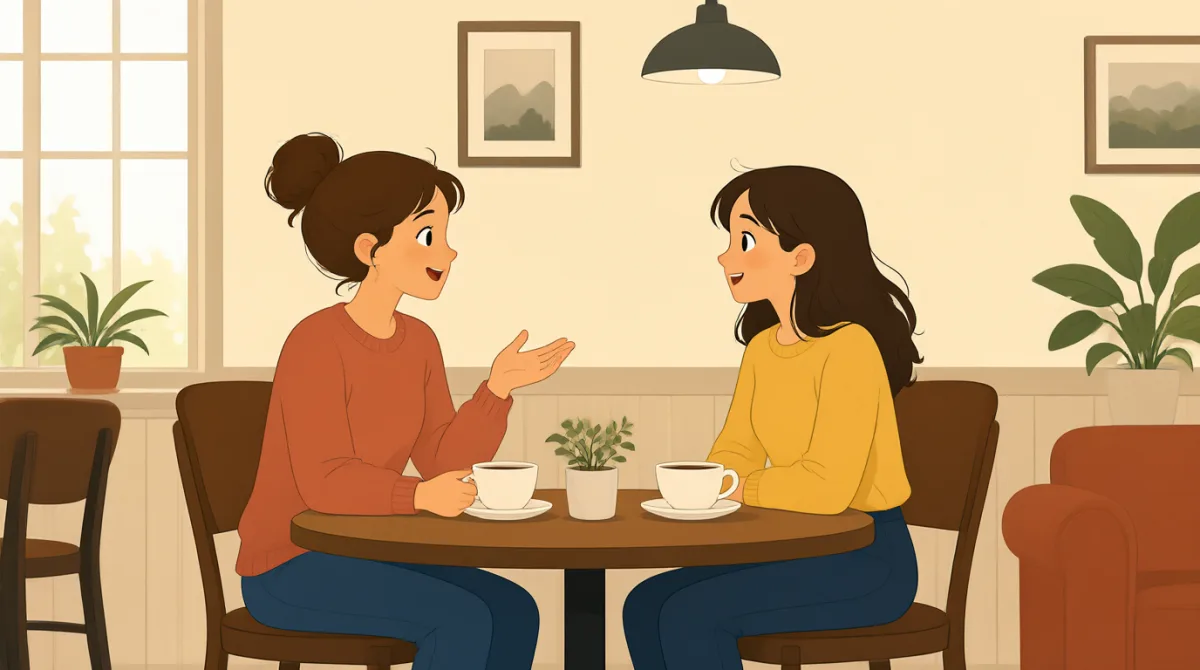

So, how was your date last night? Did you have a good time?
それで、昨夜のデートはどうだった?楽しかった?

Yes, I did. The food was really good, and the restaurant was nice and quiet.
うん、楽しかったよ。料理はすごくおいしかったし、お店も落ち着いてて静かだった。
That sounds lovely. What did you talk about?
いいね。どんな話をしたの?
We talked about work, travel, and our favorite movies. The conversation felt easy.
仕事や旅行、好きな映画の話をしたよ。会話も自然に弾んだ。
Good! Did you both want to meet again?
よかったね!二人ともまた会いたいと思った?
I think so. He asked if I’d like to go to a concert next week.
たぶんね。来週コンサートに行かない?って誘われたよ。
And what did you say?
それで、なんて答えたの?
I said yes. I’m a little nervous, but I’m excited to see him again.
いいよって答えた。ちょっと緊張するけど、また会うのが楽しみだよ。
語彙8
- have a good time楽しい時間を過ごす
To enjoy an event or activity. You can use this phrase to ask if someone enjoyed a date, party, or trip.
イベントや活動を楽しむことです。デートやパーティー、旅行が楽しかったか聞くときにも使えます。
- nice and quiet落ち着いていて静か
Pleasantly calm, without much noise. Use “nice and” before an adjective to make a description sound natural.
騒がしくなく、心地よく穏やかな様子です。形容詞の前に “nice and” を付けると、自然な表現になります。
- talked about〜について話した
Discussed a subject. You can say “talked about” followed by a topic, such as work, travel, or a movie.
あるテーマについて話し合った、という意味です。“talked about” のあとに、仕事や旅行、映画など話題を続けられます。
- favorite movies好きな映画
The movies someone likes best. You can replace “movies” with another thing, such as “favorite songs” or “favorite books.”
その人が特に気に入っている映画のことです。“movies” を別のものに変えて、“favorite songs” や “favorite books” のようにも言えます。
- meet againまた会う
See someone another time. This phrase is useful when talking about plans to see someone in the future.
別の機会にその人と会うことです。これからまた会う予定について話すときに便利な表現です。
- next week来週
The week after this one. Use it to say when a future event or plan will happen.
今週の次の週のことです。これからの予定やイベントがいつあるか伝えるときに使います。
- a little nervous少し緊張している
Slightly worried or unsure. “A little” makes the feeling sound less strong.
少し心配だったり、不安を感じたりしていることです。“A little” を付けると、気持ちの強さを和らげて表せます。
- excited to see him againまた彼に会うのが楽しみ
Very happy about the idea of seeing him another time. You can use “excited to” before an activity you are looking forward to.
また彼に会うことをとても楽しみにしている、という意味です。楽しみにしている活動の前に “excited to” を使えます。
重要な文7
- 1
So, how was your date last night?
それで、昨夜のデートはどうだった?
This is a friendly way to ask someone about a date that has already happened. Change “date” to another event, such as “trip” or “meeting.”
すでに終わったデートについて、相手に気軽に尋ねる言い方です。“date” を “trip” や “meeting” など、別の出来事に置き換えられます。
- 2
Did you have a good time?
楽しかった?
Use this question to ask whether someone enjoyed an experience. You can use it after a date, a party, or a day out.
相手が何かを楽しんだか聞くときの質問です。デートやパーティー、出かけた日のあとなどに使えます。
- 3
The food was really good, and the restaurant was nice and quiet.
料理はすごくおいしかったし、お店も落ち着いてて静かだった。
This sentence describes two good things about a restaurant. You can use the same pattern to give more than one detail about a place.
レストランのよかった点を二つ説明する文です。同じ形を使って、場所について複数の特徴を伝えられます。
- 4
What did you talk about?
どんな話をしたの?
This is a simple way to ask what subjects people discussed. Use “did” with the base form “talk” when asking about the past.
どんな話題について話したのか、簡単に尋ねる言い方です。過去のことを質問するときは、“did” のあとに動詞の原形 “talk” を使います。
- 5
The conversation felt easy.
会話も自然に弾んだ。
This describes a relaxed conversation that did not feel difficult or awkward. You can use “felt” to describe how an experience seemed.
気楽で、難しさや気まずさを感じない会話だったことを表します。“felt” を使うと、ある経験がどのように感じられたかを伝えられます。
- 6
He asked if I’d like to go to a concert next week.
来週コンサートに行かない?って誘われたよ。
This sentence reports an invitation using “asked if I’d like to.” You can replace “go to a concert” with another activity.
“asked if I’d like to” を使って、誘われたことを伝える文です。“go to a concert” は別の活動に置き換えられます。
- 7
I’m a little nervous, but I’m excited to see him again.
ちょっと緊張するけど、また彼に会うのが楽しみだよ。
This sentence describes two feelings at the same time. Use “but” to connect feelings that are different.
二つの気持ちを同時に表す文です。違う気持ちをつなぐには、“but” を使います。