Talking After the Date
Hablar después de la cita
After the date, Emma tells Mia how the evening went. They talk about the food, the conversation, and whether Emma would like to see Leo again.
Después de la cita, Emma le cuenta a Mia cómo fue la noche. Hablan de la comida, la conversación y de si Emma quiere volver a ver a Leo.
Diálogo8
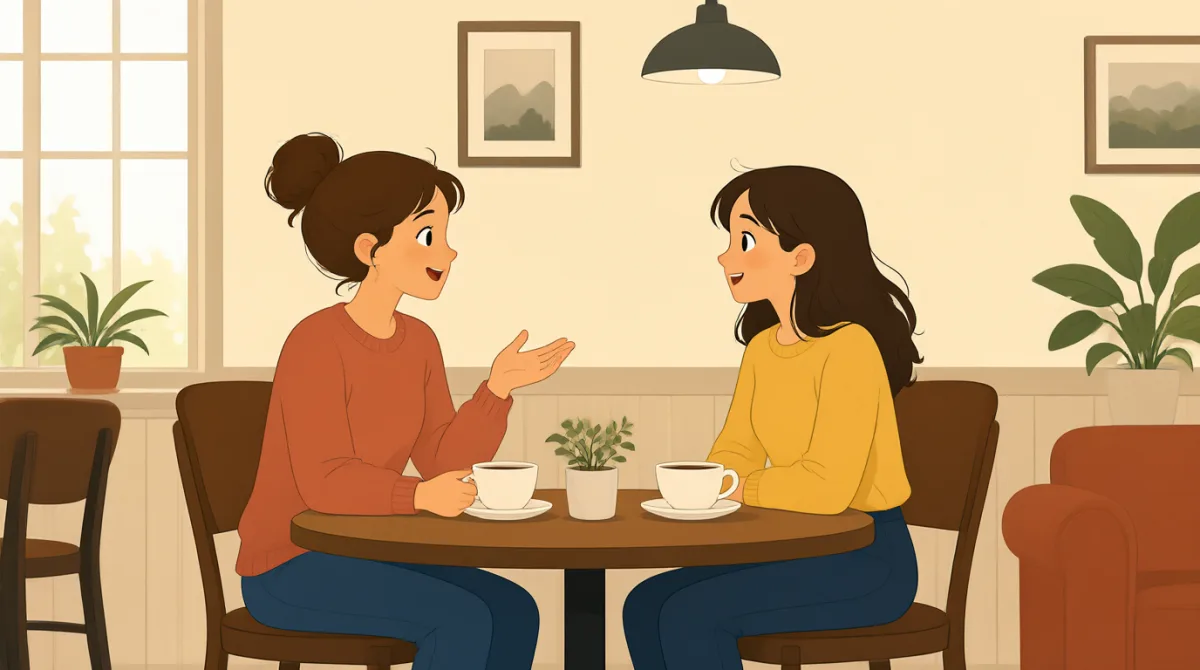

So, how was your date last night? Did you have a good time?
Y bien, ¿qué tal estuvo tu cita anoche? ¿Te lo pasaste bien?

Yes, I did. The food was really good, and the restaurant was nice and quiet.
Sí. La comida estaba muy rica y el restaurante era agradable y tranquilo.
That sounds lovely. What did you talk about?
Qué bien. ¿De qué hablaron?
We talked about work, travel, and our favorite movies. The conversation felt easy.
Hablamos del trabajo, de viajes y de nuestras películas favoritas. La conversación fluyó con naturalidad.
Good! Did you both want to meet again?
¡Qué bien! ¿Los dos querían volver a verse?
I think so. He asked if I’d like to go to a concert next week.
Creo que sí. Me preguntó si me gustaría ir a un concierto la semana que viene.
And what did you say?
¿Y qué le dijiste?
I said yes. I’m a little nervous, but I’m excited to see him again.
Le dije que sí. Estoy un poco nerviosa, pero me hace ilusión volver a verlo.
Vocabulario8
- have a good timepasarlo bien
To enjoy an event or activity. You can use this phrase to ask if someone enjoyed a date, party, or trip.
Disfrutar de un evento o una actividad. Puedes usar esta expresión para preguntarle a alguien si disfrutó de una cita, una fiesta o un viaje.
- nice and quietagradable y tranquilo
Pleasantly calm, without much noise. Use “nice and” before an adjective to make a description sound natural.
Plácido y con poco ruido. En inglés, usar “nice and” antes de un adjetivo hace que la descripción suene natural.
- talked abouthablar de
Discussed a subject. You can say “talked about” followed by a topic, such as work, travel, or a movie.
Conversar sobre un tema. Puedes decir “talked about” seguido de un tema, como el trabajo, los viajes o una película.
- favorite moviespelículas favoritas
The movies someone likes best. You can replace “movies” with another thing, such as “favorite songs” or “favorite books.”
Las películas que más le gustan a alguien. Puedes cambiar “movies” por otra cosa, como “favorite songs” o “favorite books.”
- meet againvolver a verse
See someone another time. This phrase is useful when talking about plans to see someone in the future.
Ver a alguien otra vez. Esta expresión sirve para hablar de planes de volver a ver a alguien en el futuro.
- next weekla semana que viene
The week after this one. Use it to say when a future event or plan will happen.
La semana después de esta. Úsala para decir cuándo tendrá lugar un evento o plan futuro.
- a little nervousun poco nerviosa
Slightly worried or unsure. “A little” makes the feeling sound less strong.
Algo preocupada o insegura. “A little” hace que el sentimiento parezca menos intenso.
- excited to see him againcon ilusión de volver a verlo
Very happy about the idea of seeing him another time. You can use “excited to” before an activity you are looking forward to.
Muy contenta con la idea de volver a verlo. Puedes usar “excited to” antes de una actividad que esperas con ilusión.
Frases clave7
- 1
So, how was your date last night?
Y bien, ¿qué tal estuvo tu cita anoche?
This is a friendly way to ask someone about a date that has already happened. Change “date” to another event, such as “trip” or “meeting.”
Es una forma amistosa de preguntarle a alguien por una cita que ya tuvo. Puedes cambiar “date” por otro evento, como “trip” o “meeting.”
- 2
Did you have a good time?
¿Te lo pasaste bien?
Use this question to ask whether someone enjoyed an experience. You can use it after a date, a party, or a day out.
Usa esta pregunta para saber si alguien disfrutó de una experiencia. Puedes hacerla después de una cita, una fiesta o una salida.
- 3
The food was really good, and the restaurant was nice and quiet.
La comida estaba muy rica y el restaurante era agradable y tranquilo.
This sentence describes two good things about a restaurant. You can use the same pattern to give more than one detail about a place.
Esta oración describe dos cosas buenas de un restaurante. Puedes usar la misma estructura para dar varios detalles sobre un lugar.
- 4
What did you talk about?
¿De qué hablaron?
This is a simple way to ask what subjects people discussed. Use “did” with the base form “talk” when asking about the past.
Es una forma sencilla de preguntar sobre los temas que trataron unas personas. En preguntas sobre el pasado, usa “did” con la forma base “talk.”
- 5
The conversation felt easy.
La conversación fluyó con naturalidad.
This describes a relaxed conversation that did not feel difficult or awkward. You can use “felt” to describe how an experience seemed.
Describe una conversación relajada que no resultó difícil ni incómoda. Puedes usar “felt” para describir cómo te pareció una experiencia.
- 6
He asked if I’d like to go to a concert next week.
Me preguntó si me gustaría ir a un concierto la semana que viene.
This sentence reports an invitation using “asked if I’d like to.” You can replace “go to a concert” with another activity.
Esta oración cuenta una invitación usando “asked if I’d like to.” Puedes sustituir “go to a concert” por otra actividad.
- 7
I’m a little nervous, but I’m excited to see him again.
Estoy un poco nerviosa, pero me hace ilusión volver a verlo.
This sentence describes two feelings at the same time. Use “but” to connect feelings that are different.
Esta oración describe dos sentimientos al mismo tiempo. Usa “but” para conectar sentimientos diferentes.