Choosing Between Two Gifts
2つのプレゼントから選ぶ
The assistant shows Emma a book and a mug. Emma asks which one is better for her friend.
店員がエマに本とマグカップを見せます。エマは友達へのプレゼントにどちらがいいか尋ねます。
会話6
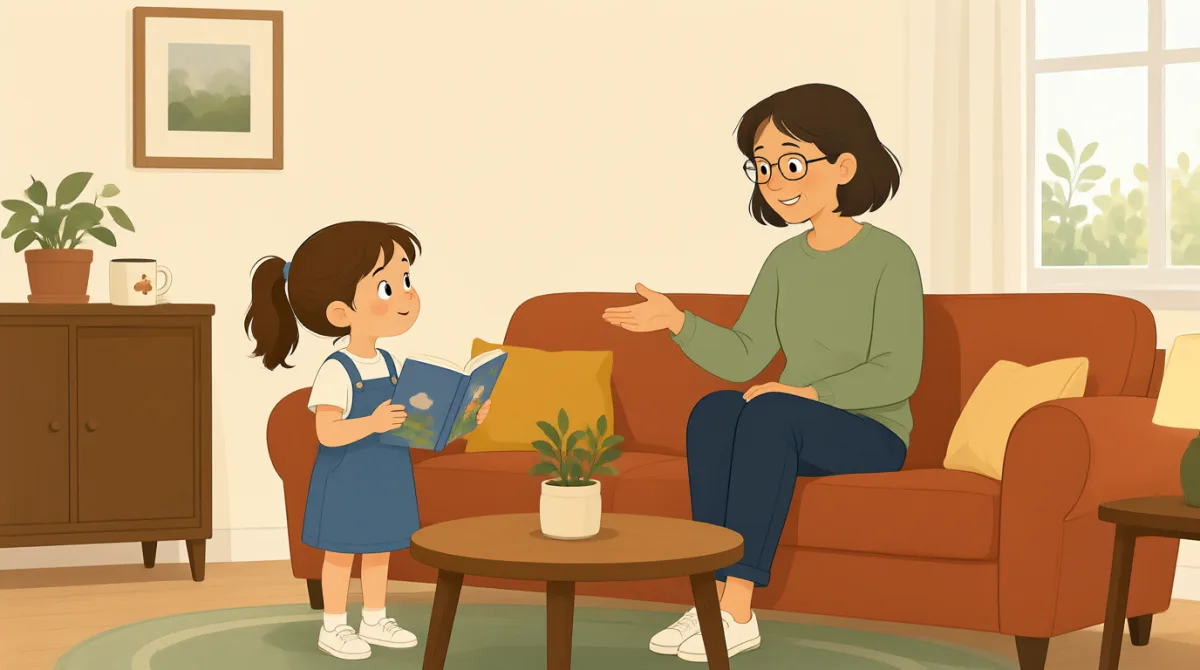

Here is a book and a mug.
本とマグカップがあるよ。

Which one is better for my friend?
友達にはどっちがいいかな?
Does your friend like reading?
友達は読書が好き?
Yes, she does. She reads every day.
うん、好きだよ。毎日読んでる。
Then I think the book is better.
じゃあ、本のほうがいいと思うよ。
That sounds good. I’ll take the book.
いいね。本にするよ。
語彙7
- a book本
A book is something you read. You can give it as a gift.
本は読むものです。プレゼントとして贈ることもできます。
- a mugマグカップ
A mug is a cup for hot drinks like tea or coffee. It can be a gift.
マグカップは、紅茶やコーヒーなどの温かい飲み物を飲むためのカップです。プレゼントにもできます。
- Which one is better?どっちがいい?
Use this question to ask which of two things is the better choice.
2つのもののうち、どちらを選ぶのがいいか尋ねるときに使います。
- like reading読書が好き
This means to enjoy reading books. You can ask, “Does your friend like reading?”
本を読むのが好きという意味です。“Does your friend like reading?”(友達は読書が好き?)のように尋ねられます。
- every day毎日
This means each day. Use it to talk about something you do regularly.
「毎日」という意味です。習慣的にしていることについて話すときに使います。
- I think思う
Use “I think” to share your opinion. For example, “I think the book is better.”
自分の意見を伝えるときに“I think”を使います。たとえば、“I think the book is better.”(本のほうがいいと思う)のように言えます。
- I’ll take the book.本にするよ。
Use this phrase to say you choose or want the book. You can replace “the book” with another item.
本を選ぶ、または本がほしいと伝える表現です。“the book”を別の品物に置き換えることもできます。
重要な文8
- 1
Here is a book and a mug.
本とマグカップがあるよ。
Use “Here is” to show someone something. You can name one or more items after it.
“Here is”は、相手に何かを見せるときに使います。そのあとに、1つでも複数でも品物の名前を続けられます。
- 2
Which one is better for my friend?
友達にはどっちがいいかな?
Use this question to ask which choice is best for someone. Replace “my friend” with another person or situation.
誰かにとってどちらがいちばんいいかを尋ねる表現です。“my friend”を別の人や状況に置き換えて使えます。
- 3
Does your friend like reading?
友達は読書が好き?
Use “Does” to ask about one person’s likes. Replace “reading” with another activity, such as “cooking.”
“Does”は、1人の人の好みを尋ねるときに使います。“reading”を“cooking”など別の活動に置き換えられます。
- 4
Yes, she does.
うん、好きだよ。
This is a short answer to a question that begins with “Does.” Use “Yes, he does” or “Yes, it does” for other subjects.
“Does”で始まる質問への短い答えです。主語が別の場合は、“Yes, he does”や“Yes, it does”を使います。
- 5
She reads every day.
彼女は毎日読んでる。
Use this sentence to talk about a daily habit. For he, she, or it, add “s” to the verb: “reads.”
毎日の習慣について話す表現です。主語がhe、she、itのときは、動詞に“s”をつけて“reads”のようにします。
- 6
Then I think the book is better.
じゃあ、本のほうがいいと思うよ。
Use “Then” to give a conclusion based on what you just learned. You can replace “the book” with another choice.
“Then”は、今わかったことをもとに結論を伝えるときに使います。“the book”を別の選択肢に置き換えることもできます。
- 7
That sounds good.
いいね。
Use this phrase to say that an idea or choice seems good to you.
ある考えや選択がよさそうだと感じたときに使う表現です。
- 8
I’ll take the book.
本にするよ。
Use this sentence to make your choice. Replace “the book” with the item you want.
自分が選ぶものを伝える表現です。“the book”を自分がほしい品物に置き換えて使えます。