Choosing Between Two Gifts
在两件礼物中做选择
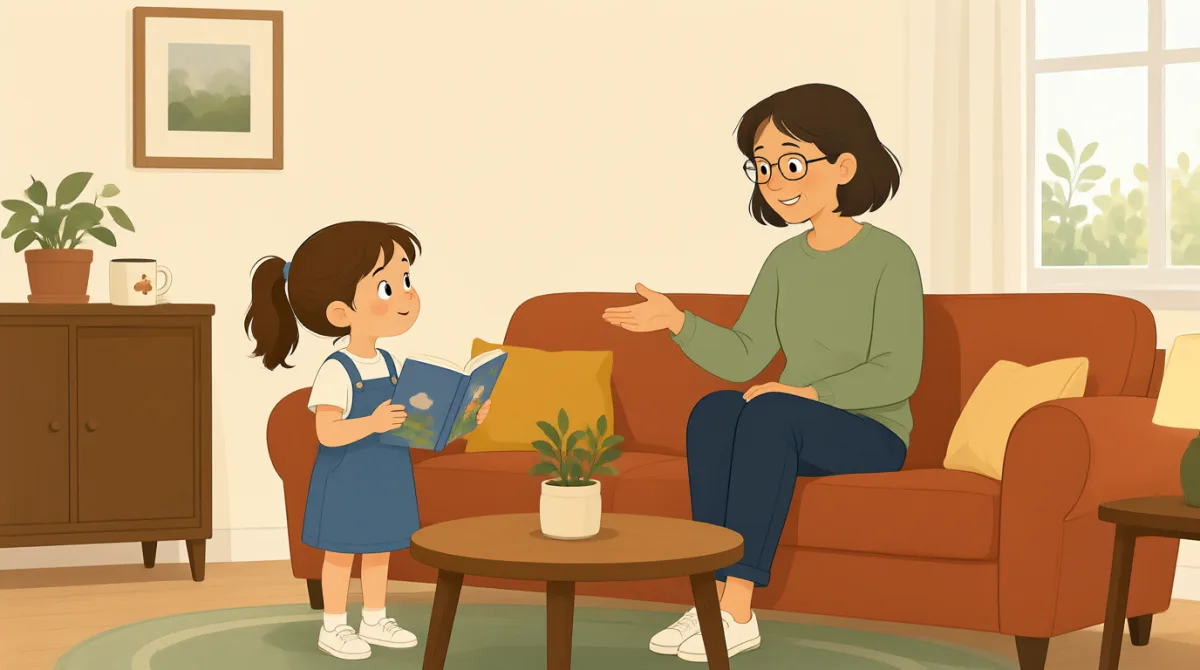
The assistant shows Emma a book and a mug. Emma asks which one is better for her friend.
店员给 Emma 看了一本书和一个杯子。Emma 问哪一件更适合送给朋友。
对话6

Here is a book and a mug.
这儿有一本书和一个马克杯。

Which one is better for my friend?
哪一个更适合我的朋友?
Does your friend like reading?
你的朋友喜欢读书吗?
Yes, she does. She reads every day.
是的,她喜欢。她每天都读书。
Then I think the book is better.
那我觉得这本书更合适。
That sounds good. I’ll take the book.
听起来不错。我就买这本书。
词汇7
- a book一本书
A book is something you read. You can give it as a gift.
书是用来阅读的东西。你可以把书当作礼物送人。
- a mug一个马克杯
A mug is a cup for hot drinks like tea or coffee. It can be a gift.
马克杯是用来喝茶、咖啡等热饮的杯子,也可以当作礼物送人。
- Which one is better?哪一个更好?
Use this question to ask which of two things is the better choice.
用这个问题来问两样东西中哪一个更好。
- like reading喜欢阅读
This means to enjoy reading books. You can ask, “Does your friend like reading?”
这个短语表示喜欢读书。你可以问:“Does your friend like reading?”(你的朋友喜欢读书吗?)
- every day每天
This means each day. Use it to talk about something you do regularly.
这个短语表示每一天。用它来谈论你经常做的事。
- I think我觉得
Use “I think” to share your opinion. For example, “I think the book is better.”
用“I think”来表达你的看法。比如:“I think the book is better.”(我觉得这本书更好。)
- I’ll take the book.我就要这本书。
Use this phrase to say you choose or want the book. You can replace “the book” with another item.
用这个短语表示你选择或想要这本书。你可以把“the book”换成其他物品。
重点句子8
- 1
Here is a book and a mug.
这儿有一本书和一个马克杯。
Use “Here is” to show someone something. You can name one or more items after it.
用“Here is”来给别人看某样东西。后面可以说一件或多件物品。
- 2
Which one is better for my friend?
哪一个更适合我的朋友?
Use this question to ask which choice is best for someone. Replace “my friend” with another person or situation.
用这个问题来问哪种选择最适合某个人。你可以把“my friend”换成其他人或情境。
- 3
Does your friend like reading?
你的朋友喜欢读书吗?
Use “Does” to ask about one person’s likes. Replace “reading” with another activity, such as “cooking.”
用“Does”来询问一个人喜欢什么。你可以把“reading”换成其他活动,比如“cooking”。
- 4
Yes, she does.
是的,她喜欢。
This is a short answer to a question that begins with “Does.” Use “Yes, he does” or “Yes, it does” for other subjects.
这是对以“Does”开头的问题的简短回答。主语是其他人或事物时,可以说“Yes, he does”或“Yes, it does”。
- 5
She reads every day.
她每天都读书。
Use this sentence to talk about a daily habit. For he, she, or it, add “s” to the verb: “reads.”
用这个句子来谈论每天都会做的习惯。主语是 he、she 或 it 时,动词要加“s”,例如“reads”。
- 6
Then I think the book is better.
那我觉得这本书更合适。
Use “Then” to give a conclusion based on what you just learned. You can replace “the book” with another choice.
用“Then”根据刚了解到的信息得出结论。你可以把“the book”换成其他选择。
- 7
That sounds good.
听起来不错。
Use this phrase to say that an idea or choice seems good to you.
用这个短语表示你觉得某个想法或选择不错。
- 8
I’ll take the book.
我就买这本书。
Use this sentence to make your choice. Replace “the book” with the item you want.
用这个句子来做出选择。把“the book”换成你想要的物品。