Choosing Between Two Gifts
두 가지 선물 중 고르기
The assistant shows Emma a book and a mug. Emma asks which one is better for her friend.
잭이 에마에게 책과 머그잔을 보여 줘요. 에마는 친구에게 어떤 게 더 좋을지 물어봐요.
대화6
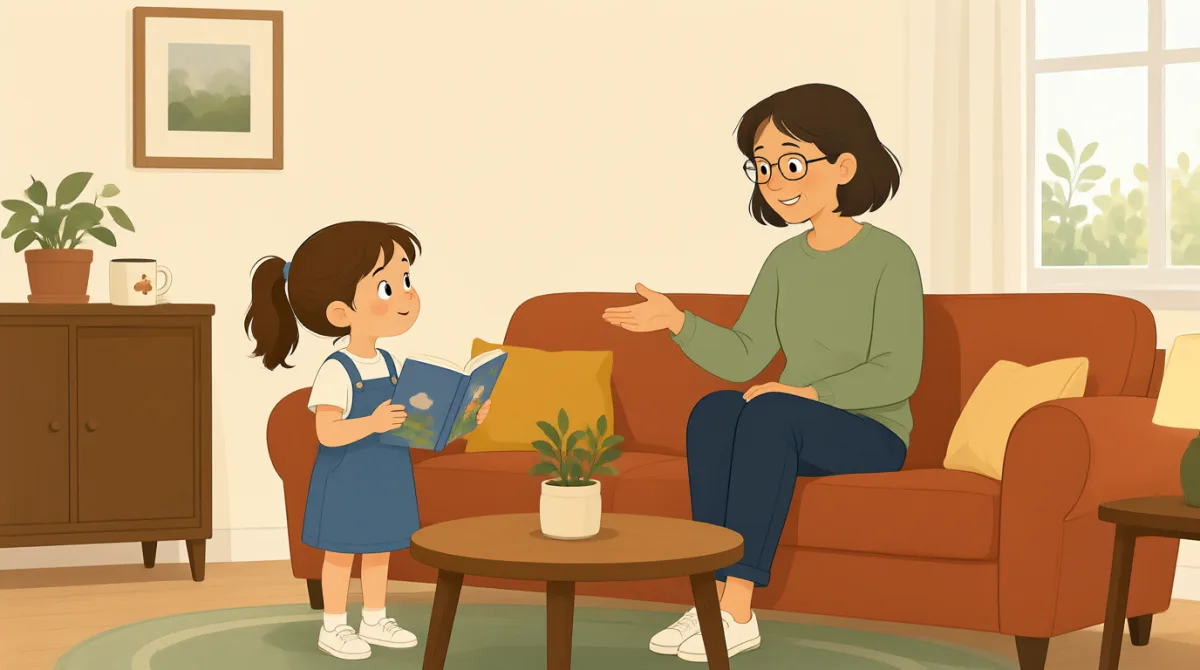

Here is a book and a mug.
책이랑 머그잔이 있어.

Which one is better for my friend?
내 친구한테는 어떤 게 더 나을까?
Does your friend like reading?
네 친구는 책 읽는 거 좋아해?
Yes, she does. She reads every day.
응, 좋아해. 매일 책을 읽어.
Then I think the book is better.
그럼 책이 더 나을 것 같아.
That sounds good. I’ll take the book.
좋은 생각이야. 책으로 할게.
어휘7
- a book책 한 권
A book is something you read. You can give it as a gift.
책은 읽는 거예요. 선물로 줄 수도 있어요.
- a mug머그잔
A mug is a cup for hot drinks like tea or coffee. It can be a gift.
머그잔은 차나 커피처럼 따뜻한 음료를 마실 때 쓰는 컵이에요. 선물로도 좋아요.
- Which one is better?어느 쪽이 더 나아?
Use this question to ask which of two things is the better choice.
두 가지 중 어떤 게 더 나은 선택인지 물어볼 때 쓰는 질문이에요.
- like reading책 읽는 걸 좋아하다
This means to enjoy reading books. You can ask, “Does your friend like reading?”
책 읽기를 즐긴다는 뜻이에요. “Does your friend like reading?”(네 친구는 책 읽는 걸 좋아해?)처럼 물어볼 수 있어요.
- every day매일
This means each day. Use it to talk about something you do regularly.
하루도 빠짐없이 한다는 뜻이에요. 규칙적으로 하는 일을 말할 때 써요.
- I think내 생각엔
Use “I think” to share your opinion. For example, “I think the book is better.”
자기 의견을 말할 때 “I think”를 써요. 예를 들어, “I think the book is better.”(내 생각엔 책이 더 나아.)라고 할 수 있어요.
- I’ll take the book.책으로 할게요.
Use this phrase to say you choose or want the book. You can replace “the book” with another item.
책을 고르거나 원한다고 말할 때 쓰는 표현이에요. “the book” 대신 다른 물건을 넣어도 돼요.
핵심 문장8
- 1
Here is a book and a mug.
책이랑 머그잔이 있어.
Use “Here is” to show someone something. You can name one or more items after it.
누군가에게 물건을 보여 줄 때 “Here is”를 써요. 뒤에 물건을 하나 또는 여러 개 말할 수 있어요.
- 2
Which one is better for my friend?
내 친구한테는 어떤 게 더 나을까?
Use this question to ask which choice is best for someone. Replace “my friend” with another person or situation.
누군가에게 어떤 선택이 가장 좋을지 물어볼 때 쓰는 질문이에요. “my friend” 대신 다른 사람이나 상황을 넣어 보세요.
- 3
Does your friend like reading?
네 친구는 책 읽는 걸 좋아해?
Use “Does” to ask about one person’s likes. Replace “reading” with another activity, such as “cooking.”
한 사람의 취향을 물어볼 때 “Does”로 시작하는 질문을 써요. “reading” 대신 “cooking”처럼 다른 활동을 넣어 보세요.
- 4
Yes, she does.
응, 좋아해.
This is a short answer to a question that begins with “Does.” Use “Yes, he does” or “Yes, it does” for other subjects.
“Does”로 시작하는 질문에 짧게 대답할 때 쓰는 표현이에요. 주어에 따라 “Yes, he does” 또는 “Yes, it does”라고 해요.
- 5
She reads every day.
그녀는 매일 책을 읽어.
Use this sentence to talk about a daily habit. For he, she, or it, add “s” to the verb: “reads.”
매일 하는 습관을 말할 때 쓰는 문장이에요. 주어가 he, she, it이면 동사에 “s”를 붙여 “reads”라고 해요.
- 6
Then I think the book is better.
그럼 책이 더 나을 것 같아.
Use “Then” to give a conclusion based on what you just learned. You can replace “the book” with another choice.
방금 알게 된 내용을 바탕으로 결론을 말할 때 “Then”을 써요. “the book” 대신 다른 선택지를 넣어도 돼요.
- 7
That sounds good.
좋은 생각이야.
Use this phrase to say that an idea or choice seems good to you.
어떤 생각이나 선택이 괜찮다고 느낄 때 쓰는 표현이에요.
- 8
I’ll take the book.
책으로 할게.
Use this sentence to make your choice. Replace “the book” with the item you want.
자신의 선택을 말할 때 쓰는 문장이에요. “the book” 대신 원하는 물건을 넣어 보세요.