Reporting a TV Problem
テレビの故障を伝える
Emma tells the front desk that the TV in her room does not work. Jack says he will send someone to check it.
エマはフロントに、部屋のテレビがつかないことを伝えます。ジャックは確認する人を部屋に向かわせると言います。
会話7
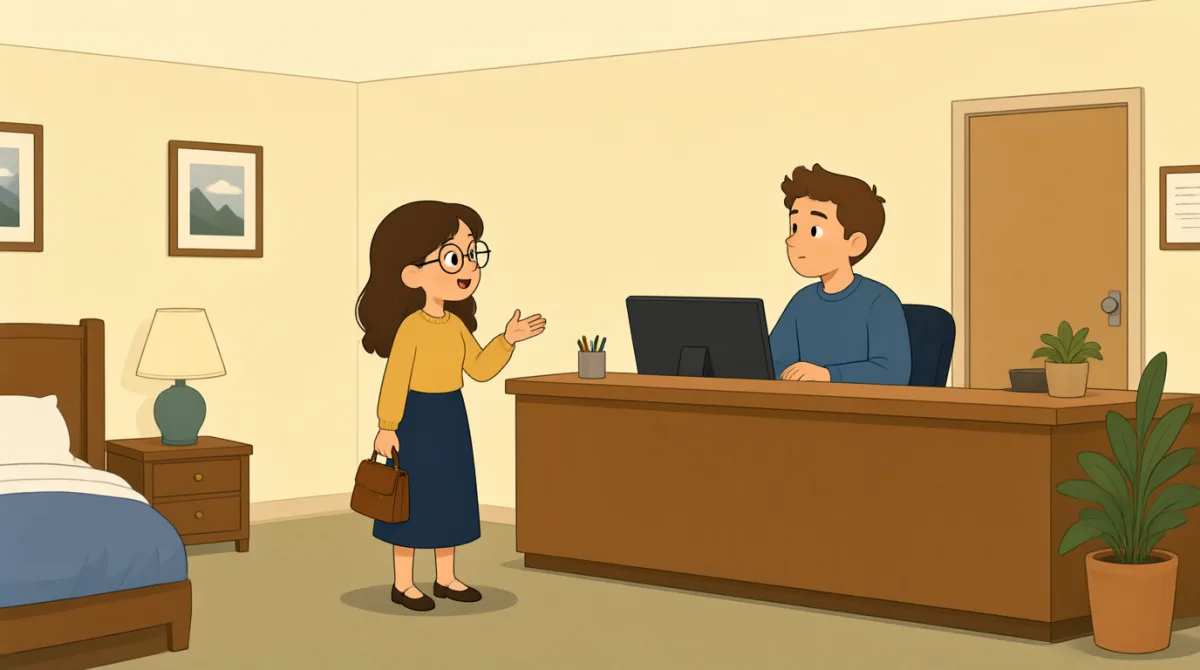

Hi, the TV in my room does not work.
こんにちは。部屋のテレビがつかないんです。

I’m sorry about that. What room are you in?
申し訳ございません。何号室にお泊まりですか?
I’m in room 204.
204号室です。
Thank you. I’ll send someone to check it.
ありがとうございます。確認する者をお部屋に向かわせます。
Can they come soon, please?
できれば、すぐに来てもらえますか?
Yes, someone will come in a few minutes.
はい。数分後にスタッフがお伺いします。
Thank you for your help.
対応していただき、ありがとうございます。
語彙8
- does not work動かない
This means something is broken or not working. Use it to report a problem with a device.
壊れていたり、正常に動かなかったりすることを表します。機器の不具合を伝えるときに使います。
- I’m sorry about that.申し訳ございません。
This is a polite way to show you feel bad about a problem. You can say it when someone tells you something is wrong.
問題について気の毒に思う気持ちを丁寧に伝える表現です。相手から困ったことを聞いたときに使えます。
- What room are you in?何号室にお泊まりですか?
Use this question to ask someone for their room number.
相手の部屋番号を尋ねる質問です。
- send someone人を向かわせる
This means to ask a person to go somewhere. Here, the front desk will send a worker to the room.
誰かにある場所へ行ってもらうという意味です。ここでは、フロントがスタッフを部屋に向かわせます。
- check it確認する
This means to look at something to find out what is wrong. You can say it when you want someone to examine a problem.
何が問題なのかを調べるために、何かを見るという意味です。不具合を調べてもらいたいときに使えます。
- come soonすぐに来る
This means to arrive in a short time. Use it to ask when someone can come.
短い時間のうちに到着するという意味です。相手にいつ来られるか尋ねるときに使います。
- in a few minutes数分後に
This means after a short wait. You can use it to say when something will happen.
少し待ったあとに、という意味です。何かがいつ起きるかを伝えるときに使えます。
- Thank you for your help.対応していただき、ありがとうございます。
This is a polite way to thank someone for helping you. You can use it at a hotel or in many other situations.
助けてもらった相手に感謝を伝える丁寧な表現です。ホテルでも、さまざまな場面でも使えます。
重要な文7
- 1
Hi, the TV in my room does not work.
こんにちは。部屋のテレビがつかないんです。
Use this sentence to tell someone about a problem in your room. You can replace “the TV” with another item, such as “the light.”
部屋で起きた問題を伝えるときに使います。“the TV” は “the light” のように、別の物に置き換えられます。
- 2
I’m sorry about that.
申し訳ございません。
This is a kind response when someone has a problem. You can use it before offering help.
相手が困っているときに、思いやりを示す返事です。手助けを申し出る前に使えます。
- 3
What room are you in?
何号室にお泊まりですか?
Use this question to ask for someone’s room number. You can also ask, “What room are you staying in?”
相手の部屋番号を尋ねる質問です。“What room are you staying in?” と聞くこともできます。
- 4
I’ll send someone to check it.
確認する者を向かわせます。
Use this sentence to say you will ask another person to look at a problem. You can replace “it” with the item that needs attention.
別の人に問題を見てもらうと伝えるときに使います。“it” は、対応が必要な物に置き換えられます。
- 5
Can they come soon, please?
できれば、すぐに来てもらえますか?
Use this polite question to ask if someone can arrive soon. You can change “they” to “you” when speaking directly to the person.
誰かに早く来てもらえるか、丁寧に尋ねる表現です。本人に直接話すときは、“they” を “you” に変えられます。
- 6
Yes, someone will come in a few minutes.
はい。数分後にスタッフがお伺いします。
Use this sentence to tell someone that help will arrive soon. You can replace “someone” with a person or job title.
助けがすぐに来ることを伝えるときに使います。“someone” は人の名前や職種に置き換えられます。
- 7
Thank you for your help.
対応していただき、ありがとうございます。
Use this sentence to thank someone who has helped you. It is polite and useful in everyday situations.
助けてくれた相手に感謝を伝える表現です。丁寧で、日常のさまざまな場面で役立ちます。