When a Friend Gets Defensive
जब कोई दोस्त रक्षात्मक हो जाता है
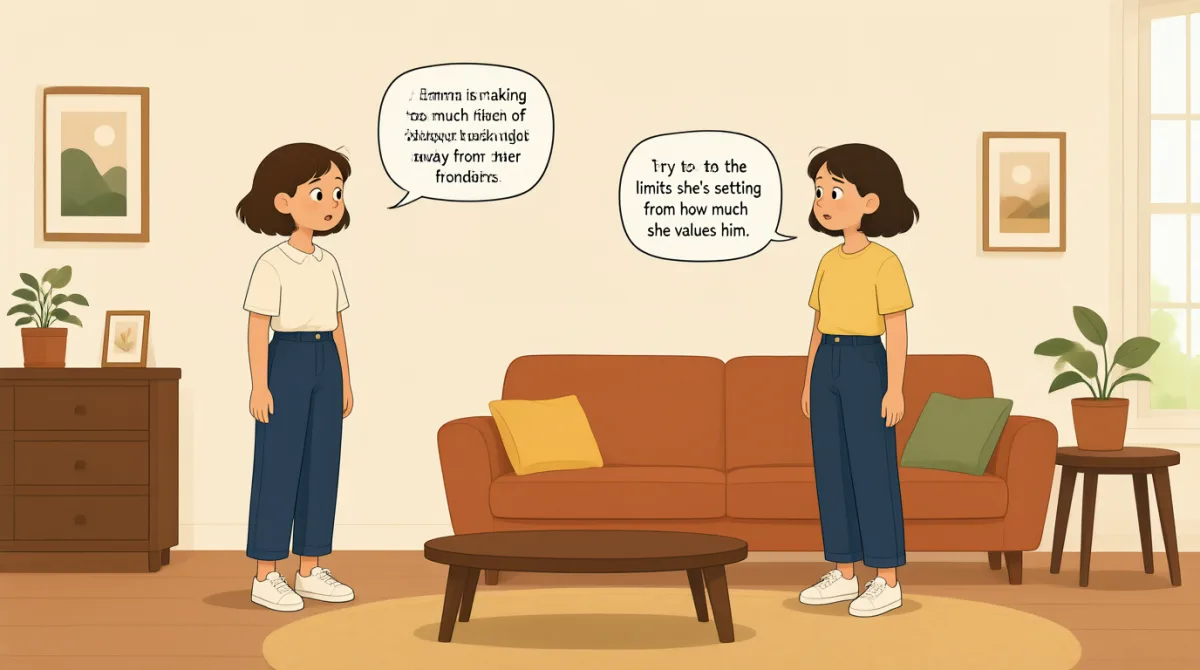
Leo feels criticized and says Emma is making too much of things. Emma acknowledges his feelings without backing away from her boundaries, and they try to separate the limits she’s setting from how much she values him.
लियो को लगता है कि उसकी आलोचना की जा रही है और वह कहता है कि एमा बात को बढ़ा-चढ़ाकर पेश कर रही है। एमा उसकी भावनाओं को समझते हुए भी अपनी सीमाओं पर कायम रहती है। दोनों यह समझने की कोशिश करते हैं कि एमा की तय की गई सीमाओं का उससे लगाव कितना है, इससे कोई लेना-देना नहीं है।
संवाद10

I get that you’re upset, but honestly, this feels like a lot. You’re making it sound as if I’m a terrible friend just because I’ve had a rough few weeks.
मैं समझता हूँ कि तुम परेशान हो, लेकिन सच कहूँ तो यह कुछ ज़्यादा लग रहा है। तुम ऐसे कह रही हो जैसे मैं बहुत बुरा दोस्त हूँ, सिर्फ़ इसलिए कि पिछले कुछ हफ़्ते मेरे लिए मुश्किल रहे हैं।

I’m not saying you’re a terrible friend, Leo. I can see why this feels like criticism, and I’m not trying to pile on when you’re already stressed.
मैं यह नहीं कह रही कि तुम बुरे दोस्त हो, लियो। मैं समझ सकती हूँ कि तुम्हें यह आलोचना जैसा क्यों लग रहा है। जब तुम पहले से ही तनाव में हो, तो मैं तुम्हारी मुश्किलें और नहीं बढ़ाना चाहती।
It just seems like every time I need you, there’s a new rule. I thought friends were supposed to show up for each other without keeping score.
बस ऐसा लगता है कि जब भी मुझे तुम्हारी ज़रूरत होती है, कोई नया नियम आ जाता है। मुझे लगा था कि दोस्त एक-दूसरे का साथ देते हैं, हिसाब नहीं रखते।
I do want to show up for you. But lending money, taking late calls, and having plans canceled at the last minute have started to wear me down.
मैं तुम्हारा साथ देना चाहती हूँ। लेकिन तुम्हें पैसे उधार देना, देर रात तुम्हारे फ़ोन उठाना और आख़िरी वक़्त पर योजनाएँ रद्द होना—इन सब से मैं थकने लगी हूँ।
I didn’t realize it was affecting you that much. When you bring up all three things at once, though, it feels like you’ve been keeping a list against me.
मुझे नहीं पता था कि इसका तुम पर इतना असर हो रहा है। लेकिन जब तुम ये तीनों बातें एक साथ उठाती हो, तो लगता है जैसे तुम मेरे ख़िलाफ़ शिकायतों की सूची बना रही हो।
I can understand why it came across that way. I’m not keeping score; I’m trying to explain the pattern so we can deal with it instead of letting resentment build up.
मैं समझ सकती हूँ कि तुम्हें ऐसा क्यों लगा। मैं हिसाब नहीं रख रही; मैं बस यह सिलसिला समझाने की कोशिश कर रही हूँ, ताकि हम इसे सुलझा सकें और मन में नाराज़गी जमा न होने दें।
So what are you actually asking me to do? I don’t want to feel like I have to pass a test just to stay your friend.
तो तुम मुझसे असल में क्या करने को कह रही हो? मैं नहीं चाहता कि तुम्हारा दोस्त बने रहने के लिए मुझे कोई परीक्षा पास करनी पड़े।
I’m asking you to check with me before calling late, give me more notice if plans change, and not count on me to cover expenses. Those are limits, not a test.
मैं चाहती हूँ कि देर रात फ़ोन करने से पहले मुझसे पूछो, योजनाएँ बदलें तो मुझे पहले से बता दो, और यह मानकर न चलो कि मैं तुम्हारे ख़र्चे उठा लूँगी। ये सीमाएँ हैं, कोई परीक्षा नहीं।
I can try to do that. I still feel a little defensive, but I don’t want you to think I take you for granted or that I don’t care about this friendship.
मैं यह करने की कोशिश कर सकता हूँ। मुझे अभी भी थोड़ा बुरा लग रहा है, लेकिन मैं नहीं चाहता कि तुम्हें लगे कि मैं तुम्हारी क़द्र नहीं करता या हमारी दोस्ती की परवाह नहीं करता।
I don’t think that. I value you, and I want us to stay close. I also need to be honest about what I can manage, so neither of us ends up quietly resenting the other.
मुझे ऐसा नहीं लगता। तुम मेरे लिए बहुत मायने रखते हो और मैं चाहती हूँ कि हमारी दोस्ती बनी रहे। साथ ही, मुझे इस बारे में ईमानदार होना होगा कि मैं क्या संभाल सकती हूँ, ताकि हम दोनों में से कोई भी चुपचाप दूसरे के लिए नाराज़गी न पालने लगे।
शब्दावली8
- pile onमुश्किलें और बढ़ाना
To add more criticism or pressure when someone is already dealing with a lot. Emma says she does not want to make Leo feel even more stressed.
जब कोई पहले से ही बहुत कुछ झेल रहा हो, तब उस पर और आलोचना या दबाव डालना। एमा कहती है कि वह लियो को और तनाव नहीं देना चाहती।
- show up for youसाथ देना
To be there for someone and support them when they need help. Here, Emma wants to support Leo while also setting limits.
ज़रूरत पड़ने पर किसी के लिए मौजूद रहना और उसकी मदद करना। यहाँ एमा अपनी सीमाएँ तय करते हुए भी लियो का साथ देना चाहती है।
- wear me downमुझे थका देना
To gradually make someone feel tired or emotionally drained. Emma uses this phrase to explain how the repeated issues have affected her.
धीरे-धीरे किसी को थका देना या भावनात्मक रूप से निढाल कर देना। एमा इस मुहावरे से बताती है कि बार-बार होने वाली बातों का उस पर क्या असर पड़ा है।
- keeping a list against meमेरे ख़िलाफ़ शिकायतों की सूची बनाना
Remembering and collecting someone’s mistakes to use against them later. Leo worries Emma has been tracking his behavior rather than trying to solve a problem.
किसी की गलतियों को याद रखना और जमा करते रहना, ताकि बाद में उन्हें उसी के ख़िलाफ़ इस्तेमाल किया जा सके। लियो को चिंता है कि एमा समस्या सुलझाने के बजाय उसके व्यवहार का हिसाब रख रही है।
- build upजमा होना
To gradually grow or become stronger over time. Emma wants to talk about the pattern before resentment grows.
समय के साथ धीरे-धीरे बढ़ना या मज़बूत होना। एमा चाहती है कि नाराज़गी बढ़ने से पहले वे इस सिलसिले पर बात कर लें।
- count on meमुझ पर भरोसा करना
To rely on someone or expect them to help. Emma is asking Leo not to assume she will pay his expenses.
किसी पर निर्भर रहना या उससे मदद की उम्मीद करना। एमा लियो से कह रही है कि वह यह न माने कि उसके ख़र्चे एमा ही उठाएगी।
- take you for grantedतुम्हें हल्के में लेना
To fail to appreciate someone because you assume they will always be there for you. Leo wants Emma to know that he values her and their friendship.
यह मानकर किसी की क़द्र न करना कि वह हमेशा तुम्हारे लिए मौजूद रहेगा। लियो चाहता है कि एमा जाने कि वह उसकी और उनकी दोस्ती की क़द्र करता है।
- quietly resenting the otherचुपचाप एक-दूसरे के लिए नाराज़गी पालना
Feeling upset with someone over time without talking openly about it. Emma wants them to be honest so this does not happen.
किसी से समय के साथ नाराज़ होते जाना, लेकिन खुलकर उस बारे में बात न करना। एमा चाहती है कि वे ईमानदारी से बात करें, ताकि ऐसा न हो।
मुख्य वाक्य8
- 1
I can see why this feels like criticism, and I’m not trying to pile on when you’re already stressed.
मैं समझ सकती हूँ कि तुम्हें यह आलोचना जैसा क्यों लग रहा है। जब तुम पहले से ही तनाव में हो, तो मैं तुम्हारी मुश्किलें और नहीं बढ़ाना चाहती।
This acknowledges another person’s feelings without agreeing that your concern is wrong. You can reuse the structure to show empathy while explaining your intention.
इस वाक्य में आप सामने वाले की भावनाओं को समझते हैं, लेकिन यह नहीं मानते कि आपकी चिंता बेवजह है। अपनी मंशा बताते हुए सहानुभूति जताने के लिए आप इस ढाँचे का फिर से इस्तेमाल कर सकते हैं।
- 2
I do want to show up for you.
मैं तुम्हारा साथ देना चाहती हूँ।
This reassures someone that you care and want to support them. The phrase “show up for you” is useful when talking about being there for a friend.
इससे आप किसी को भरोसा दिलाते हैं कि आपको उसकी परवाह है और आप उसकी मदद करना चाहते हैं। दोस्त का साथ देने की बात करते समय “show up for you” कहना उपयोगी है।
- 3
But lending money, taking late calls, and having plans canceled at the last minute have started to wear me down.
लेकिन तुम्हें पैसे उधार देना, देर रात तुम्हारे फ़ोन उठाना और आख़िरी वक़्त पर योजनाएँ रद्द होना—इन सब से मैं थकने लगी हूँ।
This explains how specific repeated behaviors have affected you. You can name several examples and use “have started to wear me down” to describe their cumulative impact.
इससे आप बताते हैं कि बार-बार होने वाले कुछ ख़ास व्यवहारों का आप पर क्या असर पड़ा है। आप कई उदाहरण देकर उनके कुल असर को बताने के लिए “have started to wear me down” का इस्तेमाल कर सकते हैं।
- 4
I’m not keeping score; I’m trying to explain the pattern so we can deal with it instead of letting resentment build up.
मैं हिसाब नहीं रख रही; मैं बस यह सिलसिला समझाने की कोशिश कर रही हूँ, ताकि हम इसे सुलझा सकें और मन में नाराज़गी जमा न होने दें।
This clarifies that you are raising an issue to solve it, not to blame someone. The contrast with “instead of” is useful for explaining what you hope to avoid.
इससे आप साफ़ करते हैं कि आप किसी को दोष देने के बजाय समस्या सुलझाने के लिए बात उठा रहे हैं। “instead of” के ज़रिए आप यह बता सकते हैं कि आप किस बात से बचना चाहते हैं।
- 5
I’m asking you to check with me before calling late, give me more notice if plans change, and not count on me to cover expenses.
मैं चाहती हूँ कि देर रात फ़ोन करने से पहले मुझसे पूछो, योजनाएँ बदलें तो मुझे पहले से बता दो, और यह मानकर न चलो कि मैं तुम्हारे ख़र्चे उठा लूँगी।
This states practical boundaries as clear, specific requests. You can reuse the parallel verbs “check,” “give,” and “not count on” to explain what you need.
इस वाक्य में व्यावहारिक सीमाएँ साफ़ और ठोस अनुरोधों के रूप में रखी गई हैं। अपनी ज़रूरतें बताने के लिए “check,” “give” और “not count on” जैसे समानांतर क्रियापदों का फिर से इस्तेमाल कर सकते हैं।
- 6
Those are limits, not a test.
ये सीमाएँ हैं, कोई परीक्षा नहीं।
This brief sentence distinguishes boundaries from a demand to prove yourself. It is useful when someone worries that your request is a test of the relationship.
यह छोटा-सा वाक्य सीमाएँ तय करने और किसी से खुद को साबित करने की माँग करने के बीच फ़र्क बताता है। जब किसी को चिंता हो कि आपका अनुरोध रिश्ते की परीक्षा है, तब यह काम आ सकता है।
- 7
I value you, and I want us to stay close.
तुम मेरे लिए बहुत मायने रखते हो और मैं चाहती हूँ कि हमारी दोस्ती बनी रहे।
This directly reassures someone that a boundary does not mean you care less about them. You can use it to affirm a relationship during a difficult conversation.
इससे आप सीधे भरोसा दिलाते हैं कि सीमा तय करने का मतलब यह नहीं कि आपको उस व्यक्ति की कम परवाह है। मुश्किल बातचीत के दौरान रिश्ते की अहमियत जताने के लिए आप यह कह सकते हैं।
- 8
I also need to be honest about what I can manage, so neither of us ends up quietly resenting the other.
मुझे इस बारे में भी ईमानदार होना होगा कि मैं क्या संभाल सकती हूँ, ताकि हम दोनों में से कोई भी चुपचाप दूसरे के लिए नाराज़गी न पालने लगे।
This explains why it is important to speak openly about your limits. The phrase “so neither of us” is a useful way to describe a shared goal.
इससे आप बताते हैं कि अपनी सीमाओं के बारे में खुलकर बात करना क्यों ज़रूरी है। साझा लक्ष्य बताने के लिए “so neither of us” एक उपयोगी वाक्यांश है।