Talking It Through Honestly
ईमानदारी से बात करके मामला सुलझाना
Emma asks Leo to sit down and talk about the pattern behind the money requests, late-night calls, and canceled plans. She uses specific examples and explains what she needs in order to feel the friendship is reciprocal.
एमा लियो से बैठकर पैसों के अनुरोधों, देर रात किए गए फ़ोन और रद्द हुई योजनाओं के पीछे बने पैटर्न के बारे में बात करने को कहती है। वह ठोस उदाहरण देती है और समझाती है कि दोस्ती को पारस्परिक महसूस करने के लिए उसे क्या चाहिए।
संवाद10
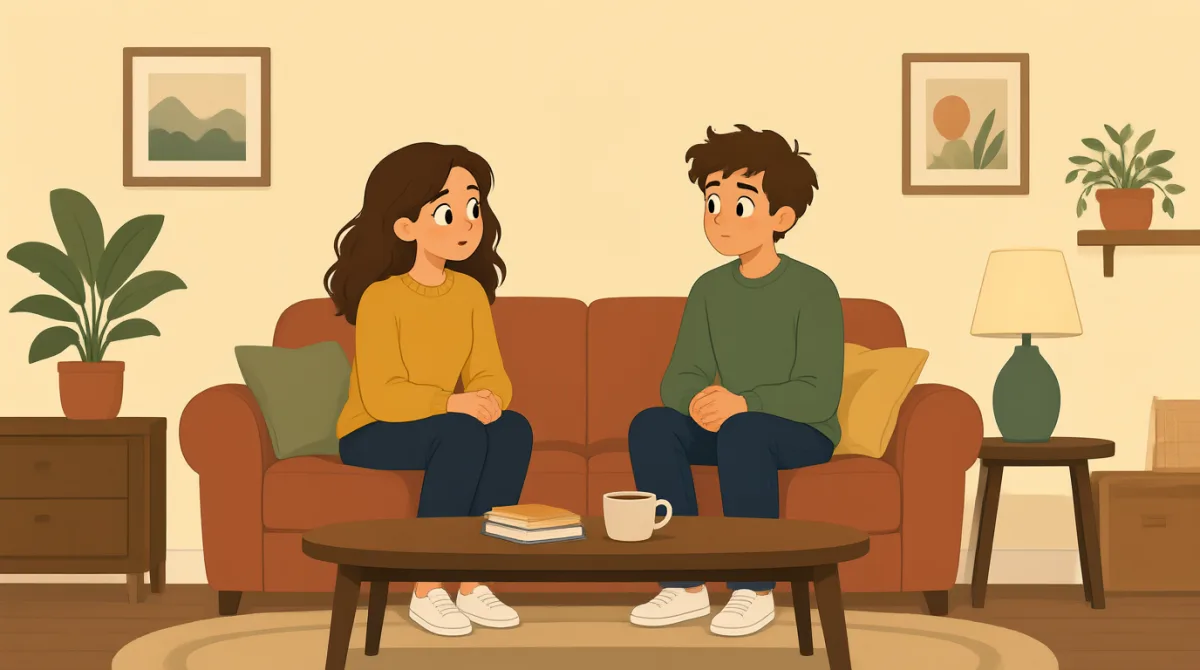

Leo, could we sit down and talk honestly about something? I value our friendship, and I’m not bringing this up to blame you. I just want us to understand each other better.
लियो, क्या हम बैठकर किसी बात पर ईमानदारी से चर्चा कर सकते हैं? मैं हमारी दोस्ती को बहुत महत्व देती हूँ, और यह बात मैं तुम्हें दोष देने के लिए नहीं उठा रही हूँ। मैं बस चाहती हूँ कि हम एक-दूसरे को बेहतर समझें।

Sure. You sound serious, though. Is this about the money I asked to borrow last week? I know I’ve been leaning on you a lot lately.
ज़रूर। लेकिन तुम काफ़ी गंभीर लग रही हो। क्या यह उस पैसे के बारे में है जो मैंने पिछले हफ़्ते उधार माँगा था? मुझे पता है कि हाल में मैं तुम पर बहुत ज़्यादा निर्भर रहा हूँ।
That’s part of it. I’ve covered your expenses a few times, and you’ve called late at night when you were stressed. Then our plans got canceled at the last minute twice.
उसका भी एक हिस्सा है। मैं कई बार तुम्हारे खर्चे उठा चुकी हूँ, और जब तुम तनाव में होते हो तो तुमने देर रात फ़ोन किया है। फिर हमारी योजनाएँ दो बार आख़िरी समय पर रद्द हो गईं।
I hadn’t realized those things were adding up for you. The cancellations weren’t meant to send a message; I’ve just been overwhelmed and bad at planning.
मुझे एहसास नहीं था कि ये सारी बातें तुम्हारे लिए जमा होती जा रही थीं। योजनाएँ रद्द करना तुम्हें कोई संदेश देने के लिए नहीं था; मैं बस बहुत परेशान था और योजना बनाने में अच्छा नहीं हूँ।
I get that things have been difficult, and I’m not saying you do any of this on purpose. But when it keeps happening, I start feeling like my time and support are taken for granted.
मैं समझती हूँ कि हालात मुश्किल रहे हैं, और मैं यह नहीं कह रही कि तुम इनमें से कुछ जान-बूझकर करते हो। लेकिन जब ऐसा बार-बार होता है, तो मुझे लगने लगता है कि मेरे समय और मदद को सहज उपलब्ध मान लिया गया है।
That’s fair. I suppose I’ve been focused on getting through one problem at a time, without thinking about how it affects you. What would help you feel things are more balanced?
यह बात वाजिब है। शायद मैं एक-एक करके अपनी समस्याएँ सुलझाने पर ध्यान देता रहा, बिना यह सोचे कि इसका तुम पर क्या असर पड़ रहा है। चीज़ों को ज़्यादा संतुलित महसूस करने के लिए क्या मदद मिलेगी?
I need to be able to say no to lending money without feeling guilty, and I’d like you to check before calling late. If we make plans, please give me as much notice as you can if they need to change.
मुझे ऐसा करने में सक्षम होना चाहिए कि बिना अपराधबोध महसूस किए पैसे उधार देने से मना कर सकूँ, और मैं चाहती हूँ कि देर से फ़ोन करने से पहले तुम पूछ लिया करो। अगर हम कोई योजना बनाएँ, तो उसमें बदलाव करना पड़े तो कृपया जितनी जल्दी बता सको, बता देना।
I can do that. I also don’t want you to feel like you’re responsible for sorting out my problems. I’ll look at other options when I’m short on money, and I’ll be more careful about making plans.
मैं ऐसा कर सकता हूँ। मैं यह भी नहीं चाहता कि तुम्हें लगे कि मेरी समस्याएँ सुलझाना तुम्हारी ज़िम्मेदारी है। जब मेरे पास पैसे कम होंगे, तो मैं दूसरे विकल्प देखूँगा और योजनाएँ बनाते समय ज़्यादा सावधान रहूँगा।
Thanks. I’m happy to listen and spend time together, but I need it to go both ways. I want us to keep being close without either of us feeling stretched too thin.
धन्यवाद। मुझे तुम्हारी बात सुनकर और तुम्हारे साथ समय बिताकर खुशी होती है, लेकिन मुझे चाहिए कि यह दोनों तरफ़ से हो। मैं चाहती हूँ कि हम एक-दूसरे के क़रीब बने रहें, बिना हममें से किसी को भी अपनी क्षमता से ज़्यादा दबाव महसूस हुए।
I hear you, Emma. I’m sorry I let things get lopsided. I care about our friendship too, and I’ll make an effort to respect those limits instead of assuming you’ll always be available.
मैं तुम्हारी बात समझ रहा हूँ, एमा। मुझे अफ़सोस है कि मैंने चीज़ों को इतना एकतरफ़ा होने दिया। मुझे भी हमारी दोस्ती की परवाह है, और मैं हमेशा तुम्हारे उपलब्ध रहने की उम्मीद करने के बजाय उन सीमाओं का सम्मान करने की कोशिश करूँगा।
शब्दावली8
- leaning on youतुम पर निर्भर रहना
Relying on you for help or support. Here, Leo recognizes that he has depended on Emma a lot lately.
मदद या सहारे के लिए तुम पर भरोसा करना। यहाँ लियो मानता है कि हाल में वह एमा पर बहुत ज़्यादा निर्भर रहा है।
- adding upधीरे-धीरे जमा होना
Becoming significant when several things happen over time. Emma means that the requests, calls, and canceled plans have built up and affected her.
समय के साथ कई बातें होने पर उनका महत्वपूर्ण बन जाना। एमा का मतलब है कि अनुरोध, फ़ोन और रद्द हुई योजनाएँ धीरे-धीरे जमा होती गईं और उन पर असर पड़ा।
- at the last minuteआख़िरी समय पर
Very close to the time something is supposed to happen. Use it when plans change or get canceled with little warning.
उस समय के बहुत क़रीब जब कोई काम होने वाला हो। इसका इस्तेमाल तब करें जब योजनाएँ बहुत कम चेतावनी के साथ बदलें या रद्द हो जाएँ।
- taken for grantedसहज उपलब्ध मान लेना
Treated as if your help or time will always be available and does not need to be appreciated. It describes how Emma feels when the pattern continues.
किसी की मदद या समय को ऐसा मानना जैसे वह हमेशा उपलब्ध रहेगा और उसके लिए आभार जताने की ज़रूरत नहीं है। यह बताता है कि पैटर्न जारी रहने पर एमा को कैसा महसूस होता है।
- feel things are more balancedचीज़ों को ज़्यादा संतुलित महसूस करना
Feel that each person is giving and receiving a fair amount. This phrase can open a conversation about making a relationship more reciprocal.
यह महसूस करना कि दोनों लोग उचित मात्रा में दे और पा रहे हैं। रिश्ते को अधिक पारस्परिक बनाने के बारे में बातचीत शुरू करने के लिए यह वाक्यांश उपयोगी है।
- go both waysदोनों तरफ़ से होना
Be mutual, with both people contributing or benefiting. Emma uses it to explain that she wants the friendship to include support in both directions.
पारस्परिक होना, जिसमें दोनों लोग योगदान दें या लाभ पाएँ। एमा इसका इस्तेमाल यह समझाने के लिए करती है कि वह चाहती है कि दोस्ती में दोनों दिशाओं से सहयोग मिले।
- stretched too thinअपनी क्षमता से ज़्यादा दबाव में होना
Under too much pressure because you have taken on more than you can manage. It is a useful way to describe feeling overcommitted without blaming someone.
इसलिए बहुत दबाव में होना क्योंकि तुमने अपनी क्षमता से ज़्यादा ज़िम्मेदारियाँ ले ली हैं। किसी को दोष दिए बिना अत्यधिक व्यस्त या बोझिल महसूस करने का वर्णन करने का यह उपयोगी तरीका है।
- get lopsidedएकतरफ़ा हो जाना
Become uneven or unfairly balanced in one direction. Leo uses it to acknowledge that he has been relying on Emma more than he should.
असमान या एक दिशा में अनुचित रूप से झुका हुआ हो जाना। लियो इसका इस्तेमाल यह स्वीकार करने के लिए करता है कि वह एमा पर जितना निर्भर होना चाहिए था, उससे ज़्यादा निर्भर रहा है।
मुख्य वाक्य7
- 1
I value our friendship, and I’m not bringing this up to blame you.
मैं हमारी दोस्ती को बहुत महत्व देती हूँ, और यह बात मैं तुम्हें दोष देने के लिए नहीं उठा रही हूँ।
This reassures someone that a difficult conversation is meant to solve a problem, not attack them. Replace “our friendship” with what you value in another relationship.
“I value our friendship, and I’m not bringing this up to blame you.” यह वाक्य सामने वाले को भरोसा दिलाता है कि मुश्किल बातचीत का उद्देश्य समस्या सुलझाना है, उस पर हमला करना नहीं। “our friendship” की जगह किसी दूसरे रिश्ते में उस चीज़ का नाम रख सकते हैं जिसे आप महत्व देते हैं।
- 2
But when it keeps happening, I start feeling like my time and support are taken for granted.
लेकिन जब ऐसा बार-बार होता है, तो मुझे लगने लगता है कि मेरे समय और मदद को सहज उपलब्ध मान लिया गया है।
This describes the effect of a repeated behavior without claiming the other person intended to cause harm. You can adapt it by naming the pattern and how it makes you feel.
“But when it keeps happening, I start feeling like my time and support are taken for granted.” यह वाक्य किसी दोहराए जाने वाले व्यवहार के असर को बताता है, बिना यह दावा किए कि सामने वाला जान-बूझकर नुकसान पहुँचाना चाहता था। आप इसमें पैटर्न और उससे होने वाली अपनी भावना का नाम जोड़ सकते हैं।
- 3
What would help you feel things are more balanced?
चीज़ों को ज़्यादा संतुलित महसूस करने के लिए क्या मदद मिलेगी?
This invites the other person to suggest practical changes and keeps the conversation collaborative. Use it when you want to discuss how to make a situation fairer.
“What would help you feel things are more balanced?” यह सामने वाले को व्यावहारिक बदलाव सुझाने का अवसर देता है और बातचीत को सहयोगपूर्ण बनाए रखता है। जब आप किसी स्थिति को अधिक न्यायसंगत बनाने के तरीके पर चर्चा करना चाहें, तब इसका इस्तेमाल करें।
- 4
I need to be able to say no to lending money without feeling guilty, and I’d like you to check before calling late.
मुझे ऐसा करने में सक्षम होना चाहिए कि बिना अपराधबोध महसूस किए पैसे उधार देने से मना कर सकूँ, और मैं चाहती हूँ कि देर से फ़ोन करने से पहले तुम पूछ लिया करो।
This combines a clear boundary with a specific request. The structure “I need to be able to...” is useful for explaining what you require, while “I’d like you to...” makes a polite request.
“I need to be able to say no to lending money without feeling guilty, and I’d like you to check before calling late.” इसमें एक स्पष्ट सीमा और एक विशेष अनुरोध साथ-साथ आते हैं। “I need to be able to...” यह बताने के लिए उपयोगी है कि आपको क्या चाहिए, जबकि “I’d like you to...” विनम्र अनुरोध करता है।
- 5
If we make plans, please give me as much notice as you can if they need to change.
अगर हम कोई योजना बनाएँ, तो उसमें बदलाव करना पड़े तो कृपया जितनी जल्दी बता सको, बता देना।
This sets an expectation while allowing for situations the other person may not control. Use “If..., please...” to make a practical request about future plans.
“If we make plans, please give me as much notice as you can if they need to change.” यह एक अपेक्षा तय करता है, साथ ही उन परिस्थितियों की गुंजाइश भी रखता है जिन्हें सामने वाला नियंत्रित नहीं कर सकता। भविष्य की योजनाओं के बारे में व्यावहारिक अनुरोध करने के लिए “If..., please...” का इस्तेमाल करें।
- 6
I’m happy to listen and spend time together, but I need it to go both ways.
मुझे तुम्हारी बात सुनकर और तुम्हारे साथ समय बिताकर खुशी होती है, लेकिन मुझे चाहिए कि यह दोनों तरफ़ से हो।
This shows that you still care while explaining that support should be mutual. It is useful when setting a boundary without ending the relationship.
“I’m happy to listen and spend time together, but I need it to go both ways.” इससे पता चलता है कि आपको अब भी परवाह है, साथ ही यह भी स्पष्ट होता है कि सहयोग पारस्परिक होना चाहिए। रिश्ता खत्म किए बिना सीमा तय करते समय यह उपयोगी है।
- 7
I’ll make an effort to respect those limits instead of assuming you’ll always be available.
मैं हमेशा तुम्हारे उपलब्ध रहने की उम्मीद करने के बजाय उन सीमाओं का सम्मान करने की कोशिश करूँगा।
This is a thoughtful way to acknowledge someone’s boundaries and commit to changing your behavior. Reuse “I’ll make an effort to...” when you want to promise improvement without claiming you’ll be perfect.
“I’ll make an effort to respect those limits instead of assuming you’ll always be available.” यह किसी की सीमाओं को स्वीकार करने और अपना व्यवहार बदलने का वादा करने का विचारशील तरीका है। जब आप सुधार का वादा करना चाहें, लेकिन यह दावा न करना चाहें कि आप हमेशा बिल्कुल सही रहेंगे, तब “I’ll make an effort to...” का दोबारा इस्तेमाल कर सकते हैं।