Quick Pen Borrow
जल्दी के लिए पेन उधार लेना
You realize you need a pen urgently for a quick note and ask a nearby colleague if you can borrow one for a moment.
आपको जल्दी से एक नोट लिखने के लिए तुरंत पेन चाहिए, इसलिए आप पास के सहकर्मी से कुछ देर के लिए पेन उधार माँगते हैं।
संवाद5
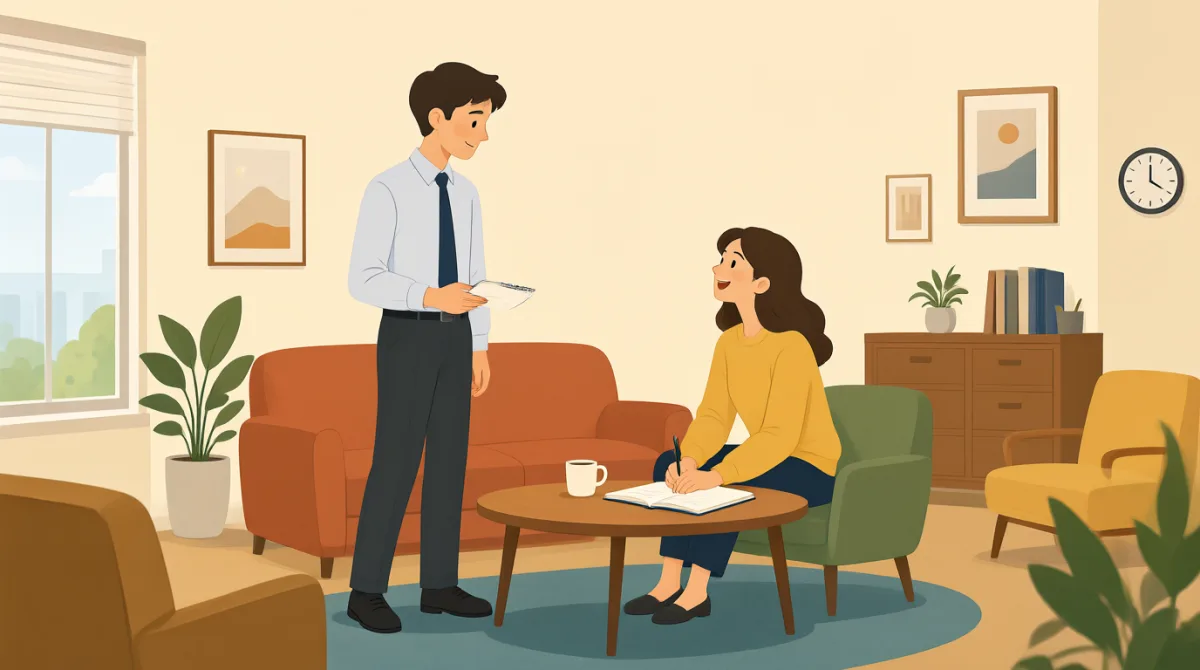

Hey Jack, do you happen to have a pen I could borrow really quickly?
अरे जैक, क्या तुम्हारे पास एक पेन है जो मैं ज़रा जल्दी से उधार ले सकूँ?

Sure, Emma. Here, take this one. Just need it for a quick note?
ज़रूर, एमा। लो, यह ले लो। बस एक छोटा-सा नोट लिखना है?
Yeah, exactly! Just need to jot something down before I forget. Thanks so much!
हाँ, बिल्कुल! भूलने से पहले बस कुछ लिखना है। बहुत-बहुत शुक्रिया!
No problem at all. Just hand it back when you're done.
कोई बात नहीं। काम हो जाए तो बस मुझे लौटा देना।
Will do! I'll be quick.
ज़रूर! मैं जल्दी करूँगी।
शब्दावली7
- borrowउधार लेना
To borrow means to take something from someone temporarily and return it later. It's useful when asking for office supplies like a pen.
“borrow” का मतलब है किसी से कोई चीज़ कुछ समय के लिए लेना और बाद में उसे लौटा देना। पेन जैसी ऑफिस की चीज़ें माँगते समय यह शब्द काम आता है।
- quicklyजल्दी से
Quickly is an adverb meaning very fast or in a short time. Use it to show urgency, like needing something right away in a busy office.
“quickly” एक क्रिया-विशेषण है, जिसका मतलब है बहुत तेज़ी से या कम समय में। व्यस्त दफ़्तर में किसी चीज़ की तुरंत ज़रूरत बताने के लिए इसका इस्तेमाल करें।
- jot downजल्दी से लिख लेना
Jot down means to write something quickly and briefly, often notes. It's practical for remembering ideas without writing a lot.
“jot down” का मतलब है कोई बात, अक्सर नोट, जल्दी और संक्षेप में लिख लेना। बिना ज़्यादा लिखे किसी विचार को याद रखने के लिए यह बहुत उपयोगी है।
- thanks so muchबहुत-बहुत शुक्रिया
Thanks so much is a polite way to express strong gratitude. It's common in casual conversations to show appreciation after someone helps you.
“thanks so much” गहरी कृतज्ञता जताने का विनम्र तरीका है। कोई आपकी मदद करे तो अनौपचारिक बातचीत में आभार जताने के लिए यह आम तौर पर कहा जाता है।
- no problemकोई बात नहीं
No problem is a casual response meaning 'it's okay' or 'you're welcome.' Use it to reply positively when someone thanks you for a small favor.
“no problem” एक अनौपचारिक जवाब है, जिसका मतलब है “कोई बात नहीं” या “आपका स्वागत है।” किसी छोटी-सी मदद के लिए धन्यवाद मिलने पर सकारात्मक जवाब देने के लिए इसका इस्तेमाल करें।
- hand backलौटा देना
Hand back means to return something to the person who gave it to you. It's useful when agreeing to give an item back after using it.
“hand back” का मतलब है कोई चीज़ उसे लौटाना जिसने आपको दी थी। इस्तेमाल के बाद कोई चीज़ वापस देने की बात करते समय यह काम आता है।
- will doज़रूर, ऐसा ही करूँगा/करूँगी
Will do is a short way to say 'I will do it' or 'understood.' It's informal and shows agreement in everyday office talks.
“will do” कहने का छोटा तरीका है “मैं ऐसा करूँगा/करूँगी” या “समझ गया/गई।” यह अनौपचारिक है और रोज़मर्रा की दफ़्तर की बातचीत में सहमति जताता है।
मुख्य वाक्य5
- 1
Hey Jack, do you happen to have a pen I could borrow really quickly?
अरे जैक, क्या तुम्हारे पास एक पेन है जो मैं ज़रा जल्दी से उधार ले सकूँ?
This sentence is a polite way to ask to borrow something urgently. 'Do you happen to have' is a soft way to ask without assuming. Use it in offices to request items without sounding demanding. The grammar uses a question with 'could' for politeness.
यह तुरंत कोई चीज़ उधार माँगने का विनम्र तरीका है। “Do you happen to have” बिना यह मानकर चले कि सामने वाले के पास वह चीज़ है, नरमी से पूछने का तरीका है। दफ़्तर में कुछ माँगते समय इसका इस्तेमाल करें, ताकि आपकी बात ज़ोर डालने जैसी न लगे। विनम्रता के लिए सवाल में “could” का प्रयोग किया गया है।
- 2
Sure, Emma. Here, take this one. Just need it for a quick note?
ज़रूर, एमा। लो, यह ले लो। बस एक छोटा-सा नोट लिखना है?
This is a friendly agreement to lend something, with a question to confirm the need. 'Sure' means yes casually, and 'take this one' offers the item directly. It's useful for responding to borrow requests and clarifying purpose.
यह कुछ उधार देने के लिए दोस्ताना सहमति है, जिसके साथ ज़रूरत की पुष्टि करने वाला सवाल भी है। “Sure” अनौपचारिक ढंग से हाँ कहता है, जबकि “take this one” सीधे चीज़ पेश करता है। उधार देने के अनुरोध का जवाब देने और उसका कारण पूछने के लिए यह उपयोगी है।
- 3
Yeah, exactly! Just need to jot something down before I forget. Thanks so much!
हाँ, बिल्कुल! भूलने से पहले बस कुछ लिखना है। बहुत-बहुत शुक्रिया!
This confirms and explains the need briefly, then thanks the helper. 'Yeah, exactly' agrees strongly, and 'jot something down' means quick writing. Use this to respond positively and show thanks in quick interactions.
इस वाक्य में ज़रूरत की पुष्टि करके उसे संक्षेप में बताया गया है, फिर मदद करने वाले को धन्यवाद दिया गया है। “Yeah, exactly” ज़ोर देकर सहमति जताता है, और “jot something down” का मतलब है कुछ जल्दी से लिख लेना। छोटी बातचीत में सकारात्मक जवाब देने और आभार जताने के लिए इसका इस्तेमाल करें।
- 4
No problem at all. Just hand it back when you're done.
कोई बात नहीं। काम हो जाए तो बस मुझे लौटा देना।
This reassures the borrower and sets a simple condition for return. 'No problem at all' is emphatic for 'you're welcome,' and 'when you're done' uses future time clause. It's practical for casual lending in team settings.
इससे उधार लेने वाले को भरोसा दिलाया जाता है और चीज़ लौटाने की एक आसान-सी शर्त बताई जाती है। “No problem at all” कहकर “आपका स्वागत है” पर ज़ोर दिया जाता है, और “when you're done” भविष्य में होने वाले समय की बात करता है। साथियों के बीच अनौपचारिक रूप से चीज़ें उधार देते समय यह उपयोगी है।
- 5
Will do! I'll be quick.
ज़रूर! मैं जल्दी करूँगी।
This agrees to the condition and promises speed. 'Will do' is a contraction for future agreement, and 'I'll be quick' uses future 'be' for assurance. Use it to acknowledge and commit in short conversations.
यह शर्त मानने और जल्दी करने का भरोसा देने का तरीका है। “Will do” भविष्य में कुछ करने की सहमति जताने का छोटा रूप है, और “I'll be quick” में भविष्य के “be” का इस्तेमाल करके आश्वासन दिया जाता है। छोटी बातचीत में बात मानने और अपना वादा जताने के लिए इसका इस्तेमाल करें।