Responding to Outside Advice
बाहरी सलाह का जवाब देना
Parents are reflecting on advice received from other family members or friends regarding their parenting choices. They discuss whether to adopt, adapt, or politely reject these external viewpoints.
माता-पिता अपने बच्चों की परवरिश के तरीकों को लेकर परिवार के सदस्यों या दोस्तों से मिली सलाह पर विचार कर रहे हैं। वे बात करते हैं कि इन बाहरी विचारों को अपनाएँ, अपने हिसाब से ढालें या विनम्रता से ठुकरा दें।
संवाद8
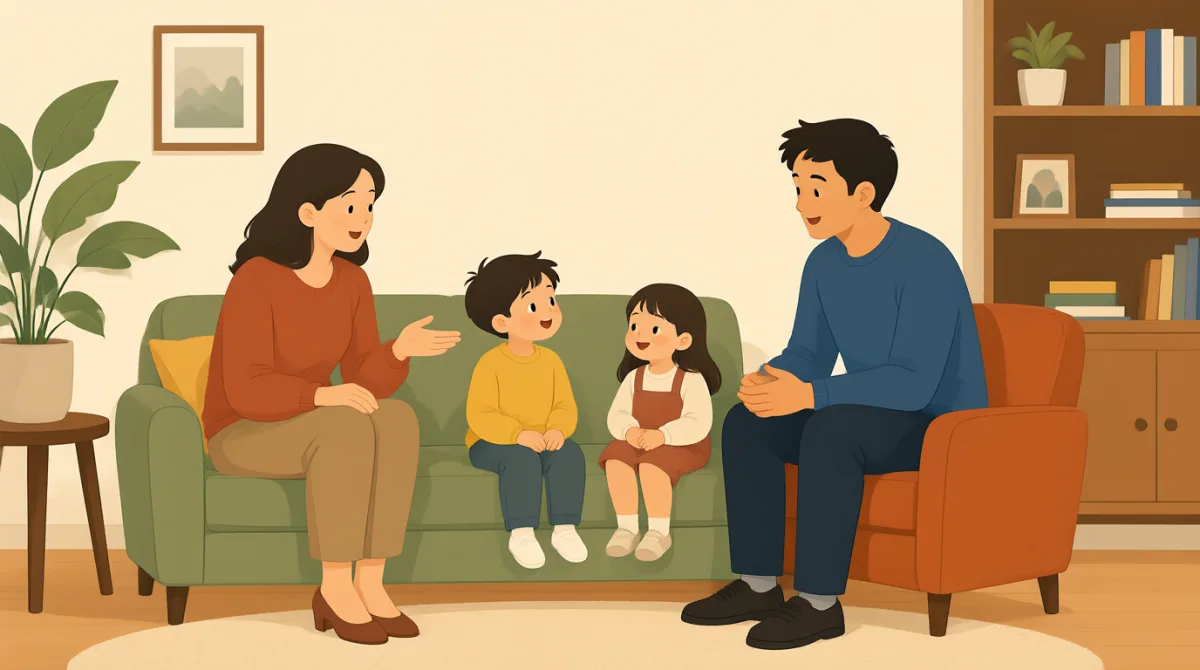

You know, my mom was here earlier and she was suggesting we really need to be stricter with James about his screen time. She said, 'Back in my day, we didn't have all this technology.'
सुनो, आज पहले माँ आई थीं और कह रही थीं कि हमें जेम्स के स्क्रीन टाइम को लेकर उसके साथ और सख़्ती करनी चाहिए। उन्होंने कहा, “हमारे ज़माने में ये सारी तकनीक नहीं थी।”

Ah, yes, the classic 'back in my day' argument. I heard something similar from my uncle about letting him figure things out on his own more, rather than being so hands-on with his homework.
हाँ, वही पुरानी “हमारे ज़माने में” वाली दलील। मेरे चाचा ने भी कुछ ऐसा ही कहा था—कि हमें उसे अपना होमवर्क खुद करने देना चाहिए, बजाय इसके कि हम हर समय उसके साथ लगे रहें।
It's tough, isn't it? On one hand, you want to respect their experience, but on the other, things have changed so much. How do we even begin to decide what to take on board and what to politely brush off?
मुश्किल है, है न? एक तरफ़ हम उनके अनुभव का सम्मान करना चाहते हैं, लेकिन दूसरी तरफ़ चीज़ें इतनी बदल गई हैं। हम तय कैसे करें कि किस सलाह को मानें और किसे विनम्रता से नज़रअंदाज़ कर दें?
Exactly. I think for the screen time, a strict ban isn't realistic, but maybe we could re-evaluate our current limits. It's a valid concern, even if the delivery was a bit old-school.
बिल्कुल। स्क्रीन टाइम के मामले में पूरी तरह रोक लगा देना ठीक नहीं होगा, लेकिन शायद हम अपनी मौजूदा सीमाओं पर फिर से विचार कर सकते हैं। उनकी चिंता जायज़ है, भले ही उसे जताने का उनका तरीका थोड़ा पुराने ख़यालों वाला था।
That's a fair point. And with your uncle's advice, I get where he's coming from. We do tend to hover a bit with the homework, don't we? Maybe we could give him more space to struggle and learn.
बात तो सही है। और तुम्हारे चाचा की सलाह के बारे में, मैं समझता हूँ कि वे ऐसा क्यों कह रहे हैं। हम उसके होमवर्क में कुछ ज़्यादा ही दखल देते हैं, है न? शायद हम उसे मुश्किलों का सामना करने और उनसे सीखने के लिए थोड़ा और मौका दे सकते हैं।
We definitely could. Ultimately, we know James best, and we need to find what works for our family, not just what worked for previous generations.
बिल्कुल दे सकते हैं। आख़िरकार, जेम्स को हम सबसे अच्छी तरह जानते हैं, और हमें यह ढूँढ़ना है कि हमारे परिवार के लिए क्या सही है—सिर्फ़ वह नहीं जो पिछली पीढ़ियों के लिए सही था।
True. So, for the screen time, we'll tell my mom we're considering her feedback and re-evaluating, without promising anything specific. And for your uncle, we can say we're working on fostering more independence.
सही है। तो स्क्रीन टाइम के बारे में हम माँ से कहेंगे कि हम उनकी बात पर विचार करके अपनी सीमाओं पर फिर से सोच रहे हैं, लेकिन अभी कोई पक्का वादा नहीं करेंगे। और तुम्हारे चाचा से कह सकते हैं कि हम उसे ज़्यादा आत्मनिर्भर बनाने की कोशिश कर रहे हैं।
Perfect. It's about finding that balance of being open to advice while staying true to our own parenting philosophy. It's an ongoing negotiation.
बढ़िया। बात यह है कि सलाह के लिए खुले रहते हुए भी हमें अपने परवरिश के तरीक़े पर कायम रहना है। इस पर तो लगातार बातचीत होती रहेगी।
शब्दावली9
- stricterज़्यादा सख़्त
The comparative form of 'strict,' meaning more severe or firm in rules, often used when talking about discipline like limiting screen time for children.
'सख़्त' का तुलनात्मक रूप, जिसका मतलब है नियमों को लागू करने में अधिक कड़ा होना। बच्चों के स्क्रीन टाइम को सीमित करने जैसे अनुशासन के बारे में बात करते समय इसका इस्तेमाल होता है।
- screen timeस्क्रीन टाइम
The amount of time spent using electronic devices like phones or TVs; a common term in parenting discussions about balancing technology use.
फ़ोन या टीवी जैसे इलेक्ट्रॉनिक उपकरणों का इस्तेमाल करने में बिताया गया समय। तकनीक के इस्तेमाल में संतुलन पर माता-पिता की बातचीत में यह आम शब्द है।
- back in my dayहमारे ज़माने में
An idiomatic expression older people use to compare the past to the present, often implying things were better or different before, like in advice about technology.
यह मुहावरेदार अभिव्यक्ति बड़े-बुज़ुर्ग बीते समय की तुलना आज से करने के लिए इस्तेमाल करते हैं। इससे अक्सर यह संकेत मिलता है कि पहले चीज़ें बेहतर या अलग थीं, जैसे तकनीक के बारे में दी गई सलाह में।
- hands-onसक्रिय रूप से शामिल
Describes being actively involved in something, like helping with homework directly; useful for contrasting with letting kids learn independently.
इसका मतलब है किसी काम में सक्रिय रूप से शामिल होना, जैसे बच्चे के होमवर्क में सीधे मदद करना। बच्चों को अपने दम पर सीखने देने के उलट इसे इस्तेमाल किया जा सकता है।
- take on boardगंभीरता से विचार करना
An idiom meaning to consider or accept advice seriously; practical for politely responding to suggestions in conversations about parenting or decisions.
इस मुहावरे का मतलब है किसी सलाह पर गंभीरता से विचार करना या उसे स्वीकार करना। बच्चों की परवरिश या दूसरे फ़ैसलों पर बातचीत में सुझावों का विनम्रता से जवाब देते समय यह काम आता है।
- brush offनज़रअंदाज़ करना
To dismiss or ignore something lightly, often politely; helpful in discussing how to handle unwanted advice without offending others.
किसी बात को हल्के से ठुकराना या अनदेखा करना, अक्सर विनम्रता से। बिना किसी को बुरा लगाए अनचाही सलाह को संभालने के बारे में बात करते समय यह उपयोगी है।
- re-evaluateफिर से मूल्यांकन करना
To assess or review something again to decide if changes are needed; commonly used in reflective talks about family rules or habits.
यह तय करने के लिए किसी चीज़ का दोबारा आकलन करना कि बदलाव की ज़रूरत है या नहीं। परिवार के नियमों या आदतों पर सोच-विचार करते समय इसका इस्तेमाल होता है।
- hoverहर समय नज़र रखना
In parenting, it means to watch or interfere too closely, like standing over a child while they do homework; describes over-involvement.
बच्चों की परवरिश के संदर्भ में इसका मतलब है बच्चे पर बहुत बारीकी से नज़र रखना या उसके काम में ज़रूरत से ज़्यादा दखल देना, जैसे होमवर्क करते समय उसके सिर पर खड़े रहना। यह ज़रूरत से ज़्यादा शामिल होने को दर्शाता है।
- parenting philosophyपरवरिश का नज़रिया
A set of beliefs or principles about how to raise children, including discipline and values; key term for deeper discussions on child-rearing approaches.
बच्चों को पालने के तरीक़े से जुड़े विश्वासों और सिद्धांतों का समूह, जिसमें अनुशासन और मूल्य शामिल हैं। बच्चों की परवरिश के अलग-अलग तरीक़ों पर गहरी बातचीत के लिए यह एक अहम शब्द है।
मुख्य वाक्य8
- 1
You know, my mom was here earlier and she was suggesting we really need to be stricter with James about his screen time.
सुनो, आज पहले माँ आई थीं और कह रही थीं कि हमें जेम्स के स्क्रीन टाइम को लेकर उसके साथ और सख़्ती करनी चाहिए।
This sentence introduces shared advice using 'you know' for casual conversation and 'suggesting' to report indirect speech; useful for starting talks about family input on parenting rules.
इस वाक्य में अनौपचारिक बातचीत के लिए 'you know' और किसी की कही बात बताने के लिए 'suggesting' का इस्तेमाल हुआ है। बच्चों की परवरिश के नियमों पर परिवार के सुझावों की बात शुरू करने के लिए यह उपयोगी है।
- 2
Ah, yes, the classic 'back in my day' argument.
हाँ, वही पुरानी “हमारे ज़माने में” वाली दलील।
A response acknowledging a common phrase with 'ah, yes' for agreement and 'classic' to show it's a typical, often humorous complaint; great for lightening discussions about generational differences.
'ah, yes' से सहमति जताई जाती है और 'classic' से यह दिखता है कि कोई बात जानी-पहचानी और आम है—अक्सर उसमें हल्का-सा हास्य भी होता है। पीढ़ियों के बीच फ़र्क पर बातचीत को हल्का रखने के लिए यह अच्छा वाक्य है।
- 3
It's tough, isn't it? On one hand, you want to respect their experience, but on the other, things have changed so much.
मुश्किल है, है न? एक तरफ़ हम उनके अनुभव का सम्मान करना चाहते हैं, लेकिन दूसरी तरफ़ चीज़ें इतनी बदल गई हैं।
Uses a tag question 'isn't it?' to seek agreement and the structure 'on one hand... on the other' to show contrast; ideal for expressing balanced views in sensitive topics like advice from elders.
'isn't it?' सहमति पाने के लिए जोड़ा गया सवाल है। 'on one hand... on the other' का ढाँचा दो विपरीत पहलुओं को दिखाता है। बुज़ुर्गों की सलाह जैसे संवेदनशील विषयों पर संतुलित विचार रखने के लिए यह उपयोगी है।
- 4
How do we even begin to decide what to take on board and what to politely brush off?
हम तय कैसे करें कि किस सलाह को मानें और किसे विनम्रता से नज़रअंदाज़ कर दें?
A rhetorical question with 'how do we even' to express difficulty, plus idioms 'take on board' and 'brush off'; practical for debating how to handle external opinions in relationships.
'how do we even' से कठिनाई जताने वाला सवाल बनता है। इसमें 'take on board' और 'brush off' मुहावरे भी हैं। रिश्तों में बाहरी राय को कैसे संभालें, इस पर चर्चा करते समय यह काम आता है।
- 5
I think for the screen time, a strict ban isn't realistic, but maybe we could re-evaluate our current limits.
स्क्रीन टाइम के मामले में पूरी तरह रोक लगा देना ठीक नहीं होगा, लेकिन शायद हम अपनी मौजूदा सीमाओं पर फिर से विचार कर सकते हैं।
Employs 'I think' for opinions, contrasts with 'but,' and suggests action with 'maybe we could'; useful for proposing compromises in family decision-making.
'I think' से राय व्यक्त की जाती है, 'but' से विरोधाभास दिखता है और 'maybe we could' से कोई उपाय सुझाया जाता है। परिवार के फ़ैसलों में बीच का रास्ता निकालने के लिए यह उपयोगी है।
- 6
We do tend to hover a bit with the homework, don't we?
हम उसके होमवर्क में कुछ ज़्यादा ही दखल देते हैं, है न?
Includes 'tend to' for habits and a tag question 'don't we?' for confirmation; helps in self-reflective talks about parenting behaviors.
'tend to' आदतों के बारे में बताता है और 'don't we?' पुष्टि पाने के लिए जोड़ा गया सवाल है। बच्चों की परवरिश के अपने तरीक़ों पर सोच-विचार करने में यह मदद करता है।
- 7
Ultimately, we know James best, and we need to find what works for our family.
आख़िरकार, जेम्स को हम सबसे अच्छी तरह जानते हैं, और हमें यह ढूँढ़ना है कि हमारे परिवार के लिए क्या सही है।
Starts with 'ultimately' for conclusion, uses 'we know... best' to assert confidence; key for emphasizing personal judgment in advice situations.
'ultimately' से निष्कर्ष की शुरुआत होती है और 'we know... best' अपने अनुभव पर भरोसा जताता है। सलाह मिलने पर अपने फ़ैसले को अहमियत देने के लिए यह वाक्य उपयोगी है।
- 8
It's about finding that balance of being open to advice while staying true to our own parenting philosophy.
बात यह है कि सलाह के लिए खुले रहते हुए भी हमें अपने परवरिश के तरीक़े पर कायम रहना है।
Explains a concept with 'it's about' and gerunds 'being open... staying true'; valuable for summarizing ongoing challenges in parenting discussions.
'it's about' से किसी विचार का सार बताया जाता है। 'being open... staying true' में क्रिया के -ing रूपों का इस्तेमाल है। बच्चों की परवरिश पर बातचीत में लगातार बनी रहने वाली चुनौतियों का सार बताने के लिए यह उपयोगी है।